FDA peptide approval 2026: What the April decision means and what’s next

May 9, 2026
FDA peptide approval 2026 regulatory timeline and decision process

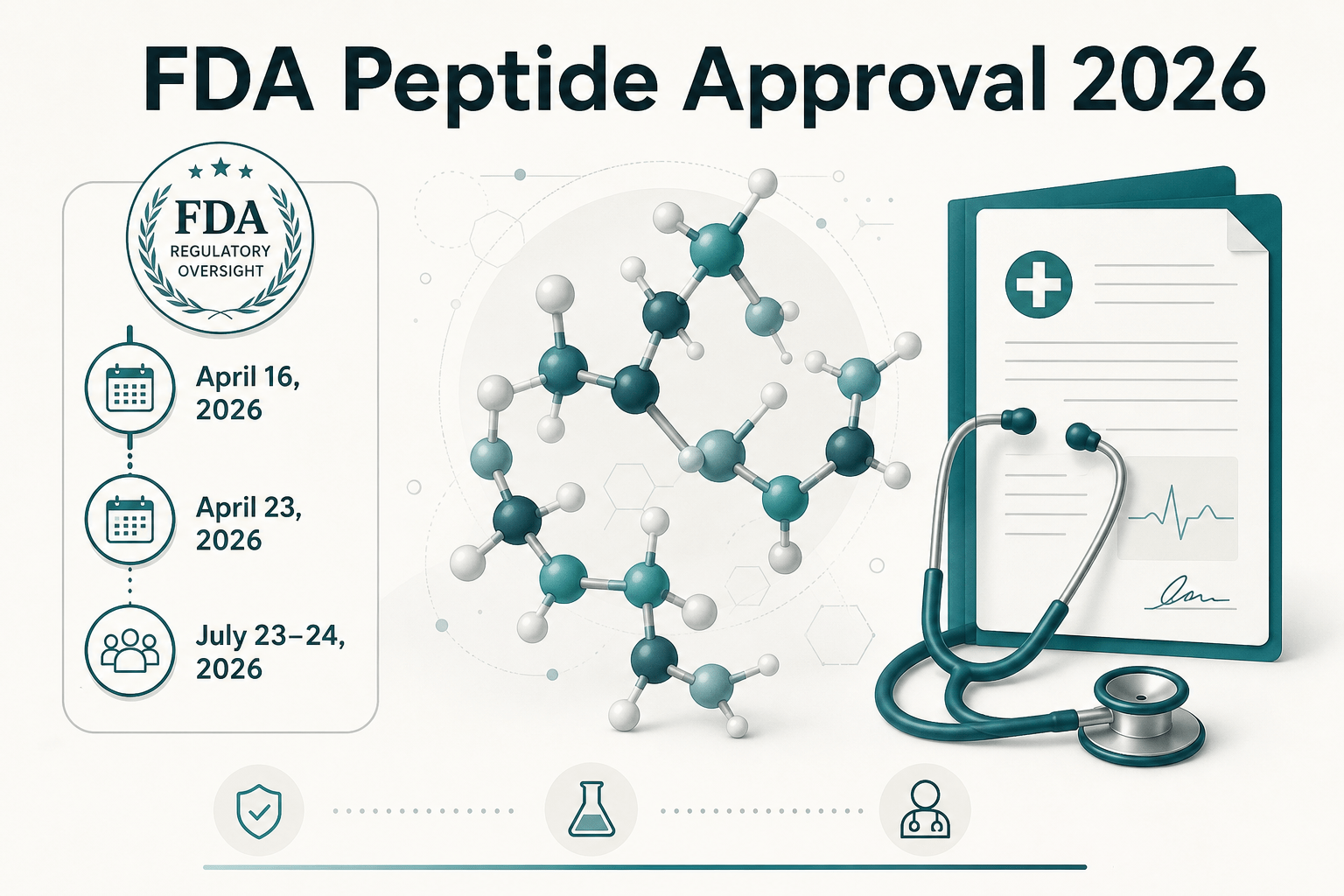
In April 2026, the FDA began moving seven peptides off its most restrictive compounding list and toward formal review. The change does not make these peptides approved drugs, and the decision that matters most has not happened yet. A federal advisory committee meets in July 2026 to recommend whether peptides like BPC-157 should be legal to compound. Here is what changed, what the categories mean, and what to expect next.

What changed for peptides in April 2026?

On April 23, 2026, the FDA removed seven peptides from its restrictive Category 2 compounding list. On its own, this was a procedural step: the peptides came off one list, but they were not added to another. In practice it moved away from the 2023 restrictions that had stopped compounding pharmacies from preparing peptides such as BPC-157 and TB-500.

The more important date is still ahead. The Pharmacy Compounding Advisory Committee meets on July 23 and 24, 2026, to decide whether these peptides should be eligible for compounding. That recommendation, not the April removal, will shape what peptide therapy looks like for the next several years.

What does the April 23 removal actually mean?

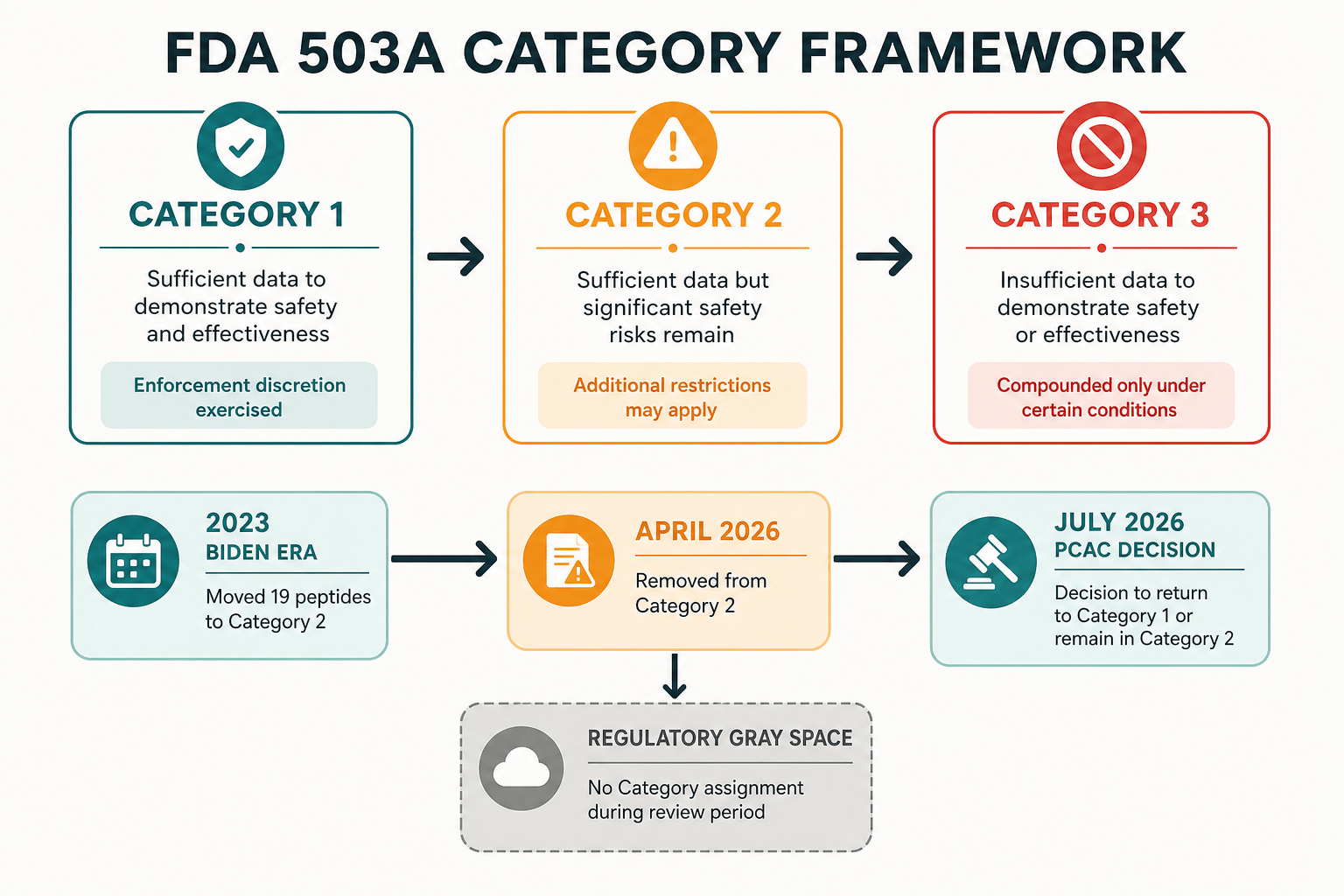
The FDA’s 503A compounding system sorts bulk drug substances into three categories. Those categories decide what a licensed compounding pharmacy can legally prepare for a patient.

CategoryStatusWhat it means
Category 1EligibleSufficient supporting data. The FDA allows compounding while it completes its evaluation.
Category 2IneligibleThe FDA has identified significant safety risks. Not authorized for compounding.
Category 3IneligibleInsufficient data for the FDA to begin a full evaluation.

In September 2023, the FDA placed 19 peptides into Category 2, citing immunogenicity concerns, limited human safety data, and contamination risks. Compounding pharmacies had to stop preparing them, and many patients turned to an unregulated gray market.

On April 16, 2026, the FDA announced that the Category 2 applications for seven of those peptides had been withdrawn. The April 23 removal followed. The seven peptides are now in regulatory gray space: not banned, not authorized. Compounding pharmacies stay in a period of uncertainty until the advisory committee meets in July.

FDA 503A category framework showing Category 1, 2, and 3 definitions for peptide compounding

The July 23-24, 2026 advisory committee meeting

The Pharmacy Compounding Advisory Committee will meet for two days in Silver Spring, Maryland to review whether seven peptides should be added to the 503A bulks list. A peptide on that list has clear legal status for compounding.

On July 23, the committee reviews BPC-157, KPV, TB-500, and MOTS-c. On July 24, it reviews Emideltide (also called DSIP), Semax, and Epitalon. The deadline for public comments is July 9, 2026. If the committee recommends inclusion, the FDA publishes new regulations and compounding becomes legal. If it does not, the peptides stay in gray space. Details are posted on the FDA’s page for the Pharmacy Compounding Advisory Committee meeting on July 23 and 24, 2026.

A second committee meeting is scheduled before the end of February 2027 to review five more peptides, including GHK-Cu, Cathelicidin, Dihexa, Melanotan II, and mechano growth factor, per an April 2026 Federal Register notice.

Which peptides are under review in July?

All seven peptides were placed in Category 2 in 2023 for similar reasons: limited human safety data, immunogenicity concerns, and contamination risks. The committee will weigh whether those concerns can be managed.

  • BPC-157 is studied for wound healing and tissue repair. It is the most widely discussed peptide on the list.
  • KPV is a tripeptide studied for anti-inflammatory and gut-health effects. The FDA noted limited human exposure data for it.
  • TB-500, a thymosin beta-4 fragment, is studied for muscle recovery and is listed as a banned substance by international sports authorities.
  • MOTS-c is a mitochondrial peptide studied for metabolic regulation, with limited published human data.
  • Emideltide (DSIP) is studied for sleep and related effects, drawing largely on older research.
  • Semax is a neuropeptide studied for cognitive function, with limited English-language clinical literature.
  • Epitalon is associated with sleep and longevity claims that are not yet supported by peer-reviewed human trials.

How do 503A and 503B compounding pharmacies fit in?

The category lists matter because they govern the pharmacies that prepare your medication. Body Works works with two types of compounding pharmacy.

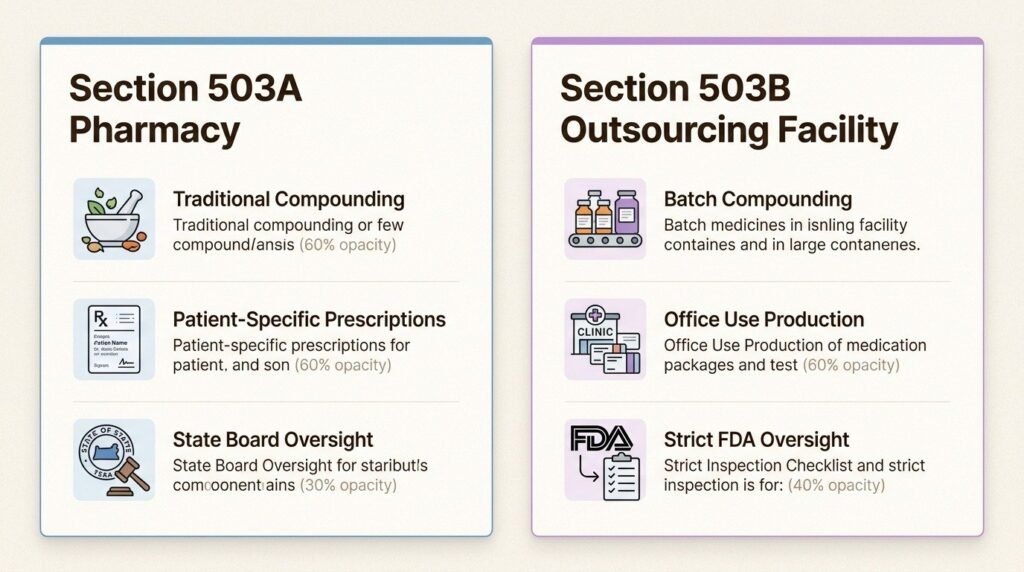
A 503A pharmacy prepares medications for a specific patient based on a prescription from a licensed provider. A 503B outsourcing facility prepares larger batches for in-office use. Both operate under the FDA’s human drug compounding program and its federal standards.

The safety risk with peptides usually comes less from the peptide itself than from where it is made. A licensed compounding pharmacy must document every ingredient and test for purity, potency, and sterility. Unregulated online sellers follow none of these rules, which is why a peptide bought from an unknown website is a gamble on what the vial actually contains.

This diagram compares 503A pharmacies for individual prescriptions with 503B facilities for larger batch compounding.

How can you access peptide therapy safely right now?

Until the advisory committee meets and the FDA publishes new rules, nothing changes for patient access. The peptides under review are still best approached through a licensed medical provider who can source from quality compounding pharmacies. The same caution applies to sourcing in general, a point covered in our guide on why authenticity matters with peptides.

At Body Works, peptide therapy follows a defined process:

  1. A medical consultation to understand your goals, whether that is recovery, sleep, or metabolic health.
  2. Comprehensive lab work to review your hormonal and metabolic picture.
  3. A personalized plan, rather than a one-size-fits-all protocol.
  4. Sourcing only from licensed compounding pharmacies that meet federal standards.

Regulatory access on its own does not make peptide therapy safe. It helps only when it is paired with physician oversight and quality compounding. That is the difference between a peptide prescribed and monitored by a licensed provider and one bought from an unregulated supplier. You can review the current options on the Body Works peptide therapy page.

What happens next: the peptide review timeline

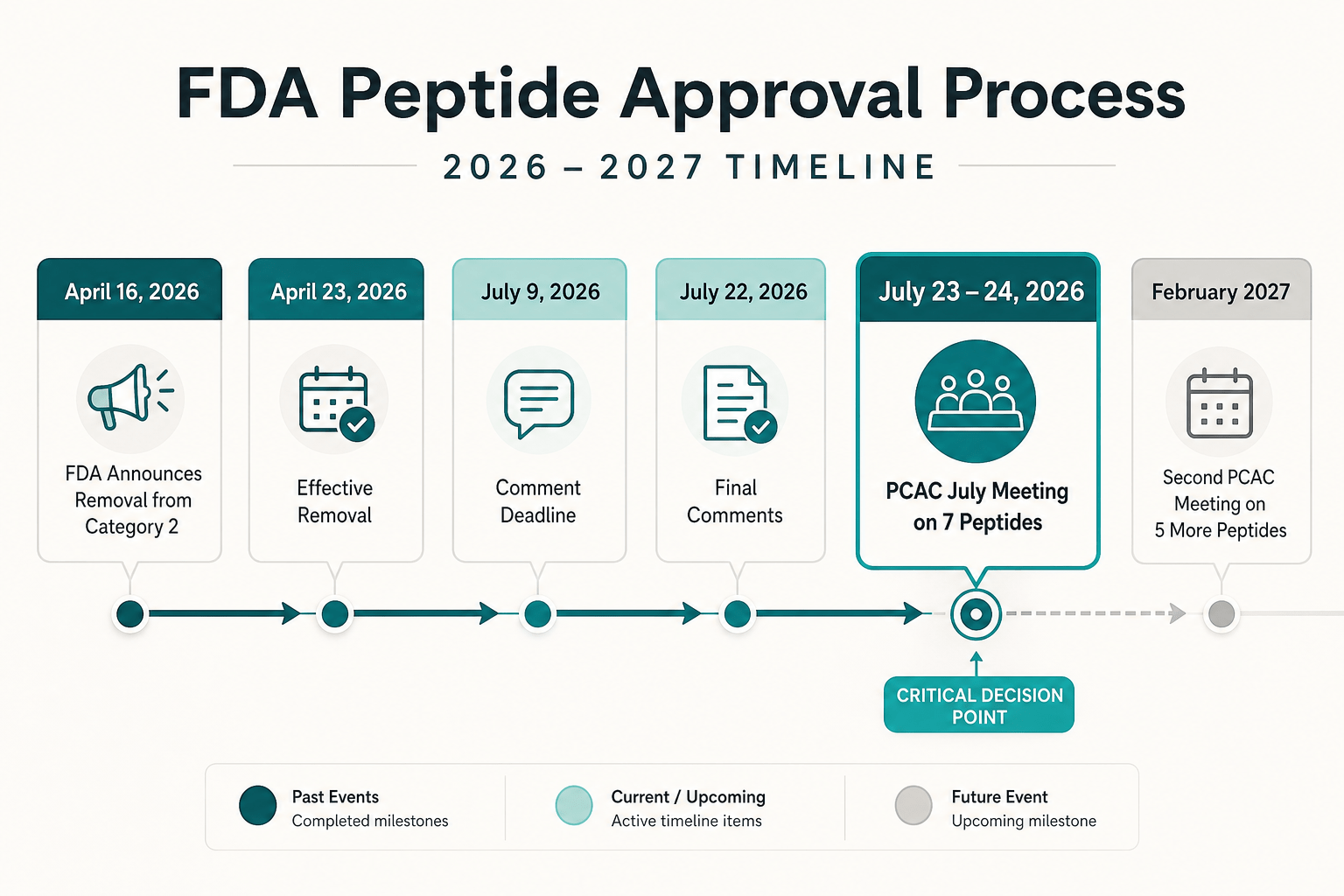
  • July 9, 2026: deadline for public comments to reach the committee.
  • July 23-24, 2026: the committee reviews and votes on the seven peptides.
  • After July 24: if the committee recommends approval, the FDA must publish new regulations adding the peptides to the 503A bulks list. This rulemaking usually takes weeks to months.
  • February 2027: the committee meets to review a second group of five peptides.

Until the committee votes and the FDA publishes new rules, patient access does not change. If you are considering peptide therapy now, work with a licensed provider who can navigate the current rules and source responsibly.

FDA peptide review timeline from the April 2026 announcement through the July PCAC meeting and February 2027 reviews

Take the next step with Body Works

The regulatory picture for peptides is still in motion, but the clinical standard has not changed. The safest path is the same one it has always been: a licensed medical team, real lab work, and compounding pharmacies that meet federal quality standards.

Body Works offers peptide therapy designed around specific health goals, with physician oversight and responsible sourcing at every step. Whether you visit the office in Franklin or Nolensville, the goal is the same: a plan built for your body, not a guess.

Schedule a Free Consultation to discuss whether peptide therapy fits your goals and what the current rules mean for your options.

Frequently Asked Questions

No. The April 23 removal from Category 2 is not the same as FDA approval. These peptides are off the restrictive list but not yet authorized for compounding. The July 2026 advisory committee meeting will decide whether they should be added to the 503A bulks list. Until then, their status is unsettled, and compounding pharmacies that use them do so at legal risk.
Seven peptides will be reviewed: BPC-157, KPV, TB-500, and MOTS-c on July 23, and Emideltide (DSIP), Semax, and Epitalon on July 24. A second group of five peptides, including GHK-Cu, is scheduled for review in February 2027. These are peptides that were placed in Category 2 in 2023 and have now been pulled from that list for formal review.
Yes. Some peptides remain legally compoundable today, and several peptide-based medications are already fully FDA approved and in clinical use. A licensed provider can tell you which options are appropriate for your situation while the July review is pending, and can monitor your response.
Work with a licensed medical provider and a quality compounding pharmacy. If a peptide is offered through a clinic, it is being prescribed under medical oversight with sourced quality control. Avoid unregulated online peptide suppliers, because the gray market still exists and sourcing is the main safety factor.
The recommendation goes to the FDA, which must then publish new regulations adding the peptide to the 503A bulks list. That rulemaking process typically takes weeks to months. Only after the final rule is published would compounding pharmacies have clear legal authority to prepare it.

Medically reviewed by Dr. Donald Vollmer, MD
Managing Physician, Body Works TN

Browse Our Blog