GLP-1 and Testosterone: What Men Should Know

August 18, 2026

A lot of men in their forties assume low energy, soft strength, and stubborn belly fat are just what aging feels like. So they ask about testosterone therapy, get their blood drawn, and are surprised when the physician wants to talk about their weight first. That is not a stall tactic. It is the single most overlooked lever in men’s hormone health.

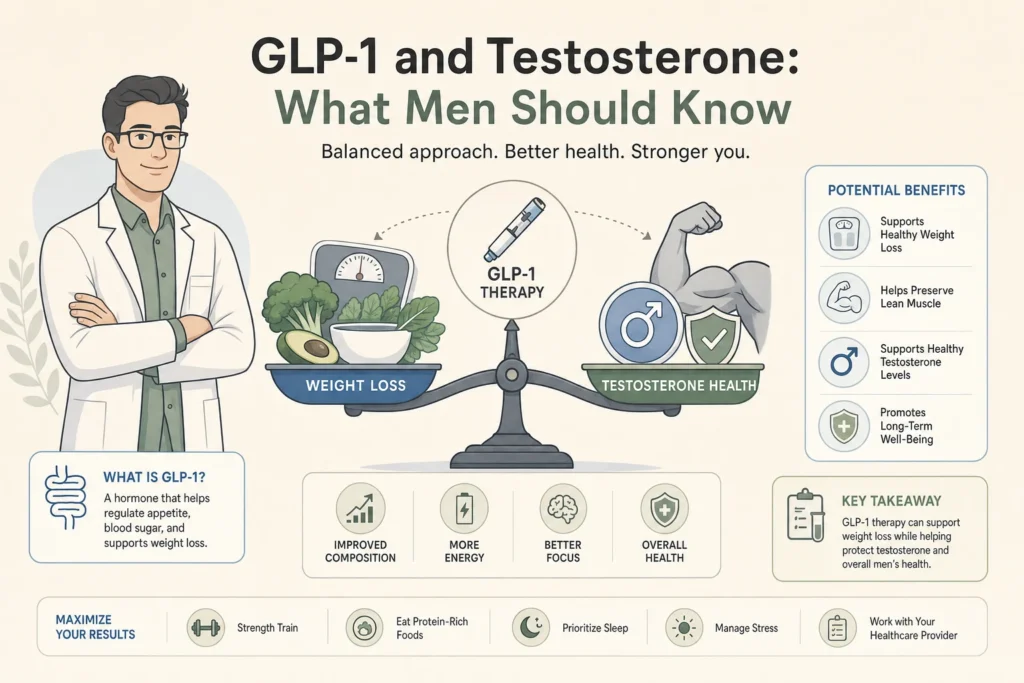
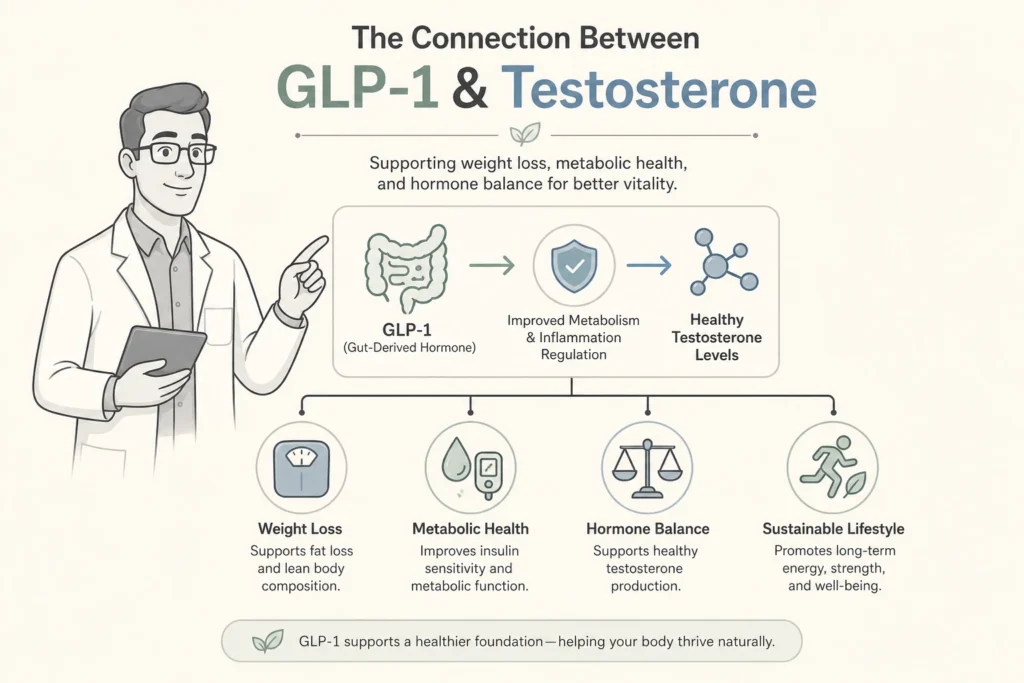
The relationship between GLP-1 and testosterone runs in both directions, and understanding it changes how you should approach both. Carrying extra weight actively suppresses testosterone, and meaningful weight loss can push it back up on its own. That means a GLP-1 medication and physician-supervised testosterone therapy are not competing choices; depending on your bloodwork, they can be complementary paths to the same goal. At Body Works in Franklin, TN and Nolensville, TN, this is one of the most common conversations men have before starting either therapy. Here is what the science actually shows.

Illustration of GLP-1 and Testosterone: What Men Should Know in a modern medical wellness setting

Why Does Carrying Extra Weight Lower Testosterone in Men?

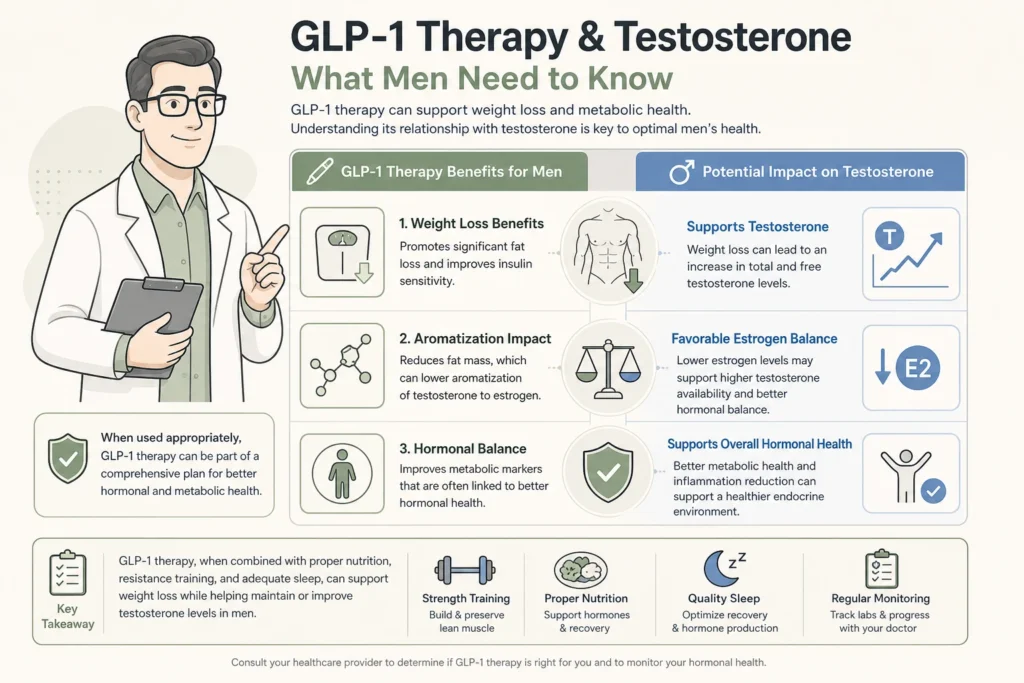
Excess body fat lowers testosterone through several mechanisms at once, which is why obesity is one of the most common reversible causes of low testosterone in men. Fat tissue contains the enzyme aromatase, which converts testosterone into estrogen, so the more fat a man carries, the more of his testosterone is quietly siphoned off. Obesity also lowers sex hormone binding globulin and drives low-grade inflammation, both of which pull measured testosterone down further.

According to a 2024 review in the journal Cureus examining BMI and testosterone, higher body mass index is strongly correlated with lower testosterone in men, largely because of increased conversion of testosterone to estrogen inside adipose tissue. This is why the problem is often described as functional rather than permanent. As Cleveland Clinic’s overview of low testosterone and male hypogonadism notes, most men with low testosterone do not have a problem with the testicles or pituitary at all; they have an issue driven by obesity or type 2 diabetes.

Does Losing Weight Actually Raise Testosterone?

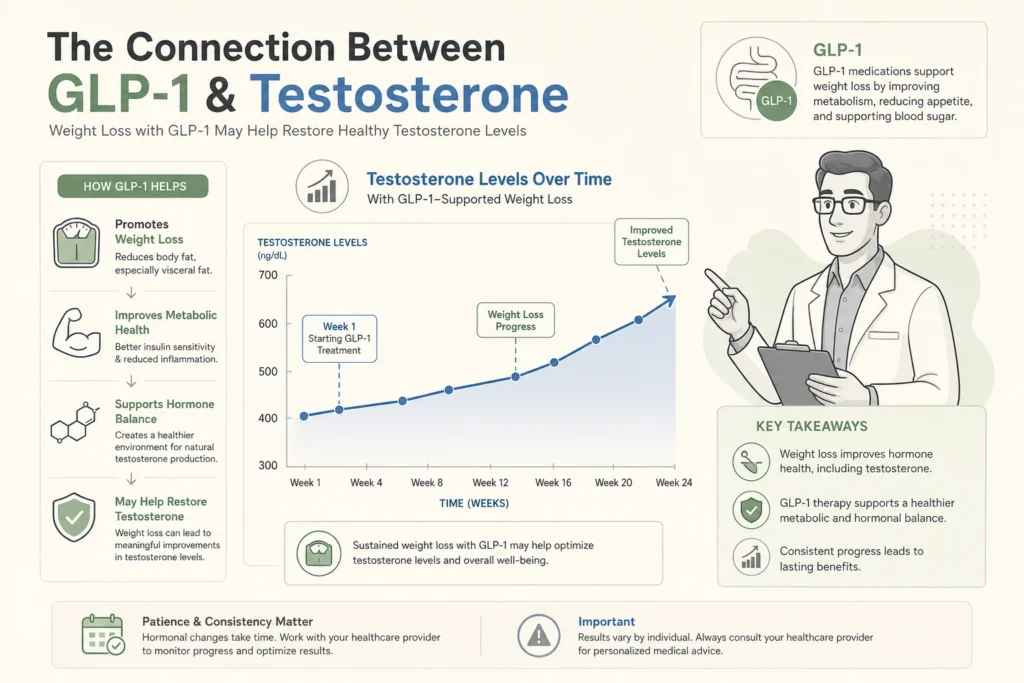
Yes. For many men, losing a meaningful amount of weight raises endogenous testosterone without any hormone prescription at all. When fat mass drops, aromatase activity falls, sex hormone binding globulin normalizes, and inflammation eases, so more of the testosterone a man already makes stays active in his bloodstream. The effect is largest in men who start with the most weight to lose.

The evidence here is strong. A 2013 meta-analysis in the European Journal of Endocrinology on weight loss and hypogonadism pooled 24 studies and found that both a low-calorie diet and bariatric surgery significantly increased total testosterone, with the rise proportional to how much weight was lost. Younger, non-diabetic men with a greater degree of obesity saw the biggest gains. In practical terms, that means the fastest way to move some men’s testosterone in the right direction is a structured medical weight loss program, not a hormone script.

Can GLP-1 Medications Improve Testosterone Levels?

GLP-1 medications can improve testosterone in men whose low levels are driven by obesity, because they treat the underlying cause by producing substantial, sustained weight loss. Medications such as semaglutide and tirzepatide reduce appetite and body fat, which in turn reduces the aromatization and metabolic disruption that suppress testosterone in the first place. The testosterone improvement is a downstream effect of losing fat, not a direct hormonal action of the drug.

Clinical data support this. A 2019 study in Endocrine Connections comparing liraglutide with testosterone therapy in obese men with functional hypogonadism found that the GLP-1 group lost significantly more weight and raised its own luteinizing hormone and testosterone production, while the testosterone-only group gained lean mass but suppressed natural gonadal signaling. For men whose main problem is weight, that distinction matters. Some men do best starting with weight loss, which is part of why a post on starting tirzepatide close to home pairs naturally with a hormone workup. The same weight-and-hormone link is showing up in emerging research on GLP-1s and hormone therapy in women, though the specific hormones differ.

Supporting illustration for GLP-1 and Testosterone: What Men Should Know in a modern medical wellness setting

Choosing Between GLP-1 Therapy and Testosterone Therapy

You cannot know which path fits until you test, because the same symptoms can come from obesity-driven low testosterone, true hypogonadism, or both. That is why a good men’s health workup starts with bloodwork, not a prescription pad. The results tell the physician whether weight loss alone is likely to restore your levels, whether you need direct hormone support, or whether coordinating both makes the most sense.

The professional standard is clear on testing first. The Endocrine Society clinical practice guideline on testosterone therapy in men with hypogonadism recommends diagnosing low testosterone only with consistent symptoms plus repeated morning measurements, and it advises checking luteinizing hormone and follicle stimulating hormone to find the cause. Men who want the fuller picture on hormone support can read our overview of how testosterone therapy works for men, and how it can be coordinated with a men’s hormone therapy program when the labs call for it.

ConsiderationWeight-First GLP-1 ApproachPhysician-Supervised Testosterone Therapy
Best whenLow testosterone is largely driven by obesityTestosterone stays low after weight loss, or hypogonadism is primary
How it helpsCuts fat mass, which reduces aromatization and raises natural testosteroneRestores testosterone directly through the androgen receptor
Effect on the body’s own hormonesSupports natural production and gonadotropin signalingReplaces hormone; can lower natural production
Bloodwork focusTestosterone, SHBG, metabolic markers, weight trendTotal and free testosterone, estradiol, hematocrit, PSA
Can they combineYes, under one physician who manages doses and labs together
Supporting illustration for GLP-1 and Testosterone: What Men Should Know in a modern medical wellness setting

How Do You Protect Muscle While Losing Weight on GLP-1s?

You protect muscle during GLP-1 weight loss by pairing the medication with resistance training and adequate protein, because rapid weight loss from any method costs some lean mass unless you actively defend it. Roughly a quarter of the weight lost during aggressive calorie restriction can come from muscle rather than fat, and muscle is exactly what supports strength, metabolism, and healthy testosterone signaling. Losing weight while losing muscle is a poor trade for a man’s hormone health.

The fix is well documented. A 2018 systematic review in the journal Nutrients on resistance training during caloric restriction found that adding resistance training to a weight loss program reduced muscle loss by roughly 93 percent while preserving the same fat loss. Prioritizing protein and lifting two or three times a week turns GLP-1 weight loss into higher-quality weight loss. For men who want to push recovery and body composition further, growth hormone releasing peptides are another physician-guided option, and our comparison of how sermorelin compares with CJC-1295 and ipamorelin and our look at how peptides and testosterone therapy work together explain where they fit.

Supporting illustration for GLP-1 and Testosterone: What Men Should Know in a modern medical wellness setting

Coordinating Weight Loss and Testosterone Care the Right Way

Body Works approaches weight and testosterone as one connected system, starting with bloodwork and an honest read of what is actually driving your symptoms before recommending any therapy. For some men across the greater Nashville area, a supervised weight loss plan restores testosterone on its own. For others, coordinating weight loss with direct hormone support is the better route, and the right answer only comes from testing, not guessing. The goal is a plan built around your labs and your goals, monitored on a schedule so nothing drifts out of range.

If you have been chasing energy, strength, and body composition without answers, the smartest next step is a conversation with a physician who reads your weight and your hormones together. Schedule a Free Consultation at the Franklin or Nolensville location. Call the Franklin office at (615) 790-2548 or the Nolensville office at (615) 941-1000.

Frequently Asked Questions

They can, but indirectly. GLP-1 medications drive weight loss, and losing body fat reduces the aromatization and metabolic disruption that suppress testosterone in men with obesity. The testosterone improvement comes from the fat loss, not from a direct hormonal effect of the medication, which is why results depend on how much weight you lose.
Often yes, and your bloodwork will tell. Because obesity is one of the most common reversible causes of low testosterone, many men see their levels rise with weight loss alone and may not need hormone replacement. A physician can review your labs and symptoms to decide whether to start with weight loss, hormone therapy, or a coordinated plan that uses both.
Some muscle loss is possible with any rapid weight loss, but it is largely preventable. Pairing your GLP-1 plan with resistance training two or three times a week and adequate protein preserves most lean mass while you lose fat. Protecting muscle also protects your strength and the healthy testosterone signaling that leaner body composition supports, so it is worth building in from day one.
Body Works does not publish pricing because the right plan depends entirely on your labs, your goals, and which therapy is actually appropriate after consultation. Starting both is not automatically the answer for every man. Your free consultation includes an honest assessment of what you need and a clear cost breakdown before you commit to anything.
Both the Franklin and Nolensville locations offer medical weight loss and men’s hormone therapy, coordinated by the same physician with shared bloodwork. You can begin with a single therapy and add the other later if your labs and goals support it. Book a consultation online or call either office to get started.

Medically reviewed by Dr. Donald Vollmer, MD
Managing Physician, Body Works TN

Browse Our Blog

See Body Works first in your Google results.

Add as a preferred source on Google