
Semaglutide in Nolensville, TN: Availability and How to Start
Searching for semaglutide in a town the size of Nolensville turns up a strange gap: national telehealth ads everywhere, but almost nothing about a real

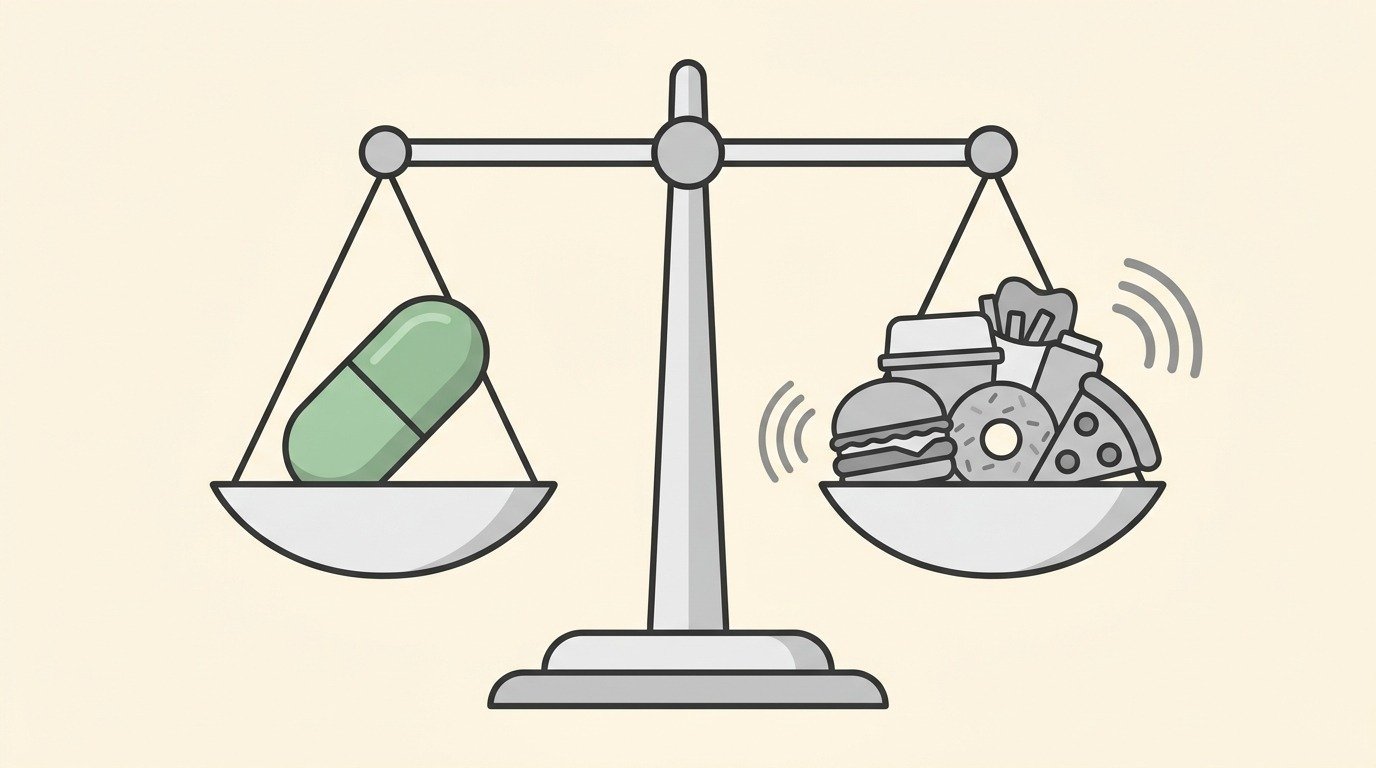
You finish breakfast, and before the last bite is swallowed, your mind is already planning lunch. You walk past a bakery and the smell hijacks your thoughts for the next hour. You ate enough to feel physically full, yet some part of your brain keeps whispering about snacks, meals, and everything in between.
If this sounds familiar, you are experiencing what researchers and patients now call “food noise.” It is not hunger. It is not a lack of willpower. It is a real, biological phenomenon that affects more than half of people living with overweight or obesity, a population that the CDC Adult Obesity Facts estimates at roughly 40% of U.S. adults. At Body Works in Franklin, TN and Nolensville, TN, we hear this story every day from patients researching medical weight loss. Here is the science behind food noise and how GLP-1 medications quiet it.
Food noise is the persistent, intrusive mental preoccupation with food that exists separate from physical hunger. Everyone thinks about meals sometimes. Food noise is different: it is constant, unwanted, and often distressing. A 2025 expert panel published in Nature defined it as “persistent thoughts about food that are perceived by the individual as being unwanted and/or dysphoric and may cause harm to the individual, including social, mental, or physical problems” (Nature, 2025).
Patients describe food noise as:
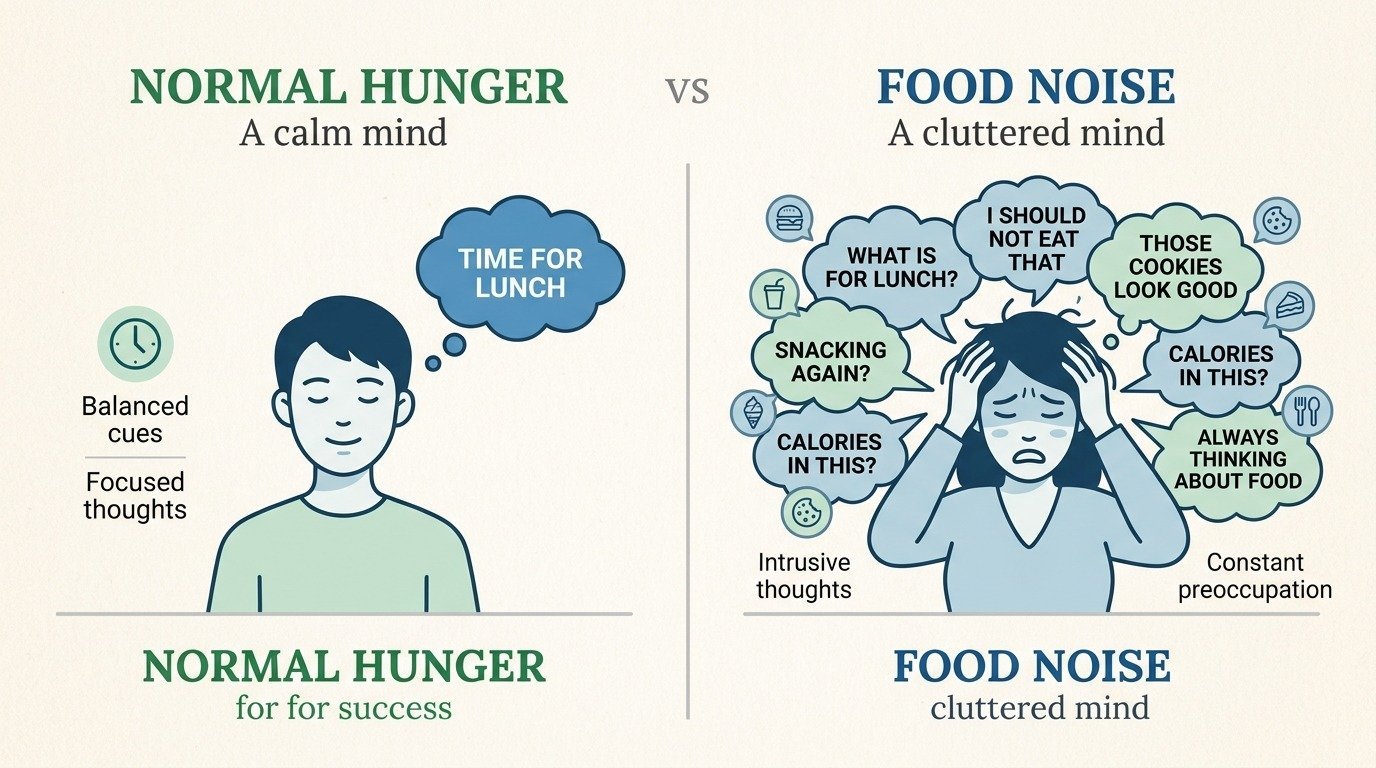
The critical distinction is that food noise is not hunger. Hunger is a physiological signal that your body needs fuel. Food noise is a cognitive phenomenon, a mental loop that continues even when your body has adequate energy. Reframing the struggle from a character flaw to a neurobiological condition is the first step toward treating it effectively.
Food noise starts with a brain system called the Default Mode Network, or DMN. Think of the DMN as your brain’s background setting, the network that activates when you are not focused on a specific task. It drives mind-wandering, daydreaming, and thinking about the future. Research published in PubMed Central found that our minds are in this wandering state roughly 47% of the time (PMC, 2024).
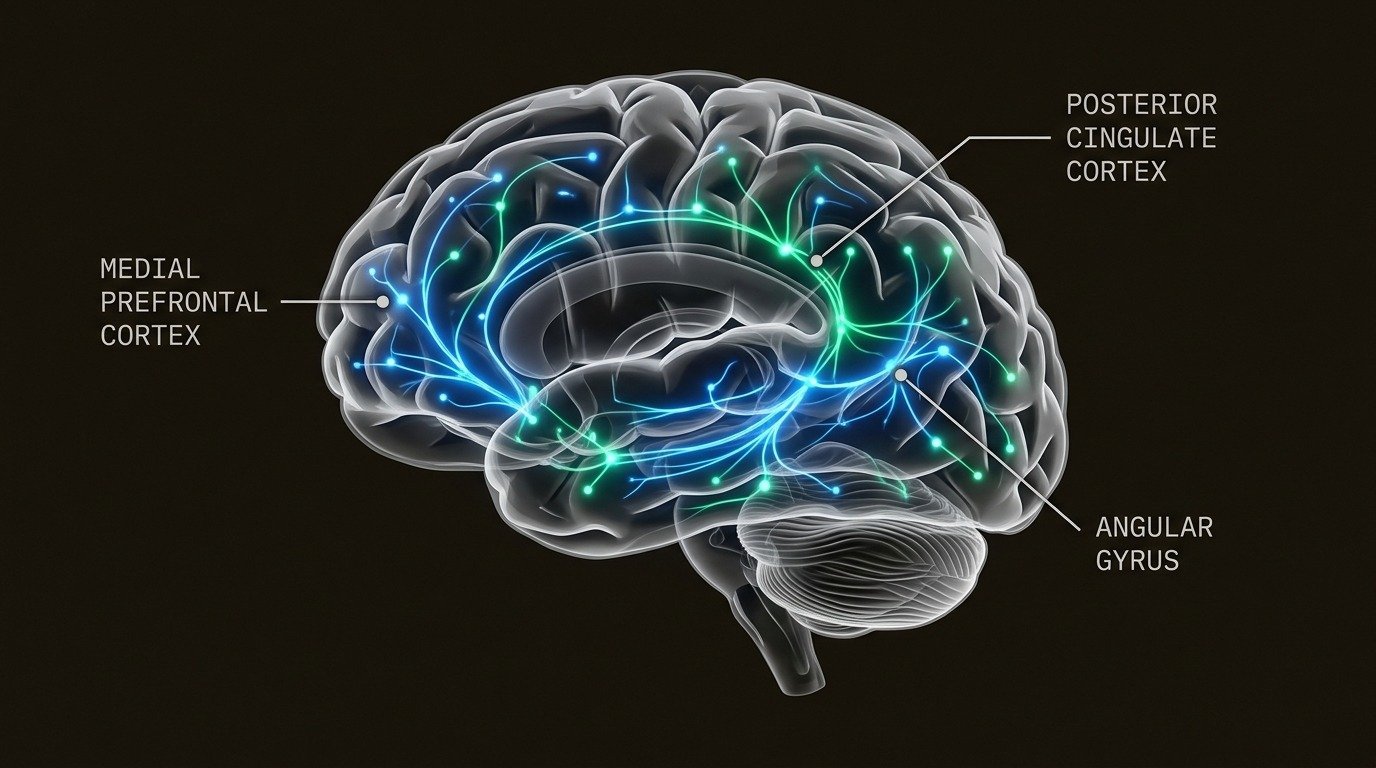
Usually, this wandering state is harmless. But for some people, the DMN becomes fixated on food. It gets co-opted by food cues, whether internal (a slight hunger pang) or external (seeing a food advertisement). This triggers what scientists call “food cue reactivity,” an evolutionary mechanism that once helped humans survive food scarcity. In modern environments saturated with food marketing and easily accessible high-calorie options, the mechanism becomes maladaptive.
One published review describes food noise as “maladaptive prospection”: your brain repeatedly simulates short-term reward scenarios (eating) that conflict with long-term goals (health and weight management). It is not that you lack discipline. Your brain’s default wiring has been hijacked by a constant stream of food-related thoughts. Interestingly, this phenomenon shares neural roots with conditions like depression, where the DMN also becomes overactive and generates repetitive thoughts.
GLP-1 medications quiet food noise by activating receptors in the brain’s appetite and reward centers, modulating the Default Mode Network, and dampening the dopamine response that food cues trigger. Synthetic GLP-1s mimic a hormone your gut naturally produces after eating, but they last much longer in your system, which means the signal they send to your brain is stronger and more sustained.
The mechanism works at three levels:
First, they act on appetite centers in the brain. GLP-1 receptors are found throughout the brain, including the hypothalamus (which regulates hunger), the hindbrain (which processes fullness signals), and the mesolimbic reward circuits that drive cravings. When activated, these receptors send powerful “I have had enough” signals to the rest of the brain. Research published in Diabetes, Obesity and Metabolism found that semaglutide therapy program significantly reduced appetite scores and food cravings by targeting these brain regions (Blundell et al., 2017).
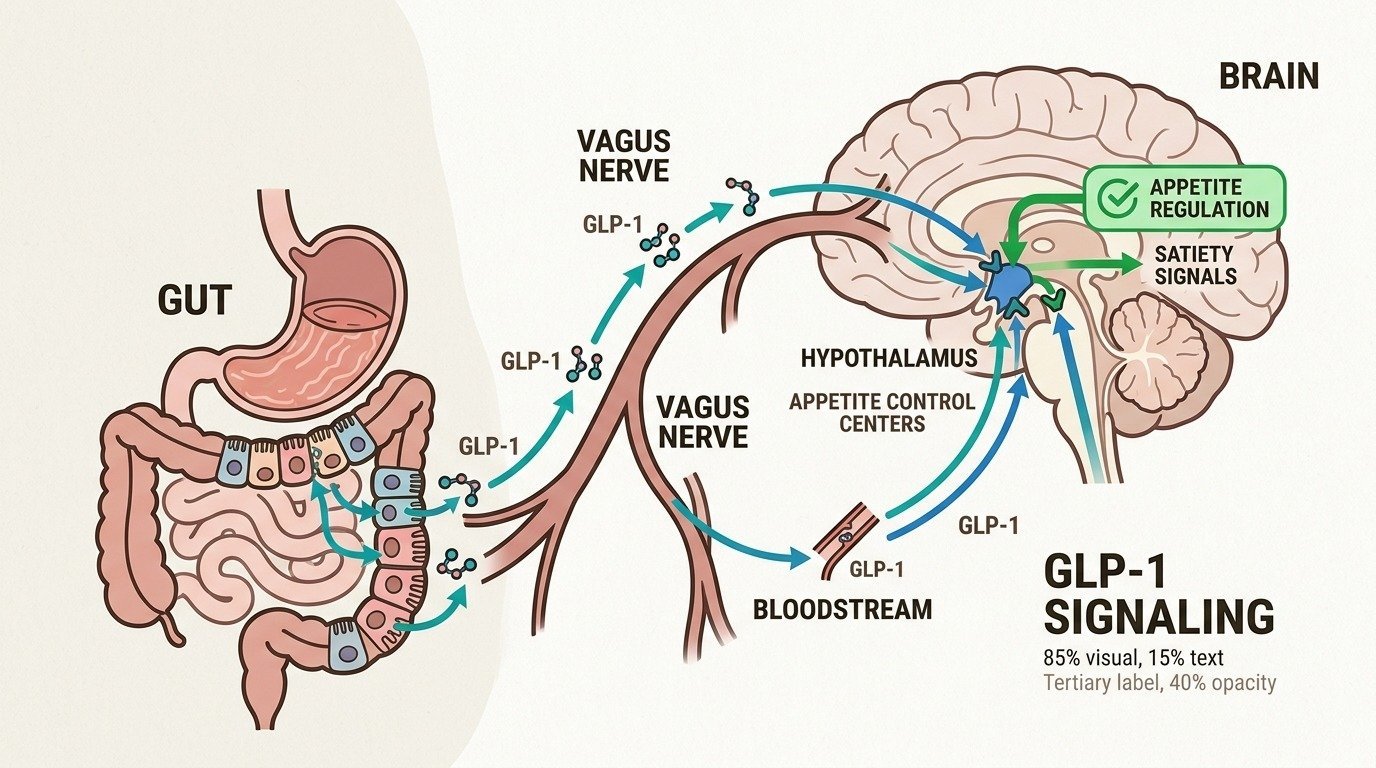
Second, they modulate the Default Mode Network. fMRI research shows that GLP-1 medications reduce DMN connectivity in regions associated with food-related rumination. This is the biological equivalent of turning down the volume on food noise.
Third, they alter reward processing. GLP-1s appear to reduce the dopamine response triggered by food cues. Importantly, patients still enjoy food, they simply stop obsessing over it. Researchers describe this as reducing the wanting without eliminating the liking. The natural gut-brain signaling pathway still carries fullness information through the vagus nerve; the medication amplifies and extends those signals so your brain gets a clearer, louder message about satiety that persists between meals. If you want the broader mechanism, see our primer on how GLP-1 medications work.
The evidence for GLP-1 medications reducing food noise goes beyond theory. A 2025 study presented at the European Association for the Study of Diabetes surveyed 550 people taking semaglutide for weight loss. The results were striking: before treatment, 62% of participants experienced constant thoughts about food throughout the day. After treatment, that number dropped to 16%.
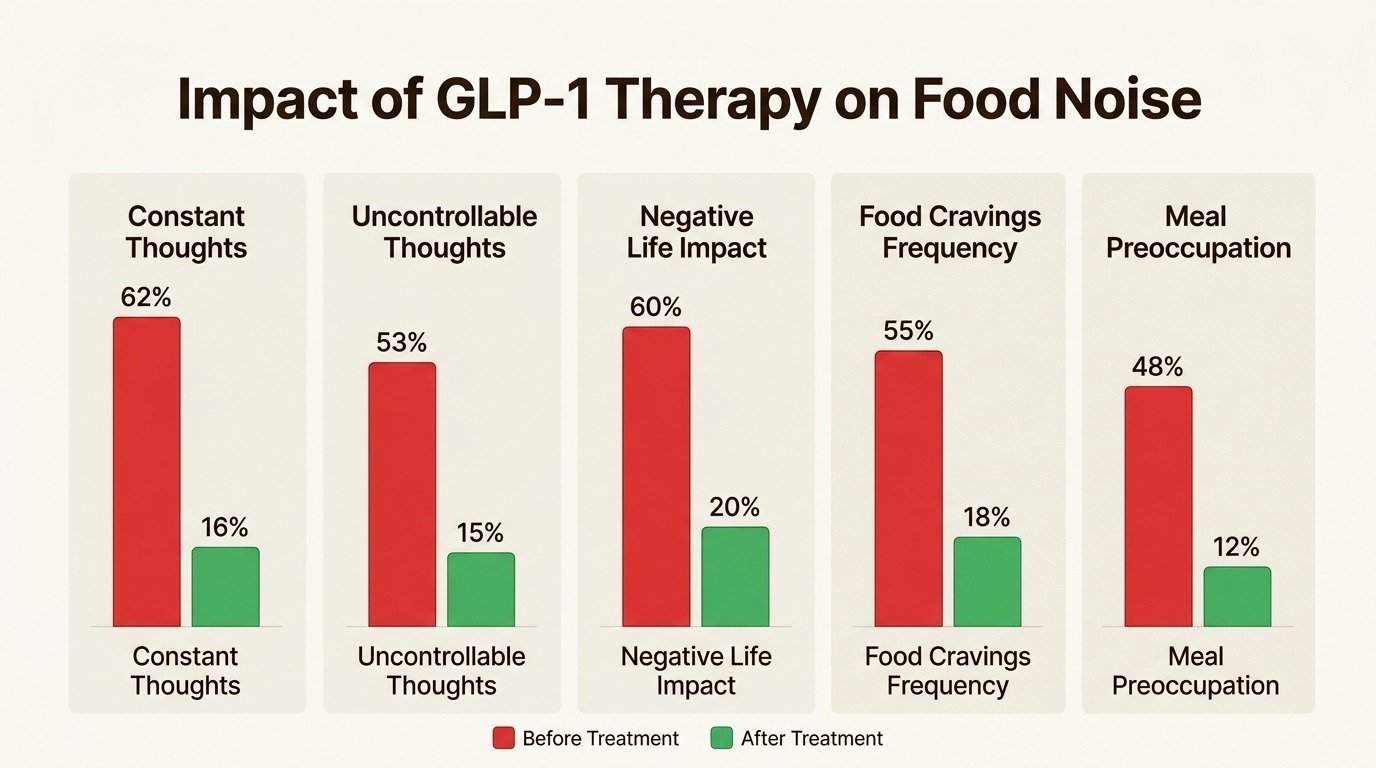
| Food Noise Metric | Before GLP-1 Treatment | After GLP-1 Treatment |
|---|---|---|
| Constant thoughts about food throughout the day | 62% | 16% |
| Spending too much time thinking about food | 63% | 15% |
| Uncontrollable food thoughts | 53% | 15% |
| Food thoughts distracting from daily activities | 47% | 15% |
| Negative effects on quality of life | 60% | 20% |
The mental health numbers were equally striking. Among the same participants, 64% reported improved mental health, 76% reported improved self-confidence, and 80% developed healthier habits. These effects appeared alongside the physical weight loss documented in the STEP 3 trial (Wadden et al., JAMA, 2021), which found that semaglutide combined with behavioral therapy produced 16% body weight loss with significantly improved control over eating.
Searching for semaglutide in a town the size of Nolensville turns up a strange gap: national telehealth ads everywhere, but almost nothing about a real

If you have been researching semaglutide for weight loss, you have probably hit the same wall everyone else does: a telehealth app that ships a

The needle is the easy part. Most people who quit a GLP-1 medication early do not quit because of the injection itself, they quit because
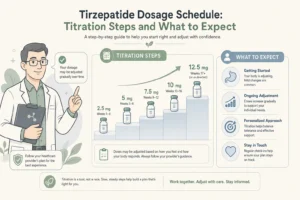
Patients starting tirzepatide often expect the first injection to feel like the start of real treatment. It isn’t. The 2.5 mg starting dose is a
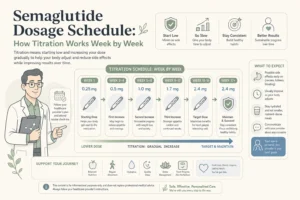
The dose on a semaglutide prescription rarely matches the dose a patient ends up taking, and that gap confuses people every week. Someone reads that
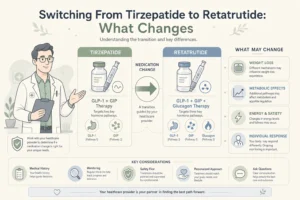
Switching from tirzepatide to retatrutide is a supervised medication change, not a milligram match. Retatrutide (GLP-3) adds the glucagon receptor and produced 24.2% weight loss
See Body Works first in your Google results.