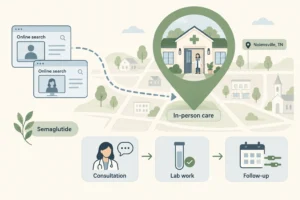
Semaglutide in Nolensville, TN: Availability and How to Start
Searching for semaglutide in a town the size of Nolensville turns up a strange gap: national telehealth ads everywhere, but almost nothing about a real


Walking into a weight loss clinic for the first time stirs up a specific kind of anxiety. You have already tried diets, gyms, maybe even apps that track every bite. None of it stuck. Now you are considering something more serious, and that means letting a medical professional see the full picture. The number on the scale. Your history of attempts. The habits you would rather not discuss.
That vulnerability is real. It is also normal. At Body Works in Franklin, TN and Nolensville, TN, we see patients arrive nervous every day. They worry about judgment. They worry we will hand them a generic meal plan and send them home. They worry this will be like every other failed attempt. This guide replaces that anxiety with clarity: exactly what happens during your first medical weight loss appointment, from the moment you walk through the door to the plan you leave with.
Most people feel some combination of dread and hope before their first appointment. Dread because stepping on a scale in front of a stranger exposes something private. Hope because maybe this time will be different. Both feelings are valid. Both are common. Body Works runs a physician-supervised semaglutide weight loss program at both the Franklin and Nolensville locations, and the steps below apply to both intake paths.
The CDC Adult Obesity Facts estimate that roughly 40% of U.S. adults meet clinical criteria for obesity, which means stepping into a weight loss clinic places you among tens of millions of Americans addressing the same health challenge. The truth is, medical weight loss is not about shame or willpower lectures. It is about identifying why your body has resisted weight loss and addressing those factors directly. Sometimes that means hormonal imbalances. Sometimes it means metabolic issues. Sometimes it means medications you are already taking that work against your goals. None of these are moral failings, they are biological realities that respond to medical intervention.

Our first job at Body Works is listening. We want to understand what you have tried, what worked temporarily, and what frustrated you. That conversation happens in a private, comfortable setting with licensed Nurse Practitioners and Registered Nurses who have guided hundreds of patients through this exact process. There is no sales pitch, no lecture, only an assessment of where you are and a discussion of where you want to go.
The entire visit takes about 45 minutes to an hour. Here is how that time breaks down.
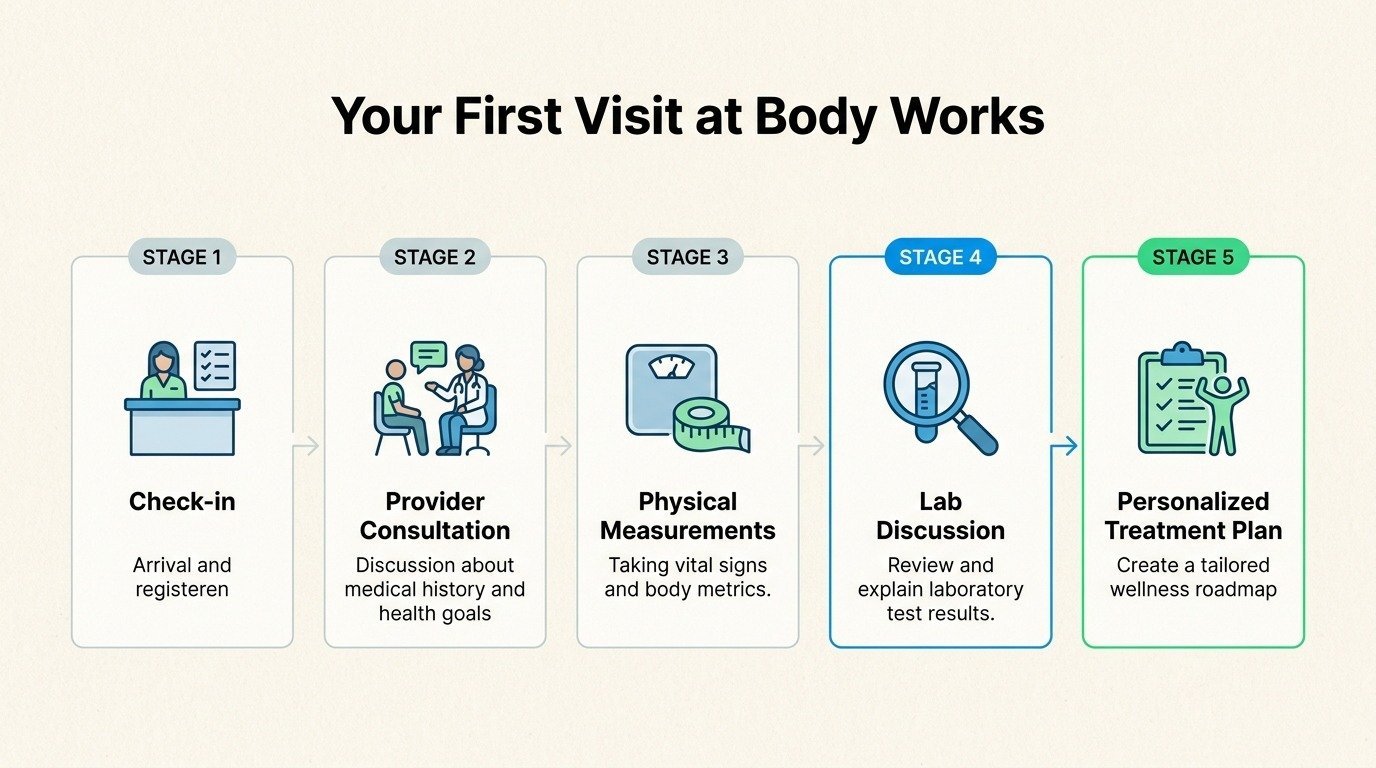
Check-in and paperwork. If you completed forms ahead of time, check-in takes a few minutes. If not, you will fill out a health history covering your medical conditions, previous weight loss attempts, family history, and current concerns. Our front desk team handles this efficiently and privately.
One-on-one consultation with your provider. This is the heart of the appointment. You will sit down with a licensed Nurse Practitioner or Registered Nurse who reviews your complete health picture. Expect questions about your weight history and previous attempts, current medical conditions such as diabetes, thyroid issues, sleep apnea, or high blood pressure, medications you are taking (some contribute to weight gain), and your daily habits: what you typically eat, how often you move, your sleep quality, and your stress levels. You will also discuss your specific goals, both the number on the scale and how you want to feel. This conversation is thorough because your treatment plan needs to account for your whole life, not just your BMI.
Physical measurements. We record your weight, height, and BMI. We check blood pressure and heart rate. Many patients also receive a body composition analysis that distinguishes fat mass from lean muscle mass. This matters because losing 10 pounds of fat while gaining 3 pounds of muscle represents real metabolic progress, even though a standard scale would only show 7 pounds lost.
Depending on your health history and recent testing, we may order labs. Common tests include metabolic panels, thyroid function tests, lipid panels, and HbA1c for blood sugar regulation. These tests reveal underlying factors like hypothyroidism or insulin resistance that can sabotage weight loss despite genuine dietary efforts. If you brought recent labs, we review them during your visit. If not, we schedule what you need.
Treatment plan conversation. Once we understand your health profile, we discuss options: GLP-1 medications like semaglutide and tirzepatide, FDA-approved appetite suppressants for appropriate candidates, lipotropic injections with B12 and MIC nutrients, nutritional counseling tailored to your lifestyle, and hormone therapy if testing reveals imbalances. Patients prescribed semaglutide can expect outcomes in the range documented by the STEP 1 trial (Wilding et al., NEJM, 2021), which reported an average 14.9% body weight loss over 68 weeks. We explain how each option works, realistic timelines, potential side effects, and whether you are a good candidate. Not everyone needs medication. Not everyone qualifies for specific medications. According to the National Institute of Diabetes and Digestive and Kidney Diseases, patients using weight management medications lose 3 to 12% more of their starting body weight than those relying on lifestyle changes alone. Your plan is built around your body, your goals, and your comfort level.
Plenty of places offer weight loss programs. Urgent care clinics, online-only services, and high-volume centers exist throughout Middle Tennessee. Here is what sets Body Works apart.
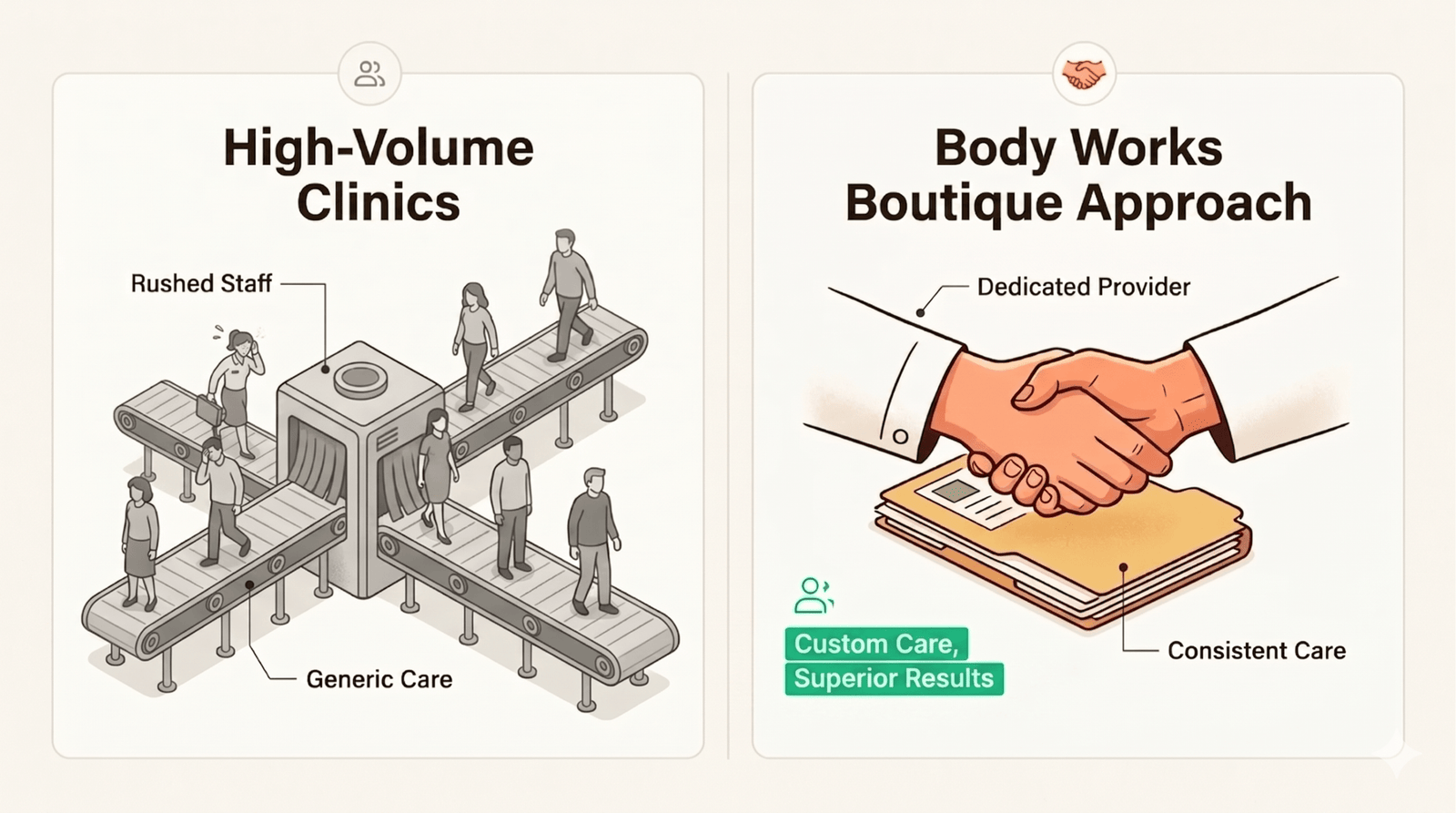
Body Works is a boutique medical practice, not a conveyor belt. You see the same providers throughout your journey. They remember your name, your history, and your specific challenges. There is no rotating cast of staff reading from a script.
Your care is medically licensed and supervised. Your program is directed by licensed Nurse Practitioners and Registered Nurses under owner Justin Williams. This is medical care, not a supplement shop or a coaching program pretending to be healthcare.
Body Works addresses the full picture under one roof. Weight gain often connects to other issues: hormonal imbalances, low energy, dehydration, stress. At Body Works, you can access IV therapy, hormone replacement therapy, peptide therapy, and aesthetic services alongside your weight loss program. No driving between three different clinics.
Two convenient locations serve Middle Tennessee. The Franklin and Nolensville offices serve patients throughout the area, and both locations offer the same comprehensive services and personalized approach.
You will not walk out with a generic meal plan and a wish for good luck. You will leave with a specific next step: starting medication, scheduling lab work, or beginning nutritional counseling.
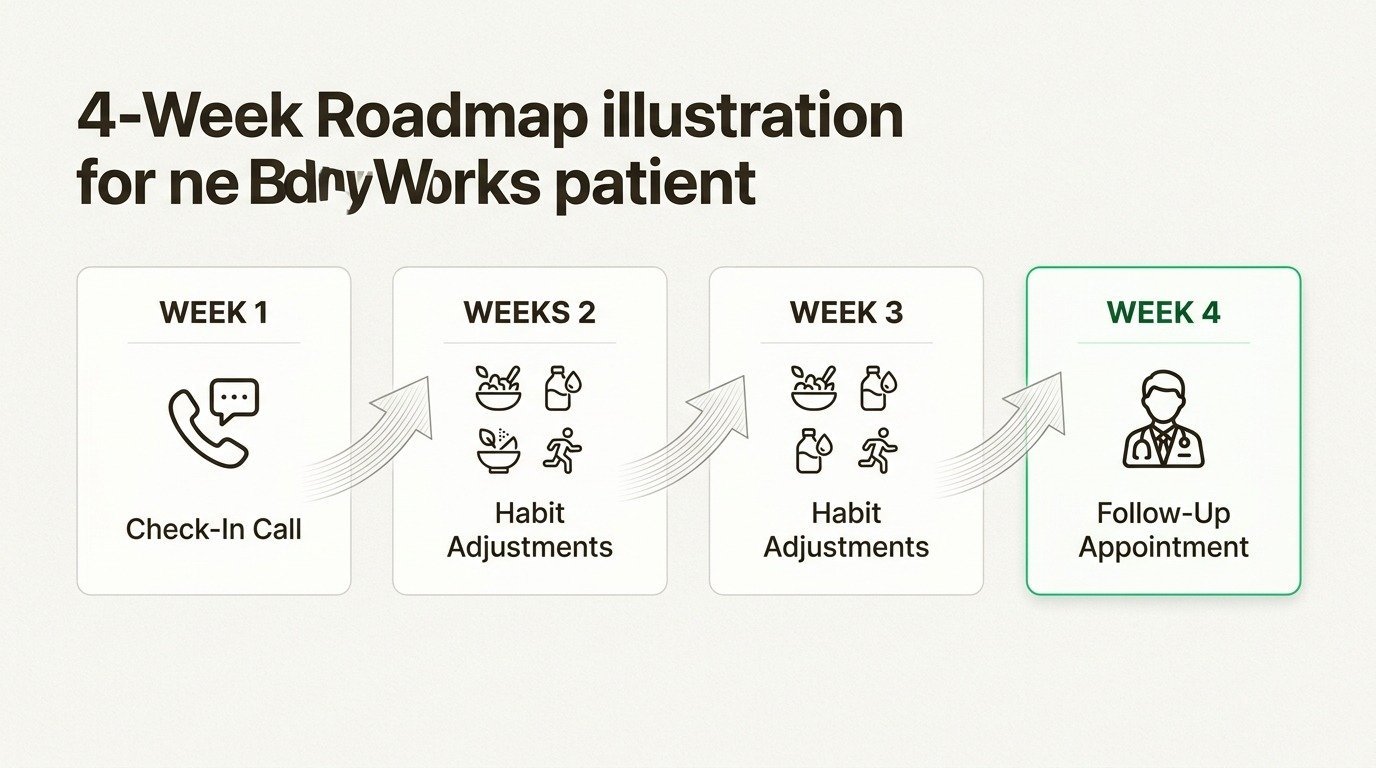
If we ordered labs, we contact you with results and any needed adjustments to your plan. If you started medication, we check in during your first week to see how you are tolerating it. Side effects like mild nausea are common and manageable, but we want to hear about them so we can help. Our team follows established best practices for GLP-1 injection success to help patients navigate the early weeks.
Your first follow-up is typically scheduled about 4 weeks after your initial visit. At that appointment, we assess your response, review any side effects, and prepare you for your next phase. Some patients need weekly check-ins initially; others do well with monthly visits. The schedule adapts to your needs. Between appointments, you have direct access to the team. Questions about your medication, struggles with meal planning, or concerns about progress are all valid reasons to reach out.
Searching for semaglutide in a town the size of Nolensville turns up a strange gap: national telehealth ads everywhere, but almost nothing about a real

If you have been researching semaglutide for weight loss, you have probably hit the same wall everyone else does: a telehealth app that ships a

The needle is the easy part. Most people who quit a GLP-1 medication early do not quit because of the injection itself, they quit because
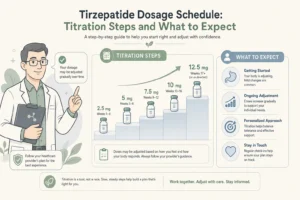
Patients starting tirzepatide often expect the first injection to feel like the start of real treatment. It isn’t. The 2.5 mg starting dose is a
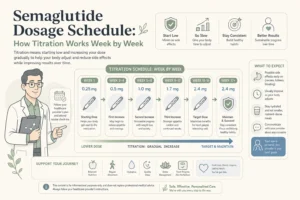
The dose on a semaglutide prescription rarely matches the dose a patient ends up taking, and that gap confuses people every week. Someone reads that
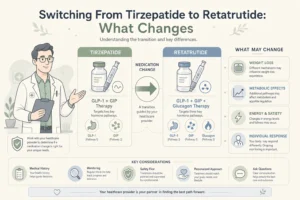
Switching from tirzepatide to retatrutide is a supervised medication change, not a milligram match. Retatrutide (GLP-3) adds the glucagon receptor and produced 24.2% weight loss
See Body Works first in your Google results.