
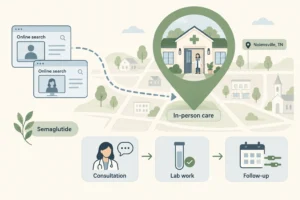
Semaglutide in Nolensville, TN: Availability and How to Start
Searching for semaglutide in a town the size of Nolensville turns up a strange gap: national telehealth ads everywhere, but almost nothing about a real
Choosing between an in-person and online GLP-1 weight loss program is one of the most consequential decisions a patient can make before starting treatment. The difference goes far beyond convenience. A Cleveland Clinic real-world analysis of nearly 8,000 GLP-1 patients found that roughly half discontinued treatment within the first 12 months. In clinical trials with intensive medical supervision, dropout rates ranged from just 14% to 17% over the same period.
The gap extends to outcomes. Real-world semaglutide patients lost an average of 8% of their body weight, compared to 15% in supervised clinical trials. For tirzepatide, the real-world average was 12%, compared to 15-20% in trials. Understanding how GLP-1 medications work is the first step; choosing the right care setting is the second, because the model a patient selects directly shapes both how much weight they lose and how long they stay on treatment.
TL;DR: In-person GLP-1 programs deliver nearly double the weight loss of online alternatives. Patients with regular medical supervision stay on treatment longer, manage side effects more effectively, and achieve outcomes closer to clinical trial results. Online programs offer convenience but lack physical assessments, body composition tracking, and immediate side effect management.

Online GLP-1 programs typically begin with a digital intake form and a short telehealth consultation via video or phone. If a provider determines the patient is a candidate, medication ships directly to their door. Follow-up care happens through messaging platforms or scheduled virtual calls. Research published in the Journal of Medical Internet Research found that higher levels of digital engagement in remote GLP-1 programs correlated with greater weight loss at three and six months, suggesting that active participation matters regardless of the care model.
In-person programs start with a comprehensive medical evaluation: lab work, physical examination, body composition analysis, and a face-to-face consultation. Dosing adjustments happen based on direct clinical observation rather than self-reported symptoms. Patients also gain access to complementary services like IV hydration therapy, nutritional counseling, and in-office injections that online programs cannot provide.
The core limitation of telehealth programs is what they cannot do. Physical examinations are impossible remotely. Providers cannot take vitals, assess body composition changes, or identify clinical signs that indicate how treatment is affecting the patient. Dosing protocols tend to be more standardized, and the real-time clinical adjustment that comes from seeing a patient face-to-face is absent.
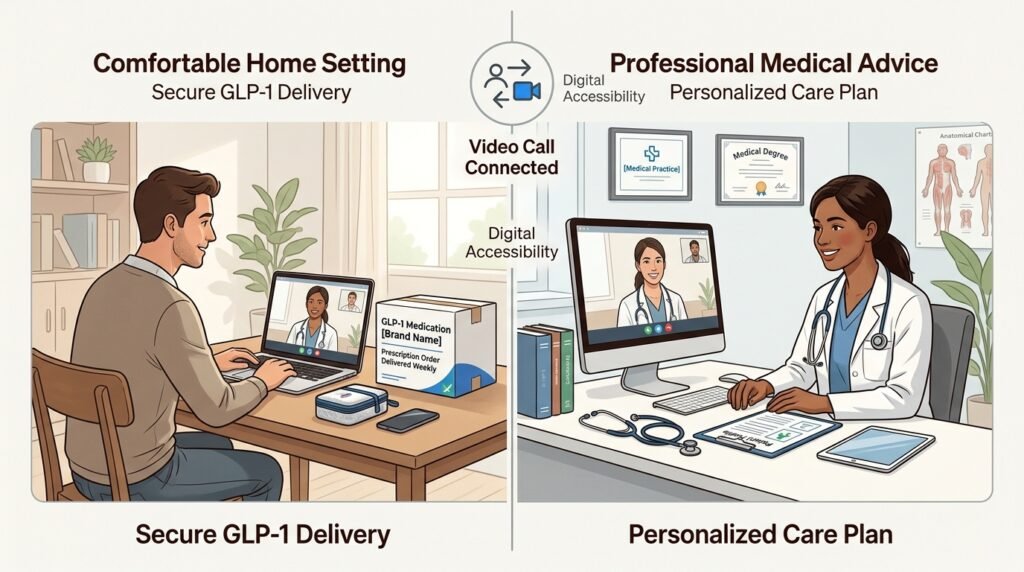
The safety gap between in-person and online GLP-1 care comes down to three factors: pre-treatment screening, side effect management, and long-term monitoring.
Lab work and pre-screening is the first major differentiator. In-person programs require bloodwork to assess metabolic health, thyroid function, and kidney markers before prescribing. This identifies contraindications, establishes baselines for tracking progress, and confirms the medication is appropriate for the patient’s biology. Some online programs skip comprehensive labs or rely entirely on self-reported medical history.
Side effect management is where the gap becomes most visible. GLP-1 medications commonly cause nausea, vomiting, diarrhea, and fatigue as the body adjusts to delayed gastric emptying. In the STEP 1 semaglutide trial published in the New England Journal of Medicine (2021), approximately 44% of patients experienced nausea during the titration phase. In-person providers can assess severity, adjust dosing schedules, prescribe anti-nausea protocols, and determine when symptoms warrant a medication change. Online programs handle these issues through asynchronous messaging or scheduled calls, which can delay intervention during a critical adjustment window.
Muscle preservation is an emerging concern that in-person monitoring addresses more effectively. Research from UC Davis indicates that rapid weight loss on GLP-1 medications can result in 15-25% lean muscle mass loss without proper dietary and exercise intervention. In-person programs track body composition over time, provide targeted exercise guidance, and ensure adequate protein intake to protect lean mass. Remote programs rarely have the tools or regular touchpoints to monitor this closely.
The clinical team at Body Works, including four Nurse Practitioners and three Registered Nurses, provides the level of medical oversight that ensures patients receive timely adjustments throughout their treatment.
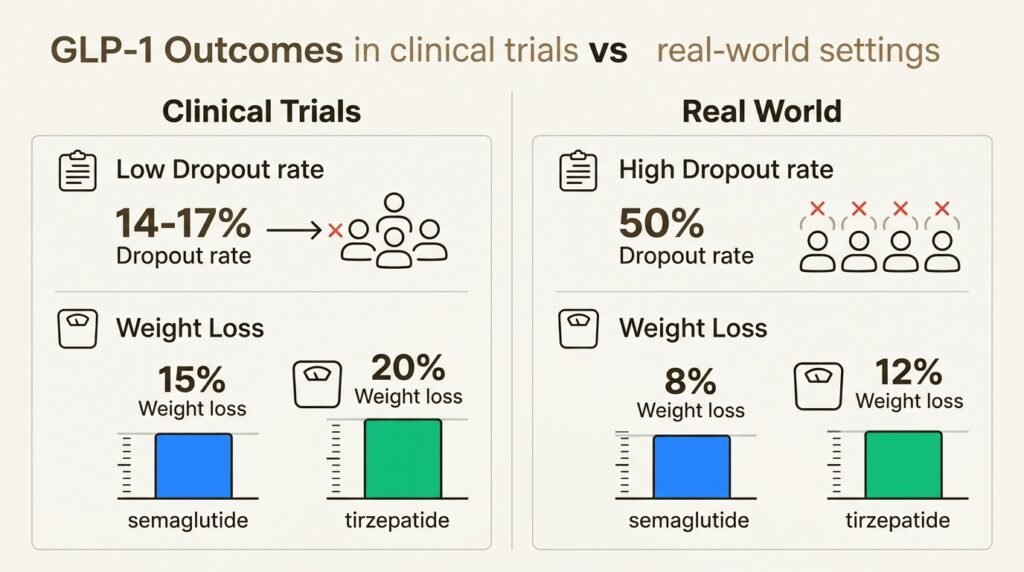
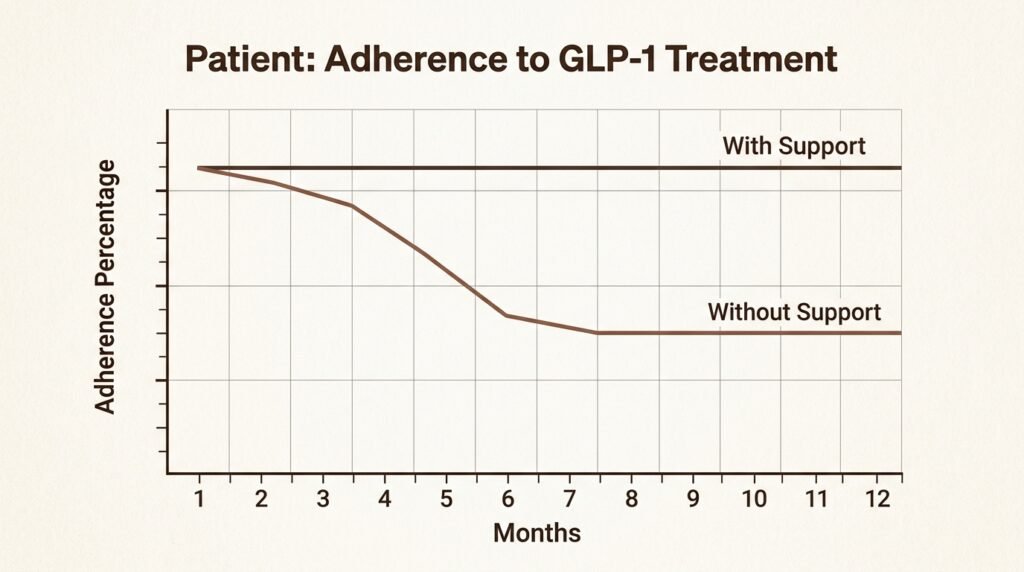
The Cleveland Clinic real-world data tells a clear story: roughly half of GLP-1 patients in everyday settings stopped treatment within 12 months, compared to just 14-17% in supervised clinical trials. The most common reasons for discontinuation were cost, unmanaged side effects, and frustration with plateaus. Patients who stopped within the first year saw minimal sustained weight loss, while those who continued treatment maintained and built on their progress.
In-person programs address adherence through built-in accountability structures. Scheduled visits create natural commitment points. A direct relationship with a provider builds the trust needed for patients to report problems early rather than quietly discontinuing. Immediate problem-solving prevents minor side effects from becoming reasons to abandon treatment entirely. Regular body composition tracking and lab work provide objective measures of progress beyond the bathroom scale, which can be misleading during periods of body recomposition. Following proven strategies for medical weight loss success becomes significantly easier with a provider who reinforces them at every visit.
This accountability is particularly important for maintaining the reduction in “food noise,” the constant mental preoccupation with eating that many patients describe as life-changing when it quiets on GLP-1 medication. That benefit requires consistent treatment, and programs designed around regular check-ins help patients sustain appetite control over the long term.
Online GLP-1 programs typically advertise lower monthly fees than in-person alternatives. Telehealth providers have lower overhead without physical facilities and often pass those savings to patients. However, advertised pricing frequently covers only the consultation and prescription. Medication, shipping, follow-up visits, and lab work come at additional cost, which can narrow the gap once all expenses are accounted for.
| Factor | Online Programs | In-Person Programs |
|---|---|---|
| Monthly program fees | Lower | Higher |
| Medication costs | Often billed separately | Often included in program |
| Lab work and monitoring | Patient arranges independently | Included in program |
| Side effect support | Messaging or scheduled calls | Same-day or next-day appointments |
| Body composition tracking | Not available | Included |
| Complementary services | Not available | IV therapy, injections, nutrition counseling |
The most economical option is the one that keeps the patient on treatment long enough to reach their goals. Discontinuing after three months because of unmanaged side effects or lack of support means paying for medication that never delivered its full benefit. Body Works offers flexible financing through Cherry with no hard credit check, making medically supervised care accessible without compromising on quality of support.
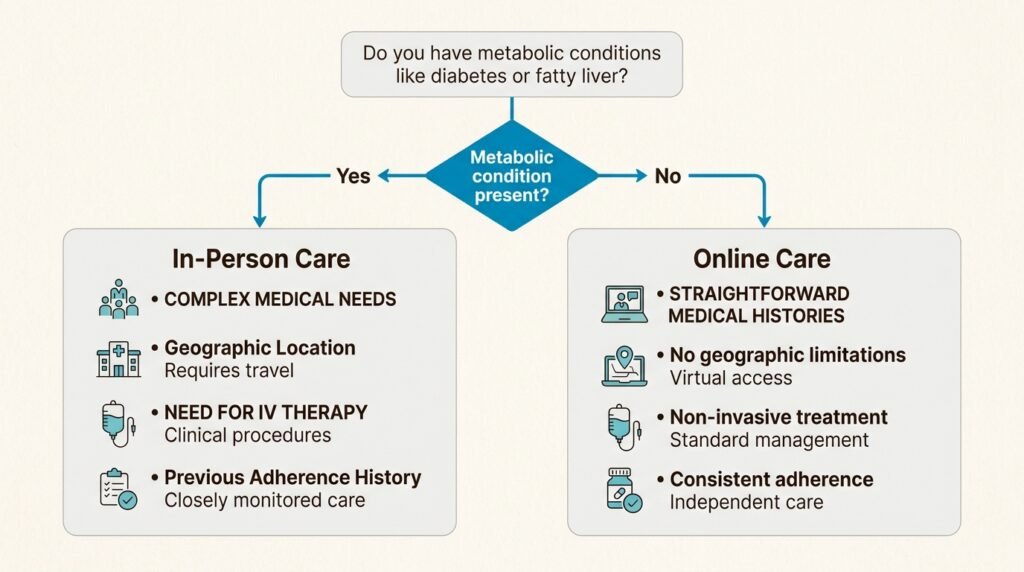
In-person care tends to work best for patients with complex medical histories or multiple medications, those with diabetes or cardiovascular concerns, people who value immediate access to their medical team, anyone who has struggled with treatment adherence in the past, and patients who want access to complementary services like IV therapy or hormone optimization.
Online programs may be appropriate for patients with straightforward medical histories, those living in areas without local obesity specialists, people who travel frequently and need schedule flexibility, and patients who are highly self-motivated and comfortable managing their own care with minimal supervision.
Body Works offers comprehensive, physician-supervised GLP-1 weight loss programs at two convenient locations in Franklin and Nolensville, Tennessee. Each program begins with a full medical evaluation, includes ongoing body composition tracking and lab monitoring, and provides the accountability structure that real-world research shows leads to better outcomes. Request a free consultation to discuss which approach is right for your health profile and goals.
Medically reviewed by Dr. Donald Vollmer, MD
Managing Physician, Body Works TN
Searching for semaglutide in a town the size of Nolensville turns up a strange gap: national telehealth ads everywhere, but almost nothing about a real

If you have been researching semaglutide for weight loss, you have probably hit the same wall everyone else does: a telehealth app that ships a

The needle is the easy part. Most people who quit a GLP-1 medication early do not quit because of the injection itself, they quit because
Patients starting tirzepatide often expect the first injection to feel like the start of real treatment. It isn’t. The 2.5 mg starting dose is a
The dose on a semaglutide prescription rarely matches the dose a patient ends up taking, and that gap confuses people every week. Someone reads that
Switching from tirzepatide to retatrutide is a supervised medication change, not a milligram match. Retatrutide (GLP-3) adds the glucagon receptor and produced 24.2% weight loss
See Body Works first in your Google results.