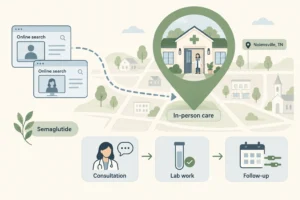
Semaglutide in Nolensville, TN: Availability and How to Start
Searching for semaglutide in a town the size of Nolensville turns up a strange gap: national telehealth ads everywhere, but almost nothing about a real

 If you are searching for a semaglutide clinic in Franklin TN, the rest of this guide explains exactly what to expect, who qualifies, and how to start.
You have tried the diets. You have joined the gyms. You have counted calories until your head spun. Yet the scale barely moved, or the weight came right back. If this sounds familiar, you are not alone, and you are not doing anything wrong. Sometimes biology works against us in ways that willpower alone cannot overcome. The CDC Adult Obesity Facts estimate that roughly 40% of U.S. adults meet clinical criteria for obesity, a biological condition that responds best to medical rather than willpower-based interventions.
This is where medical weight loss comes in. Unlike DIY approaches, physician-supervised programs use evidence-based treatments to address the hormonal and metabolic factors that make weight loss difficult. At Body Works in Franklin, TN and Nolensville, TN, we help patients navigate medical weight loss from the first consultation through long-term maintenance. Here is what to expect if you are considering getting started in Middle Tennessee.
Medical weight loss refers to physician-supervised programs that go beyond “eat less, move more.” These programs address the biological barriers to weight loss: hormones, metabolism, appetite regulation, and underlying health conditions that make traditional dieting feel impossible. Licensed practitioners monitor your health, adjust treatments based on how your body responds, and provide accountability that apps and diet books cannot match.
Most programs require a BMI of 30 or higher, or a BMI of 27 with weight-related conditions such as high blood pressure, type 2 diabetes, high cholesterol, PCOS, or sleep apnea. BMI is not the whole story, though. Medical weight loss also benefits people who have struggled with traditional diets, experienced stubborn weight gain from aging or hormonal changes, need to lose weight before a surgical procedure, or simply want professional guidance to break the cycle of yo-yo dieting.

The key difference from DIY approaches is supervision. Your provider evaluates your health profile, designs a plan around your specific metabolic picture, and adjusts as you progress. Dieting alone tries to override biology with willpower. Medical weight loss works with your biology through targeted interventions.
Today’s medical weight loss clinics offer several approaches. The National Institute of Diabetes and Digestive and Kidney Diseases reports that patients using weight management medications lose 3 to 12% more of their starting body weight than those relying on lifestyle changes alone. Understanding these options helps you have an informed conversation with your provider and set realistic expectations about what treatment will look like.
FDA-approved GLP-1 medications are the current standard. GLP-1 receptor agonists mimic a natural hormone that regulates appetite, slows gastric emptying, and reduces cravings at the neurological level. The two main options are semaglutide, a once-weekly injection that produced an average 14.9% body weight loss over 68 weeks in the STEP 1 trial (Wilding et al., NEJM, 2021), and tirzepatide, a dual-action medication targeting both GLP-1 and GIP hormones with even greater weight loss in head-to-head trials. Patients start on a low dose and titrate up, which minimizes early side effects like mild nausea.
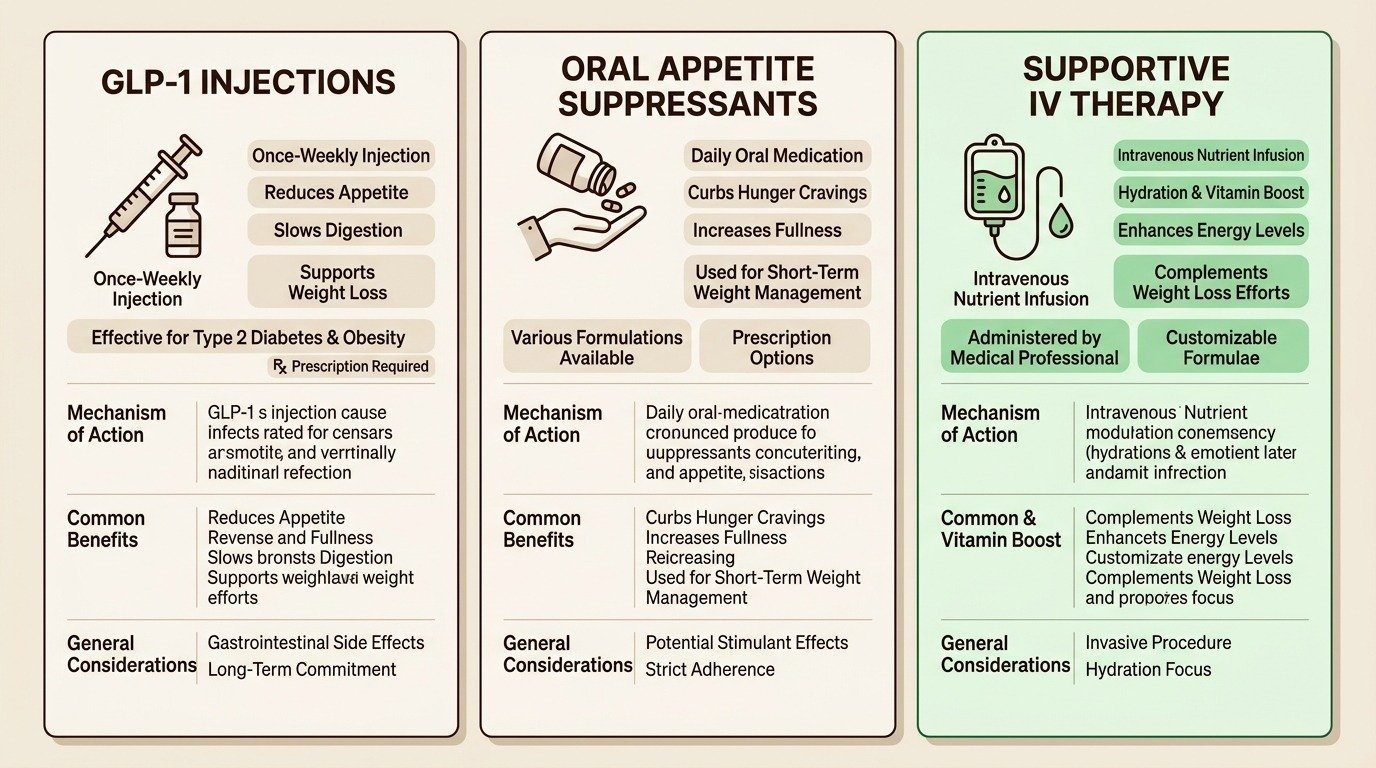
Complementary therapies round out the plan. Body Works pairs GLP-1 treatment with lipotropic injections (B12 plus MIC nutrients) for fat metabolism, customized IV hydration, and hormone optimization for patients whose weight challenges stem from hormonal imbalances. The best programs combine these based on your individual profile rather than a one-size-fits-all template. For the underlying mechanism, see our primer on how GLP-1 medications work.
Not all weight loss clinics operate the same way. Before committing to a provider, ask who prescribes the medication (look for licensed Nurse Practitioners or physicians), whether bloodwork is monitored throughout treatment, what is included in the program beyond just a prescription, whether ongoing support is offered, and what happens if you experience side effects.
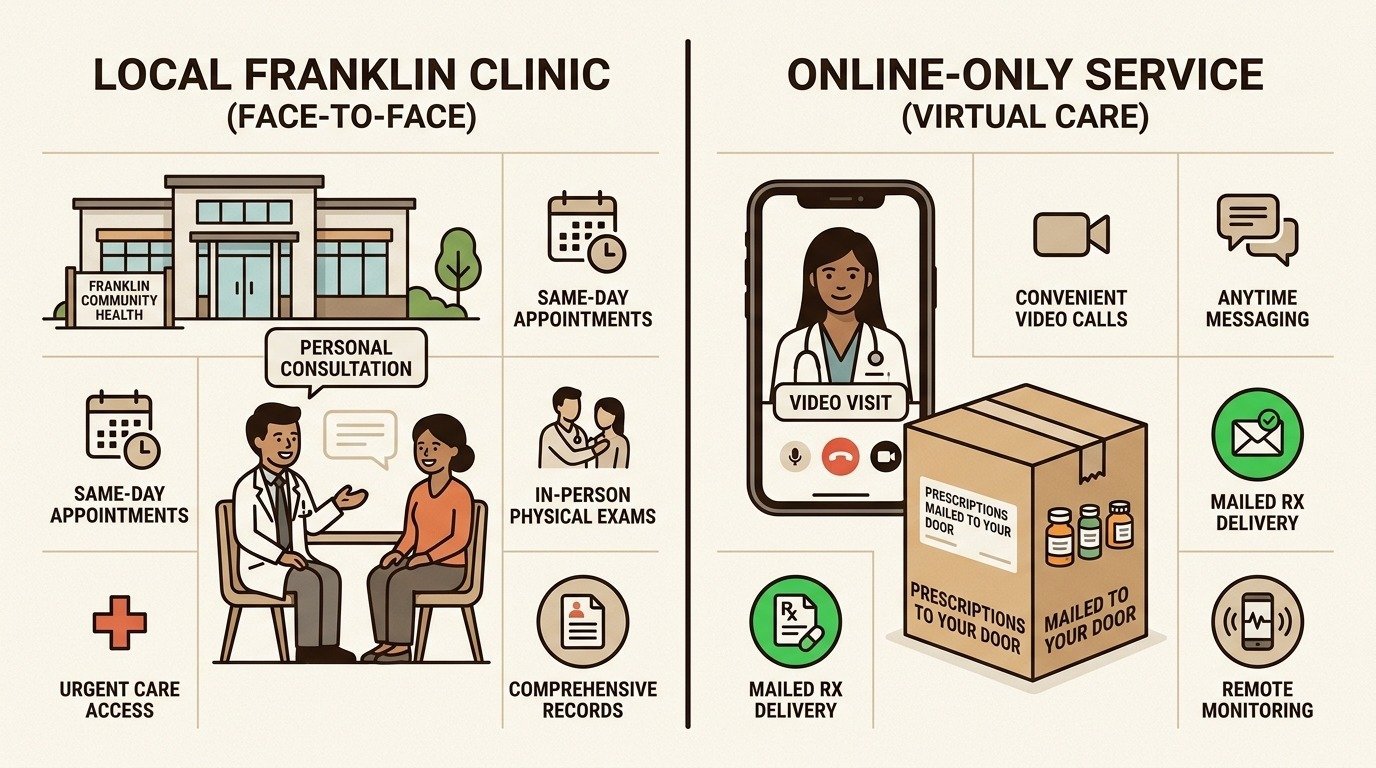
Telehealth weight loss has made treatment more accessible but introduces trade-offs. Online programs mail you medication without ever seeing you in person. It works for some patients, but it lacks the hands-on care most patients need when working with powerful medications like GLP-1 receptor agonists. Local clinics offer face-to-face accountability, immediate clinical support when side effects arise, body composition tracking with medical-grade technology, and coordination with your primary care physician. Having a local medical team that knows you by name provides peace of mind that chatbots and call centers cannot replicate.
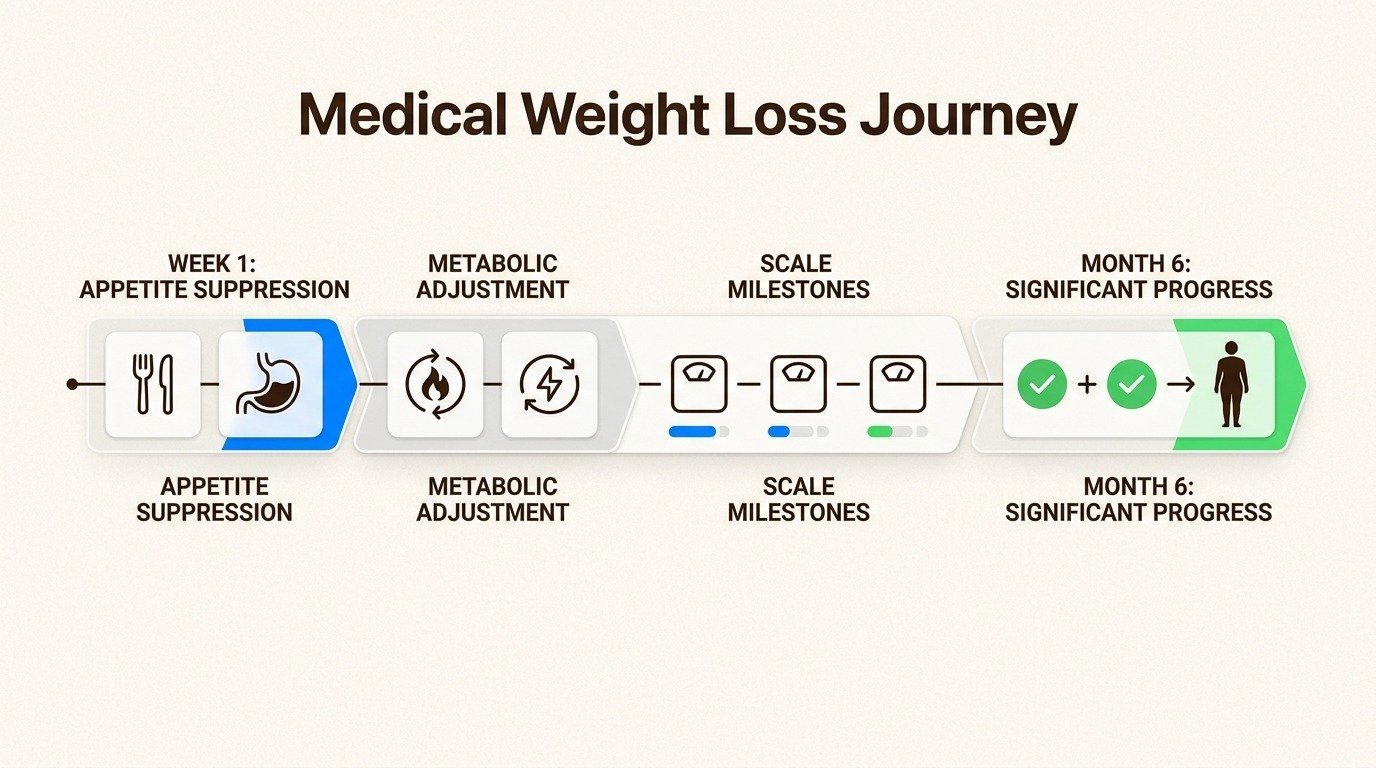
One of the biggest mistakes people make is expecting overnight transformations. Medical weight loss works, but it works through biology, not magic. Here is the typical progression that Body Works patients experience at both the Franklin and Nolensville clinics.
| Phase | Timeframe | What to Expect |
|---|---|---|
| Early adaptation | Weeks 1 to 2 | Appetite suppression begins. You feel full faster and think about food less. Mild nausea possible during adjustment. |
| Initial loss | Weeks 4 to 6 | Measurable weight loss becomes visible. Most patients lose 3 to 5 pounds in early weeks, though starting weight and metabolism drive variation. |
| Sustained loss | Months 3 to 6 | Significant weight loss accumulates at a safe 1 to 2 pounds per week. Total body weight loss of 15 to 20% is achievable over 6 to 12 months. |
| Maintenance | 6+ months | Goal shifts from losing to maintaining. Gradual step-down of medication while building sustainable habits around nutrition and activity. |
Medication alone is not the answer. GLP-1s reduce appetite, making it easier to eat less, but what you eat still matters. Protein intake becomes especially important to preserve muscle mass during weight loss. Hydration, sleep, stress management, and physical activity all play supporting roles. Our guide on how to succeed on medical weight loss injections breaks down the habits that separate the strongest responders from average ones, and our overview of appetite-focused weight loss explains how the pieces work together.
Searching for semaglutide in a town the size of Nolensville turns up a strange gap: national telehealth ads everywhere, but almost nothing about a real

If you have been researching semaglutide for weight loss, you have probably hit the same wall everyone else does: a telehealth app that ships a
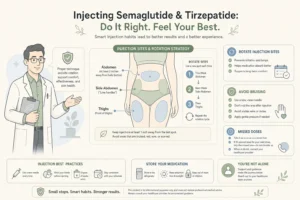
The needle is the easy part. Most people who quit a GLP-1 medication early do not quit because of the injection itself, they quit because
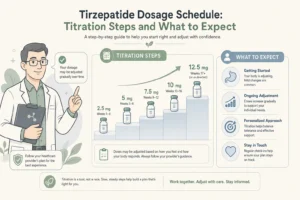
Patients starting tirzepatide often expect the first injection to feel like the start of real treatment. It isn’t. The 2.5 mg starting dose is a
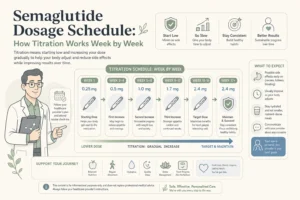
The dose on a semaglutide prescription rarely matches the dose a patient ends up taking, and that gap confuses people every week. Someone reads that
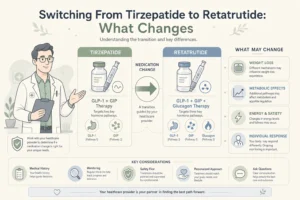
Switching from tirzepatide to retatrutide is a supervised medication change, not a milligram match. Retatrutide (GLP-3) adds the glucagon receptor and produced 24.2% weight loss
See Body Works first in your Google results.