
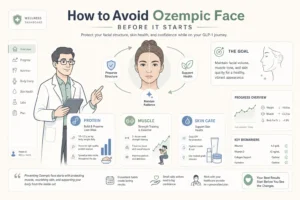
How to Avoid Ozempic Face Before It Starts
You can lower your odds of the gaunt, sunken look people call Ozempic face. Here is how pacing, protein, muscle, and skin care protect your
Peptide therapy is a targeted medical approach that uses specific sequences of amino acids to restore balance and vitality to the body. You can think of it as a precision messaging system. By reintroducing these signaling molecules, we help your cells perform functions they may have forgotten or deprioritized over time. It is not about forcing the body to do something unnatural. Instead, it is about giving it the exact instructions it needs to heal, recover, and thrive.
More people are turning to this kind of biological signaling because cookie-cutter prescriptions tend to mask symptoms rather than restore function. This guide explains how peptide therapy works, the major categories, and what treatment actually looks like.
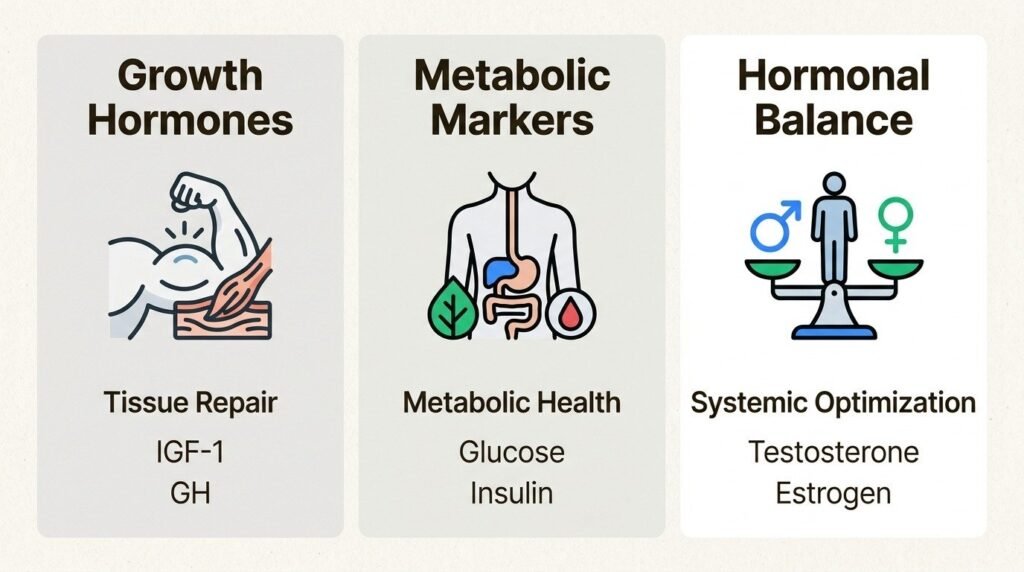
At its simplest level, peptide therapy involves using short chains of amino acids to influence how your body functions. According to the NIH StatPearls reference on peptide biochemistry, a peptide is a short string of 2 to 50 amino acids joined by covalent peptide bonds. These chains act as biological messengers. They travel through your system and bind to specific receptors on your cells, much like a key fits into a lock. Once the connection is made, the cell receives a signal to initiate a particular process, whether that is building muscle, burning fat, or repairing damaged tissue.
You might wonder how peptides differ from proteins. The main distinction is size and signaling function. Most scientists refer to chains with over 50 to 100 amino acids as proteins, while these shorter chains are classified as peptides. Because they are smaller, peptides can often navigate the body with more precision and higher target specificity than larger proteins.
The need for this therapy arises because our natural production of these molecules does not stay constant. For most people, the production of growth hormone releasing hormones and thymic peptides begins to drop after age 30. This decline is gradual but measurable. It often leads to the fatigue, slower recovery, and stubborn weight gain that people assume is just a normal part of getting older. We view it differently. It is often just a breakdown in communication between your systems.
If you want to explore how these treatments fit into a broader wellness plan, you can learn more about our peptide therapy services. If you are brand new to the topic, start with our plain-English guide to what peptides are and come back for the clinical detail.
The core of peptide therapy is biological signaling. Every cell in your body is waiting for instructions. These instructions come in the form of molecules that tell the cell when to grow, when to activate the immune system, or when to release a specific hormone. A peptide binds to a specific receptor on the surface of a cell, which triggers a cascade of internal biological responses.
One of the defining advantages of this approach is specificity. Traditional drugs often work by broadly suppressing or stimulating entire systems, which can lead to unwanted side effects. Peptides offer higher target specificity with minimal off-target effects. They go where they are needed and do exactly what they are designed to do.
This targeted action has immense regenerative potential. For example, some peptides are specifically designed to promote angiogenesis, which is the formation of new blood vessels. This process is essential for healing damaged tissue and restoring blood flow to areas that have been injured.
We also distinguish between bioidentical and synthetic peptides. Bioidentical versions are identical in structure to the molecules your body already recognizes, while synthetic versions are designed to mimic these natural signals for smoother integration into existing biological pathways. Bottom line: peptides are the body’s internal messaging system, and we are just making sure the messages get delivered clearly.
Not every peptide does the same thing. We group them by the specific goals they help achieve. Let’s break it down into the most common categories.
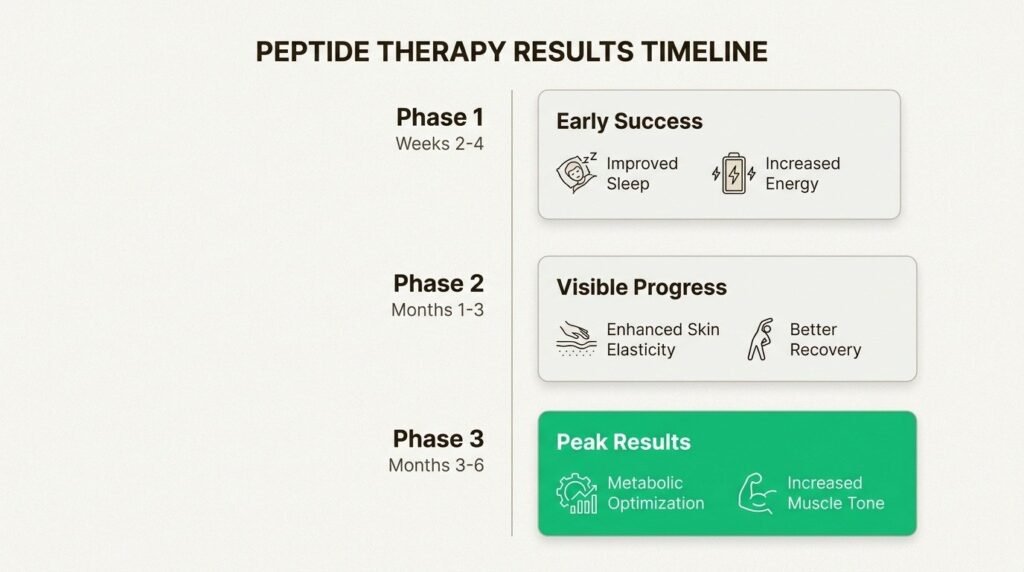
Metabolic peptides have gained significant attention for their ability to influence how the body processes energy. The NIDDK overview of prescription weight management medications explains how GLP-1 receptor agonists like semaglutide and tirzepatide target areas of the brain that regulate appetite and food intake. They work by slowing digestion and increasing feelings of fullness, which helps people manage their appetite naturally.
Another option discussed in clinical research is AOD-9604, a fragment of human growth hormone that has been studied for its ability to influence fat breakdown without affecting blood sugar levels. If you are struggling with stubborn weight, our medical weight loss programs incorporate these precise tools.
For those looking to increase strength and vitality, growth hormone secretagogues are a common option. A peer-reviewed study on CJC-1295 in Growth Hormone and IGF Research demonstrated that this long-acting GHRH analog produced sustained, dose-dependent increases in plasma growth hormone and IGF-1 in healthy adults. CJC-1295 and Ipamorelin are frequently paired to stimulate the pituitary gland to increase the natural production of growth hormone. Unlike synthetic hormones that can suppress your natural levels, these peptides support your existing pulses. We often use these protocols in our men’s hormone therapy programs to help restore energy and strength.
Recovery is where many peptides truly shine. A 2025 systematic review of BPC-157 in orthopaedic sports medicine examined 36 studies and found that BPC-157, a pentadecapeptide derived from a protein found in human gastric juice, improved functional, structural, and biomechanical outcomes in muscle, tendon, ligament, and bony injury models. It is often combined with TB-500, which promotes cell migration to injury sites, creating a supportive environment for healing.
Your brain needs specialized signaling to maintain clarity and focus. Peptides like Semax and Selank have been studied in some research contexts for their potential influence on neurotransmitter activity. Other compounds like Dihexa and Pinealon remain investigational. Because peer-reviewed clinical evidence for these specific peptides is limited, we only consider them after a full intake and medical review.
The benefits of these treatments extend beyond a single problem. They are designed to support overall physiological balance.
One of the most important benefits is hormonal support. Instead of overriding your system with aggressive doses of hormones, peptides work with your regulatory systems. This is a core component of our approach to women’s hormone therapy, where we focus on addressing the root causes of fatigue and mood changes.
Immune system modulation is another area of active research. A review of thymosin alpha 1 in World Journal of Virology describes how this peptide, naturally produced by the thymus gland, has long been recognized for modifying, enhancing, and restoring immune function through effects on T-cell maturation.
For longevity, Epitalon has been studied for its potential effects on telomeres, the protective caps on chromosomes. Many of our clients also pair these treatments with custom IV hydration to ensure their bodies have the nutrients to support these signaling processes.
If you are new to this, the logistics can feel intimidating. Here is how the process actually works.
Peptides are available in several forms, including subcutaneous injections, nasal sprays, and oral forms. Injections are generally preferred because they offer superior bioavailability. While oral forms may only have 1 to 2 percent absorption, injections deliver nearly 100 percent of the peptide directly into your system.
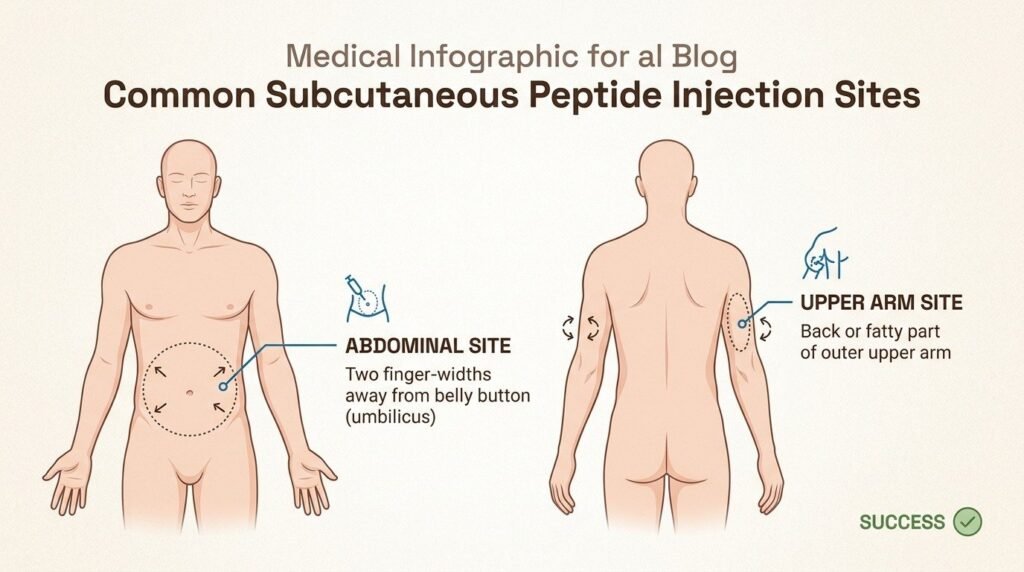
The injection process is straightforward and uses very thin needles that cause minimal discomfort. CDC guidance on subcutaneous injection technique outlines the standard technique:
1. Clean the site: Use an alcohol wipe on the injection area (usually the abdomen or thigh).
2. Position the tissue: Gently pinch a small fold of subcutaneous tissue between your thumb and index finger.
3. Insert the needle: Insert the needle at a 45 degree angle into the fatty tissue.
4. Inject and apply pressure: Push the plunger steadily, withdraw the needle, and apply light pressure.
Most injectable peptides come in a lyophilized (powdered) form and must be reconstituted. This means you slowly inject bacteriostatic water into the vial to dissolve the powder. It is important to swirl the vial gently rather than shaking it, as shaking can degrade the sensitive peptide structure.
Potency is also tied to storage. Most reconstituted peptides must be kept in the refrigerator at around 39 degrees Fahrenheit to remain effective. Proper handling ensures that your treatment stays safe and potent for the duration of your protocol.
Peptide therapy is generally considered safe under medical supervision because the molecules already exist in your body. However, there are a few things you should know before starting.
The most common side effects are mild, such as temporary redness or itching at the injection site, slight water retention, or occasional headaches that usually resolve as your body adjusts. It is also important to note that anyone with a personal or familial history of cancer should consult with a specialist before using growth hormone secretagogues, as these peptides promote cellular growth.
The regulatory landscape has also shifted recently. The FDA page on bulk drug substances that may present significant safety risks explains how the agency evaluates compounded peptides under Section 503A. Several peptides, including BPC-157, have been the subject of regulatory review, meaning they are subject to higher scrutiny and can only be compounded under specific medical necessity.
This is why medical oversight is non-negotiable. You should never purchase research-grade products online. These products often have purity levels well below pharmaceutical standards and are not intended for human consumption. A reputable clinic will always use pharmaceutical-grade peptides and provide a data-driven protocol based on your specific biomarkers.
We believe that health should never be a cookie-cutter experience. Many clinics operate on a high-volume model that treats every patient the same way. At Body Works, we take a boutique approach. We focus on you as an individual, not just a set of symptoms.
Our process begins with a comprehensive intake. We evaluate your blood markers and talk through your specific goals for energy, recovery, and vitality. Whether you are looking to reclaim your healthiest self or just want to optimize your current performance, we build a plan that fits your life.
This is not a new offering for us. In 2025 alone, 48 clients at our Nolensville office were on peptide protocols, separate from our GLP-1 weight loss programs, and our Franklin practice has provided peptide care for years longer. If you are still comparing clinics, our guide on how to choose a peptide therapy provider covers the questions worth asking anywhere you go.
If you are ready to see if these treatments are right for you, you can visit us at our Franklin or Nolensville locations. Our team of licensed Nurse Practitioners and Registered Nurses is here to guide you every step of the way.
Ready to take the next step? Contact us today to schedule a free consultation. You can also learn more about our team and mission on our about us page. We look forward to helping you feel like YOU again.
Medically reviewed by Dr. Donald Vollmer, MD
Managing Physician, Body Works TN
You can lower your odds of the gaunt, sunken look people call Ozempic face. Here is how pacing, protein, muscle, and skin care protect your
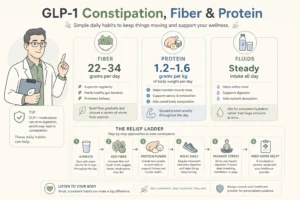
Constipation affects 24% of semaglutide patients and up to 17% on tirzepatide. This guide gives the daily targets that prevent it: 22 to 34 grams

Ozempic face is the hollow, aged look some people notice after rapid weight loss. Here is why it happens, who is most at risk, and
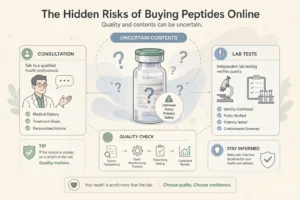
When Tennessee investigators tested counterfeit weight loss vials seized in Medina, one was mostly water. That was the good outcome. The dangers of buying peptides
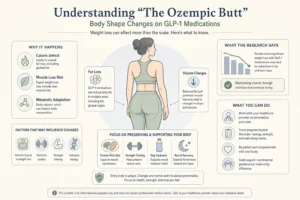
Rapid weight loss changes more than the number on the scale. Here is why the glutes, breasts, and arms often change shape on GLP-1 medications,
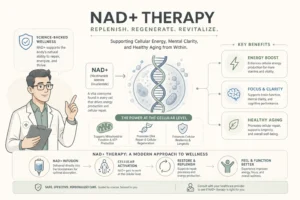
NAD+ therapy is marketed as a longevity reset for energy, focus, and healthy aging. This guide separates what the science on NAD therapy actually supports
See Body Works first in your Google results.