

How to Avoid Ozempic Face Before It Starts
You can lower your odds of the gaunt, sunken look people call Ozempic face. Here is how pacing, protein, muscle, and skin care protect your
If you have followed weight loss news lately, one number keeps coming up: 24 percent. That is roughly how much body weight people lost on the highest dose of retatrutide during its phase 2 trial, and it is the figure fueling nearly every headline about this next-generation medication. For anyone who has struggled to lose weight, a number that high sounds almost too good to be true.
So it is worth separating the excitement from the evidence. The retatrutide results everyone is talking about come from a single, carefully run study, and they are genuinely impressive: retatrutide is a triple hormone agonist that acts on three appetite and metabolism pathways at once, more than the medications most people know today. You will also see it nicknamed GLP-3 online, an informal label rather than an official drug class. Whether retatrutide or one of today’s proven medications is the better fit for you is exactly the kind of question our providers answer at Body Works in Franklin, TN and Nolensville, TN.
Understanding what the trial data actually shows and how it stacks up against the treatments you can get right now will help you make a clear-eyed decision with your care team instead of putting your progress on hold.
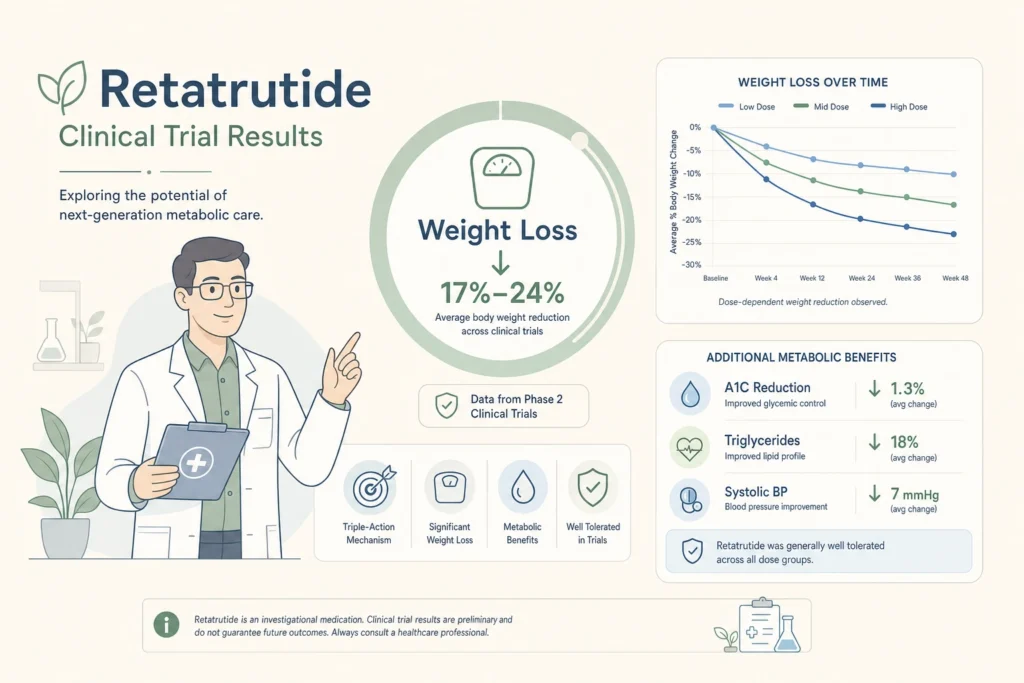
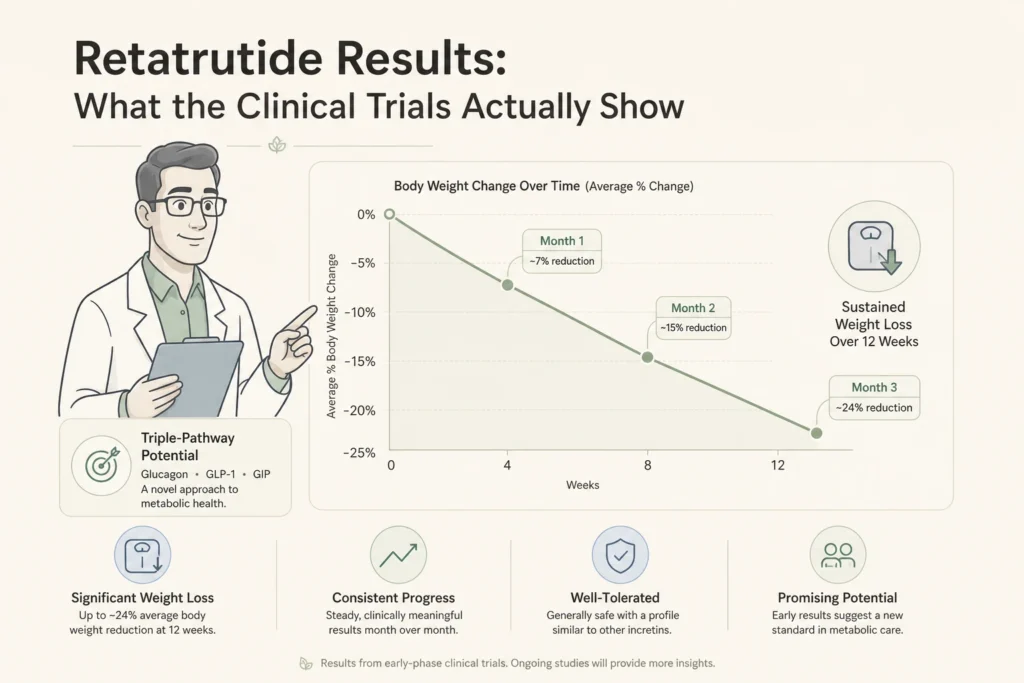
The headline finding is a mean weight reduction of about 24 percent of body weight at the highest dose after 48 weeks of treatment. That result came from a phase 2 study of 338 adults with obesity or overweight, and it is the reason retatrutide has drawn so much attention from researchers and patients alike. Retatrutide works differently from current options because it activates three receptors at once: GIP, GLP-1, and glucagon, the last of which is thought to boost energy expenditure on top of curbing appetite. That triple action is why some people informally nickname it GLP-3, even though GLP-3 is not a real receptor or an official drug class.
According to a phase 2 obesity trial published in the New England Journal of Medicine, adults on the 12 milligram dose of retatrutide lost an average of 24.2 percent of their body weight at 48 weeks, compared with 2.1 percent for those on placebo. Weight was still trending downward when the study ended, suggesting the full effect had not yet plateaued.
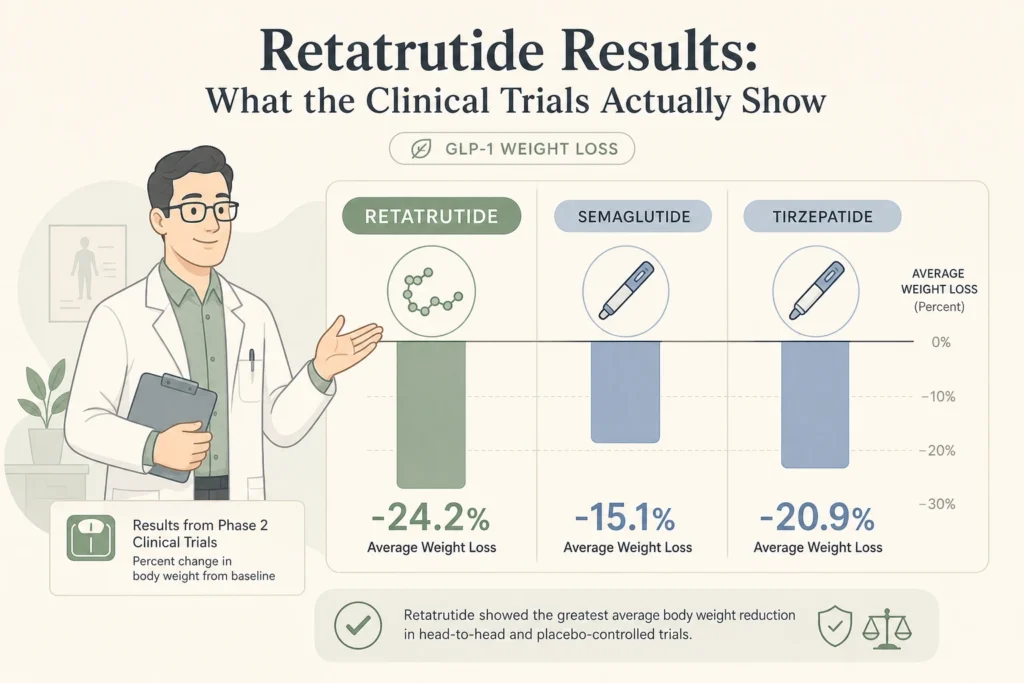
On paper, the retatrutide results are higher than the average weight loss reported for the two approved medications most people know, but the comparison deserves context. Retatrutide’s numbers come from an earlier, smaller phase 2 study, while tirzepatide and semaglutide were measured in large phase 3 trials over longer periods. Cross-trial comparisons are useful for a general sense of scale, not a head-to-head verdict, because the study designs and patient groups differ.
Even with that caveat, the pattern is clear. In the SURMOUNT-1 trial of tirzepatide, participants on the 15 milligram dose lost an average of 20.9 percent of their body weight over 72 weeks, while the STEP 1 trial of once-weekly semaglutide reported about 14.9 percent over 68 weeks. You can read a fuller breakdown of how retatrutide compares with tirzepatide and semaglutide if you want the side-by-side detail.
| Medication | Trial | Average weight loss (highest dose) | Trial length | Status |
|---|---|---|---|---|
| Retatrutide | Phase 2 (NEJM 2023) | About 24% | 48 weeks | In phase 3 trials; ask our providers |
| Tirzepatide | SURMOUNT-1 (phase 3) | About 21% | 72 weeks | FDA approved, available now |
| Semaglutide | STEP 1 (phase 3) | About 15% | 68 weeks | FDA approved, available now |
Retatrutide, the medication behind the GLP-3 buzz, is still moving through the FDA process. It is being studied in a large phase 3 program before regulators complete their review, which is exactly how a promising drug moves from encouraging early data to something patients can use with confidence. Be cautious of unofficial online sellers claiming to offer it directly today; the safest path is to ask our providers where things stand and which option fits you now.
That phase 3 work is well underway. The phase 3 TRIUMPH-1 study registered on ClinicalTrials.gov is testing retatrutide’s efficacy and safety in adults with obesity or overweight across a much larger group than the phase 2 trial. If you are curious about the science behind the molecule, our overview of what retatrutide is and how it works walks through the three-receptor mechanism in plain language.
Retatrutide is working through one of the largest phase 3 programs in weight loss medicine, and the pace of development has been fast, with strong interest from the medical community. Exact timing depends on the results holding up and the regulatory process running its course, so the most current answer on where things stand is always a conversation with our providers.
Part of what regulators want to confirm is long-term safety and real-world benefit beyond the scale. The TRIUMPH-Outcomes cardiovascular and kidney trial is following adults living with obesity for several years to see whether retatrutide reduces serious heart and kidney complications, not just body weight. Strong outcomes there would strengthen the case for approval and help define who benefits most.
While retatrutide sits on the horizon, semaglutide and tirzepatide are FDA approved, available now, and backed by the phase 3 results shown above. For most people ready to begin, starting a proven treatment under medical supervision today makes far more sense than putting progress on hold, and your care team can fold in newer options as the science advances. Both work through the same appetite and metabolism pathways that make retatrutide so promising.
These medications also come in more than one form and dosing approach. If you are weighing your choices, it helps to understand the differences between oral and injectable GLP-1 options as well as microdosing and maintenance dosing strategies for staying on track long term. A physician-guided medical weight loss program tailors the medication, dose, and plan to your body and goals. For a broader look at the approved options, the NIDDK overview of prescription weight management medications outlines how these therapies fit into long-term care.
Retatrutide is an exciting glimpse of where weight loss medicine is heading, but the smartest move today is a plan built around treatments that are already here and already working. At Body Works, our team helps patients across the greater Nashville area choose the right approach under close medical oversight, with honest guidance about what each option can realistically do for you. The goal is simple: safe, effective progress starting now, not someday.
If you are ready to see what medical weight loss could look like for you, our providers in Franklin and Nolensville are here to help. Schedule a Free Consultation to talk through your options and build a plan that fits your life.
Medically reviewed by Dr. Donald Vollmer, MD
Managing Physician, Body Works TN
You can lower your odds of the gaunt, sunken look people call Ozempic face. Here is how pacing, protein, muscle, and skin care protect your
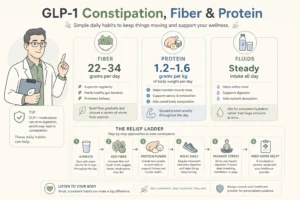
Constipation affects 24% of semaglutide patients and up to 17% on tirzepatide. This guide gives the daily targets that prevent it: 22 to 34 grams

Ozempic face is the hollow, aged look some people notice after rapid weight loss. Here is why it happens, who is most at risk, and

When Tennessee investigators tested counterfeit weight loss vials seized in Medina, one was mostly water. That was the good outcome. The dangers of buying peptides
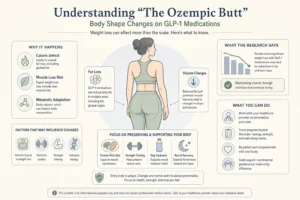
Rapid weight loss changes more than the number on the scale. Here is why the glutes, breasts, and arms often change shape on GLP-1 medications,

NAD+ therapy is marketed as a longevity reset for energy, focus, and healthy aging. This guide separates what the science on NAD therapy actually supports
See Body Works first in your Google results.