Retatrutide vs. Tirzepatide vs. Semaglutide: How the GLP-3 Compares

June 29, 2026

If you have been researching weight-loss medications, you have run into the same three names again and again: semaglutide, tirzepatide, and the newcomer everyone is buzzing about, retatrutide. They sound similar, they are all injectables, and they all work with your body’s own hormones. So what actually separates them, and which one deserves your attention right now?

The short version of the retatrutide vs tirzepatide question is this: retatrutide, the one you may have seen called a “GLP-3,” produced the strongest results in early studies, while semaglutide and tirzepatide have the longest real-world track record. This guide breaks down how the three compare on weight loss, how they work, and how to pick the right path at Franklin, TN and Nolensville, TN.

Retatrutide, tirzepatide and semaglutide compared side by side

Retatrutide vs. Tirzepatide vs. Semaglutide: What Is the Difference?

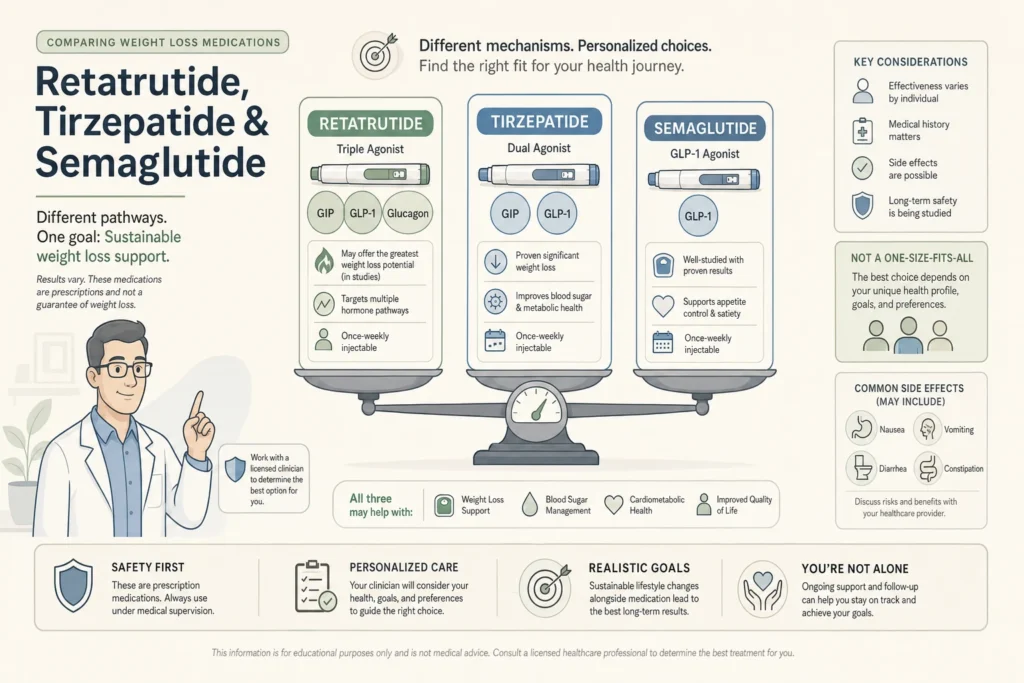
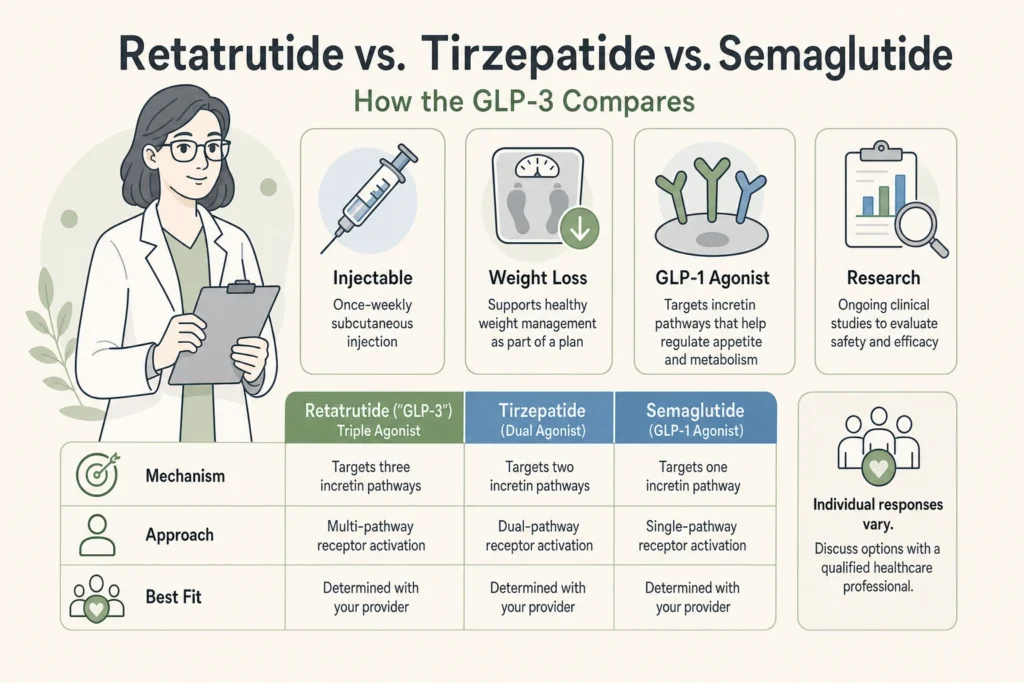
The core difference is how many hormone pathways each medication activates. Semaglutide works on one pathway (GLP-1). Tirzepatide works on two (GIP and GLP-1). Retatrutide works on three, adding glucagon, which is why it is nicknamed the triple agonist or “triple-G.” It is also the medication people mean when they say “GLP-3,” a nickname rather than an official drug class. Each added pathway gives the body another way to reduce appetite and, in retatrutide’s case, to increase energy use.

Think of it as a ladder. In a 2023 phase 2 trial in the New England Journal of Medicine, retatrutide’s triple action produced the largest average weight loss reported for this class of medication. More pathways is not automatically better for every person, but it helps explain why retatrutide has generated so much excitement.

Which One Leads to the Most Weight Loss?

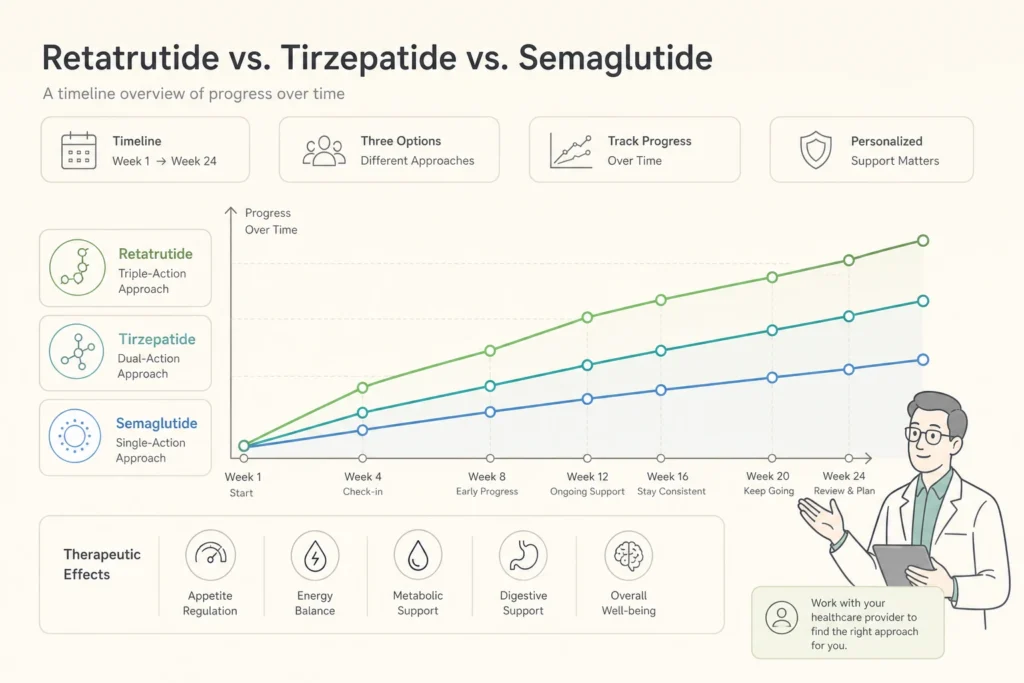
In their respective trials, retatrutide produced the highest average weight loss, followed by tirzepatide, then semaglutide. Retatrutide reached about 24 percent average body-weight loss at 48 weeks in its phase 2 study. Tirzepatide reached about 22.5 percent in the SURMOUNT-1 trial, and semaglutide reached about 15 percent in the STEP 1 trial.

One important caveat: these numbers come from separate studies with different participants and lengths, so they are not a true head-to-head comparison. What they do show is that all three are highly effective, and that tirzepatide, available today, delivers results very close to what early retatrutide studies report.

MedicationHormone pathwaysAvg. weight loss in trialsAvailable today?
Semaglutide1 (GLP-1)About 15%Yes, at Body Works
Tirzepatide2 (GIP, GLP-1)About 22.5%Yes, at Body Works
Retatrutide3 (GIP, GLP-1, glucagon)About 24%Ask our providers
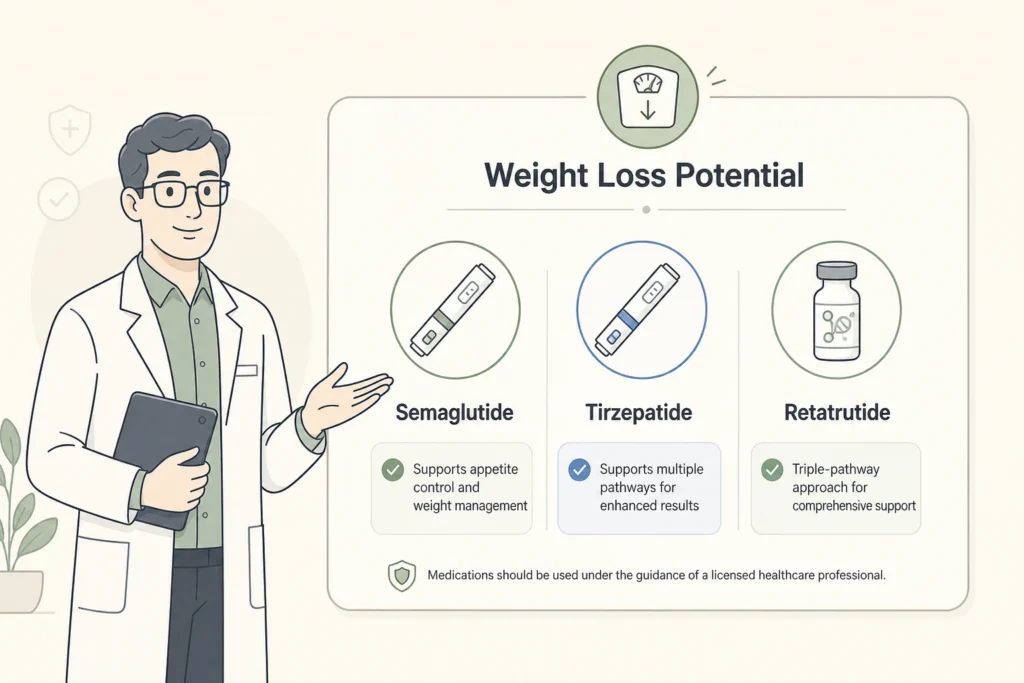
Comparison of semaglutide, tirzepatide and retatrutide weight-loss potential

Should You Wait for Retatrutide or Start With Tirzepatide Now?

For most people, the better move is to start now rather than wait. Retatrutide is still working through its phase 3 TRIUMPH research program and where things stand today is worth talking through with a provider rather than guessing from a headline. Waiting means postponing the health benefits you could be gaining now.

Because tirzepatide already delivers results close to early retatrutide data, many people who are curious about retatrutide start with a supervised tirzepatide or semaglutide plan and reassess with their provider as the field evolves. An established relationship makes any future transition smooth. You can read more about how these medications work to decide what fits your goals.

Retatrutide vs tirzepatide vs semaglutide mechanism and agonist comparison chart

How Do the Side Effects Compare?

All three medications share a similar side-effect profile because they act on related hormone pathways. The most common effects are digestive, such as nausea, reduced appetite, and occasional stomach upset, especially when first increasing the dose. In the phase 2 retatrutide study in The Lancet, side effects were mostly mild to moderate and tended to ease over time, a pattern also seen with semaglutide and tirzepatide.

This is exactly why medical supervision matters. A provider adjusts your dose gradually, helps you manage any early side effects, and monitors your progress so the plan stays comfortable and effective. Side effects are far more manageable with a personalized, physician-guided approach than with a one-size-fits-all schedule.

How to Choose the Right Weight-Loss Medication in Tennessee

The best medication is the one that fits your body, your health history, and your goals, and that decision is easier with expert guidance. Body Works offers physician-supervised medical weight-loss programs with both semaglutide and tirzepatide, and a team that follows the science on retatrutide closely so you always know your best options.

With locations in Franklin and Nolensville, you get local, in-person care and a plan built specifically for you. Curious which option is right for you today, and how retatrutide might fit later? Schedule a Free Consultation to map it out. You may also like our guide to keeping the weight off for good.

Choosing a supervised weight-loss medication with a Body Works provider

Frequently Asked Questions

In early studies, retatrutide produced slightly higher average weight loss than tirzepatide, but the two have never been compared directly in the same trial. Which one is right for you depends on your history and your goals, so the most useful step is a free consultation where our providers can walk you through it.
Yes. “GLP-3” is a nickname the internet gave retatrutide, not an official drug class or a real receptor. Retatrutide acts on three pathways: GIP, GLP-1, and glucagon. If you are trying to decide between the options in this category, book a free consultation and we will help you sort out what fits.
Cost depends on the medication and your personalized plan. The most useful next step is a free consultation, where we review the options and payment plans together. Body Works focuses on finding a plan that fits your budget and your goals.
All three share a similar, mostly digestive side-effect profile that often eases over time. There is no single answer for everyone, which is why a gradual, supervised dosing plan matters. Your provider tailors the approach to keep side effects minimal while protecting your results.
Body Works provides physician-supervised weight-loss programs at two Middle Tennessee locations, Franklin and Nolensville. Both offer personalized dosing and ongoing monitoring, and both stay current on the newest research so your plan reflects your best option.

Medically reviewed by Dr. Donald Vollmer, MD
Managing Physician, Body Works TN

Browse Our Blog