

How to Avoid Ozempic Face Before It Starts
You can lower your odds of the gaunt, sunken look people call Ozempic face. Here is how pacing, protein, muscle, and skin care protect your
Search “GLP-1 microdosing” and you will find confident advice about splitting doses, stretching a prescription, and staying on “just a little” semaglutide forever. Most of it skips the part that actually decides whether any of it is safe or works: who is watching the dose, and why.
GLP-1 microdosing and maintenance dosing are real, physician-guided strategies, not internet shortcuts. Microdosing usually means using a dose lower than the standard label schedule, while maintenance dosing means settling onto the lowest dose that holds your results after you reach your goal weight. Both are off-label decisions that belong with a licensed provider, not a spreadsheet or a social media thread. At Body Works, patients in Franklin, TN and Nolensville, TN ask about them constantly, usually for three reasons: managing side effects, controlling ongoing cost, and keeping weight off without escalating the dose forever.
Understanding what these terms mean, and where the evidence is thin, is the difference between a smart conversation with your provider and a risky experiment on yourself.
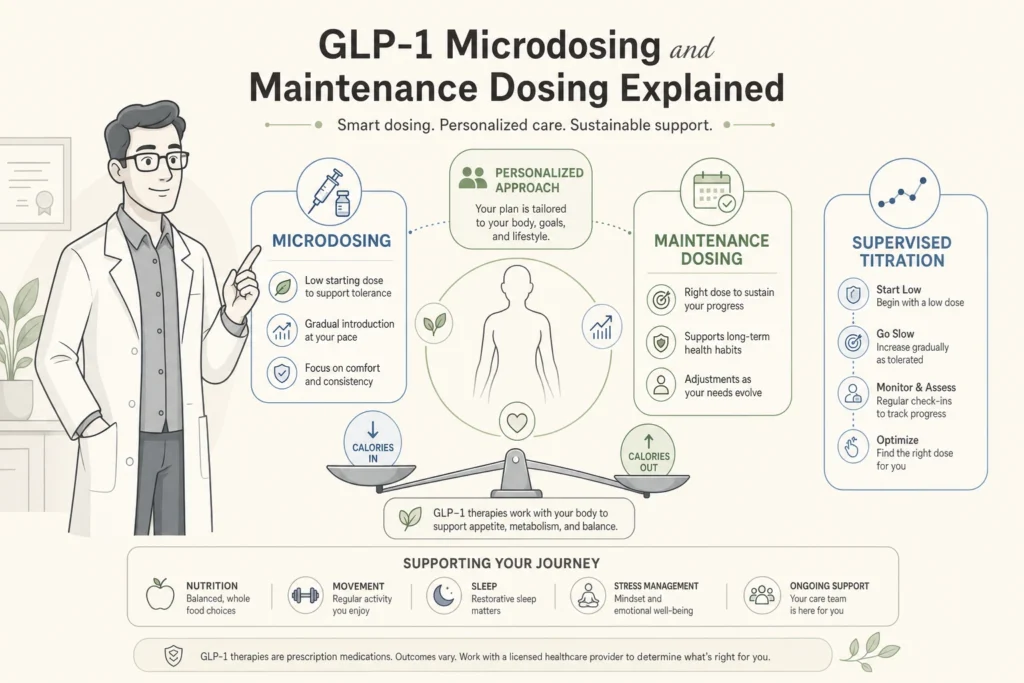
GLP-1 microdosing generally refers to using a dose below the standard therapeutic target, often near the starting or early-titration range, rather than climbing to the higher doses used in most clinical trials. The appeal is straightforward: gentler side effects, slower medication use, and a lower monthly outlay. The catch is that “lower dose” is not automatically “same result at less risk.” A dose that is too low for your biology may simply underperform while still carrying side effects.
The label doses for these medications exist because that is what was tested. In the pivotal semaglutide trial, participants titrated up to a target dose and lost, on average, 14.9 percent of their body weight over 68 weeks, per the STEP 1 trial reported in the New England Journal of Medicine, 2021. Microdosing steps outside that tested framework, which is exactly why it needs a physician defining the goal, not a guess. How you take the medication matters too, and the tradeoffs differ by delivery route, which we cover in how oral and injectable GLP-1 options compare.
Maintenance dosing means continuing GLP-1 therapy at the lowest effective dose that preserves your results once you have reached your goal, rather than escalating further or stopping outright. Obesity behaves like a chronic condition, so for many people the medication is not a short course but an ongoing part of managing weight, appetite, and metabolic health. Maintenance is about holding ground, not chasing more loss.
The evidence for staying on treatment is strong. In a randomized trial, adults who continued semaglutide kept losing weight over the following 48 weeks, averaging a further 7.9 percent reduction, while those switched to placebo regained about 6.9 percent, according to the STEP 4 randomized clinical trial in JAMA, 2021. Maintenance dosing is a distinct decision from ending therapy entirely; if you are weighing whether to come off medication, read what happens if you stop treatment altogether, which is a separate conversation from tuning your dose down.
These three approaches share a medication but answer different questions. Standard titration is about reaching an effective dose safely. Maintenance dosing keeps results steady at the lowest workable level once you get there. Microdosing raises a harder question: can a below-standard dose deliver acceptable benefit for a given person? The table below compares them conceptually, without prescribing any specific numbers, because the right dose is always individual.
| Factor | Standard Titration | Maintenance Dosing | Microdosing Approach |
|---|---|---|---|
| Primary goal | Reach an effective dose while limiting side effects | Hold results after the goal is met | Test whether a below-standard dose gives acceptable benefit |
| Dose direction over time | Gradual step-ups on a set schedule | Steady or gently reduced to the lowest effective level | Kept below the usual therapeutic target |
| Typically considered for | Anyone starting therapy | People who have reached a goal weight | People prioritizing tolerability or cost, case by case |
| Evidence base | Strong, from large randomized trials | Strong for continued treatment | Limited direct trial data |
| Supervision required | Yes | Yes | Yes, and off-label |
According to the two-year STEP 5 trial published in Nature Medicine, 2022, semaglutide produced substantial, sustained weight loss of about 15.2 percent over 104 weeks, evidence that supports staying on a well-managed dose long term rather than treating GLP-1 therapy as a brief intervention.
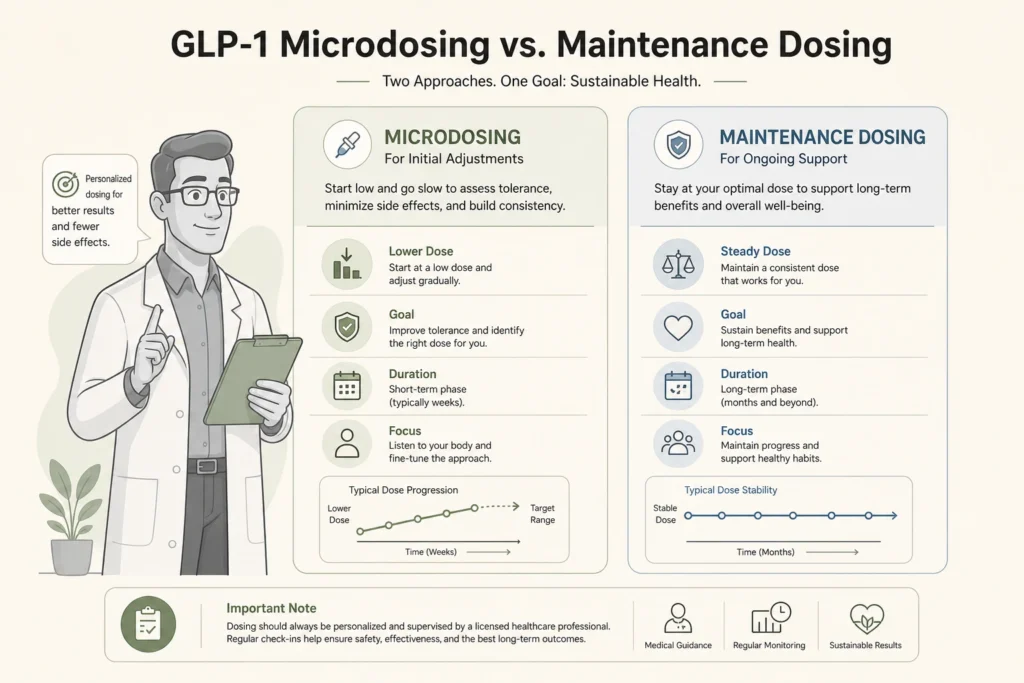
Physician-supervised titration matters because dose changes interact with side effects, hydration, and other conditions in ways a fixed rule cannot anticipate. Moving up or down at the right pace is how providers keep nausea and gastrointestinal symptoms manageable while still reaching a dose that works for you. Adjusting the dose too fast, or self-adjusting without guidance, is where people run into trouble.
Gastrointestinal effects are the most common reason dosing gets tricky. Clinical guidance advises raising the dose slowly when nausea is present, and notes that persistent vomiting or diarrhea can lead to dehydration and even kidney strain, per the GLP-1 receptor agonist review on the NCBI Bookshelf. This is also why dose strategy pairs so closely with everyday habits; a practical guide to eating well on GLP-1 therapy, covered in what to eat while on these medications, often does more to smooth side effects than a dose change alone. No reputable protocol asks patients to titrate on their own.
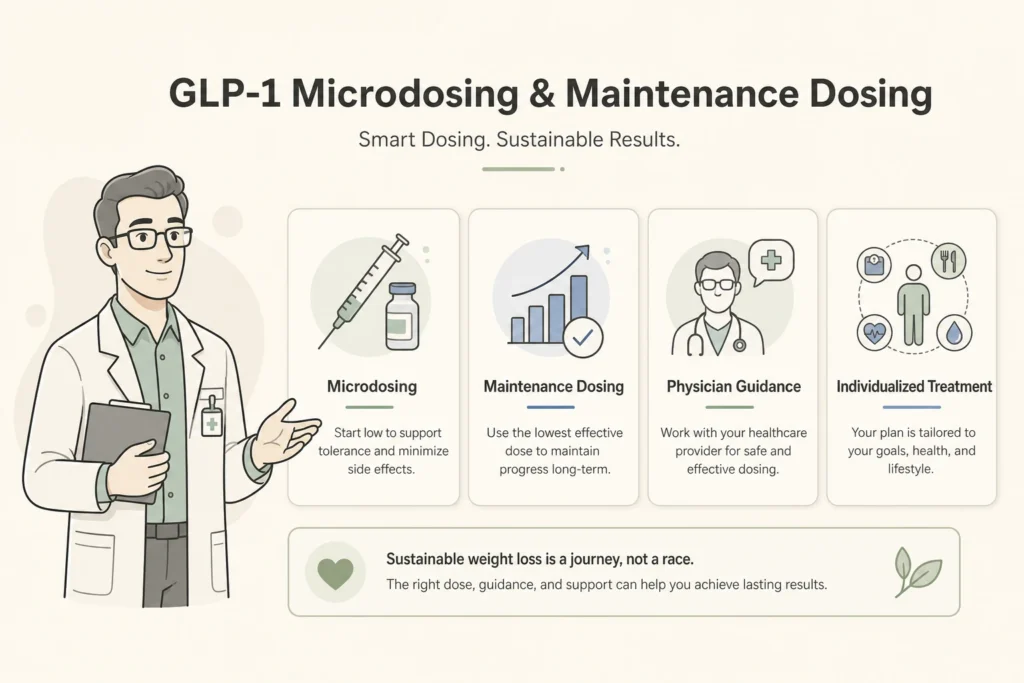
The honest answer is that the strongest evidence supports titrating to established therapeutic doses, while microdosing specifically has far less direct trial data behind it. Large randomized studies tested defined dose schedules, not below-label regimens, so claims that a small fraction of the usual dose delivers the same results are extrapolations, not proven outcomes. That does not make lower dosing wrong for everyone; it makes it a supervised, individualized judgment.
What is well established is that these medications work at effective doses and that stopping tends to reverse the gains. Tirzepatide produced up to about 20.9 percent average weight loss at its studied doses over 72 weeks, per the SURMOUNT-1 trial in the New England Journal of Medicine, 2022, and federal health guidance describes obesity as a chronic disease where medication is often continued long term, as outlined by the National Institute of Diabetes and Digestive and Kidney Diseases. Newer options are also advancing quickly, and you can see where the science is heading in what the latest retatrutide trial data suggests.
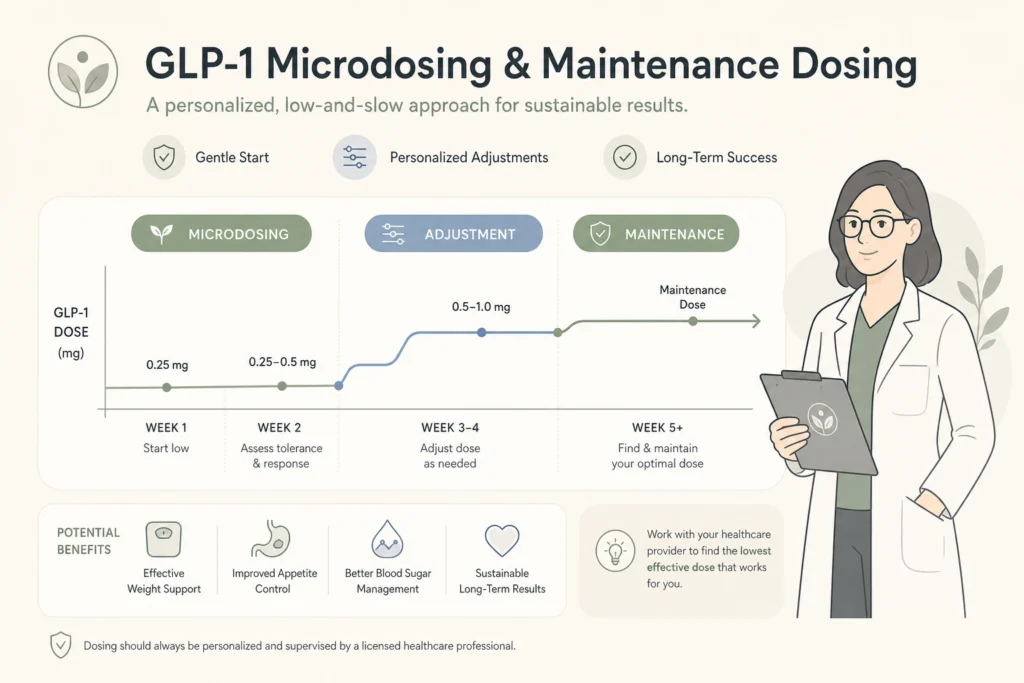
The right dose is not the one trending online. It is the one built around your health history and how your body actually responds over time. At Body Works, titration and maintenance planning, along with any consideration of a lower dose, are handled as a supervised medical decision rather than a fixed template. That approach is what keeps results and tolerability in balance for the long term, which is the whole point of a medically supervised weight loss program.
If you are weighing microdosing, planning your maintenance phase, or just starting out, the team in Franklin and Nolensville serving the greater Nashville area can map a plan to you. Schedule a Free Consultation to talk through what a personalized dosing strategy could look like.
Medically reviewed by Dr. Donald Vollmer, MD
Managing Physician, Body Works TN
You can lower your odds of the gaunt, sunken look people call Ozempic face. Here is how pacing, protein, muscle, and skin care protect your
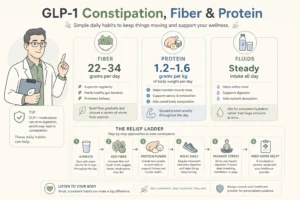
Constipation affects 24% of semaglutide patients and up to 17% on tirzepatide. This guide gives the daily targets that prevent it: 22 to 34 grams

Ozempic face is the hollow, aged look some people notice after rapid weight loss. Here is why it happens, who is most at risk, and
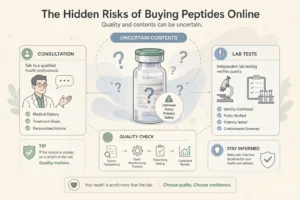
When Tennessee investigators tested counterfeit weight loss vials seized in Medina, one was mostly water. That was the good outcome. The dangers of buying peptides
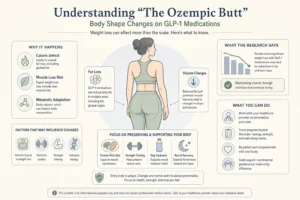
Rapid weight loss changes more than the number on the scale. Here is why the glutes, breasts, and arms often change shape on GLP-1 medications,

NAD+ therapy is marketed as a longevity reset for energy, focus, and healthy aging. This guide separates what the science on NAD therapy actually supports
See Body Works first in your Google results.