
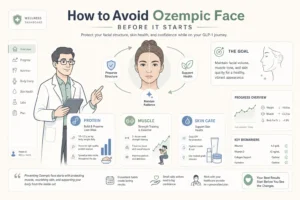
How to Avoid Ozempic Face Before It Starts
You can lower your odds of the gaunt, sunken look people call Ozempic face. Here is how pacing, protein, muscle, and skin care protect your
The right peptide therapy provider is a licensed medical practice that requires lab work before prescribing, names the compounding pharmacies it sources from, and schedules ongoing monitoring. If a provider skips any of those three, keep looking.
This guide walks through the essential questions to ask and the red flags to walk away from before you begin.
Peptide therapy is everywhere right now. You can find ads for weight loss injections or anti-aging protocols on almost every social media feed. The market has moved fast, which usually means the quality is all over the map. You’re likely looking for a way to recover faster, lose weight, or regain the energy you had a decade ago. But finding the right provider isn’t as simple as clicking a buy button on a website.
Choosing a provider is the most important decision you’ll make in this process. It’s the difference between a supervised medical treatment and a risky experiment with your own biology. We see patients every day who are confused by the options. Some are looking at local clinics in Middle Tennessee while others are considering national mail-order services that promise quick results with zero human interaction.
The goal is to help you “feel like YOU again” without taking unnecessary risks. This guide will help you spot the red flags and ask the questions that actually matter. You can also find more information on our wellness blog.
New to peptides entirely? Start with our complete guide to how peptide therapy works, then come back here to vet providers.

The peptide market is currently fragmented. On one side, you have legitimate medical practices that treat peptides as one tool in a larger wellness strategy. On the other side, there’s a thriving “gray market” of websites selling “research chemicals” that aren’t intended for human use. These products skip the purity and safety testing required for medical treatments.
If you choose a provider that cuts corners, you’re not just risking your money. You’re risking your health. Peptides are powerful signaling molecules. They tell your body to produce growth factors, burn fat, or repair tissue. When used correctly under medical supervision, peptide therapy can be life-changing. When used incorrectly, you might experience anything from simple site reactions to more serious hormonal imbalances.
We believe that a trusted partner is essential to achieving sustainable results. You need someone who understands your medical history and can adjust your protocol as your body responds. This is a journey, not a transaction.
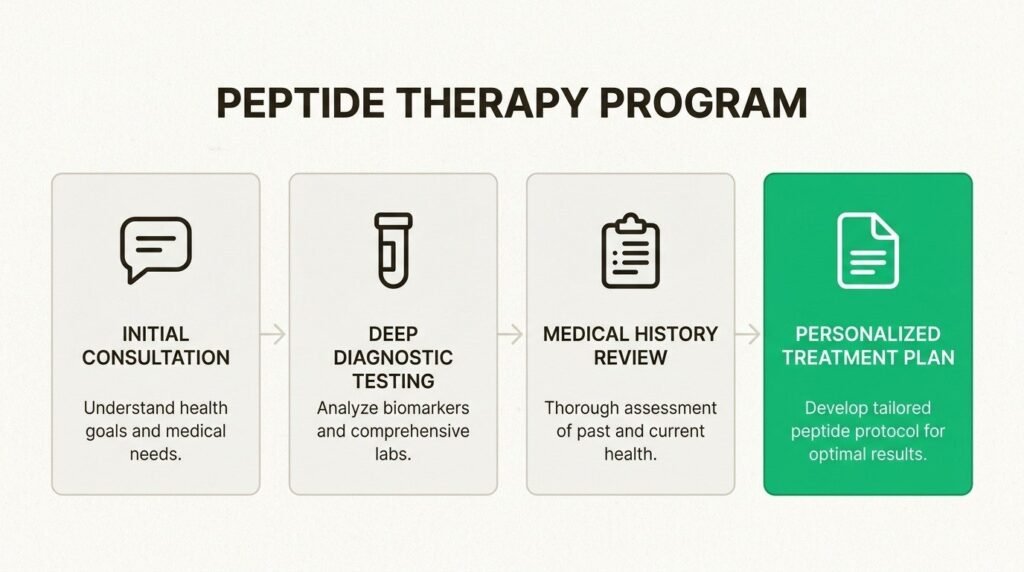
A legitimate program starts with a person, not a form. If a provider offers to ship you peptides after you fill out a five-minute online questionnaire, that’s a red flag. Medical treatments require a relationship between a patient and a licensed provider.
Our team at Body Works includes Nurse Practitioners and Registered Nurses who oversee every aspect of your care. This medical oversight ensures that the peptides you use are appropriate for your specific health needs. A real program involves:
Providers who skip these steps are usually more interested in volume than outcomes. They offer “one-size-fits-all” stacks that ignore the unique biology of each patient. If a provider can’t explain why a specific peptide was chosen for you, it’s time to look elsewhere.
You can’t manage what you don’t measure. Any reputable provider will insist on comprehensive lab work before you start your first cycle. This isn’t just to see where your levels are; it’s a critical safety step to ensure you don’t have underlying conditions that would make certain peptides dangerous.
A safe and effective program should include a thorough screening protocol aligned with published safety and efficacy data on growth hormone secretagogues to determine whether peptides are even appropriate for you. We look for specific markers including:
A full medical history review is also required to spot contraindications. For example, growth hormone secretagogues can stimulate the growth of existing tumors. If a provider doesn’t ask about your history with cancer or heart issues, they’re ignoring established safety protocols.
Personalized dosing is the only way to get real results. Your body is different from your neighbor’s. A medically guided approach takes your unique history and lifestyle into account to find the right dose for your specific goals.
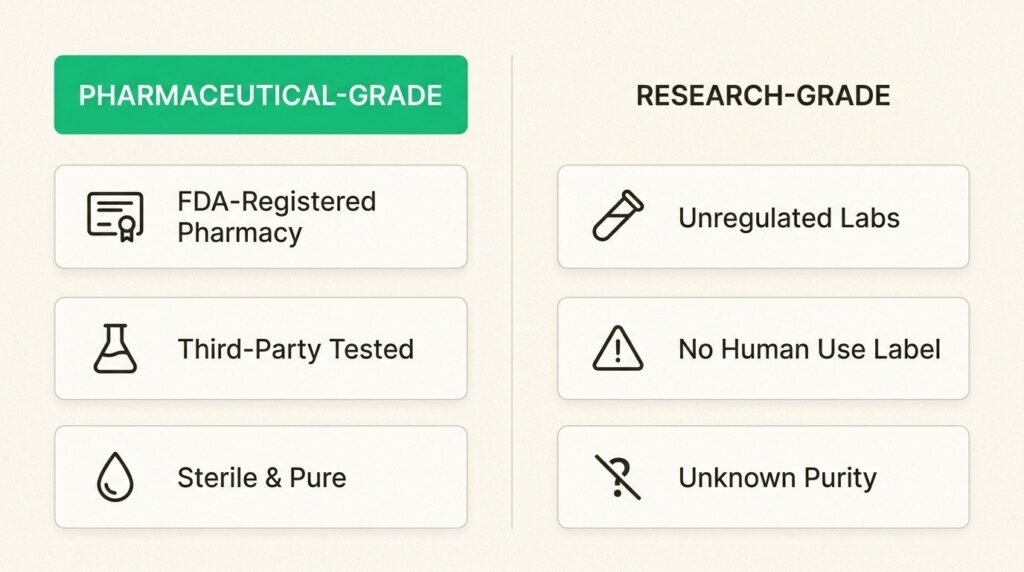
Where your peptides come from is just as important as who prescribes them. This is the area where the most confusion exists for new patients. You’ll see many websites selling peptides labeled as “research chemicals” or “research grade” products. These bypass the safety and quality controls a medical clinic enforces.
There’s a FDA Section 503A pharmacy compounding guidance between pharmaceutical-grade peptides and research-grade chemicals. Pharmaceutical-grade products are manufactured in highly regulated environments with strict quality controls. Research-grade chemicals are often produced in labs with lower standards and may contain impurities or incorrect dosages.
High-quality peptides must come from FDA bulk drug substances used in compounding under Section 503A. These pharmacies follow pharmaceutical-grade standards for purity and sterility. When you use a local provider like Body Works, you know exactly where your medication is coming from.
You should also understand the importance of a Certificate of Analysis (COA). A COA is a document provided by the lab that verifies the identity and purity of a specific batch. Legitimate providers should be able to confirm that their sources use third-party testing to back up their claims.
When you’re interviewing a potential provider, don’t be afraid to be direct. A good clinician will welcome these questions because they show you’re serious about your health. If a provider gets defensive or vague, that’s your cue to leave.
You want to ensure that a qualified medical professional is involved in every step. Ask if you’ll be meeting with a Nurse Practitioner or a Doctor, or if you’ll only be talking to a sales representative. You need a clinician who can interpret your labs and adjust your protocol based on how you feel.
A trustworthy clinic will be transparent about their sources. They should name the compounding pharmacies they work with. If they claim their peptides are “proprietary” and can’t name a registered pharmacy, that’s a major red flag.
Peptide therapy isn’t a “one and done” prescription. Legitimate programs include Endocrine Society clinical practice guideline on growth hormone deficiency. We typically recommend re-evaluating labs every three to six months to ensure the therapy remains effective and your body is responding well.
No treatment is without risks. Your provider should be honest about the FDA safety information on unapproved compounded GLP-1 peptide products and the timeline for results. Most patients begin to see changes in energy or recovery within a few weeks, but it often takes three to six months to see the full benefits for body composition or anti-aging.
There’s a significant benefit to working with a local clinic rather than a national mail-order service. In-person consultations allow for a better understanding of your physical health and a more personal connection with your medical team. You’re not just a number in a database; you’re a neighbor.
Our own experience backs this up. Body Works has supervised peptide protocols for hundreds of clients across Franklin and Nolensville since 2022, and the difference shows in the follow-through: labs tracked, dosing adjusted, and a plan that evolves with your results instead of a vial shipped from a website.
Body Works operates in both Franklin and Nolensville. We provide a comprehensive wellness experience where you can address multiple goals at once. Whether you’re interested in medical weight loss, men’s testosterone replacement, or women’s hormone therapy, we have the expertise to help. Our other services like IV hydration and Botox and fillers can also complement your health journey.
If you’re ready to reclaim your health and vitality, the first step is a conversation. We offer free consultations at both of our locations to help you decide if peptide therapy is the right path for you. Our team will listen to your story, review your goals, and help you build a plan that works.
Schedule your free consultation today and take the first step toward feeling like YOU again.
Medically reviewed by Dr. Donald Vollmer, MD
Managing Physician, Body Works TN
You can lower your odds of the gaunt, sunken look people call Ozempic face. Here is how pacing, protein, muscle, and skin care protect your
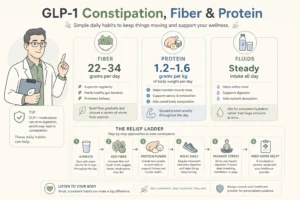
Constipation affects 24% of semaglutide patients and up to 17% on tirzepatide. This guide gives the daily targets that prevent it: 22 to 34 grams

Ozempic face is the hollow, aged look some people notice after rapid weight loss. Here is why it happens, who is most at risk, and
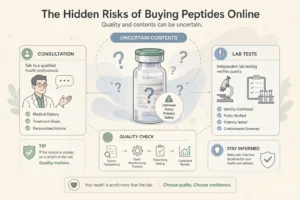
When Tennessee investigators tested counterfeit weight loss vials seized in Medina, one was mostly water. That was the good outcome. The dangers of buying peptides
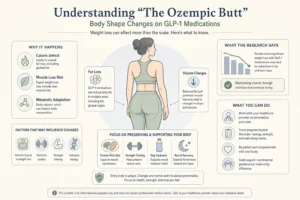
Rapid weight loss changes more than the number on the scale. Here is why the glutes, breasts, and arms often change shape on GLP-1 medications,

NAD+ therapy is marketed as a longevity reset for energy, focus, and healthy aging. This guide separates what the science on NAD therapy actually supports
See Body Works first in your Google results.