

Semaglutide in Nolensville, TN: Availability and How to Start
Searching for semaglutide in a town the size of Nolensville turns up a strange gap: national telehealth ads everywhere, but almost nothing about a real
If you have looked into peptide therapy side effects, you have probably found two extremes online: glowing testimonials that promise more energy and better skin with no downside, and scare stories that treat every peptide as dangerous. Neither is honest. Peptides are real medicine, and like any treatment that changes how your body signals itself, they carry measurable effects worth understanding before you start.
At Body Works, the conversation we have with new patients always starts here, with the risks, not the marketing. Most people who start peptide therapy notice nothing worse than a sore injection spot or a few days of mild bloating. A smaller group needs a dose adjustment, and a few people should not take certain peptides at all. Knowing which group you fall into is the whole point of working with a medical team instead of buying vials off an unregulated website.
Below are the common reactions, the rare but serious risks, the people who should avoid peptides, and the bloodwork that turns a guessing game into a monitored plan.
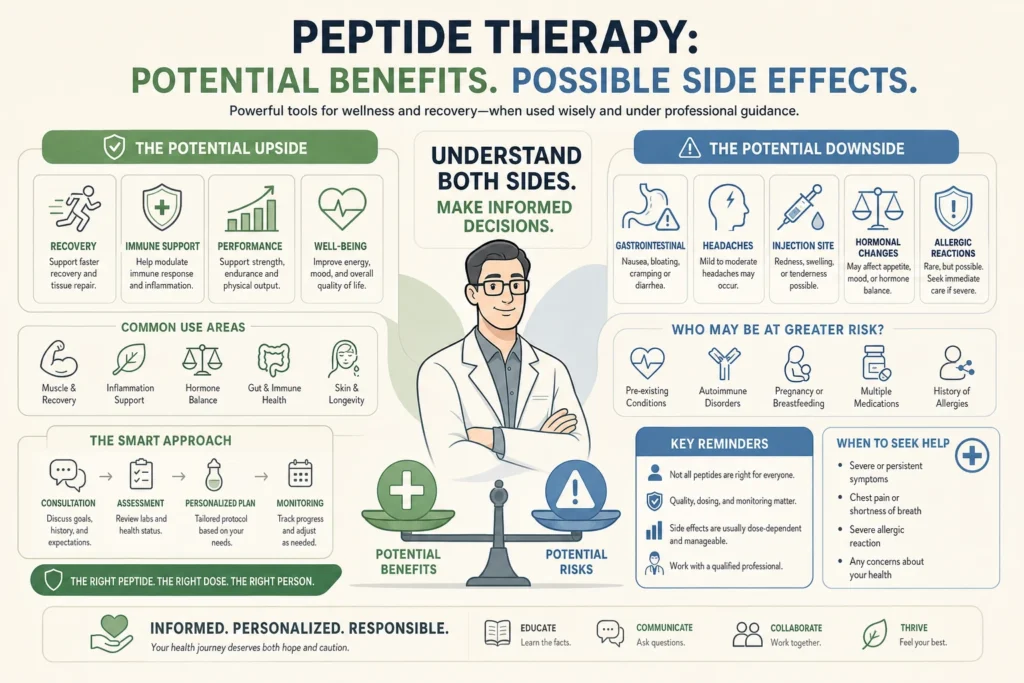
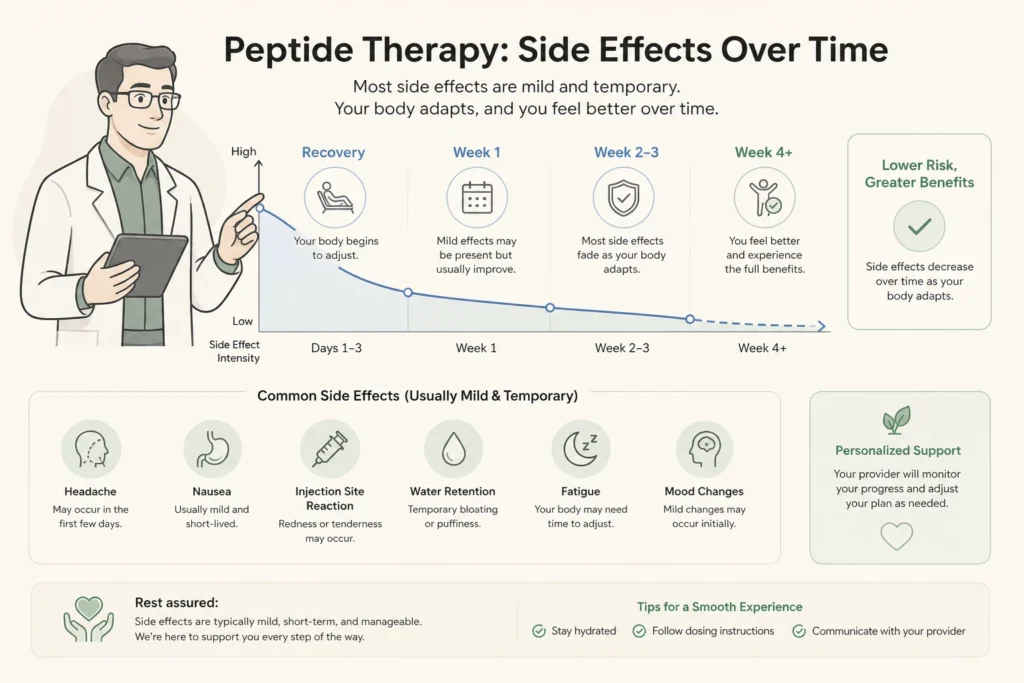
The most common peptide therapy side effects are mild, local, and temporary: injection site reactions, short term water retention, and early headaches or fatigue. They tend to show up in the first few weeks as your body adjusts, then fade. Reactions at the injection site are the most reported issue, and they are usually minor.
The FDA prescribing information for the approved growth hormone releasing peptide tesamorelin lists injection site reactions such as redness, itching, pain, and swelling, along with fluid retention that can show up as puffiness, joint aches, or even carpal tunnel symptoms, as recognized adverse reactions. According to the FDA prescribing information for tesamorelin (EGRIFTA SV), the most frequent reactions include injection site erythema, pruritus, pain and swelling, plus edema-related effects like arthralgia and carpal tunnel syndrome. Staying hydrated and watching salt intake early on helps the fluid retention settle.
For GLP-1 weight loss peptides such as semaglutide and tirzepatide, the side effects are mostly gastrointestinal: nausea, diarrhea, vomiting, and constipation. They are common but usually manageable, and they cluster in the dose-escalation phase rather than lasting forever. This is why a slow, stepped titration matters.
In the STEP 1 trial of once-weekly semaglutide 2.4 mg, 2021, nausea and diarrhea were the most common adverse events, and they were typically transient and mild to moderate in severity before subsiding over time. A pooled analysis of gastrointestinal tolerability across the STEP trials found that the vast majority of these events were non-serious and resolved without stopping treatment. Prioritizing protein and gradual dose increases keeps most patients comfortable.
Yes, growth hormone peptides can cause joint stiffness, carpal tunnel symptoms, and shifts in blood sugar, which is exactly why they call for monitoring. Compounds such as CJC-1295 and ipamorelin push your pituitary gland to release more of your own growth hormone, and overstimulating that pathway has predictable downstream effects on fluid balance and glucose.
The same FDA label for tesamorelin warns that glucose intolerance or diabetes can develop during therapy and instructs prescribers to evaluate glucose before and during treatment. It also notes that the peptide raises IGF-1, a growth factor, and that the effects of prolonged IGF-1 elevation are not fully known. That is why a serious provider tracks your fasting glucose and IGF-1 rather than handing you a fixed dose and walking away. You can read more about how these compounds are dosed in our overview of CJC-1295 and ipamorelin growth hormone peptides.
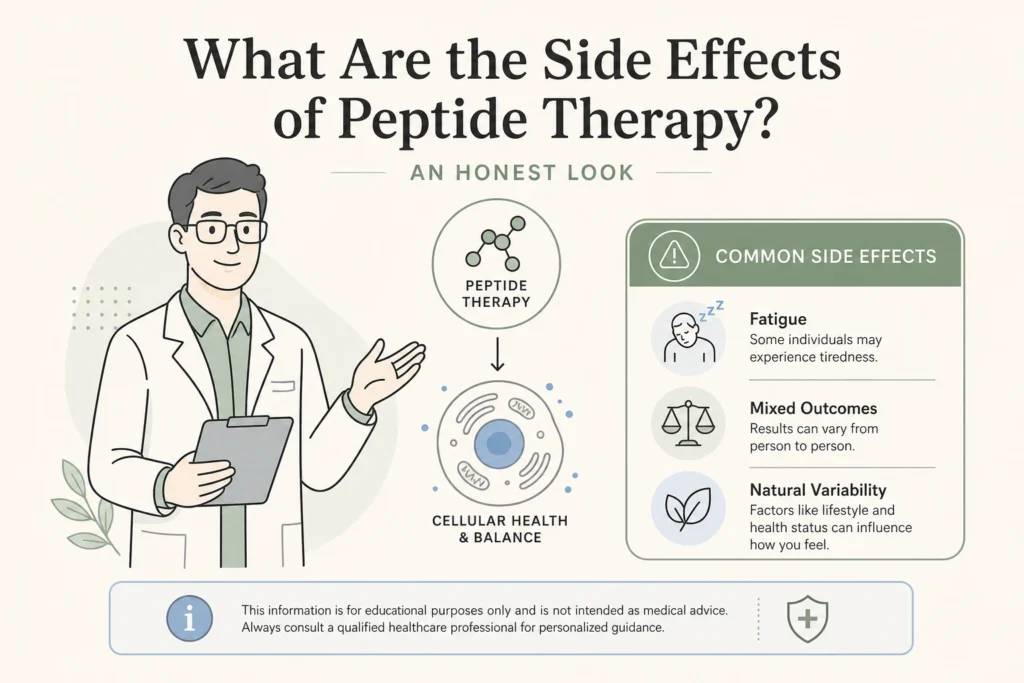
The serious risks of peptide therapy are rare, largely theoretical in healthy people, and tied to one biological fact: many peptides encourage cell growth. When you stimulate growth pathways for a long time, the open question is whether you could also feed cells you would rather not. That is a screening question, not a reason for panic.
Excess growth hormone and IGF-1 promote cell proliferation and resist normal cell death, which is why people with chronically high levels carry a higher tumor risk. A review of neoplasm risk in acromegaly, the disease of lifelong growth hormone excess, found a higher incidence of certain tumors, with the strongest signal for colorectal growths. A separate analysis asking whether growth hormone causes cancer concluded the data are mixed and that careful long-term monitoring is warranted. None of this means a supervised protocol gives you cancer. It means a careful provider screens your history and watches your labs.
You should avoid peptide therapy, or at least delay it, if you have an active or recent cancer, are pregnant or breastfeeding, or have uncontrolled glucose, kidney, or liver disease. These are not arbitrary cutoffs. They come straight from how peptides act in the body and from the contraindications on approved labels.
The FDA contraindications for tesamorelin explicitly list active malignancy and pregnancy, and the label directs that any preexisting cancer be inactive with treatment complete before therapy begins. Because growth signaling could in theory accelerate existing malignant cells, a history of cancer triggers close review, and uncontrolled diabetes or significant kidney or liver disease also raises the bar. A thorough provider asks every one of these questions before writing a protocol, which is part of what we cover in our guide on how to choose a peptide therapy provider.
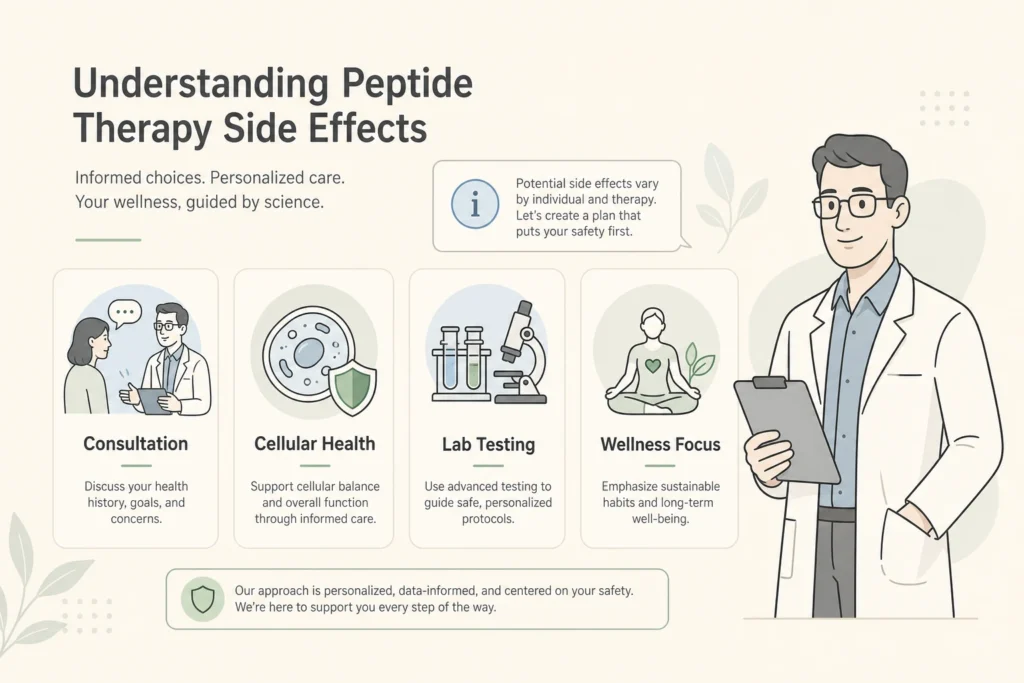
Where your peptides come from is one of the biggest safety variables, often bigger than the compound itself. Unregulated peptides bought as research chemicals can be contaminated, mislabeled, or dosed incorrectly, turning a manageable treatment into a gamble. This is the most preventable risk in the category.
The FDA has been direct about this. According to the FDA statement on unapproved GLP-1 and peptide drugs, unapproved versions do not undergo the agency review for safety, effectiveness, and quality before they reach the market, and the agency has logged adverse events, some requiring hospitalization, tied to dosing errors with these products. A genuine clinical setting removes those variables: pharmaceutical-grade sourcing, a verified dose, and a clinician adjusting the plan to how you respond.
A good provider treats peptide therapy as a monitored medical protocol, not a subscription. Before anyone starts, licensed providers at the Franklin, TN and Nolensville, TN offices review your full medical history and order baseline bloodwork. During therapy, they recheck the labs that the science says matter most, then adjust your dose based on the results instead of a fixed schedule.
That means checking fasting glucose because growth-related peptides can nudge blood sugar, tracking IGF-1 so growth signaling stays in a safe range, and screening for the contraindications that should pause treatment. Protocols start at the lowest effective dose to keep early reactions mild, then increase slowly. This monitoring is the difference between following a trend and following a plan, and it is built into the peptide therapy program. If a peptide is not the right tool for your goal, the better answer may be medical weight loss or men’s hormone therapy instead.
Different peptides carry different risk profiles, so the side effects you might notice depend on which category you are using. The table below summarizes the patterns providers watch for across the most common groups.
| Peptide Category | Common Purpose | Typical Side Effects | Key Monitoring |
|---|---|---|---|
| GLP-1 peptides (semaglutide, tirzepatide) | Weight management, appetite | Nausea, diarrhea, vomiting, constipation | Slow titration, protein intake, weight trend |
| Growth hormone secretagogues (CJC-1295, ipamorelin) | Recovery, body composition | Water retention, joint stiffness, carpal tunnel feelings | Fasting glucose, IGF-1 levels |
| Growth hormone releasing factor (tesamorelin) | Visceral fat reduction | Injection reactions, edema, raised glucose | Glucose before and during, IGF-1 |
| Tissue repair peptides (BPC-157 type) | Recovery support | Mostly local; long-term data limited | Medical history, cancer screening |
Peptide therapy can be safe and effective when the right person uses the right compound under real medical supervision. The side effects are usually mild, the serious risks are largely avoidable through screening, and the biggest danger is doing it alone with product of unknown quality. A short conversation sorts out whether peptides fit your health and goals.
At Body Works, every plan starts with your history, your baseline labs, and a frank discussion of what to expect. If you want to understand the full picture first, start with our complete guide to peptide therapy or see exactly what happens at your first peptide therapy appointment. When you are ready, our providers in Franklin and Nolensville can build a monitored protocol around you. Schedule a Free Consultation to talk it through.
Peptide therapy is available at both the peptide therapy clinic in Franklin and in Nolensville.
Medically reviewed by Dr. Donald Vollmer, MD
Managing Physician, Body Works TN
Searching for semaglutide in a town the size of Nolensville turns up a strange gap: national telehealth ads everywhere, but almost nothing about a real

If you have been researching semaglutide for weight loss, you have probably hit the same wall everyone else does: a telehealth app that ships a

The needle is the easy part. Most people who quit a GLP-1 medication early do not quit because of the injection itself, they quit because
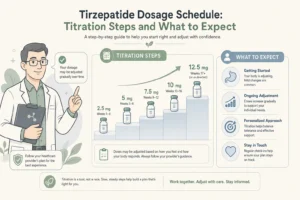
Patients starting tirzepatide often expect the first injection to feel like the start of real treatment. It isn’t. The 2.5 mg starting dose is a
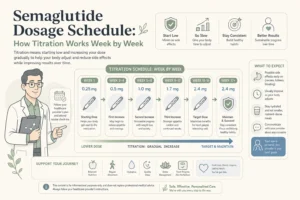
The dose on a semaglutide prescription rarely matches the dose a patient ends up taking, and that gap confuses people every week. Someone reads that
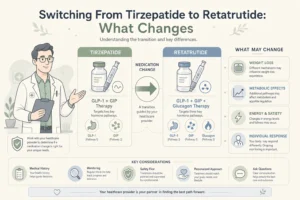
Switching from tirzepatide to retatrutide is a supervised medication change, not a milligram match. Retatrutide (GLP-3) adds the glucagon receptor and produced 24.2% weight loss
See Body Works first in your Google results.