
How to Avoid Ozempic Face Before It Starts
You can lower your odds of the gaunt, sunken look people call Ozempic face. Here is how pacing, protein, muscle, and skin care protect your
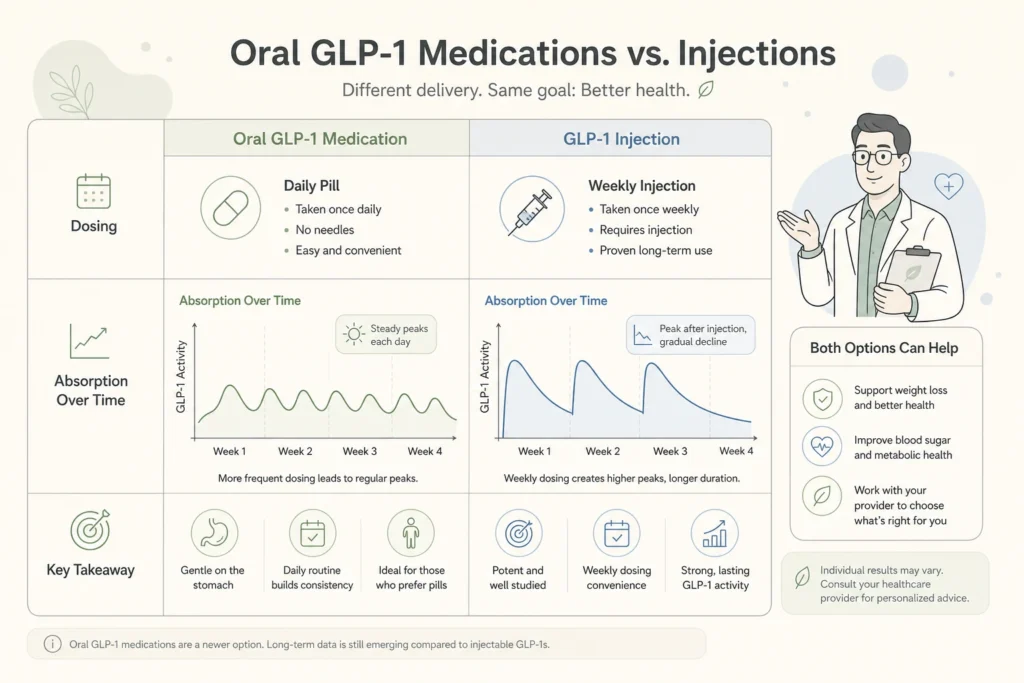
The idea sounds almost too convenient: swallow a small GLP-1 pill each morning and skip the weekly injection entirely. If a tablet can quiet appetite the same way a shot does, why would anyone still reach for the needle?
The honest answer is that a GLP-1 pill and a GLP-1 injection are not simply two versions of the same product. They differ in how the medication reaches your bloodstream, how much of each dose your body actually absorbs, how strict the timing rules are, and how much clinical evidence stands behind them. One oral option is FDA approved and available today, another promising pill is still moving through late-stage trials, and injections remain the most studied path to results.
At Body Works, patients across Franklin, TN and Nolensville, TN ask about oral GLP-1s constantly, usually hoping to avoid injections. This guide compares the pill and the injection on the details that actually change your outcome, so you can walk into a conversation about weight loss already knowing the right questions to ask.
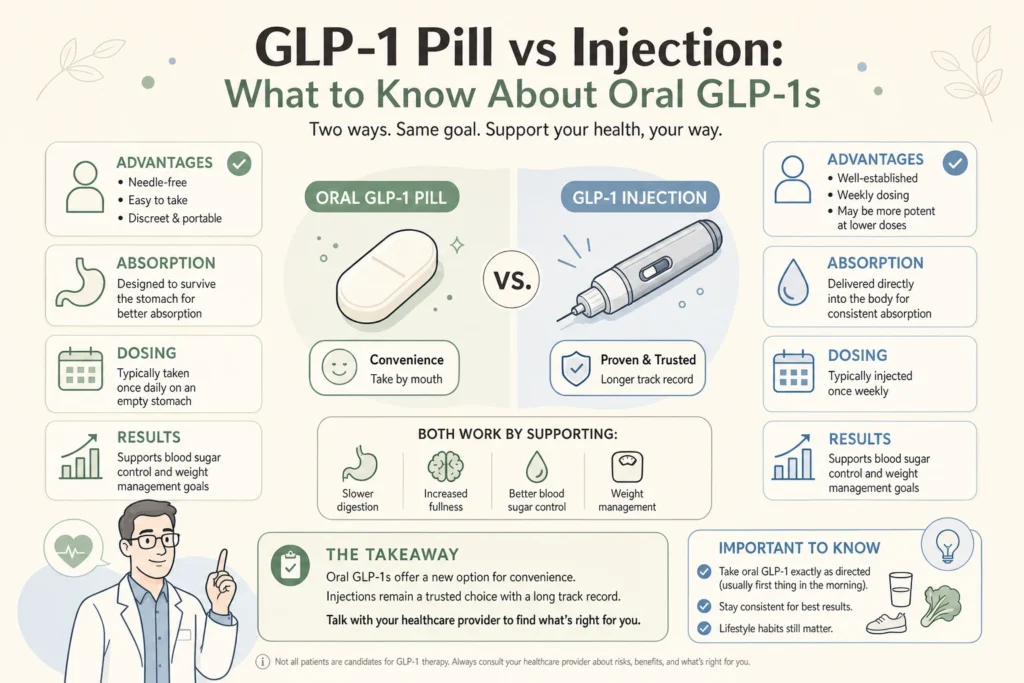
Yes, a GLP-1 pill already exists. Oral semaglutide is the only oral GLP-1 receptor agonist with FDA approval today, and it is currently approved to lower blood sugar in adults with type 2 diabetes. It delivers the same active molecule found in the familiar weekly injection, just in tablet form taken once a day. The injectable GLP-1 medications used most often for weight management, semaglutide and tirzepatide, remain separate, well-established options.
If you want a refresher on how these medications curb appetite and slow digestion in the first place, our explainer on how GLP-1 medications work in the body covers the mechanism in depth. This article stays focused on one narrower question: how the delivery format changes what you can expect.
In the PIONEER 8 trial, oral semaglutide taken once daily produced greater reductions in both HbA1c and body weight than placebo across all three doses tested in adults with type 2 diabetes, confirming that a swallowed GLP-1 can reach the bloodstream and work, according to the PIONEER 8 trial published in Diabetes Care.
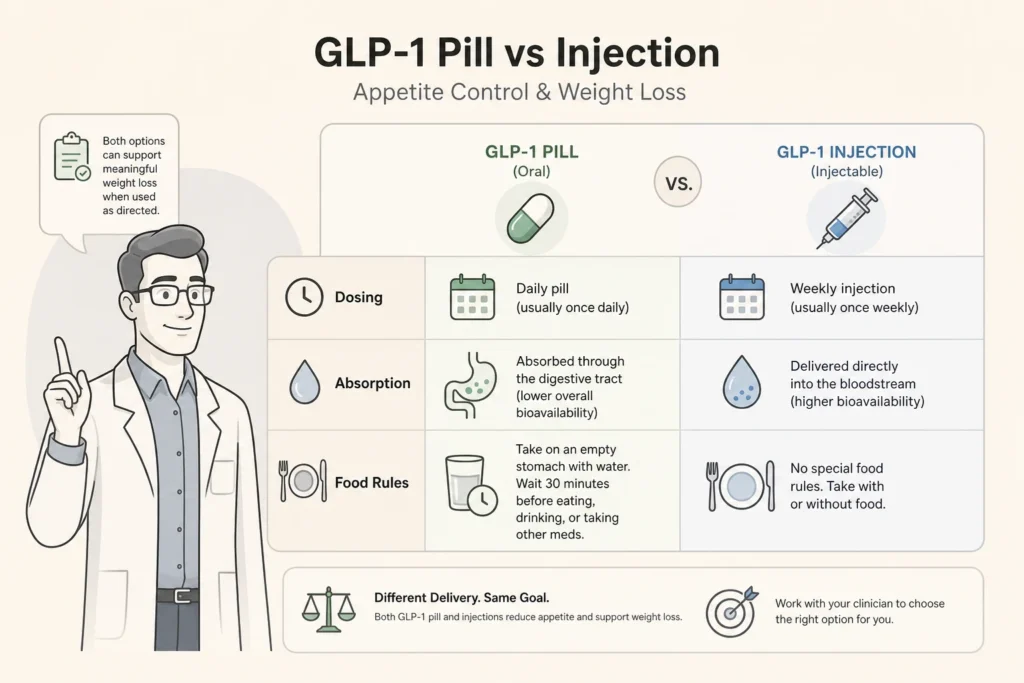
The GLP-1 pill has strict food rules because peptides are notoriously hard for the stomach to absorb, so the tablet has to be taken under very specific conditions to work at all. Oral semaglutide is paired with an absorption enhancer that helps the molecule cross the stomach lining, but even then only a tiny fraction of each dose gets through. That is why the label calls for taking it first thing in the morning with no more than a few sips of plain water, then waiting before eating, drinking, or taking anything else.
This is the biggest practical trade-off of the pill. A weekly injection has no fasting window; you simply inject and continue your day. The daily tablet asks for consistency that some people find harder to sustain than a once-weekly shot.
A clinical pharmacokinetics analysis found that oral semaglutide has a bioavailability of roughly 0.8 percent under recommended conditions, rising toward 1.4 percent with a longer fasting window, per a pharmacokinetic analysis of oral semaglutide dosing. In plain terms, when and how you take the pill dramatically changes how much medicine you actually receive.
The pill and the injection differ most in absorption reliability, daily routine, and the depth of evidence behind each. Injectable GLP-1s deliver the full dose under the skin, bypassing the digestive tract entirely, which makes their absorption far more predictable. The oral route is more convenient for needle-averse patients but demands disciplined timing to match that reliability.
The table below lays out the head-to-head picture. If you want to see how results typically unfold once treatment begins, our week-by-week semaglutide results timeline walks through what the first months usually look like.
| Factor | GLP-1 Pill (oral semaglutide) | GLP-1 Injection (semaglutide or tirzepatide) |
|---|---|---|
| Absorption | Roughly 0.8 percent of the dose crosses the stomach lining; highly sensitive to timing | Enters through the skin, bypasses digestion, far more predictable |
| Dosing routine | Once daily, every morning | Once weekly |
| Food restrictions | Empty stomach, small sip of water, wait before eating or other pills | None; inject anytime, with or without food |
| Efficacy evidence | Strong for blood sugar; weight data comparable to injection in some analyses | Extensive long-term weight-loss trial evidence |
| Availability today | FDA approved for type 2 diabetes; used under physician supervision | Widely available through supervised weight-loss programs |
A systematic review and meta-analysis comparing the two formats found that injectable semaglutide produced slightly greater HbA1c reductions, while the difference in weight loss between oral and injectable was not statistically significant, though the oral version carried a higher rate of discontinuation from side effects, according to a meta-analysis of oral versus injectable semaglutide. The takeaway is that neither format is universally better; the right choice depends on the patient.
Yes, a new generation of once-daily GLP-1 pills is advancing quickly, and the most talked-about is orforglipron, a small-molecule oral GLP-1 that, unlike semaglutide tablets, does not appear to require the same fasting restrictions. It is not FDA approved yet and is not available to patients, but late-stage trial results have been encouraging. This mirrors the excitement around what the retatrutide clinical trials are showing on the injectable side: both represent promising next steps in weight loss medicine.
Timing is the key distinction. These are tomorrow’s options, not today’s. Right now, oral semaglutide and the injectable GLP-1s are the formats that patients can actually start under a physician’s care.
In the phase 3 ATTAIN-1 obesity trial, orforglipron produced meaningful body-weight reductions over 72 weeks, with more than half of participants at the highest dose losing at least 10 percent of their weight, as summarized in a 2025 review of oral GLP-1 therapy for obesity.
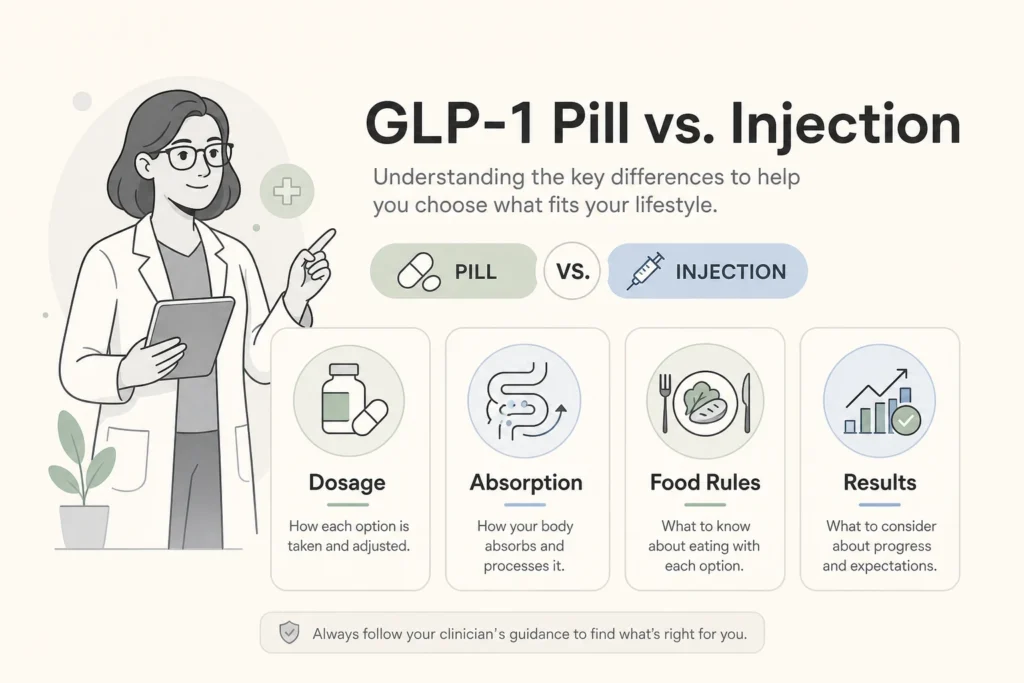
Choosing between a GLP-1 pill and an injection comes down to your daily habits, your comfort with needles, and how your body responds, which is why this decision belongs in a supervised medical setting rather than a self-guided one. Someone who dreads injections and keeps a steady morning routine may do well with the oral option, while someone who wants the simplest possible schedule and the deepest evidence base may prefer a weekly shot.
Dose strategy matters too. Both formats are typically started low and increased gradually to limit nausea, and some patients explore tailored maintenance approaches once they reach their goal, a topic covered in our guide to GLP-1 microdosing and maintenance dosing. None of this should be adjusted on your own; the safest results come from a plan built and monitored by a clinician who tracks your progress and side effects.
This is exactly the kind of decision our physician-supervised medical weight loss program is designed to guide, matching the delivery format to the person rather than the other way around.
The pill-versus-injection question rarely has a one-size answer, and that is a good thing: it means the format can be matched to how you actually live instead of forcing you into a mold. The best next step is a conversation with a clinician who can look at your full health picture and recommend the right starting point.
At Body Works, our team helps patients across Franklin and Nolensville weigh oral and injectable GLP-1 options and build a supervised plan around the one that fits. Schedule a Free Consultation to talk through which GLP-1 delivery method makes the most sense for you.
Medically reviewed by Dr. Donald Vollmer, MD
Managing Physician, Body Works TN
You can lower your odds of the gaunt, sunken look people call Ozempic face. Here is how pacing, protein, muscle, and skin care protect your
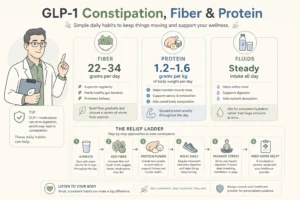
Constipation affects 24% of semaglutide patients and up to 17% on tirzepatide. This guide gives the daily targets that prevent it: 22 to 34 grams

Ozempic face is the hollow, aged look some people notice after rapid weight loss. Here is why it happens, who is most at risk, and
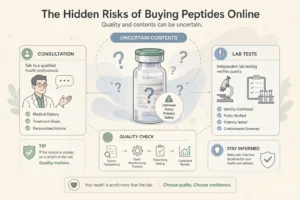
When Tennessee investigators tested counterfeit weight loss vials seized in Medina, one was mostly water. That was the good outcome. The dangers of buying peptides
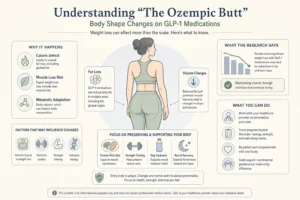
Rapid weight loss changes more than the number on the scale. Here is why the glutes, breasts, and arms often change shape on GLP-1 medications,

NAD+ therapy is marketed as a longevity reset for energy, focus, and healthy aging. This guide separates what the science on NAD therapy actually supports
See Body Works first in your Google results.