
What Is NAD+ Therapy? Benefits, Science, and What to Expect
NAD+ therapy is marketed as a longevity reset for energy, focus, and healthy aging. This guide separates what the science on NAD therapy actually supports
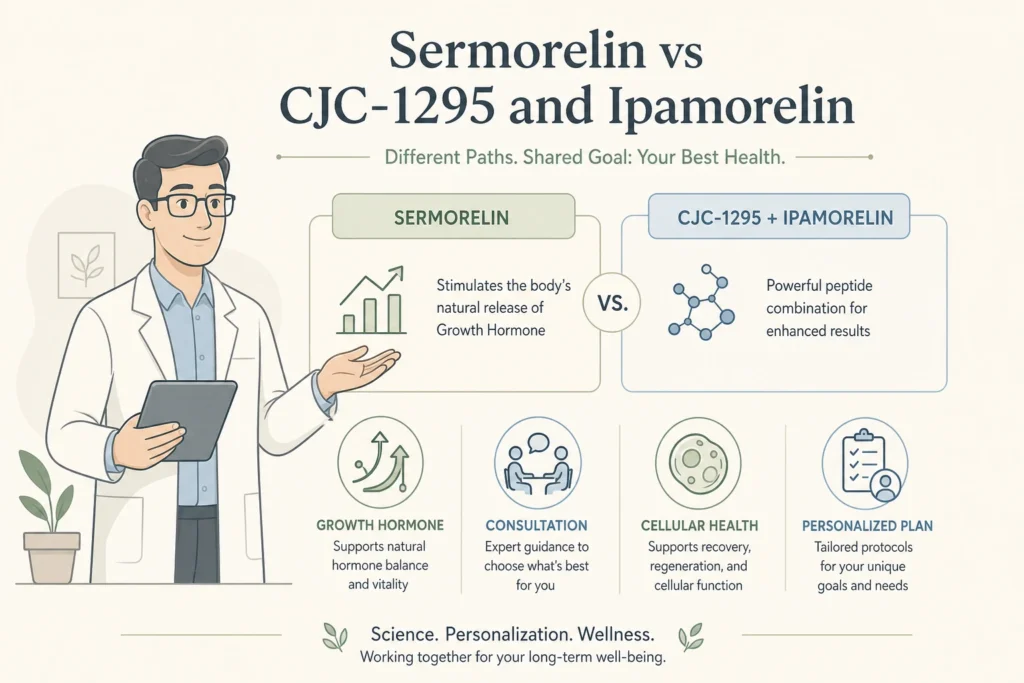
If you have researched growth hormone peptides, three names come up again and again: sermorelin, CJC-1295, and ipamorelin. They get grouped together, prescribed in overlapping situations, and often mistaken for one another. Yet each one works differently, stays in the body for a different length of time, and suits a different kind of patient.
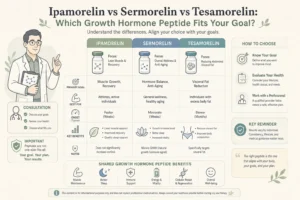
Understanding sermorelin vs CJC-1295 and ipamorelin is not about crowning a single best peptide. It is about matching the right tool to your physiology, your goals, and your lab work. Two of these compounds nudge your pituitary gland to release more of its own growth hormone. The third works through an entirely separate pathway and is usually paired with one of the others. At Body Works in Franklin, TN and Nolensville, TN, that decision is always made by a physician after reviewing your bloodwork, never from a chart you found online.
This guide breaks down how each peptide signals your body, how long each one lasts, what each is typically chosen for, and how a clinician weighs the tradeoffs.

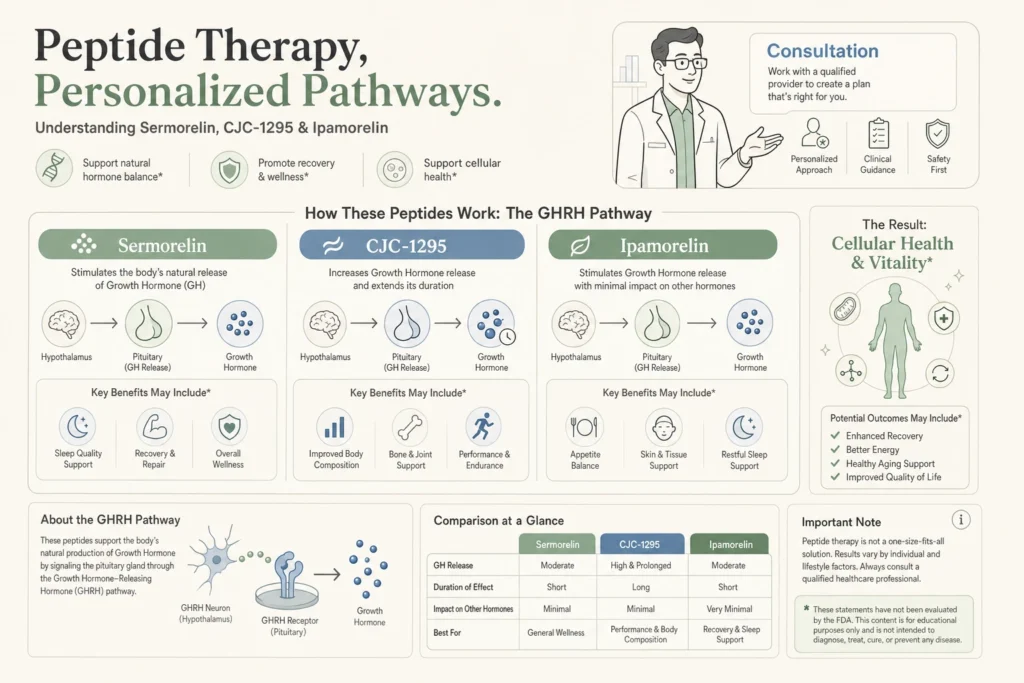
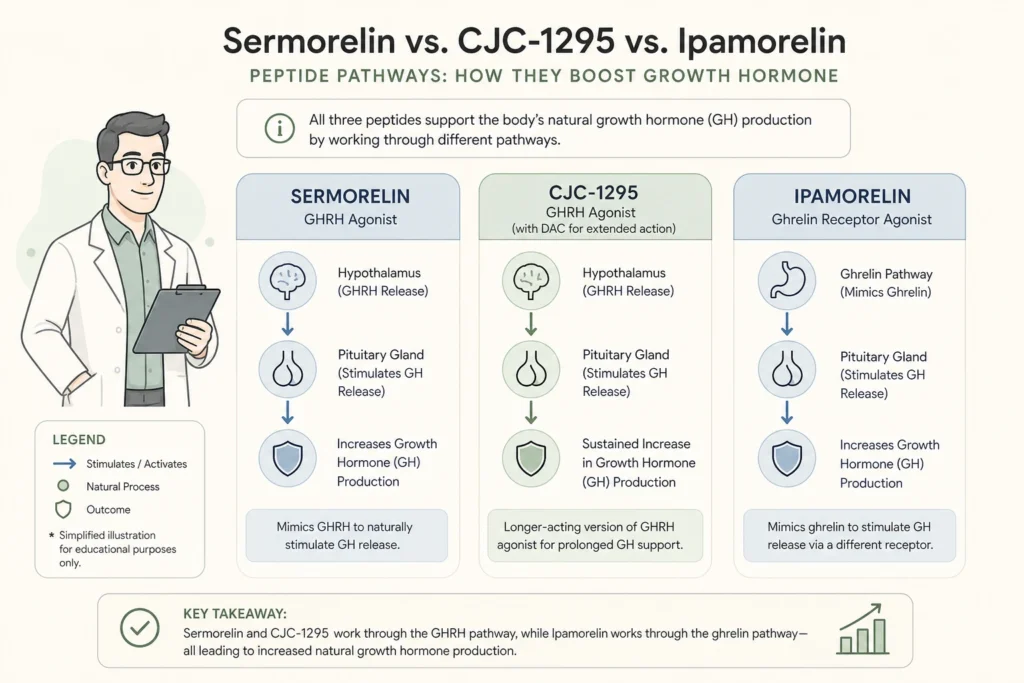
All three are peptides that raise growth hormone, but they belong to two different families. Sermorelin and CJC-1295 are growth hormone releasing hormone (GHRH) analogs, meaning they copy the natural signal your hypothalamus sends to your pituitary gland. Ipamorelin is a growth hormone secretagogue that imitates ghrelin, a separate hormone, to trigger release through a different receptor entirely.
Your body normally releases growth hormone in bursts, mostly during deep sleep, under the control of GHRH. A growth hormone physiology overview from StatPearls explains that GHRH is the primary factor promoting growth hormone production and that the hormone is secreted in a pulsatile rhythm rather than a steady stream. Peptides in this category work by boosting that existing signal instead of overriding it.
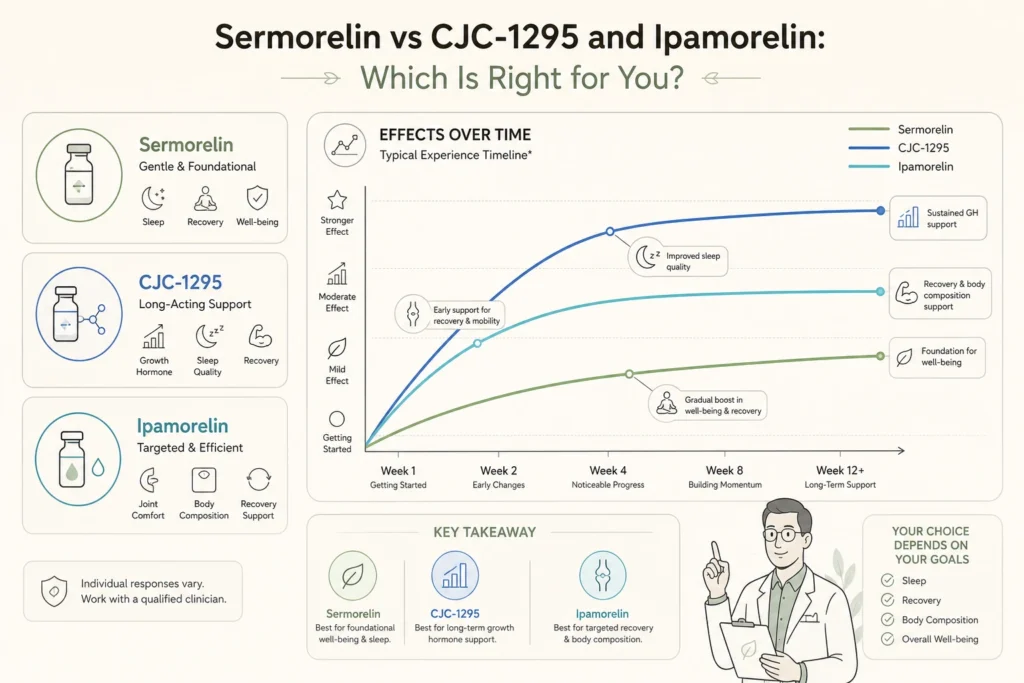
Half-life is the single biggest practical difference. Sermorelin clears the body quickly, within roughly 10 to 20 minutes, so it creates a short, natural burst of growth hormone that closely mirrors your own rhythm. CJC-1295 was engineered to last far longer, raising baseline growth hormone and IGF-1 for several days from a single administration. Ipamorelin acts fast and briefly, producing a clean, sharp pulse.
A longer half-life does not have to flatten your natural rhythm. A 2006 study in the Journal of Clinical Endocrinology and Metabolism found that even during continuous stimulation by CJC-1295, pulsatile growth hormone secretion persisted, with the frequency and size of the pulses largely unchanged and trough levels rising. That preserved pulsatility is a key reason these peptides are viewed differently from injected growth hormone.
The clearest way to see the differences is side by side. Sermorelin offers the most physiologic, short-acting signal, CJC-1295 offers sustained elevation, and ipamorelin adds a selective second pathway. Research published in the Journal of Clinical Endocrinology and Metabolism in 2006 reported that CJC-1295 produced prolonged, dose-dependent increases in growth hormone and IGF-1 in healthy adults, which is why it is chosen when a longer, steadier effect is the goal.
| Factor | Sermorelin | CJC-1295 | Ipamorelin |
|---|---|---|---|
| Mechanism | GHRH analog | GHRH analog, long-acting | Ghrelin-mimetic secretagogue |
| Half-life | Short, about 10 to 20 minutes | Long, up to several days | Short, about 2 hours |
| Typical use case | Gentle, physiologic support for age-related decline | Sustained growth hormone and IGF-1 elevation | Selective pulse, often stacked with CJC-1295 |
| Monitoring | IGF-1 levels and symptom review | IGF-1, glucose, periodic labs | IGF-1 and tolerability |
No column in that table is automatically better than another. The right row for you depends on whether your physician is aiming for a light, natural nudge or a stronger, more sustained effect.

The two are frequently paired because they stimulate growth hormone through separate doors. CJC-1295 acts on the GHRH receptor while ipamorelin acts on the ghrelin receptor, so using them together produces a stronger, complementary release than either one alone. Ipamorelin’s appeal is its selectivity. Research in the European Journal of Endocrinology introduced ipamorelin as the first selective growth hormone secretagogue, meaning it raised growth hormone without meaningfully increasing cortisol or prolactin, the off-target effects that limited earlier compounds.
This is why a closer look at how CJC-1295 and ipamorelin work as growth hormone peptides tends to frame them as a duo rather than rivals. If you are weighing peptides against synthetic hormone, our breakdown of why stimulating your own growth hormone can be safer than HGH explains why many patients prefer this route.

The decision starts with your labs and your goals, not with a peptide name. A clinician reviews your IGF-1 level, symptoms such as poor recovery or disrupted sleep, medical history, and what you are trying to achieve, then matches the mechanism to the person. Sermorelin is often favored when the goal is gentle, physiologic support for age-related growth hormone decline. An editorial in Clinical Interventions in Aging describes how sermorelin stimulates your own pituitary through natural feedback, which lowers the risk of overshooting compared with injecting growth hormone directly.
Because these peptides sit alongside other longevity-focused and hormone-optimization options, the conversation rarely happens in isolation. Many patients also ask about how NAD+ therapy supports cellular energy and healthy aging, or, for men, how growth hormone peptides fit with the link between weight loss and testosterone. A full guide to how peptide therapy works can help you prepare for that visit.

There is no universal winner in sermorelin vs CJC-1295 and ipamorelin, only the peptide that fits your physiology and what your labs reveal. That is exactly why the process at Body Works begins with a physician consultation and bloodwork instead of a fixed protocol. Our physician-supervised peptide therapy program is built around individualized dosing, ongoing monitoring, and honest guidance about what these peptides can and cannot do.
If you are in Franklin or Nolensville and want a clear, medically grounded answer about which growth hormone peptide is right for you, the next step is simple. Schedule a Free Consultation and let a clinician build a plan around your bloodwork, not guesswork.
Medically reviewed by Dr. Donald Vollmer, MD
Managing Physician, Body Works TN

NAD+ therapy is marketed as a longevity reset for energy, focus, and healthy aging. This guide separates what the science on NAD therapy actually supports

A candid, evidence-based look at what natural methods can and cannot do for loose skin after GLP-1 weight loss, from protein and resistance training to

The link between GLP-1 and testosterone catches many men off guard. Carrying extra weight suppresses testosterone through aromatization, low SHBG, and inflammation, while meaningful weight

Loose skin after major or GLP-1 weight loss is common, and it worries a lot of people. Here is what causes it, which factors decide

Rapid weight loss changes more than the number on the scale. Here is what happens to your face, skin, muscle, and body shape on GLP-1

A new retrospective study found postmenopausal women on tirzepatide lost noticeably more weight when they also used menopause hormone therapy. Here is what the research