
What Is NAD+ Therapy? Benefits, Science, and What to Expect
NAD+ therapy is marketed as a longevity reset for energy, focus, and healthy aging. This guide separates what the science on NAD therapy actually supports
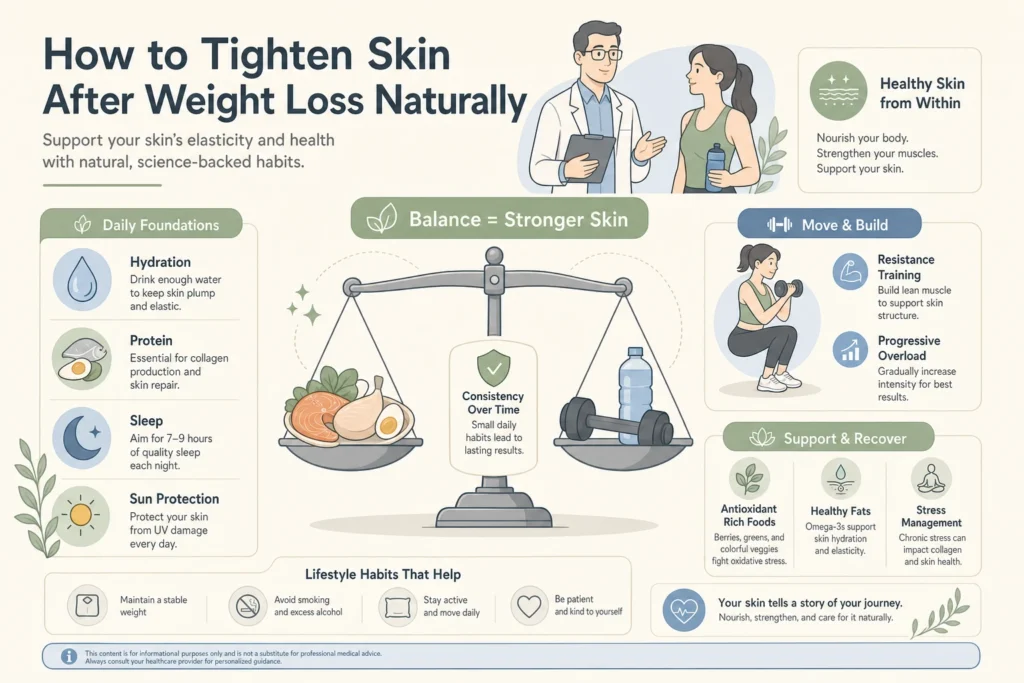
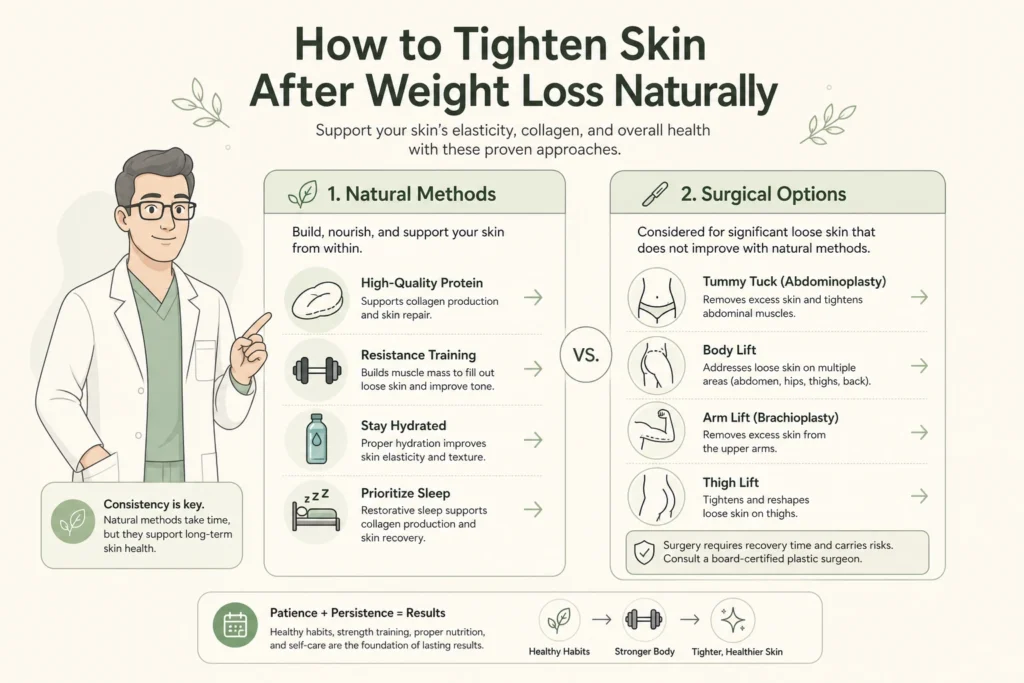
You can improve the look and feel of loose skin after weight loss with natural methods, but how much you can tighten it depends on your age, how much weight you lost, how fast you lost it, and how long the skin was stretched. Nutrition, muscle-building exercise, hydration, and sleep all support the skin that stays. What they cannot do is surgically remove skin that has permanently lost its elasticity. This guide walks through what actually helps, what the evidence shows, and how to tell when a natural plan has done all it can.
If you have been losing weight on semaglutide or tirzepatide, some skin change is normal, and it’s a sign the medication is working. For the bigger picture of what shifts during rapid weight loss, see our complete guide to GLP-1 body changes. This article stays focused on one question: how to firm skin without a procedure, and how to know your limits.

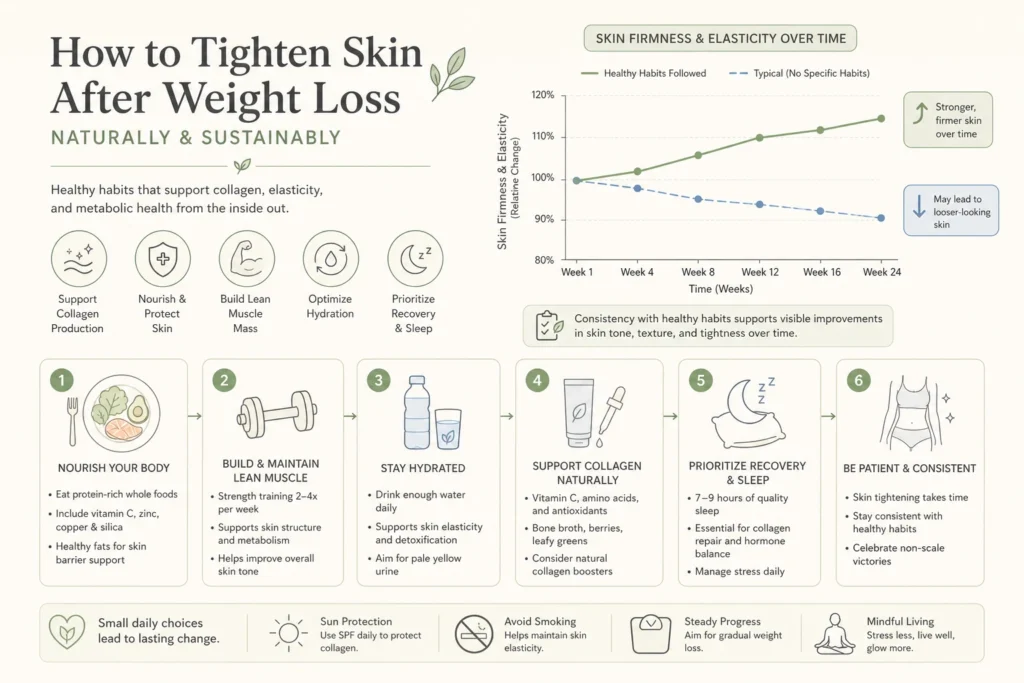
Natural methods can meaningfully improve mild to moderate skin laxity, especially in younger people and those who lost weight gradually. Skin is a living organ that responds to how you treat it, so supporting collagen production, building the muscle underneath, and keeping the skin healthy all help it look and feel firmer. The honest limit is elasticity: once the elastic fibers in skin are stretched past their ability to recoil, no food or workout snaps them back.
According to Cleveland Clinic on excess skin after weight loss, skin that is stretched to cover extra weight can lose elasticity and often fails to shrink back, so significant sagging after major weight loss frequently does not fully resolve without a procedure. So natural methods are the right first step and the right maintenance plan, but they are not a guaranteed fix for severe laxity.
Skin loosens because it was stretched to cover extra volume, and that volume left faster than the skin could remodel. Skin gets its firmness from collagen and elastin, two proteins that form a supportive web in the dermis. Carrying extra weight for years stretches that web, and aging and rapid loss both reduce how well it bounces back. On GLP-1 medications, the weight often comes off quickly, which gives skin less time to adapt.
Small studies suggest that slower, steadier weight loss gives skin more time to remodel, though genetics and age still set the ceiling. This is the causes-and-overview lane covered in depth in our guide to loose skin after weight loss. Here the point is simple: understanding why skin loosens tells you what natural methods can realistically influence, which is the health and appearance of the skin, not the total amount of it.
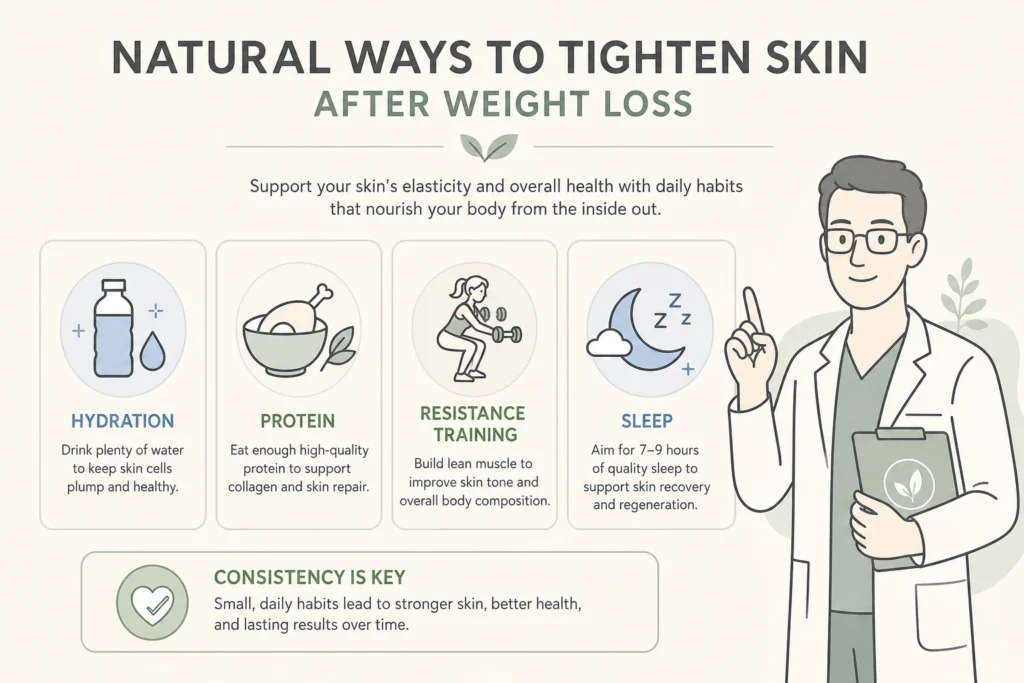
No single food tightens skin, but a diet built around protein, vitamin C, and colorful produce gives your body the raw materials to make collagen and protect the skin you have. Collagen is a protein, so adequate protein intake matters, and vitamin C is required for your body to actually assemble collagen fibers. Foods that support skin firmness include lean meats, fish, eggs, beans, citrus, berries, peppers, leafy greens, and other antioxidant-rich plants.
A review of nutrition and skin aging published in Dermato-Endocrinology, 2012 concluded that adequate protein and vitamin C support collagen synthesis, while antioxidants from fruits and vegetables help defend skin structure against damage. During weight loss, protein does double duty: it feeds collagen and helps preserve muscle. We cover the collagen and supplement question in detail, including what the research does and does not support, in our guide to collagen and supplements for skin during weight loss.

The most effective natural way to tighten stomach skin is to build the muscle beneath it through resistance training. You cannot contract skin like a muscle, but you can fill out the area under the skin so it drapes more smoothly. Building abdominal and core muscle, plus lean mass across the body, reduces the appearance of looseness and improves how the midsection looks and feels.
Resistance training also protects against the muscle loss that often comes with rapid weight loss, which matters because losing muscle along with fat makes skin look emptier. Aim for two to three strength sessions a week that work major muscle groups, and pair them with enough protein to support recovery. Progress here is gradual and measured in months, not days. For anyone on a GLP-1, protecting lean mass is one of the highest-value habits in a medically supervised weight loss program, both for the scale and for the skin.
Hydration and sleep will not remove excess skin, but they visibly affect skin quality, tone, and how firm skin looks day to day. Well-hydrated skin appears plumper and more resilient, while dehydrated skin looks thinner and more crepey. Sleep is when the body does much of its tissue repair, including the collagen turnover that keeps skin healthy.
The daily water intake guidance from the Mayo Clinic notes that fluid needs vary by body size, activity, and climate, and that most healthy people can meet their needs by drinking when thirsty and eating water-rich foods. There is no evidence that overdrinking tightens skin, so the goal is consistent, adequate hydration rather than extremes. Steady sleep, generally seven to nine hours for adults, supports the same repair processes. These habits are the low-effort, high-consistency foundation under everything else in this guide.

Facial volume loss after weight loss, sometimes called the deflated or gaunt look, responds partly to the same natural habits, though the face has less muscle to build than the body does. To support a fuller, healthier-looking face naturally, focus on adequate protein, good hydration, sleep, sun protection, and avoiding very rapid additional loss once you reach a healthy weight. Some people also find that stabilizing at a maintenance weight, rather than continuing to drop, lets the face settle and soften.
Natural methods can improve skin quality and support what volume remains, but they cannot replace fat pads that shrank as you lost weight. That is an honest limit worth stating plainly. When facial volume loss is significant and bothersome, the meaningful options are professional, and they belong in a conversation with a provider rather than a supplement aisle.
Natural methods have done their job when your skin is healthy and well-supported but a significant amount of loose skin remains after your weight has been stable for six to twelve months. At that point, more time and more protein will not change the excess itself. This is common after large amounts of weight loss, and it is not a personal failure. It reflects how much and how fast the skin was stretched.
When you reach that ceiling, the next step is understanding your professional options, which range from energy-based skin tightening to surgical removal for severe cases. If you are weighing what topical and clinical products can realistically do for skin quality, our guide to clinical peptide therapy versus skincare creams compares them honestly. The team that manages your weight loss is the right place to talk through what is realistic for your skin, because they already know your history, your medication, and your goals. There is no need to guess in isolation.

Medically reviewed by Dr. Donald Vollmer, MD
Managing Physician, Body Works TN

NAD+ therapy is marketed as a longevity reset for energy, focus, and healthy aging. This guide separates what the science on NAD therapy actually supports

The link between GLP-1 and testosterone catches many men off guard. Carrying extra weight suppresses testosterone through aromatization, low SHBG, and inflammation, while meaningful weight

Sermorelin, CJC-1295, and ipamorelin all raise growth hormone, but they work through different pathways and last different amounts of time. Here is how each peptide

Loose skin after major or GLP-1 weight loss is common, and it worries a lot of people. Here is what causes it, which factors decide

Rapid weight loss changes more than the number on the scale. Here is what happens to your face, skin, muscle, and body shape on GLP-1

A new retrospective study found postmenopausal women on tirzepatide lost noticeably more weight when they also used menopause hormone therapy. Here is what the research