
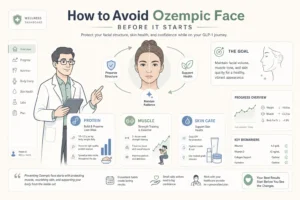
How to Avoid Ozempic Face Before It Starts
You can lower your odds of the gaunt, sunken look people call Ozempic face. Here is how pacing, protein, muscle, and skin care protect your
Copper sounds like an odd thing to put on, or in, your skin. It is also one of the most-studied trace minerals in dermal repair, and the body’s use of it depends on a small carrier molecule called GHK-Cu. The peptide has been in the lab since 1973, and the research now spans collagen biology, wound healing, dermal fibroblasts, and gene expression in aging skin. Most of what people read online about it, though, comes from supplement marketing rather than the peer-reviewed work.
This guide looks at what the GHK-Cu peptide actually does at the cellular level, what the dermatology and biochemistry literature supports, how topical and injectable forms differ in practice, and who is a reasonable candidate. The goal is to give you an honest picture so you can decide whether copper-tripeptide therapy belongs in a conversation with a clinician. At Body Works, GHK-Cu is one of several tools inside a physician-supervised peptide protocol in Franklin, TN and Nolensville, TN, paired with realistic expectations rather than miracle claims.
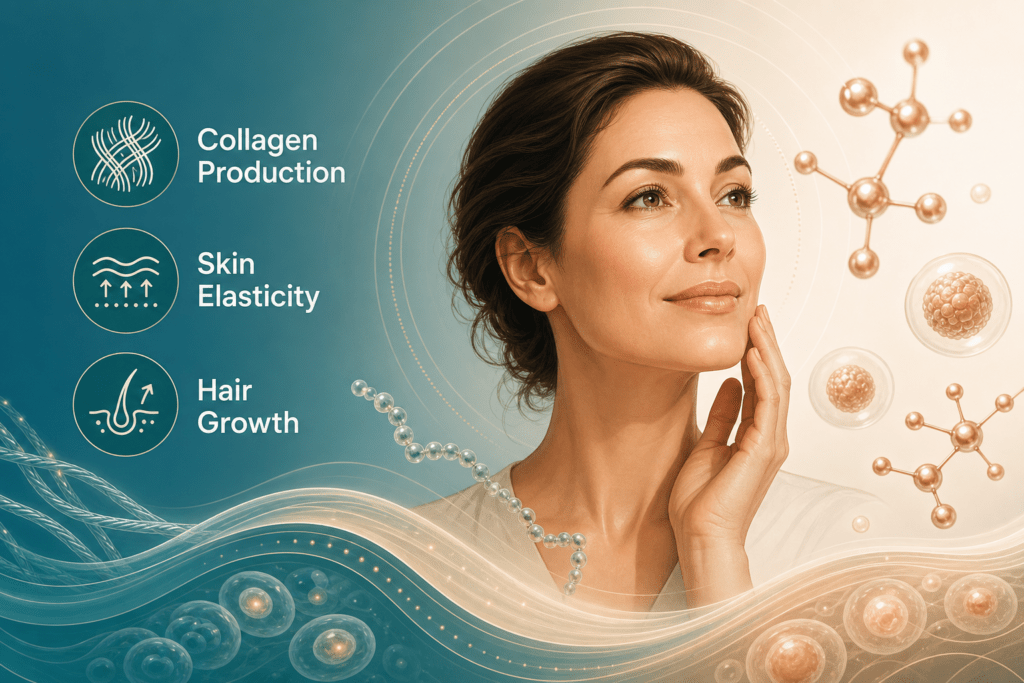
GHK-Cu is a small protein fragment of three amino acids, glycine, histidine, and lysine, bound to a copper ion. It occurs naturally in human plasma and signals skin cells, immune cells, and connective-tissue cells how to repair injury. Levels are high in young adults and decline steadily with age, which mirrors the loss of skin firmness, slower wound healing, and thinner dermal collagen seen in older patients.
Most of the foundational science traces back to Loren Pickart. A peer-reviewed review by Pickart and Margolina, BioMed Research International, 2015 describes GHK-Cu as modulating several cellular pathways at once, increasing collagen and elastin synthesis, supporting fibroblast function, and acting as an anti-inflammatory and antioxidant signal. The peptide is not a drug in the conventional sense. It is a delivery system for copper plus a biological instruction the body already recognizes.
GHK-Cu signals dermal fibroblasts, the cells that build the collagen and elastin scaffolding under your skin, to step up matrix production. This is the mechanism that earned the peptide most of its scientific attention. In cell culture work published by Maquart et al., FEBS Letters, 1988, the GHK-copper complex stimulated collagen synthesis in fibroblast cultures at nanomolar concentrations, with the largest effect at very low doses. Later studies extended the finding to glycosaminoglycans, decorin, and matrix metalloproteinase balance.
The cellular effect is not a single event. The peptide raises collagen and elastin output, triggers release of growth factors like vascular endothelial growth factor that improve local blood flow, activates antioxidant defenses including superoxide dismutase that protect cells from oxidative damage, and tempers inflammatory signals like TNF-alpha that accelerate skin aging. In plain terms, the peptide tells fibroblasts to rebuild dermal scaffolding without excessive breakdown of healthy tissue. American Academy of Dermatology guidance on retinoids and peptides places this class of ingredients in the category of evidence-supported topical and procedural strategies, alongside microneedling and chemical peels that stimulate the same repair cells.

Hair follicles cycle through a long growth phase called anagen, a short transition called catagen, and a resting phase called telogen. Anything that supports anagen activity, improves scalp circulation, or strengthens the dermal papilla cells at the base of each follicle has the potential to influence hair density and shedding. Copper-binding peptides like GHK-Cu interact with several of those signals in laboratory studies, which is why they appear in hair-loss research.
The hair-cycle physiology is well established. According to DermNet on hair loss and the hair cycle, around 85 to 90 percent of scalp follicles are in anagen at any time, with each remaining in active growth for two to six years. Supporting that phase, or reducing inflammation around the follicle, is the lever most hair-focused therapies pull. Honest framing matters: GHK-Cu has a plausible mechanism and supportive preclinical data, but it is not an FDA-approved hair-loss drug, and patients with significant pattern hair loss usually need a multi-modal plan rather than a peptide alone.
Both forms exist, and they answer different questions. Topical GHK-Cu, typically labeled as copper tripeptide-1 in serums, sits on the skin and acts locally on the dermis it can reach. Injectable GHK-Cu compounded by a 503A pharmacy delivers the peptide subcutaneously, which produces broader exposure across tissues but also adds the considerations that come with any injectable, including sterile technique, dosing accuracy, and physician oversight.
The decision is rarely either-or. In practice, patients focused on aesthetic skin tone, wrinkle texture, and topical maintenance often start with a well-formulated topical, sometimes paired with the procedural treatments offered at the Body Works medical aesthetics program such as microneedling or chemical peels. Patients pursuing whole-body regenerative goals, hair-cycle support, or post-procedure recovery may benefit more from an injectable protocol inside a supervised peptide therapy program at Body Works. The right answer depends on the goal and on what the bloodwork and history show.
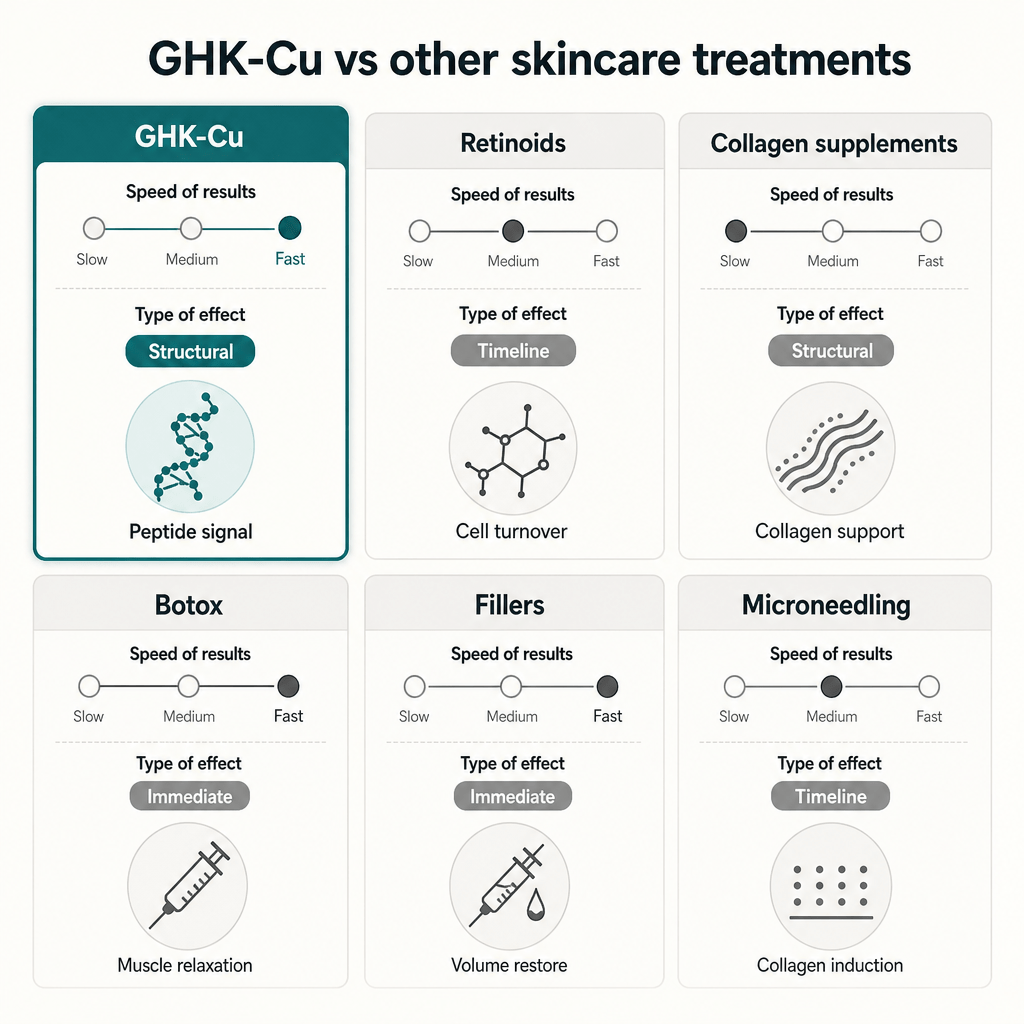
Patients ask this often, and the honest answer is that these tools do different things, not better or worse versions of the same thing. Topical retinoids are the most-studied anti-aging molecule and work by accelerating skin cell turnover and prompting collagen remodeling, and they can be combined with GHK-Cu rather than substituted for it. Neurotoxin injections like onabotulinumtoxinA reduce the muscle contractions that crease dynamic wrinkles, but they do not change skin quality or build collagen. Hyaluronic acid and other dermal fillers add volume in a specific location for several months at a time, but they do not stimulate tissue repair. Microneedling and fractional lasers create controlled micro-injury to trigger collagen remodeling and can be paired with GHK-Cu to support the recovery phase.
GHK-Cu fits a different slot. It is a slower, structural intervention that supports the cells that build skin and follicle tissue in the first place. It will not freeze a wrinkle, fill a hollow cheek, or resurface skin in a week. It will, over months, support better dermal scaffolding underneath whichever procedural treatments a patient also chooses, which is why dermatologists often think of it as a complement to retinoids, Botox, and fillers rather than a replacement.
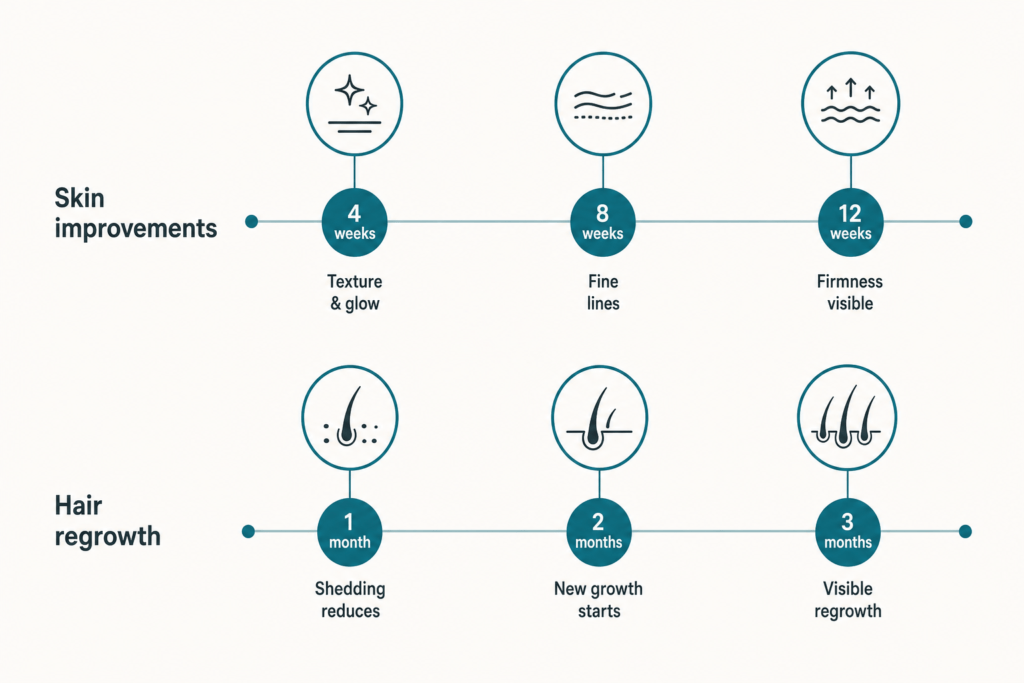
Published data and clinical experience converge on a few honest expectations. The earliest signal is usually a change in skin feel, hydration, and surface texture, appearing in the first two to four weeks of a consistent topical or injectable protocol. Fine-line softening, more uniform skin tone, and visible firmness changes generally take eight to twelve weeks because dermal collagen rebuilds slowly. Hair density and shedding changes are even slower, with most patients needing at least three months of consistent dosing before judging the response, and a full six months before deciding whether to continue, adjust, or stop.
Several variables move the timeline. Patients who pair the peptide with daily SPF, structured sleep, adequate protein, and avoidance of nicotine respond faster than patients who rely on the peptide alone. Patients with significant chronic inflammation, uncontrolled blood sugar, or thyroid dysfunction tend to respond more slowly. Honest peptide programs are scheduled in months, not weeks, and the patients who do best understand that.
The most striking line of GHK-Cu research is the gene-expression work. The peptide does not just push collagen production. It appears to influence the activity of thousands of genes involved in tissue repair, antioxidant defense, and cellular signaling, which is why the literature sometimes describes it as a broad biological modulator rather than a single-target drug.
A detailed review by Pickart and Margolina, International Journal of Molecular Sciences, 2018 documents these actions, including effects on collagen and elastin pathways, anti-inflammatory signaling, and antioxidant defenses. The breadth is both the appeal and the caveat. A molecule that touches many pathways at once is harder to package into a single, narrowly defined clinical claim, and the human randomized-trial base is thinner than for established drugs like topical retinoids.
Safety for healthy adults has looked favorable in the published GHK-Cu literature, especially at the low doses used in topicals and in standard compounded injectable protocols. Side effects when they occur are usually local: mild redness, transient itching, or sensitivity at an application or injection site. Even so, copper-tripeptide therapy is not a fit for everyone, and self-experimenting with research-grade powders or unvetted online vendors carries real risks for sterility, dosing, and counterfeit material.
Candidacy at Body Works starts with a physician evaluation, a review of medical history and current medications, and bloodwork where indicated. Patients with active cancer, certain autoimmune conditions, pregnancy, or copper-metabolism disorders should not pursue GHK-Cu without specialist input. Skin-care patients who are happy with results from collagen-supporting strategies outlined by Cleveland Clinic, such as daily SPF, topical retinoids, and procedural collagen induction, may not need a peptide protocol at all.
GHK-Cu is not an FDA-approved drug. It is most often dispensed through 503A compounding pharmacies, which prepare patient-specific medications under a physician prescription. The current bulk drug substances list that governs which ingredients are eligible for compounding is administered by the FDA and continues to evolve. According to the FDA Bulk Drug Substances Used in Compounding Under Section 503A page, the agency periodically reviews peptides and other substances for inclusion or removal based on safety data, supply, and clinical use.
What this means for patients is practical. The 503A framework is the lane that allows physician-supervised peptide therapy to exist, but the regulatory status of any specific peptide can change. That is exactly why provider selection matters so much. A clinic that watches FDA category updates, sources only from accredited 503A pharmacies, and rebuilds protocols when the list shifts is offering a different product than one that markets the same peptide indefinitely regardless of policy. Patients who want a deeper read on the 2026 changes can see the explainer on FDA peptide regulation in 2026, and the broader framework lives in the complete guide to peptide therapy.
Patients rarely show up wanting copper peptide for its own sake. They arrive with a goal: smoother skin texture, better hair density, faster recovery from an aesthetic procedure, or general regenerative support. GHK-Cu fits some of those goals well, fits others modestly, and fits a few not at all. The honest framing is to start with the goal, then ask which tools give the best return on time, cost, and physiologic risk.
A Body Works peptide consultation includes skin and lifestyle factors, candidacy for topical or injectable forms, complementary aesthetic procedures, and overlap with services like custom IV hydration for general nutrient and antioxidant support. It also includes a candid discussion of what GHK-Cu cannot do. It will not regrow hair gone for years, will not reverse deep volume loss, and is not a substitute for sun protection or basic skin care. Patients who want to vet any clinic before booking can review the guide to choosing a peptide therapy provider.
GHK-Cu is one of the more interesting molecules in regenerative dermatology, but the right place to evaluate it is inside a physician relationship, not at a checkout page. Body Works runs peptide therapy under medical supervision in Franklin and Nolensville, with bloodwork-first protocols, accredited 503A sourcing, and a conservative posture on claims. If GHK-Cu is the right fit, the team will explain why. If it is not, the team will say so and recommend the better path. That is the standard worth holding any peptide clinic to.
If you are ready to compare GHK-Cu against the other tools available for your goals, Schedule a Free Consultation with the Body Works team. You can reach the Franklin office at (615) 790-2548 or the Nolensville office at (615) 941-1000.
Medically reviewed by Dr. Donald Vollmer, MD
Managing Physician, Body Works TN
You can lower your odds of the gaunt, sunken look people call Ozempic face. Here is how pacing, protein, muscle, and skin care protect your
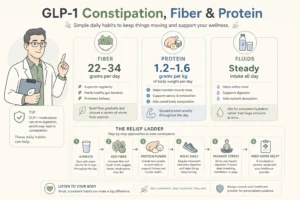
Constipation affects 24% of semaglutide patients and up to 17% on tirzepatide. This guide gives the daily targets that prevent it: 22 to 34 grams

Ozempic face is the hollow, aged look some people notice after rapid weight loss. Here is why it happens, who is most at risk, and

When Tennessee investigators tested counterfeit weight loss vials seized in Medina, one was mostly water. That was the good outcome. The dangers of buying peptides
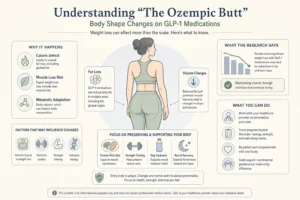
Rapid weight loss changes more than the number on the scale. Here is why the glutes, breasts, and arms often change shape on GLP-1 medications,
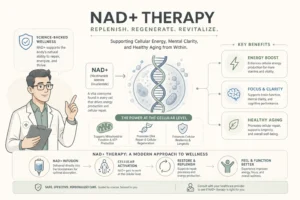
NAD+ therapy is marketed as a longevity reset for energy, focus, and healthy aging. This guide separates what the science on NAD therapy actually supports
See Body Works first in your Google results.