How to Tighten Skin After Weight Loss Naturally (and When You Need More)
A candid, evidence-based look at what natural methods can and cannot do for loose skin after GLP-1 weight loss, from protein and resistance training to
You have probably seen NAD+ therapy described as a longevity miracle, an energy reset, or a way to turn back your cellular clock. The marketing is loud and the promises are large. The actual science is more interesting, and more honest, than the hype around it.
NAD therapy delivers a molecule your cells already depend on every second of the day. The real question is not whether NAD+ matters, because it clearly does, but how much a supervised infusion can do for how you feel, and where the evidence is genuinely strong versus still developing. At Body Works, we think patients deserve that distinction rather than a sales pitch.
This guide explains what NAD+ is, why levels fall as you age, what the research supports today, and what a clinician-supervised visit actually involves. If you are weighing NAD+ against other wellness options, the goal here is clarity, not cheerleading.

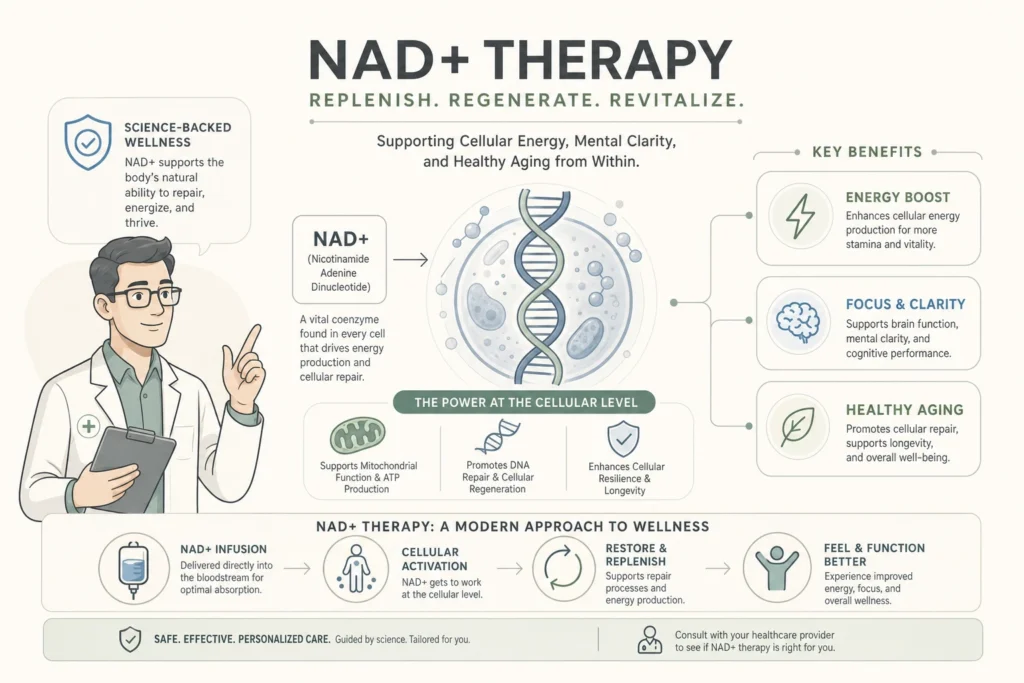
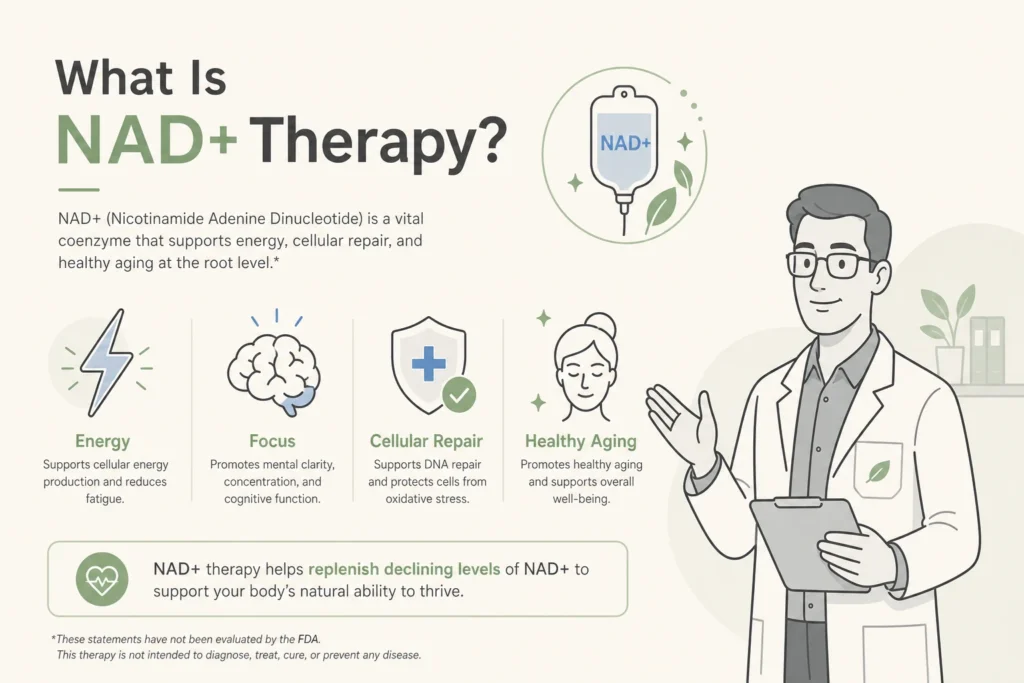
NAD+, short for nicotinamide adenine dinucleotide, is a coenzyme found in every living cell, and it is essential for turning the food you eat into usable energy. It shuttles electrons through the reactions that produce ATP, the fuel your mitochondria generate. Without adequate NAD+, energy metabolism slows at the most basic level.
NAD+ also acts as a signaling molecule. It powers enzymes called sirtuins and PARPs that help regulate DNA repair and the inflammatory response, and it shapes how cells react to stress. That dual role, both fuel and switchboard, is why researchers study it so intensely in the context of metabolism and aging.
A widely cited review in Cell Metabolism describing NAD+ metabolism and the control of energy homeostasis frames NAD+ as a vital cofactor that helps rewire metabolism, activate sirtuins, and maintain mitochondrial fitness. In plain terms, when NAD+ is abundant, the cellular machinery that makes and manages energy runs more smoothly.
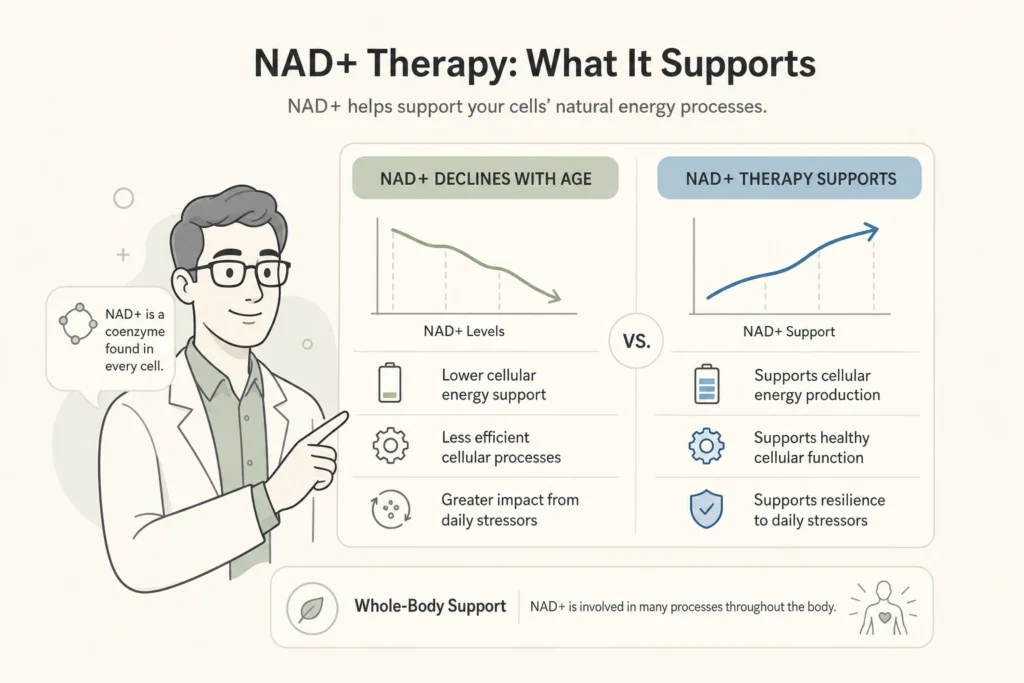
NAD+ levels tend to fall as you get older, and researchers attribute the decline to a mix of reduced production and increased consumption. Enzymes such as CD38 and the PARPs draw down NAD+ to handle inflammation and DNA damage, both of which rise with age. At the same time, some of the pathways that rebuild NAD+ become less efficient.
Lower NAD+ can leave mitochondria less able to meet energy demand, which is one proposed reason people report flagging stamina and slower recovery over the decades.
Researchers writing in Experimental Gerontology on age-related NAD+ decline document falling NAD+ across species, including humans, driven by higher consumption through CD38 and PARPs alongside reduced synthesis. The authors are careful to note that much about the causes and consequences of this decline in people remains to be understood, which is an honest anchor for any claims about restoring it.
Start with the honest version. The foundational science is strong, while the human clinical evidence for infusions is still maturing. Decades of laboratory and animal research show that raising NAD+ can improve mitochondrial function and support healthy aging in model organisms. Translating those results into proven outcomes for people is where the field is still working.
Most rigorous human data so far comes from oral NAD+ precursors rather than intravenous NAD+ itself. A randomized, double-blind, placebo-controlled crossover trial published in Nature Communications, testing chronic nicotinamide riboside supplementation in healthy middle-aged and older adults, found that the precursor was well tolerated and reliably raised NAD+ levels. That is meaningful, but the study did not prove downstream benefits like more energy or better cognition.
The same pattern shows up in Cell Metabolism on the therapeutic potential of NAD-boosting molecules and the in vivo evidence: promising results in animals, with human trials still catching up. Here is a simple way to hold both truths at once.
| What NAD+ therapy is claimed to do | Current evidence status |
|---|---|
| Raise measurable NAD+ levels in the body | Supported in human trials of oral precursors |
| Support mitochondrial energy metabolism | Strong mechanistic and animal evidence |
| Improve day-to-day energy, focus, and recovery | Widely reported; limited controlled human data |
| Reverse aging or extend human lifespan | Not established in people |

People pursue NAD+ therapy hoping for more energy, sharper mental clarity, faster recovery, and support for healthy aging. Those goals are reasonable given what NAD+ does inside cells, but it helps to frame them as reasons people try it rather than guarantees the science has confirmed.
The strongest scientific throughline is metabolic: NAD+ is required for energy production and cellular repair, so keeping it adequate is biologically sensible. Reports of improved focus, mood, and stamina are common among people who use it, though those subjective benefits have not been consistently proven in large controlled trials, and individual responses vary.
Work summarized in a Cell Metabolism review of the biology and therapeutic potential of the NAD+ intermediates NMN and NR highlights genuine promise for supporting metabolic health while stressing that more human research is needed. The practical takeaway: NAD+ therapy is best viewed as a supportive wellness tool with encouraging science behind it, not a proven cure for any condition.

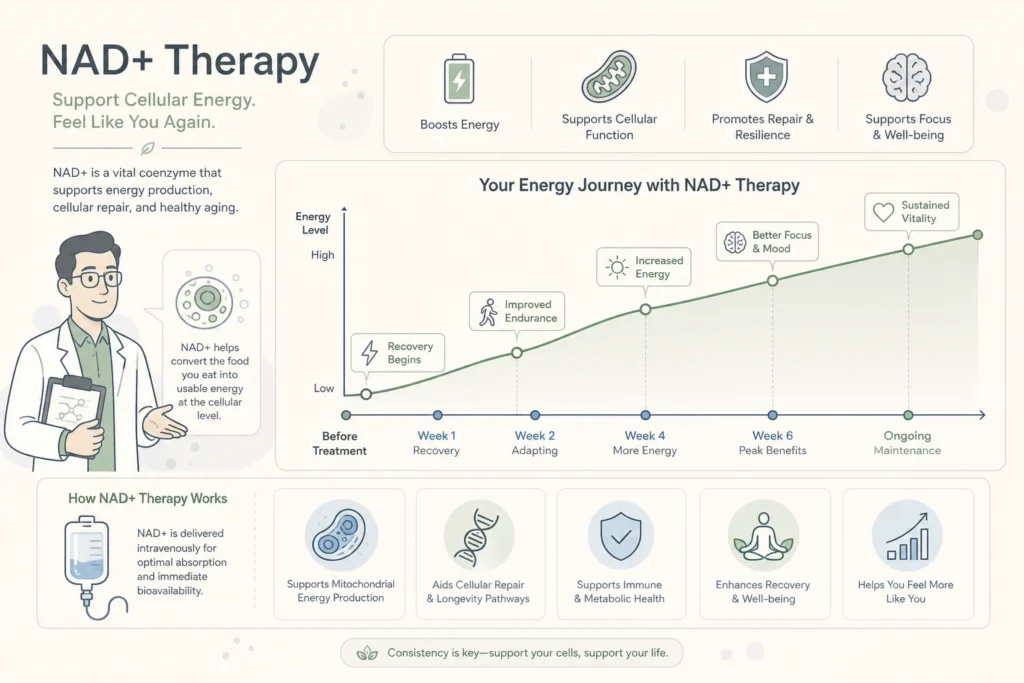
A NAD+ infusion is a slow, monitored process rather than a quick vitamin shot. Because pushing NAD+ too fast can cause flushing, nausea, or chest tightness, it is delivered gradually through an IV over an extended session, and the drip rate is adjusted by a clinician based on how you feel.
Here is how a first NAD+ visit typically unfolds at Body Works:
In practice, the pace is what surprises first-timers most. We tell patients to clear the afternoon and treat the session as real downtime, not a quick in-and-out shot.
NAD+ pairs naturally with a broader hydration and micronutrient plan, which is why it sits alongside our custom IV hydration and nutrient infusions. If you are new to infusion therapy in general, our overview of how IV therapy delivers nutrients directly into the bloodstream is a useful starting point for understanding why the delivery method matters.

NAD+ therapy is generally considered for healthy adults interested in energy, recovery, and longevity-oriented wellness, and it should always be evaluated on an individual basis by a clinician. It is not a substitute for medical treatment of a diagnosed condition, and it is not right for everyone.
On safety, controlled research on NAD+ precursors has been reassuring. The nicotinamide riboside trial in Nature Communications reported that supplementation was well tolerated in older adults, and IV infusions given slowly under supervision are designed to keep the most common side effects, flushing and nausea, mild and manageable. Pregnancy, certain medical conditions, and some medications may make NAD+ inappropriate, which is exactly what a consultation is meant to catch.
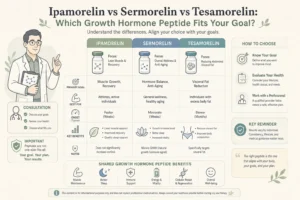
NAD+ is one of several physician-guided longevity options rather than a standalone answer. Some patients pair it with regenerative approaches like growth hormone peptides such as sermorelin and ipamorelin or explore it within our full guide to peptide therapy and cellular health. Others combine metabolic and hormone-optimization strategies, a pairing covered in our look at how weight loss and testosterone support work together for men.
Body Works builds each plan around your goals, health history, and clinical judgment, so NAD+ is recommended only when it genuinely fits.
Ready to find out whether NAD+ therapy makes sense for you? Our team at Franklin and Nolensville can review your health, answer your questions, and tailor a supervised plan. Schedule a Free Consultation to get started.
Medically reviewed by Dr. Donald Vollmer, MD
Managing Physician, Body Works TN

A candid, evidence-based look at what natural methods can and cannot do for loose skin after GLP-1 weight loss, from protein and resistance training to

The link between GLP-1 and testosterone catches many men off guard. Carrying extra weight suppresses testosterone through aromatization, low SHBG, and inflammation, while meaningful weight

Sermorelin, CJC-1295, and ipamorelin all raise growth hormone, but they work through different pathways and last different amounts of time. Here is how each peptide

Loose skin after major or GLP-1 weight loss is common, and it worries a lot of people. Here is what causes it, which factors decide

Rapid weight loss changes more than the number on the scale. Here is what happens to your face, skin, muscle, and body shape on GLP-1

A new retrospective study found postmenopausal women on tirzepatide lost noticeably more weight when they also used menopause hormone therapy. Here is what the research