

TRT Side Effects and How They Are Managed: Hematocrit, Estrogen, Injection Sites
Ask ten men about TRT side effects and you’ll hear ten different fears, most of them wrong. Shrinking testicles, aggression, hair loss, none of these
Two men walk into the same clinic with nearly identical lab results: both have low testosterone, both are in their late 30s, both still want kids someday. One leaves with a testosterone prescription. The other leaves with enclomiphene. Same problem, same age, same low number, different medication entirely, and weighing enclomiphene vs TRT is exactly the conversation that decided it, because both plans are correct.
The reason isn’t the lab value. It’s the mechanism. Testosterone replacement therapy adds testosterone directly to your bloodstream and, in doing so, tells your brain to stop signaling your testes to make their own. Enclomiphene does the opposite: it blocks estrogen’s feedback signal at the pituitary, which pushes your own testes to produce more testosterone on their own. Same destination, opposite road, and the road you take changes what happens to fertility, to your natural hormone axis, and to what “stopping treatment” actually looks like later.
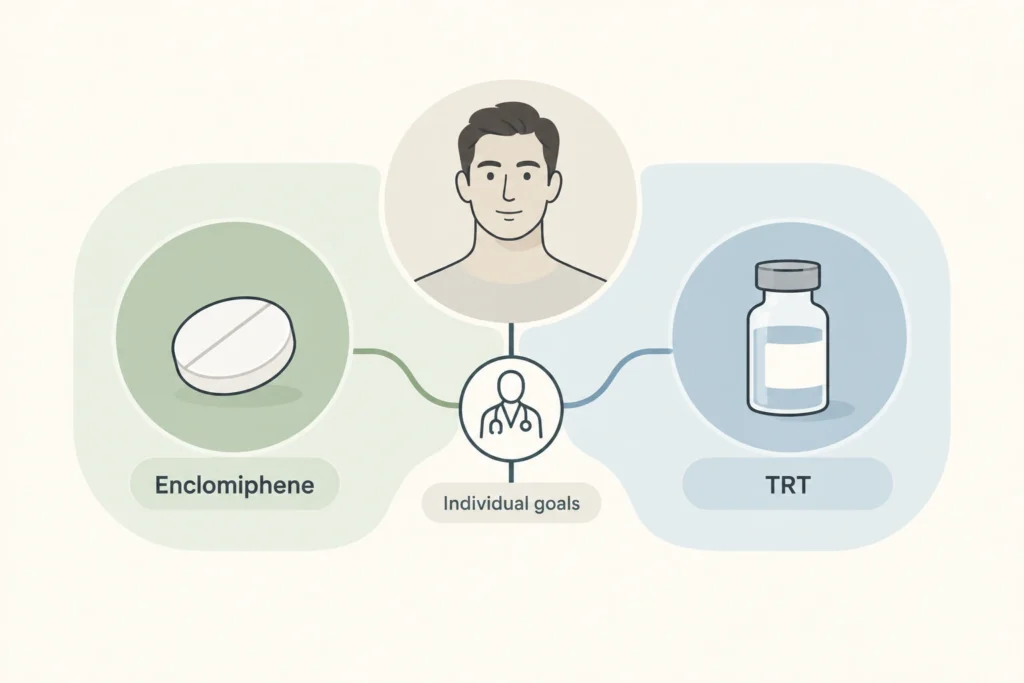
Enclomiphene is a selective estrogen receptor modulator that blocks estrogen receptors in the hypothalamus and pituitary gland. Your brain reads less estrogen signal as “testosterone is low,” so it releases more luteinizing hormone and follicle-stimulating hormone, which in turn drives your testes to make more testosterone and continue producing sperm. Clinical trial data on enclomiphene citrate in men with secondary hypogonadism shows exactly this pattern: enclomiphene citrate raised testosterone by restoring the body’s own hormonal signaling rather than replacing it.
TRT works through direct replacement. Injected, gel, or pellet testosterone raises your blood level directly, and your brain, sensing plenty of testosterone already circulating, dials back its own signal to the testes. Over time, that suppressed signal means reduced natural testosterone production and reduced sperm production for as long as you stay on therapy.
The practical difference shows up the moment either medication stops. Stop TRT, and your natural production has to restart on its own timeline, which can take weeks or months and sometimes needs its own recovery protocol. Stop enclomiphene, and there’s no suppressed axis to restart, because your own system never stopped producing in the first place. That single distinction is often the deciding factor for men who are weighing a long-term commitment against something they can adjust or discontinue with fewer downstream questions.
Yes, and for most men comparing the two, this is the deciding factor. Because enclomiphene stimulates rather than replaces, it generally preserves or improves sperm production while raising testosterone. A pharmacodynamic study comparing enclomiphene citrate to testosterone gel found enclomiphene restored testosterone while maintaining the hormonal signaling sperm production depends on, unlike topical testosterone.
TRT, by suppressing the pituitary signal, commonly reduces sperm count and can cause temporary infertility while a man is on it. That effect isn’t universal or permanent for every man once therapy stops, but it’s common enough that fertility plans should factor in before, not after, starting testosterone. Men on TRT who want to preserve fertility sometimes add human chorionic gonadotropin alongside testosterone specifically to keep that testicular signal active; clinical guidance on hCG use in hypogonadal men covers when that combination makes sense. Enclomiphene sidesteps the question for many men by not suppressing that signal in the first place.
Enclomiphene is generally considered for men with secondary hypogonadism, meaning the testes themselves work but aren’t getting an adequate signal from the pituitary, and who still want to preserve fertility or avoid long-term suppression of their own hormone production. It is not typically the right choice for men with primary testicular failure, where the testes can’t respond to signaling regardless of how strong that signal is; TRT is the standard approach there.
The Endocrine Society’s clinical practice guideline on testosterone therapy frames TRT as the default treatment for confirmed hypogonadism, with alternatives like enclomiphene considered based on a man’s specific goals, particularly fertility. That’s a clinical decision that depends on which type of hypogonadism a man has, not a personal preference between two equally interchangeable options.
Response to enclomiphene also isn’t universal even among good candidates. Some men see a strong testosterone rise within a few weeks; others get a partial response that doesn’t fully resolve their symptoms, and switching to TRT at that point isn’t a failure, it’s the workup doing its job. A trial of enclomiphene with a follow-up lab draw is a reasonable, low-commitment first step for a man who qualifies for either option and wants to keep fertility on the table before deciding whether TRT is worth the tradeoff.
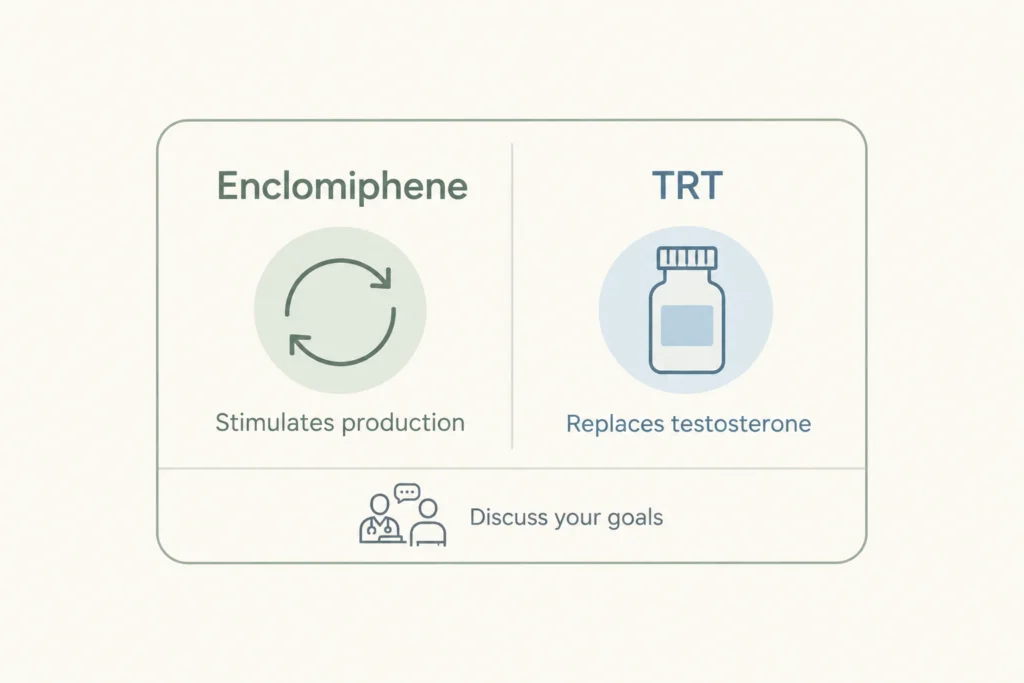
| Factor | Enclomiphene | Testosterone Replacement Therapy |
|---|---|---|
| Mechanism | Stimulates the body’s own testosterone production via the pituitary | Replaces testosterone directly, suppressing natural production |
| Effect on fertility | Generally preserves or supports sperm production | Commonly reduces sperm count while on therapy |
| Administration | Oral tablet | Injection, topical gel, or pellet, depending on protocol |
| Best fit for | Secondary hypogonadism with a functioning testicular signal, fertility a priority | Confirmed hypogonadism, especially primary testicular failure |
| What monitoring looks like | Follow-up testosterone, LH, and FSH to confirm response | Testosterone, hematocrit, and estradiol monitored on a regular schedule |
Neither option is inherently “stronger” or “better.” They solve different versions of the same problem, and matching the mechanism to the actual cause of a man’s low testosterone is the entire job of the consultation before treatment starts.

Both options carry monitoring requirements, just different ones. TRT’s most closely watched issues are hematocrit and estradiol, both of which require periodic labs and occasional dose adjustments; TRT side effects and how they’re managed covers that monitoring schedule in detail. Enclomiphene’s monitoring centers more on confirming the hormonal response is actually happening as expected, through repeat testosterone, LH, and FSH measurements.
On the regulatory side, testosterone products themselves have had their safety label updated as recently as 2025. The FDA’s 2025 class-wide labeling update for testosterone products removed the boxed cardiovascular warning based on newer trial data, while adding a new blood pressure warning across the product class, which is the kind of evolving detail that makes an in-person, physician-supervised conversation more useful than a forum thread from three years ago.
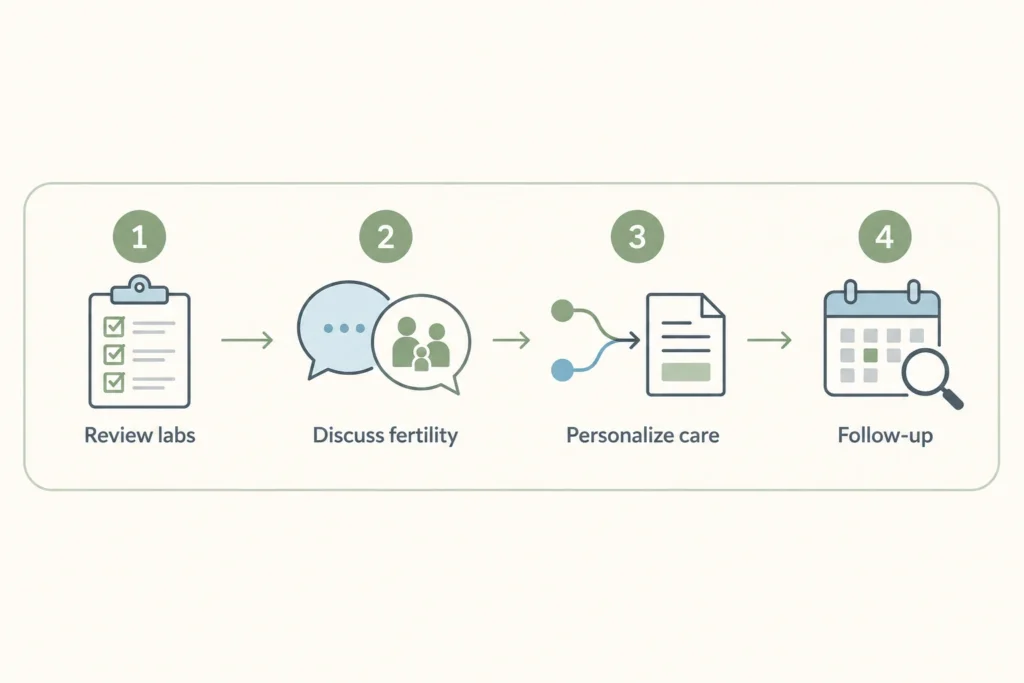
At Body Works, the enclomiphene-versus-TRT conversation always starts with one question: does fertility, now or in the future, matter to you? That single answer reshapes the rest of the workup, because it determines whether the labs we order are checking for primary or secondary hypogonadism, not just confirming a low number. A man in Franklin, TN or Nolensville, TN who wants more kids someday gets a very different first conversation than a man who’s certain his family is complete, even if their lab numbers are nearly identical.
This is also why a proper diagnostic workup, not a quick online questionnaire, matters before either medication gets prescribed. Testosterone levels by age explains the testing process that comes before this decision, and what physician-supervised treatment looks like covers the full process for men choosing either path at Body Works.
Schedule a Free Consultation to talk through your labs, your goals, and which mechanism actually fits your situation.
Medically reviewed by Dr. Donald Vollmer, MD
Managing Physician, Body Works TN
Ask ten men about TRT side effects and you’ll hear ten different fears, most of them wrong. Shrinking testicles, aggression, hair loss, none of these
Most men expect testosterone therapy to feel like flipping a switch. It doesn’t, and a realistic TRT results timeline looks nothing like the overnight transformation

He’s 38, sleeping seven hours a night, still hitting the gym three times a week, and he still feels like he’s dragging a weighted sled
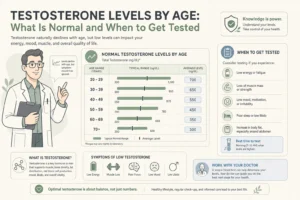
A 42-year-old man gets his testosterone checked, and the lab report comes back with a single word next to the number: “normal.” He still feels

A lot of what passes for testosterone replacement therapy in Franklin, TN and nationwide in 2026 is a questionnaire, a card swipe, and a prescription
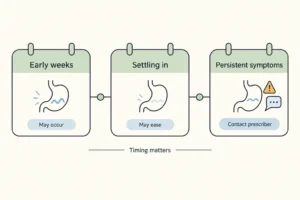
A symptom that is completely normal in week two can be a reason to call your prescriber in week fourteen. Nausea right after a dose
See Body Works first in your Google results.