

TRT Side Effects and How They Are Managed: Hematocrit, Estrogen, Injection Sites
Ask ten men about TRT side effects and you’ll hear ten different fears, most of them wrong. Shrinking testicles, aggression, hair loss, none of these
He’s 38, sleeping seven hours a night, still hitting the gym three times a week, and he still feels like he’s dragging a weighted sled through his own day. His doctor’s first suggestion is usually more sleep, less stress, maybe less coffee. Sometimes that’s the right call. Sometimes it isn’t, and the actual cause is sitting in a hormone panel nobody’s ordered yet.
Low testosterone symptoms are the answer here often enough to matter, because fatigue, low libido, and mood changes are also the three most common complaints in a general primary care visit for completely unrelated reasons. That overlap is exactly why low testosterone gets missed in men under 45: the symptoms look like everything else first. The checklist below is the pattern clinicians actually look for, not a generic “feeling off” list, and it’s the first thing worth ruling in or out before assuming your 30s or 40s are just supposed to feel this way.
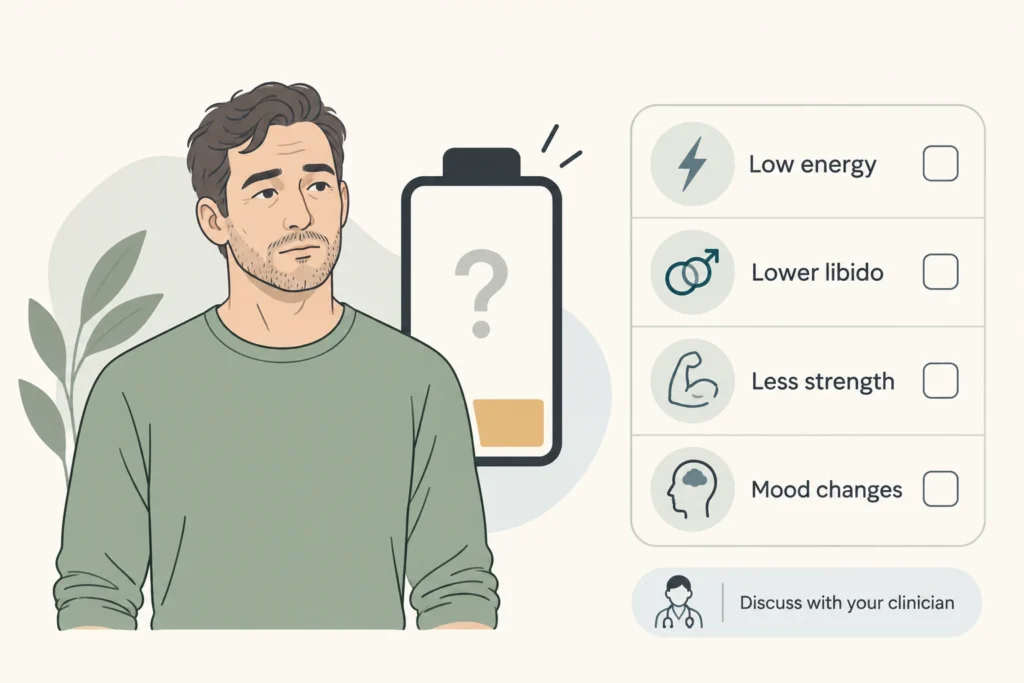
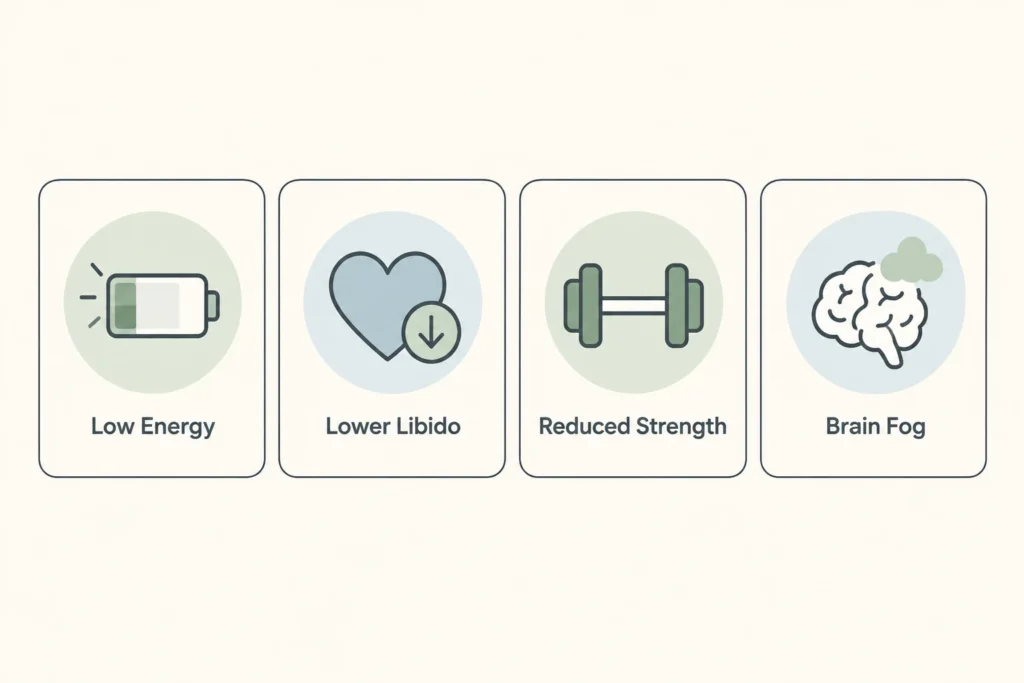
Reduced libido, fatigue, loss of muscle mass, increased body fat, and depressed mood are the core cluster clinicians screen for, according to MedlinePlus’s patient guidance on recognizing low testosterone. No single symptom on that list, taken alone, points reliably to low testosterone; poor sleep causes fatigue, stress causes low libido, and a demanding job causes both. What matters is whether several of these are showing up together and sticking around for weeks rather than days.
The Endocrine Society’s clinical practice guideline on testosterone therapy is direct about this: a testosterone diagnosis requires symptoms consistent with deficiency plus a confirmed low lab value, not one or the other. Symptoms alone don’t diagnose low T. Neither does a low number on a lab slip with no symptoms attached. You need both.
Physically, low testosterone shows up as a drop in muscle mass and strength even with consistent training, an increase in body fat, particularly around the midsection, reduced bone density over time, and fewer spontaneous morning erections. Some men also notice smaller testicles or breast tenderness. The Cleveland Clinic’s overview of male hypogonadism lists both as signs to raise directly with a provider, since they point toward a hormonal cause rather than a lifestyle one and change what a clinician looks for next.
Hair loss and hot flashes get mentioned online more than clinical literature supports as reliable low-T markers on their own. Treat them as supporting evidence in a broader pattern, not standalone proof. Sleep quality deserves a separate mention here too: poor sleep both mimics low testosterone symptoms and actively lowers testosterone production, since most of a man’s daily testosterone release happens during deep sleep. A man who is sleeping five hours a night and feeling wrecked may have a sleep problem, a testosterone problem, or both feeding each other, which is one more reason a lab panel settles the question faster than guessing.
Low mood, irritability, trouble concentrating, and a general loss of motivation are common enough in low testosterone that they’re part of the standard screening conversation, not an afterthought. Men often describe it as feeling flat rather than depressed exactly, a subtle drop in drive that’s hard to pin on any one event.
This is the category most likely to get written off as burnout or a rough patch, because it fits the story so easily. The distinguishing feature is duration: burnout tends to track with a specific stretch of stress and eases once that stress lifts. Low testosterone symptoms don’t ease on their own, because the underlying hormone level isn’t changing on its own either.
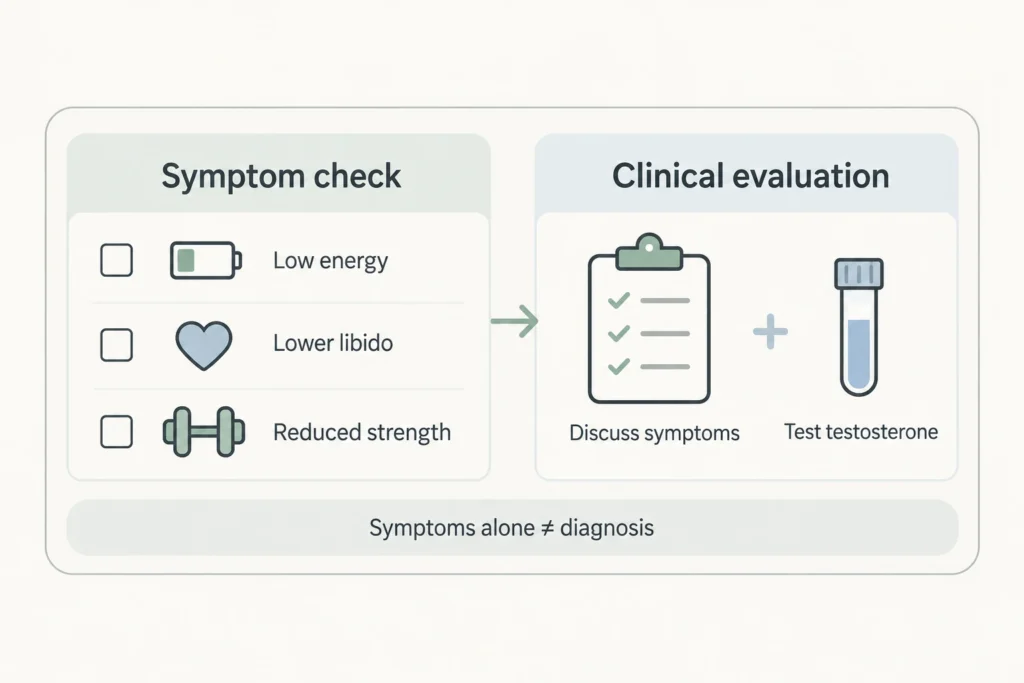
Three or more symptoms from the checklist, present most days for a month or longer, is a reasonable threshold for requesting a lab panel rather than waiting it out. That’s not a diagnostic cutoff, just a practical trigger for the conversation. The Mayo Clinic’s guide to testosterone therapy makes the same point from the other direction: testing men without meaningful symptoms rarely changes anything, which is why symptom-first screening, not routine testing, is the standard most clinicians follow.
If your symptom list matches but you don’t know what a normal result actually looks like once the labs come back, testosterone levels by age covers how reference ranges work and why a “normal” result can still mean something’s off.
Clinical societies don’t fully agree on where the biochemical cutoff should sit, which is part of why the symptom picture carries so much weight. The American Association of Clinical Endocrinologists’ guideline on hypogonadism in adult men has historically used a lower biochemical threshold than some other specialty groups, which means a man evaluated under one framework could be told his labs are borderline while another framework calls the same number diagnostic. That’s a reason to work with a provider who treats the number and the symptoms together rather than one in isolation.
Yes, and this specific overlap catches a lot of men off guard. Fatigue and reduced muscle mass show up on both symptom lists, so a man losing weight on a GLP-1 medication who also has undiagnosed low testosterone can chalk both up to the weight loss itself. GLP-1s and testosterone: what men should know breaks down why obesity and low testosterone often travel together and what that means if you’re on both a weight loss protocol and wondering about your hormones.
At Body Works, the intake conversation for men in Franklin, TN and Nolensville, TN starts with the symptom pattern, not the lab order. A provider walks through fatigue, libido, mood, sleep, and body composition changes before any blood is drawn, because that conversation determines which labs actually get ordered and how the results should be read once they come back. A man reporting three or four symptoms gets a different diagnostic workup than one reporting a single vague complaint, and that distinction is easy to miss on a rushed ten-minute visit.
That symptom-first process is also what separates a real diagnostic workup from the kind of online questionnaire that leads straight to a prescription. A checklist tells you whether a lab panel is worth ordering. It does not replace one, and it should never be the basis for a prescription on its own.

If this checklist reads like your last several months, the next step is a real conversation and a confirmed lab result, not another round of guessing. Franklin and Nolensville men working with Body Works get a physician-supervised process from the first symptom conversation through ongoing monitoring; what that process looks like start to finish is worth reading before your visit.
Schedule a Free Consultation and bring your symptom list. If treatment ends up being the right call, the TRT results timeline covers what changes month by month once you start.
Medically reviewed by Dr. Donald Vollmer, MD
Managing Physician, Body Works TN
Ask ten men about TRT side effects and you’ll hear ten different fears, most of them wrong. Shrinking testicles, aggression, hair loss, none of these
Most men expect testosterone therapy to feel like flipping a switch. It doesn’t, and a realistic TRT results timeline looks nothing like the overnight transformation
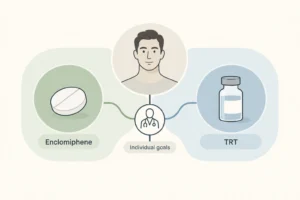
Two men walk into the same clinic with nearly identical lab results: both have low testosterone, both are in their late 30s, both still want
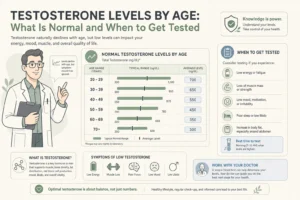
A 42-year-old man gets his testosterone checked, and the lab report comes back with a single word next to the number: “normal.” He still feels
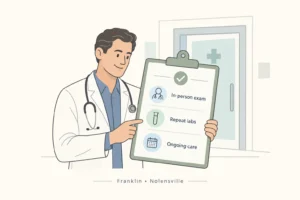
A lot of what passes for testosterone replacement therapy in Franklin, TN and nationwide in 2026 is a questionnaire, a card swipe, and a prescription
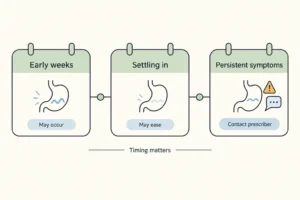
A symptom that is completely normal in week two can be a reason to call your prescriber in week fourteen. Nausea right after a dose
See Body Works first in your Google results.