

TRT Side Effects and How They Are Managed: Hematocrit, Estrogen, Injection Sites
Ask ten men about TRT side effects and you’ll hear ten different fears, most of them wrong. Shrinking testicles, aggression, hair loss, none of these
Most men expect testosterone therapy to feel like flipping a switch. It doesn’t, and a realistic TRT results timeline looks nothing like the overnight transformation ads imply. The first two weeks can feel like nothing changed at all, which is exactly when a lot of men quietly wonder if they wasted their money. Then, somewhere between week four and week eight, something shifts, and by month three most men are asking why they waited so long to start.
The order those changes arrive in isn’t random. Mood and libido tend to move first because they respond to blood testosterone levels directly. Muscle, body composition, and bone density move slower because they depend on tissue rebuilding itself, which takes months regardless of how high your testosterone number climbs. Knowing that order in advance is the difference between sticking with treatment through the slow middle stretch and quitting right before it starts working.
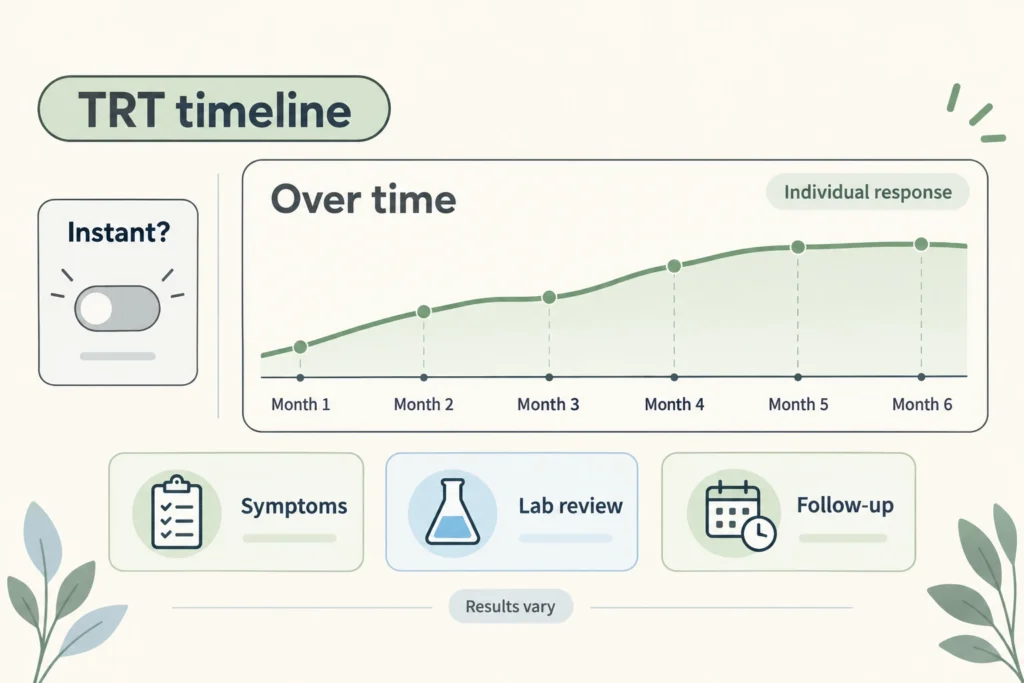
In the first two weeks, testosterone levels rise into range, but most men notice little to no subjective change yet. This is the most common point of early frustration, and it’s also the point where the fewest physical changes have actually had time to happen. Sleep and mood may shift slightly for some men in this window, but energy, libido, and physical changes typically lag behind the lab number.
This lag is expected, not a sign something is wrong. The Endocrine Society’s clinical practice guideline on testosterone therapy recommends the first follow-up lab check at three months, not two weeks, specifically because that’s the earliest point where both testosterone levels and clinical response are meaningful to evaluate together.
By four to eight weeks, most men report a noticeable lift in libido, mood, and energy. This is usually the first stretch where treatment starts to feel worth it, since these are the symptoms that respond fastest once testosterone stabilizes in range. Some men also notice improved concentration and motivation in this window, though the timing varies by individual and by how low their starting testosterone was.
Physical changes lag noticeably behind mood and libido. Strength gains in the gym, visible changes in body composition, and improvements in energy during workouts typically don’t show up until later, which is a common source of impatience for men expecting the same six-to-eight-week timeline across every symptom.
Three months is the first real checkpoint, both clinically and physically. The Mayo Clinic’s guide to testosterone therapy notes that measurable changes in strength, body composition, and mood are more reliably assessed around this point than in the first several weeks, once levels have had time to stabilize and tissues have had time to respond.
This is also the standard point for the first full monitoring panel. Hematocrit, a measure of red blood cell concentration, gets checked here because testosterone therapy can raise it, and catching a rising hematocrit early is far easier to manage than catching it late. A recent narrative review on managing hematocrit during testosterone therapy recommends exactly this cadence: baseline hematocrit before starting, a recheck at three to six months, then annual monitoring after that. TRT side effects and how they’re managed covers what happens if that number climbs higher than expected.
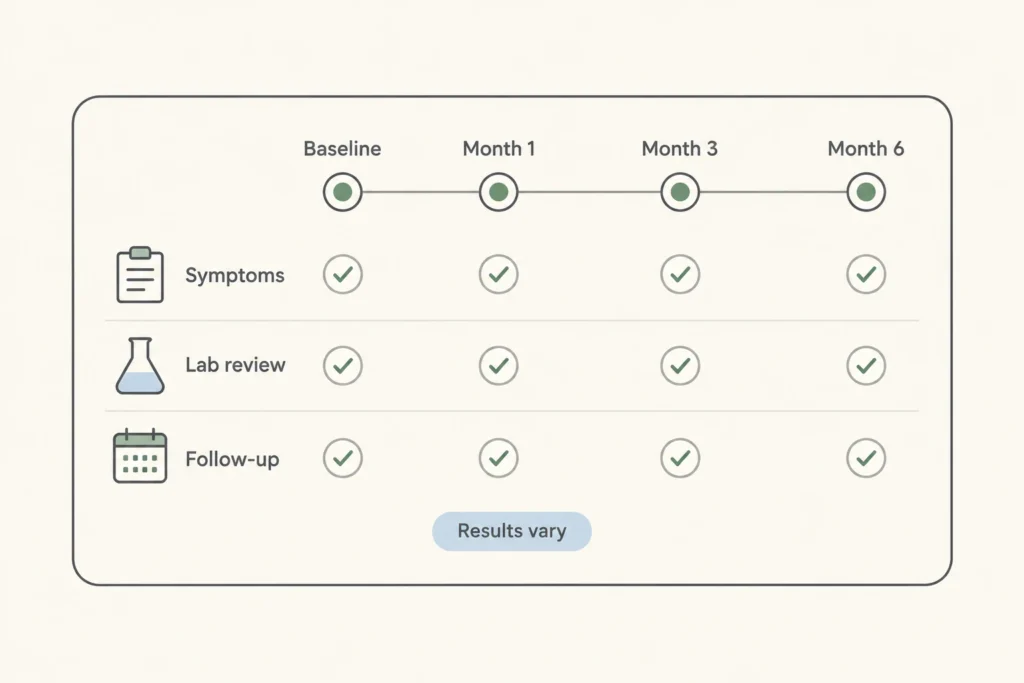
By six months, most men who are going to see meaningful gains in muscle mass, reduced body fat, and bone density have started to see them, though full bone density benefits can take a year or longer to show up on imaging. Testosterone levels themselves reach a stable, predictable range well before six months for most men on a consistent protocol; what continues changing after that point is the downstream tissue response, not the lab number.
Testosterone’s downstream cardiovascular safety has been studied at a larger scale than most other aspects of long-term therapy. The TRAVERSE trial, a large randomized study of hypogonadal men with existing or high cardiovascular risk, found testosterone replacement therapy was not associated with an increase in major cardiac events compared with placebo, while also identifying a higher rate of certain other events like blood clots and irregular heartbeat that are worth discussing with a provider over the course of long-term treatment.
Some men combine testosterone therapy with peptide protocols aimed at recovery, sleep, or body composition, and the two can work well together when they’re supervised as a single coordinated plan instead of two separate protocols working against each other. Peptide therapy and testosterone replacement covers how that combination is monitored and what it does and doesn’t change about the core TRT timeline above.
| Timeframe | What typically changes | What gets monitored |
|---|---|---|
| Weeks 1 to 2 | Testosterone rises into range; little subjective change yet | Confirm protocol is starting as prescribed |
| Weeks 4 to 8 | Libido, mood, and energy improve for most men | Check in on side effects and dosing tolerance |
| 3 months | Strength and body composition changes become measurable; levels stabilize | Testosterone, hematocrit, and symptom review |
| 6 months | Muscle and fat composition changes more visible; energy gains sustained | Repeat hematocrit and estradiol; dose adjustment if needed |
| 12 months and beyond | Bone density benefits become measurable; results plateau to a stable baseline | Annual hematocrit, lipid panel, and general health review |
Individual timelines vary based on starting testosterone level, age, body composition, and consistency with the protocol. This table reflects the general pattern reported across clinical literature and guideline monitoring schedules, not a guarantee for any specific man. Where a man starts matters too: someone whose baseline testosterone sat well below the harmonized reference range for healthy adult men tends to notice change faster than someone whose starting number was only marginally low, based on the same population data used to define what counts as normal by age in the first place.
If you’re past three months with little change, the first question isn’t whether TRT works, it’s whether the dose, the protocol, or an unaddressed side effect is holding results back. The Cleveland Clinic’s overview of testosterone replacement therapy notes that a provider will typically check dosing, adherence, and lab trends together before concluding treatment isn’t working, rather than adjusting the dose blind.
The low testosterone symptoms checklist is also useful here in reverse: if the specific symptoms that brought you in haven’t shifted, that’s worth a direct conversation with your provider rather than assuming the timeline simply doesn’t apply to you. For a broader look at why TRT works the way it does, the truth about testosterone covers the case for treatment in more depth.
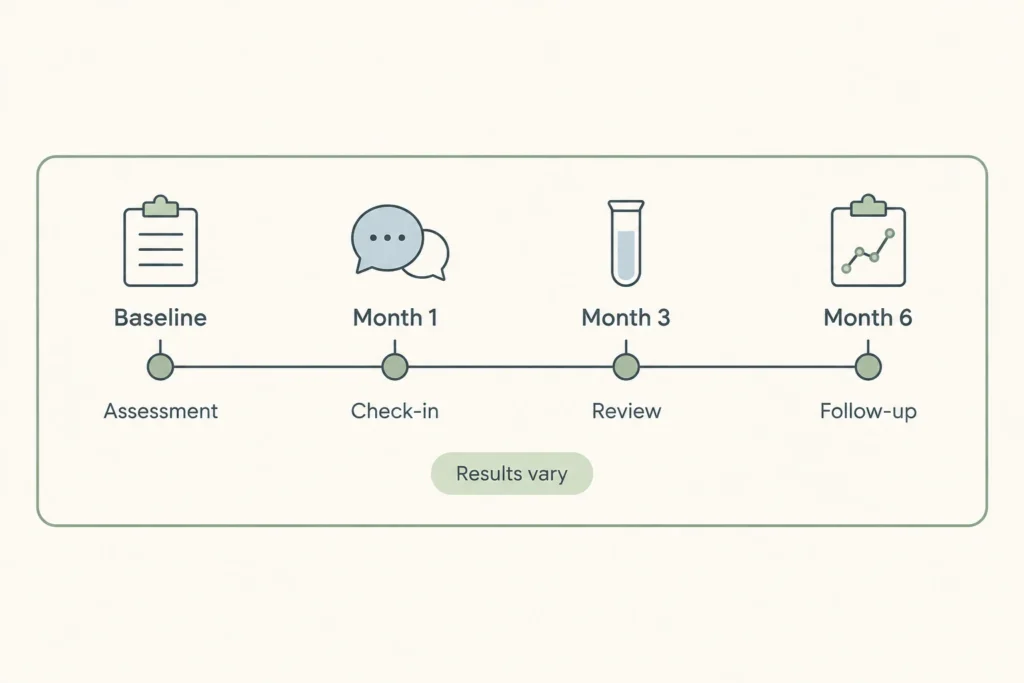
At Body Works, every TRT protocol for men in Franklin, TN and Nolensville, TN is built around this exact monitoring rhythm: baseline labs, a three-month checkpoint, and regular follow-up after that, so results and safety get tracked together instead of guessed at. What physician-supervised treatment looks like at Body Works covers the full process end to end.
Schedule a Free Consultation to talk through your starting labs and what a realistic timeline looks like for your specific situation.
Medically reviewed by Dr. Donald Vollmer, MD
Managing Physician, Body Works TN
Ask ten men about TRT side effects and you’ll hear ten different fears, most of them wrong. Shrinking testicles, aggression, hair loss, none of these
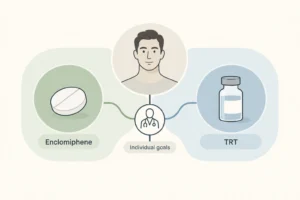
Two men walk into the same clinic with nearly identical lab results: both have low testosterone, both are in their late 30s, both still want

He’s 38, sleeping seven hours a night, still hitting the gym three times a week, and he still feels like he’s dragging a weighted sled
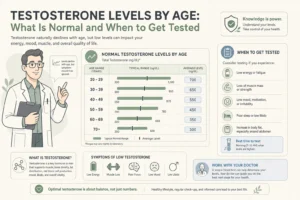
A 42-year-old man gets his testosterone checked, and the lab report comes back with a single word next to the number: “normal.” He still feels

A lot of what passes for testosterone replacement therapy in Franklin, TN and nationwide in 2026 is a questionnaire, a card swipe, and a prescription
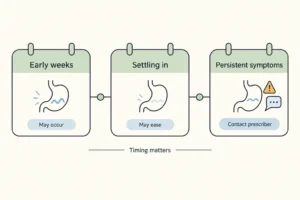
A symptom that is completely normal in week two can be a reason to call your prescriber in week fourteen. Nausea right after a dose
See Body Works first in your Google results.