What Is Retatrutide? The GLP-3 Triple-Hormone Breakthrough Explained

July 3, 2026

Every few years a new weight-loss medication comes along that changes the conversation. Right now, that name is retatrutide. It has produced some of the largest weight-loss results ever recorded in a medication trial, and people who have struggled for years are paying close attention. If you have been wondering what all the excitement is about, you are in the right place.

So what is retatrutide, and why does it have the weight-loss world so energized? In plain terms, it is a next-generation injectable that works with three of your body’s hormones at once to reduce appetite and help you burn energy. It is still finishing its final research stage, but the early results are remarkable. Here is a clear, no-hype breakdown, plus what you can do today at Franklin, TN and Nolensville, TN.

What is retatrutide, the triple-hormone medication called a GLP-3

What Is Retatrutide?

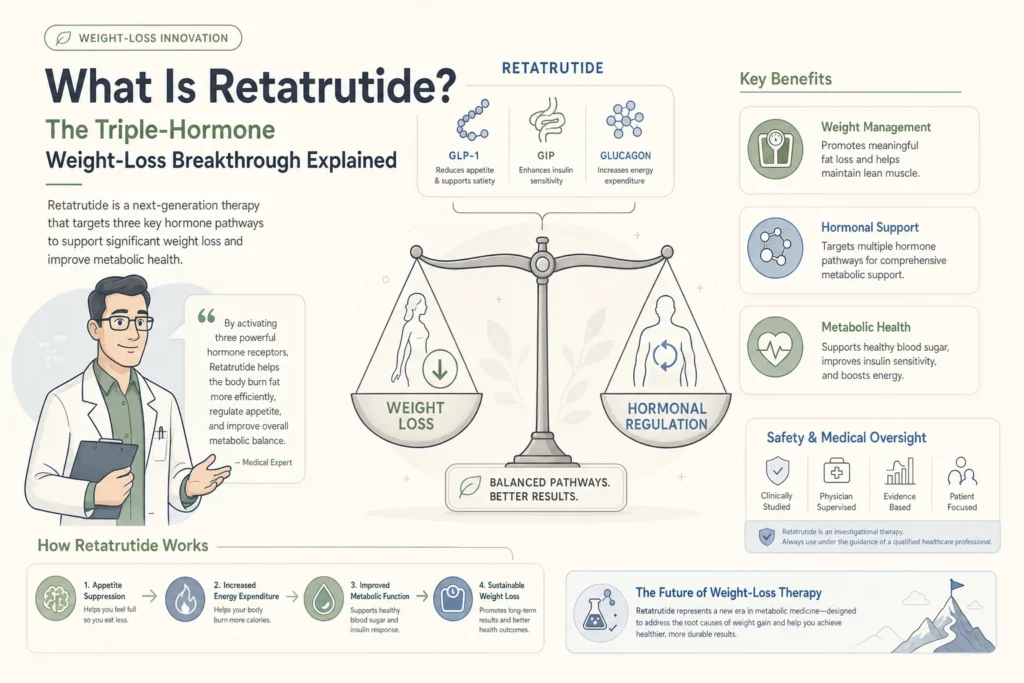
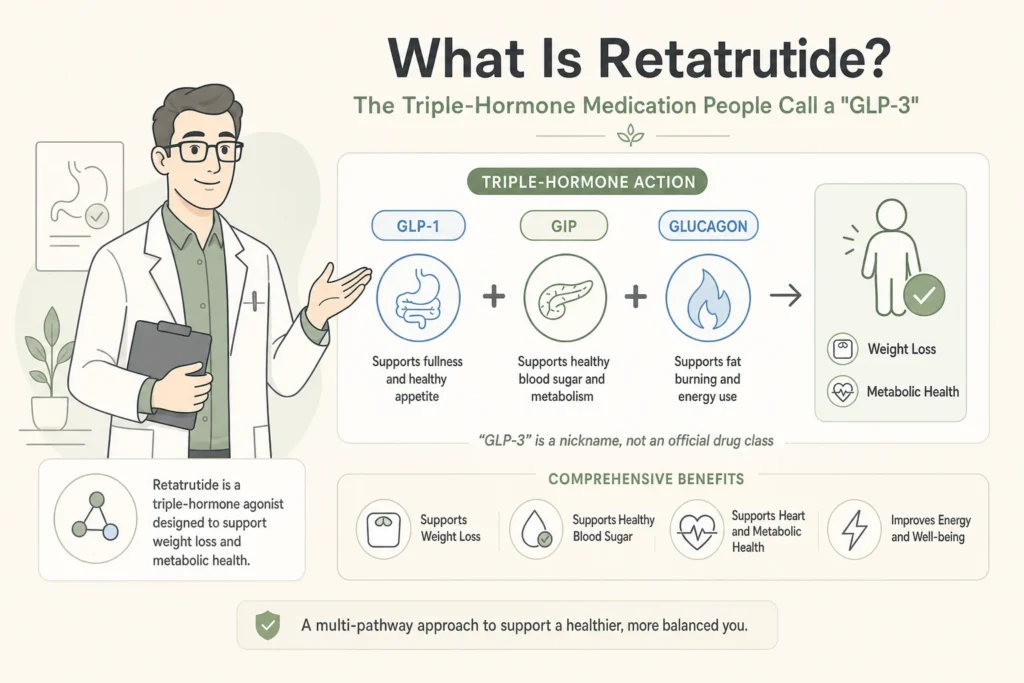
Retatrutide is a once-weekly injectable medication developed by Eli Lilly, currently known in research as LY3437943. It belongs to the same broad family as today’s popular weight-loss shots, but it goes a step further by acting on three hormone pathways instead of one or two. That is why it is often called a “triple agonist” or “triple-G.” You may also see it called a “GLP-3.” That nickname is not an official drug class, but it caught on because retatrutide reaches one step beyond the GLP-1 medications most people already know.

What has people excited is the scale of the results. In a 2023 phase 2 trial published in the New England Journal of Medicine, adults with obesity on the highest dose lost an average of 24.2 percent of their body weight over 48 weeks. That is among the highest averages ever reported for a weight-loss medication, which is why retatrutide is considered such a promising step forward.

How Does Retatrutide Work in the Body?

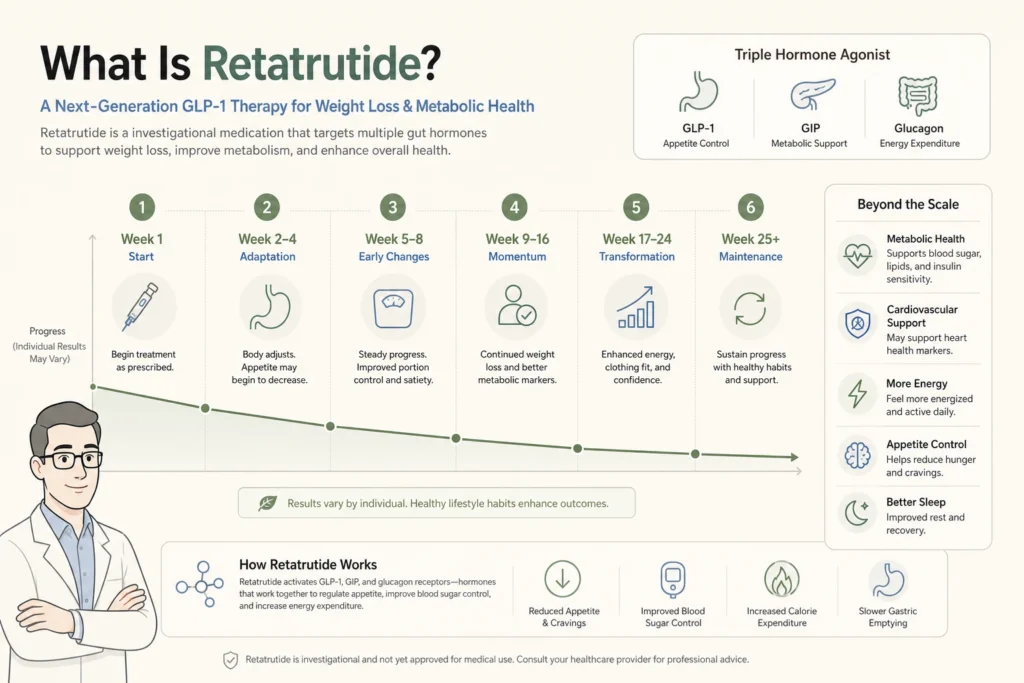
Retatrutide works by activating three hormone receptors that influence hunger, blood sugar, and energy use: GIP, GLP-1, and glucagon. The first two help reduce appetite and slow digestion so you feel full longer, the same mechanisms behind today’s leading medications. The third, glucagon, adds something extra by helping the body use more energy. Those three pathways working together are what people are describing when they use the shorthand “GLP-3.”

That third pathway is the key difference. By combining appetite reduction with increased energy use, retatrutide addresses weight from more than one angle at the same time. Research also points to benefits beyond the scale: a 2024 study in Nature Medicine found retatrutide dramatically reduced fat stored in the liver, an important marker of metabolic health.

Retatrutide triple-hormone action across GLP-1, GIP and glucagon pathways

How Much Weight Did People Lose in Retatrutide Studies?

Across its trials, retatrutide has consistently produced strong weight-loss results. The obesity study showed an average loss of about 24 percent at the highest dose. A separate phase 2 trial in adults with type 2 diabetes, published in The Lancet, showed meaningful weight loss along with improved blood-sugar control.

These results are why retatrutide has generated so much attention, but it is worth keeping perspective. Every person responds differently, results depend on dose and consistency, and the medication is still being studied in its largest trials. The numbers are genuinely exciting, and they are still being confirmed in the research that will support approval.

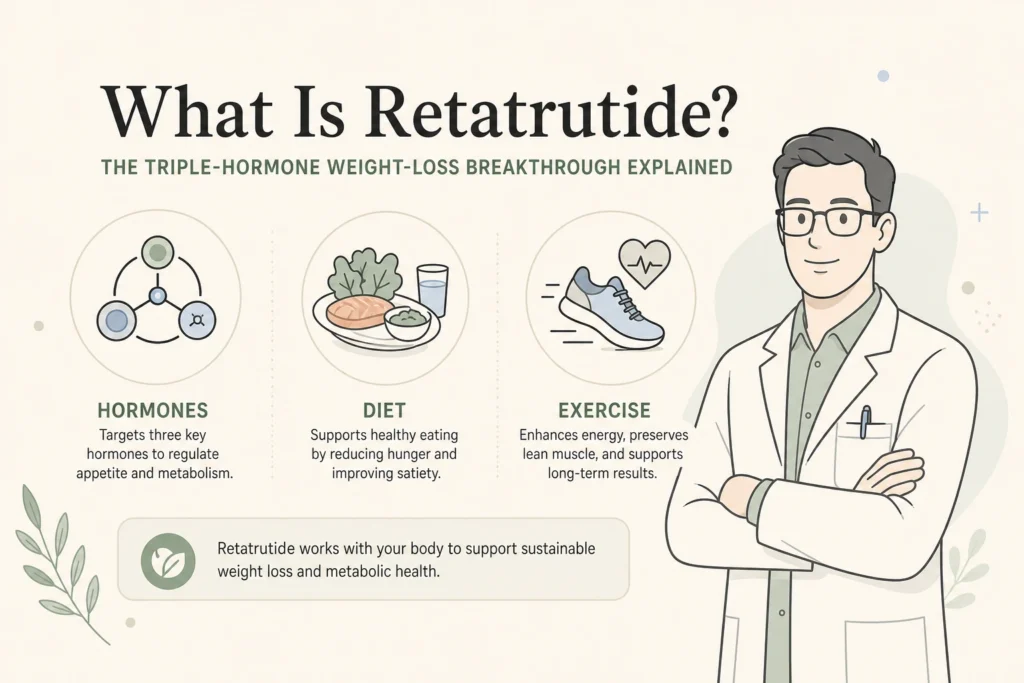
How retatrutide supports weight loss and metabolic health

Is Retatrutide the Same Thing as a GLP-3?

Yes. “GLP-3” is an informal nickname the internet gave retatrutide, not a real receptor or an official drug class. It stuck because semaglutide targets one pathway and tirzepatide targets two, so a medication targeting three sounded like the next number in the sequence. Retatrutide is still working through a large phase 3 research program, and you can see the flagship study, enrolling thousands of participants, on the government registry for the TRIUMPH-1 phase 3 trial.

If a GLP-3 is on your radar, the useful question is not a date on a calendar, it is which supervised option fits your body and your goals right now. That is what our providers do in a free consultation, and it is what our post on retatrutide availability in Tennessee walks through.

What Can You Do About Weight Loss Today at Body Works?

You do not have to wait to start making progress. Body Works offers physician-supervised medical weight-loss programs with semaglutide and tirzepatide, two proven medications available right now. In the SURMOUNT-1 trial, tirzepatide produced an average weight loss of about 22.5 percent, results very close to early retatrutide data.

With offices in Franklin and Nolensville, Body Works gives you a personalized plan, real medical oversight, and a team that tracks the science so you always know your best options. Want to see which approach fits you? Schedule a Free Consultation. You can also compare your choices in our guide to retatrutide, tirzepatide, and semaglutide or learn how GLP-1 medications work.

Comparing supervised weight-loss options with a Body Works provider

Frequently Asked Questions

In its phase 2 trial, retatrutide, the medication people call a GLP-3, produced an average weight loss of about 24 percent of body weight over 48 weeks, among the highest figures reported for this class. It is still completing the research needed for approval. Our providers can walk you through which supervised option is the right fit for you today.
Neither label is official. “GLP-1” describes medications acting on a single pathway, and “GLP-3” is an internet nickname for retatrutide because it acts on three: GIP, GLP-1, and glucagon. That broader action is why early studies showed such strong results.
Cost depends on the medication and the plan you and your provider build together. The most useful step is a free consultation, where we discuss the options you can start and what to expect. Body Works also offers flexible payment plans.
Retatrutide is being studied in large, carefully designed trials specifically to confirm its safety and effectiveness. Any weight-loss medication is safest when prescribed and monitored by licensed providers, which is how every Body Works program is run.
Body Works offers physician-supervised weight-loss care at two Middle Tennessee locations, Franklin and Nolensville. Both provide supervised programs today, and both follow the research closely so your plan always reflects your best available option.

Medically reviewed by Dr. Donald Vollmer, MD
Managing Physician, Body Works TN

Browse Our Blog