
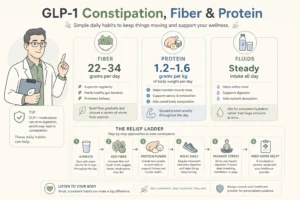
GLP-1 Constipation, Fiber and Protein: What Nobody Tells You
Constipation affects 24% of semaglutide patients and up to 17% on tirzepatide. This guide gives the daily targets that prevent it: 22 to 34 grams
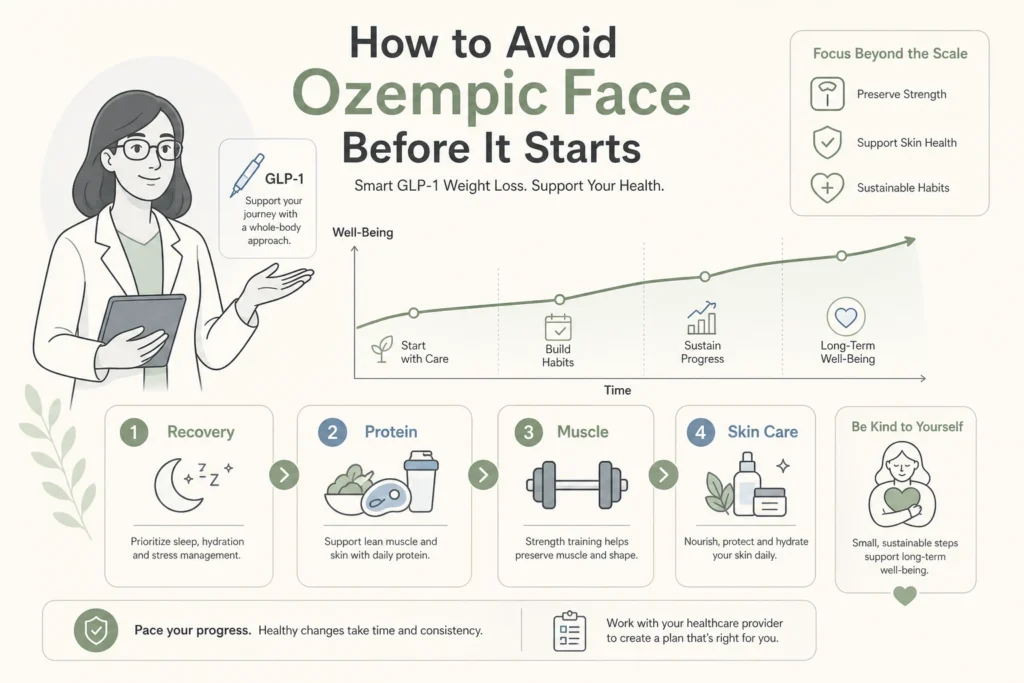
Yes, you can lower your odds of the drawn, hollow look people call “Ozempic face,” and the best time to start is before it shows up. That nickname points to the facial volume loss some people notice during fast weight loss on semaglutide or tirzepatide. It is not caused by the medication itself. It comes from losing fat and, sometimes, muscle faster than your skin and face can adjust. The habits that protect your face are the same ones that make weight loss healthier, so prevention costs you nothing extra.
This guide stays in the prevention lane. If you want the full background on why faces change, read our companion piece on why Ozempic face happens and what you can do, or step back for the bigger picture in our guide to how weight loss changes your face, skin, and muscle. Here, the focus is the levers you can pull now.
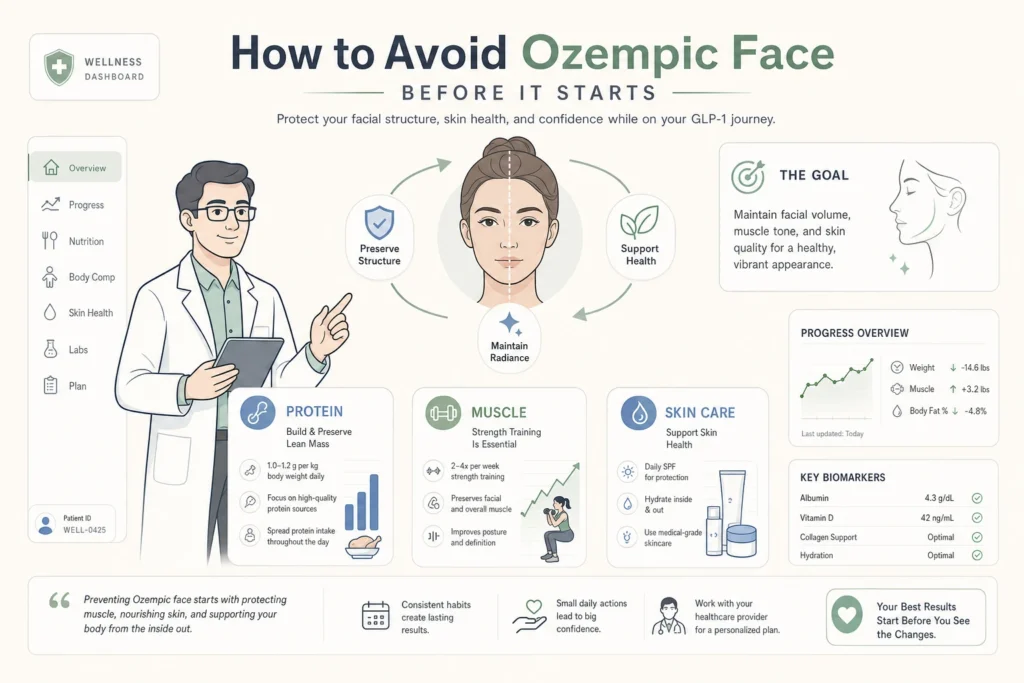
You cannot guarantee a face that never changes, but you can meaningfully reduce the risk. Facial volume loss during weight loss is largely about how much fat you lose, how fast you lose it, and how much muscle you keep. All three are partly in your control. The face holds distinct fat pads that give cheeks their fullness, and rapid loss can deflate them before skin has time to retract.
According to Cleveland Clinic guidance on facial changes during weight loss, the sunken look tied to GLP-1 medications reflects the loss of facial fat that comes with any significant, rapid weight reduction, not a unique drug side effect. That distinction matters, because it means the same prevention levers that apply to any fast weight loss apply here: slow the pace, feed your muscles, and support your skin.
The first signs of “Ozempic face” are subtle, and catching them early gives you time to adjust before they deepen. Most people notice flatter cheeks first, then more shadow under the eyes and along the jaw. Skin can start to look a little loose around the lower face, and fine lines may show up more because there is less volume underneath to smooth them.
Common early signals include cheeks that look deflated in photos, temples that appear slightly hollow, and a jawline that reads softer or more crepey than before. None of these mean something is wrong. They are cues to check your pace of loss and your protein, not reasons to panic. If you spot them, treat them as an early prompt to talk with your provider about adjusting your plan.
The speed of your weight loss is the single biggest lever for protecting your face. When you lose weight gradually, your skin has more time to shrink along with you, and you are more likely to lose fat while keeping muscle. When you drop weight very fast, fat leaves the face quickly and skin can lag behind, which is what creates that deflated look.
This is one reason steady, provider-guided loss beats crash results. A slower climb in your dose and a moderate rate of loss give the face and skin a fairer chance to keep up. It also protects the muscle and bone that support facial structure. If your loss feels alarmingly fast, that is worth flagging, because pace is something your provider can adjust with you.
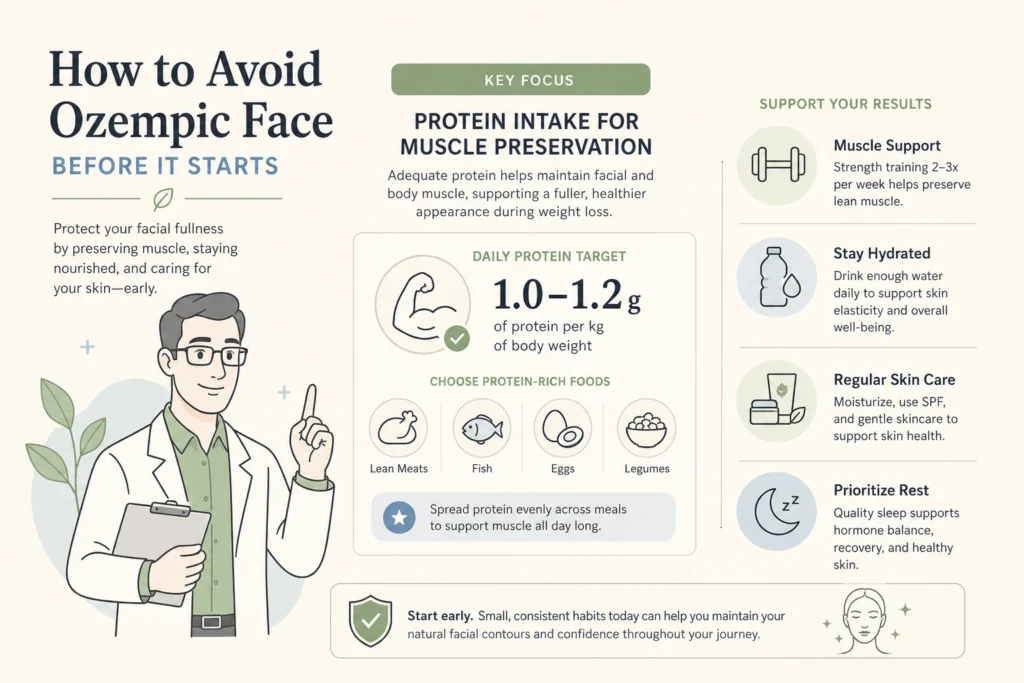
Protein protects your face by helping you hold onto muscle and lean tissue while you lose fat. During any calorie deficit, some of the weight you lose can come from muscle unless you actively defend it, and muscle loss in the face and neck contributes to that hollow, aged look. Eating enough protein is the most reliable way to shift more of your loss toward fat.
A review of protein and body weight published in the American Journal of Clinical Nutrition, 2015 found that higher protein intake during weight loss helps preserve lean body mass and supports appetite control at the same time. Practically, that means building each meal around a protein source, spreading protein across the day rather than saving it for dinner, and not letting GLP-1 appetite suppression push your intake too low. Muscle you keep is structure your face keeps.
Strength training preserves facial fullness indirectly, by signaling your body to hold onto muscle everywhere while you lose fat. You cannot target the muscles of your face with exercise, but total-body muscle preservation is what keeps your body composition and structure intact during weight loss. When you protect lean mass, more of the weight you lose is fat, and the supporting tissue under your skin stays fuller.
Research summarized by the National Institute of Diabetes and Digestive and Kidney Diseases points to combining resistance activity with adequate protein to protect muscle during weight management. You do not need a complicated program. Two or three sessions a week that work the major muscle groups, paired with enough protein, cover the essentials. This pairs closely with protecting your skin, which we cover in our guide to tightening skin after weight loss naturally.
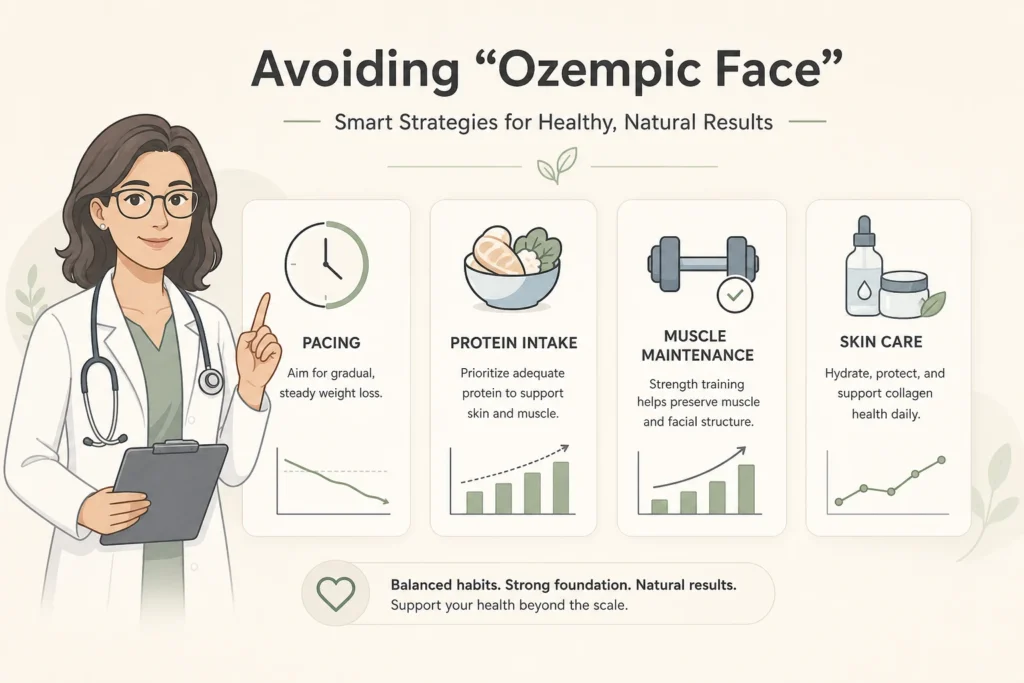
Hydration and basic skin care will not stop fat loss, but they help your skin look and behave its best while your face changes. Well-hydrated skin appears plumper and more resilient, and dehydration can make hollow areas look more pronounced. GLP-1 medications can reduce your thirst and appetite, so many people quietly drink less without noticing.
Keep water intake steady across the day, and support your skin barrier with simple habits: a gentle moisturizer, daily sunscreen to limit collagen breakdown from sun exposure, and consistency over expensive products. These steps support skin elasticity, which is the skin’s ability to snap back as your face reshapes. For a deeper look at what actually helps skin bounce back, our review of collagen and supplements for skin during weight loss separates the useful from the overhyped.
Working with a provider who monitors your progress is one of the most underrated ways to avoid “Ozempic face.” Regular check-ins let someone catch a too-fast rate of loss, thinning muscle, or dropping protein intake before those show up in your face. A provider can slow your dose escalation, adjust your target rate, or add support when the numbers call for it.
This is where the medically supervised approach at Body Works earns its keep. The team that manages your medical weight loss program is watching the same trends that drive facial change, so the plan can flex as you go. In our patients, the people who avoid the gaunt look are almost always the ones who lose steadily and keep their protein and strength work consistent, not the ones chasing the fastest possible number on the scale.
Medically reviewed by Dr. Donald Vollmer, MD
Managing Physician, Body Works TN
Constipation affects 24% of semaglutide patients and up to 17% on tirzepatide. This guide gives the daily targets that prevent it: 22 to 34 grams
Ozempic face is the hollow, aged look some people notice after rapid weight loss. Here is why it happens, who is most at risk, and

When Tennessee investigators tested counterfeit weight loss vials seized in Medina, one was mostly water. That was the good outcome. The dangers of buying peptides
Rapid weight loss changes more than the number on the scale. Here is why the glutes, breasts, and arms often change shape on GLP-1 medications,
NAD+ therapy is marketed as a longevity reset for energy, focus, and healthy aging. This guide separates what the science on NAD therapy actually supports
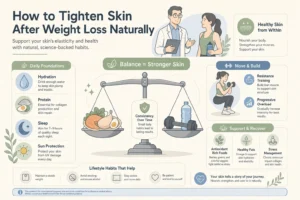
A candid, evidence-based look at what natural methods can and cannot do for loose skin after GLP-1 weight loss, from protein and resistance training to
See Body Works first in your Google results.