

How to Avoid Ozempic Face Before It Starts
You can lower your odds of the gaunt, sunken look people call Ozempic face. Here is how pacing, protein, muscle, and skin care protect your
You reached 15 mg. The scale that dropped two pounds a week for eight months has been flat since spring, and the weekly shot now feels like maintenance you did not sign up for. Then a friend mentions the “GLP-3,” and the question writes itself: is switching from tirzepatide to retatrutide the next step, or a mistake you pay for in nausea?
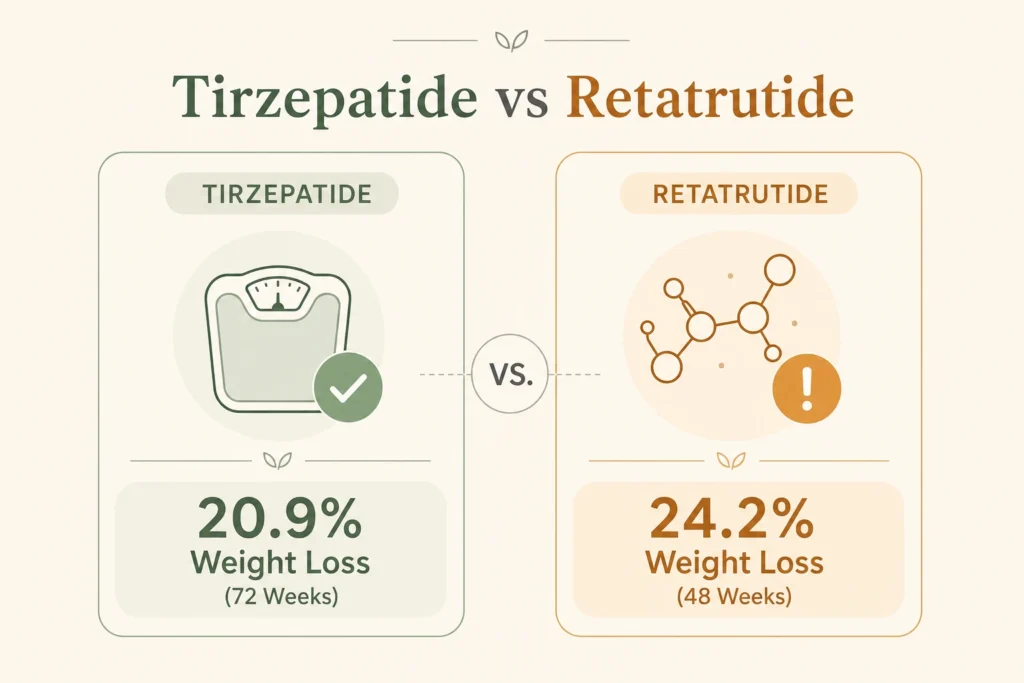
Switching from tirzepatide to retatrutide is a supervised change in medication, not an upgrade you can dose your way into. Retatrutide, the medication people call a GLP-3, adds a third receptor that tirzepatide does not touch, and in its 48-week phase 2 trial the top dose produced 24.2% average weight loss, ahead of the 20.9% tirzepatide reached in its own 72-week trial. The switch works best for people who have stalled at a stable tirzepatide dose, and it is timed to the weekly schedule you already keep, with retatrutide started low and raised on its own ladder rather than matched milligram for milligram.
Body Works manages semaglutide, tirzepatide, and retatrutide (GLP-3) patients under physician supervision in Franklin, TN and Nolensville, TN. Here is what the switch involves and how the first eight weeks tend to go.
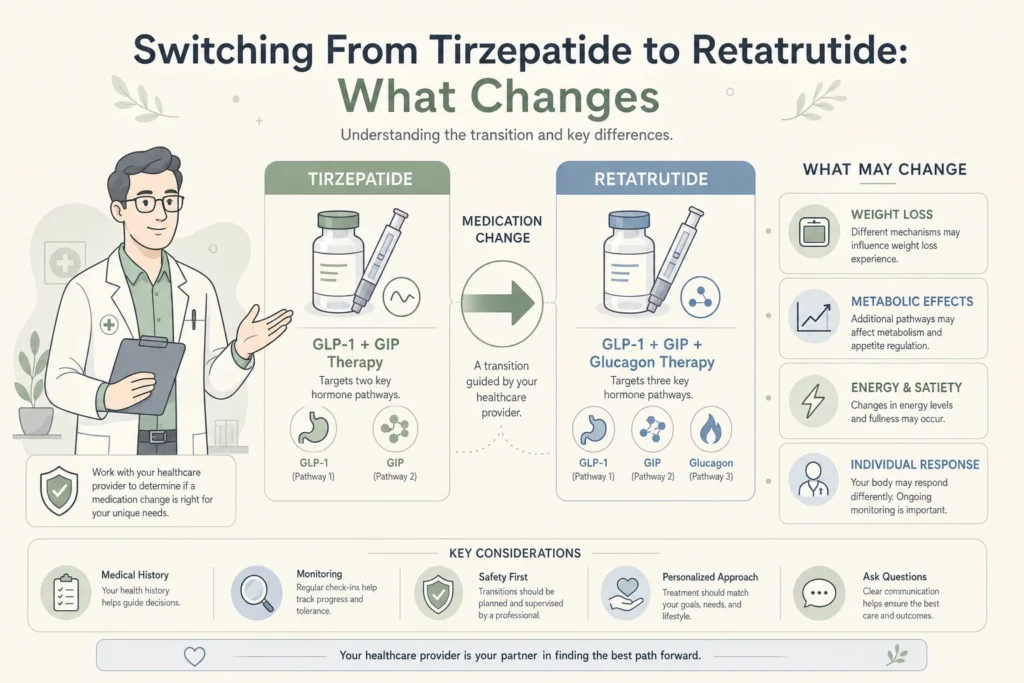
Because they have stopped losing weight on tirzepatide, or because they want the extra mechanism retatrutide adds. Tirzepatide acts on two receptors, GIP and GLP-1, which together reduce appetite and slow stomach emptying. Retatrutide acts on those two plus the glucagon receptor, and glucagon activity is associated with higher energy expenditure. Tirzepatide mostly changes how much you eat, and retatrutide is designed to change both how much you eat and how much you burn.
The trial numbers are the reason the question keeps coming up. In the SURMOUNT-1 trial of tirzepatide in the New England Journal of Medicine, participants on 15 mg lost 20.9% of their body weight over 72 weeks. In the phase 2 retatrutide trial in the same journal, participants on 12 mg lost 24.2% in 48 weeks, and every participant at 8 mg or 12 mg lost at least 5%. Those are separate trials with different lengths and populations, so the gap is a tendency, not a measured head-to-head result. The direct comparison, a phase 3 study of retatrutide against tirzepatide in adults with obesity, is registered on ClinicalTrials.gov as NCT06662383 and is active but not yet reporting.
A plateau is the most common trigger in practice. Weight loss on any GLP-1 medication slows as the body settles at a new set point, and a stable weight for three months at the highest dose you tolerate is a reasonable point to ask about the next option.
Three receptors instead of two, a different dose ladder, and a weight-loss ceiling that appears to sit higher. Both are once-weekly injections. Both are titrated slowly because gastrointestinal side effects cluster around dose increases. The practical differences are in the table.
| Factor | Tirzepatide | Retatrutide (GLP-3) |
|---|---|---|
| Receptors | GIP and GLP-1 | GIP, GLP-1, and glucagon |
| Trial doses | 5, 10, and 15 mg weekly | Phase 2: 1, 4, 8, and 12 mg weekly. Phase 3 (type 2 diabetes): 4, 9, and 12 mg |
| Starting dose in trials | 2.5 mg, raised by 2.5 mg no faster than every 4 weeks | 2 mg or 4 mg, raised toward the target dose |
| Weight loss at top dose | 20.9% at 72 weeks (SURMOUNT-1) | 24.2% at 48 weeks (phase 2) |
| Main side effects | Nausea, diarrhea, constipation, mostly during escalation | Same pattern, dose-related, reduced by a 2 mg start |
| Regulatory status | FDA approved for chronic weight management | Phase 3 under way. First results published 2026 |
The phase 3 program has started to report. The TRANSCEND-T2D-1 trial published in The Lancet in June 2026 gave retatrutide 4 mg, 9 mg, or 12 mg to 537 adults with type 2 diabetes for 40 weeks. Body weight fell 11.5%, 13.9%, and 15.3% respectively against 2.6% on placebo, and the gastrointestinal side effects were mostly mild to moderate and subsided over time. Only 2% to 5% of participants stopped because of side effects.
The three-way comparison with semaglutide and the explainer on why retatrutide is nicknamed GLP-3 go deeper.
After you have reached a stable tirzepatide dose and held it long enough to know what it does for you. Switching in the middle of the tirzepatide ladder gives up information: you do not yet know whether 12.5 mg or 15 mg would have restarted the loss. Three signals make the switch worth discussing.
If tirzepatide is still working, the honest advice is to stay on it. And if the plateau traces to something fixable, such as protein intake that has drifted below target or a dose that was never fully raised, that gets addressed first. The tirzepatide dosing and results guide walks through what the full ladder should have delivered before a plateau is called.
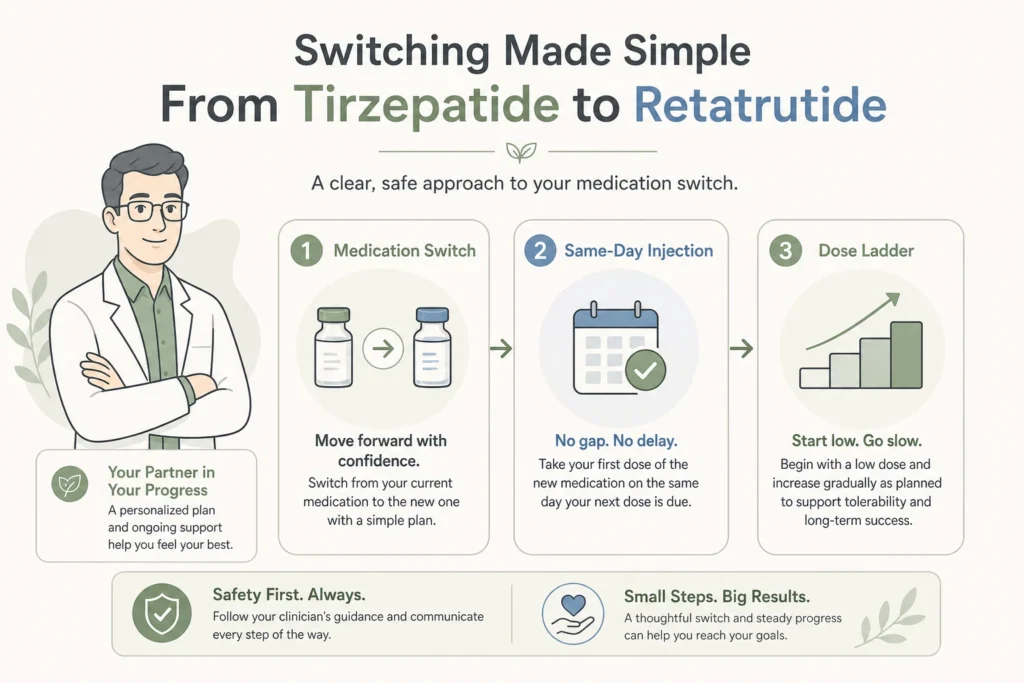
No washout period is built into the switch. Retatrutide replaces tirzepatide on the next scheduled injection day. Tirzepatide has a half-life of approximately 5 days according to its FDA prescribing information, which is why it is dosed weekly and why the label allows a missed dose to be taken within 4 days. By the time your next weekly injection comes due, the previous tirzepatide dose is already declining. Taking the first retatrutide dose on that same day keeps the weekly rhythm and avoids a gap in appetite control.
The dose starts over rather than converting. There is no published table that maps 15 mg of tirzepatide onto a retatrutide dose, and the two molecules are not interchangeable at the receptor level. Retatrutide begins at the low end of its own ladder regardless of how high your tirzepatide dose was, because the glucagon activity is new to your body, and the phase 2 investigators reported that a 2 mg start, compared with 4 mg, partially mitigated the stomach side effects. Anyone who tells you to “match the milligrams” is guessing.
Two things carry over unchanged from your tirzepatide plan. Protein stays at target, because a 2025 joint nutrition advisory from four medical societies recommends 1.2 to 1.6 grams per kilogram per day during medication-driven weight loss to protect lean mass, and a second round of rapid loss raises the stakes. And resistance training continues, for the same reason. The guide to preventing muscle loss on GLP-1 medications covers the plan.
A return of the early-titration feeling, then a new drop in weight. The first weeks on retatrutide look like the first weeks on tirzepatide did: appetite falls further, meals get smaller, and stomach symptoms show up around each dose increase and fade before the next. In the 48-week phase 2 trial the side effects were dose-related, mostly mild to moderate, and the 2 mg starting dose eased them. One effect is specific to retatrutide: a dose-dependent increase in resting heart rate that peaked at 24 weeks and declined afterward. Your provider will track it.
The weight response arrives in stages. Across the phase 2 dose groups, participants had lost 7.2% to 17.5% by week 24 and 8.7% to 24.2% by week 48, with the higher doses pulling away over time. The first month tells you little, because the curve is still steep at week 24. Constipation is worth planning for from the first injection, because slower stomach emptying plus smaller meals is the setup for it, and the fiber, protein, and fluid plan for GLP-1 constipation applies to retatrutide without changes.
Call your provider the same day for persistent vomiting, dehydration, severe upper abdominal pain, or a racing heart at rest. Those symptoms change the plan.
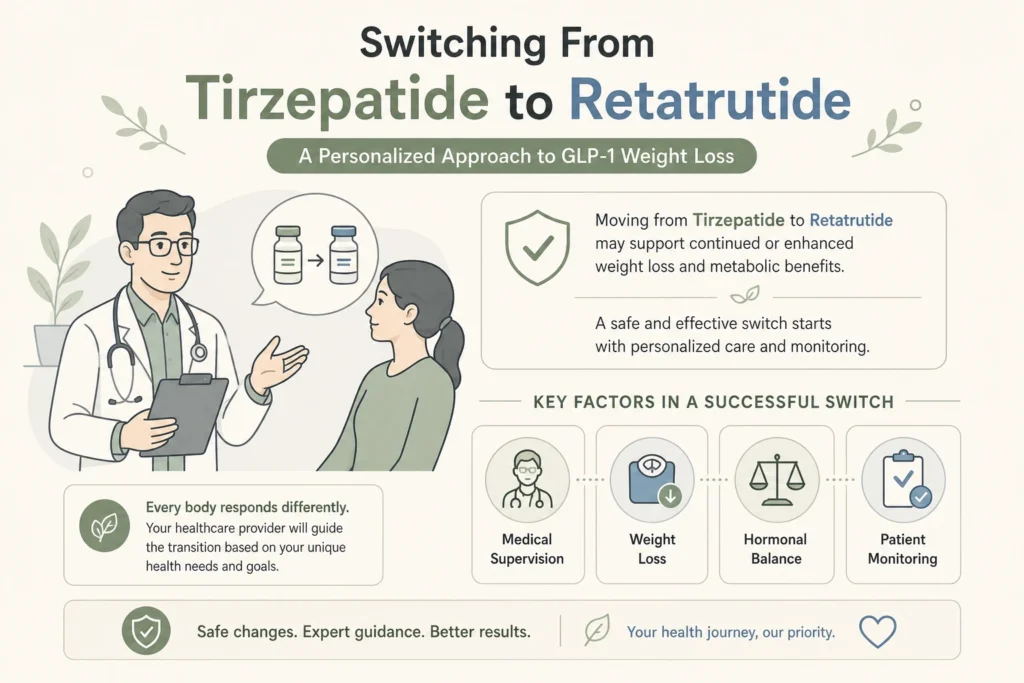
Anyone for whom tirzepatide is still doing its job, anyone who is pregnant or planning pregnancy, and anyone with the conditions that already ruled out tirzepatide. The tirzepatide label carries a boxed warning for people with a personal or family history of medullary thyroid carcinoma or Multiple Endocrine Neoplasia syndrome type 2, and a history of pancreatitis calls for caution. Retatrutide shares the GLP-1 pathway and the same precautions apply until its own label says otherwise.
The phase 3 trials excluded certain groups, and a supervised clinic follows the same logic: the switch is for adults who have finished a proper tirzepatide course with current bloodwork and a reason that holds up in a consultation. A patient who wants retatrutide because it is newer, with weight still coming off on tirzepatide, does not need it yet.
In 2025, Body Works guided more than 130 patients through its medical weight loss program at the Nolensville office alone. Every patient starting a GLP-1 medication there leaves the first visit with written nutrition and symptom guidance, and when a patient reports a problem the team looks at two things first: what they have been eating and drinking, and when the change began relative to the last dose increase. Bring the same two facts to a plateau conversation, your dose history and a week of meals, because they sort the plateaus that need a medication change from the ones that need a protein correction or a final dose step. That sorting happens before any retatrutide is discussed.
If you have stalled on tirzepatide and want to know whether retatrutide (GLP-3) is the right next step, the Franklin and Nolensville teams can review your history and build the plan. Schedule a Free Consultation to get started, or read about the retatrutide program at Body Works and the broader medical weight loss program.
Medically reviewed by Dr. Donald Vollmer, MD
Managing Physician, Body Works TN
You can lower your odds of the gaunt, sunken look people call Ozempic face. Here is how pacing, protein, muscle, and skin care protect your
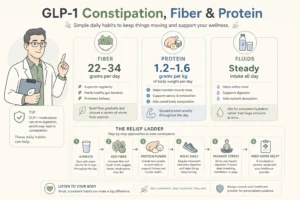
Constipation affects 24% of semaglutide patients and up to 17% on tirzepatide. This guide gives the daily targets that prevent it: 22 to 34 grams

Ozempic face is the hollow, aged look some people notice after rapid weight loss. Here is why it happens, who is most at risk, and

When Tennessee investigators tested counterfeit weight loss vials seized in Medina, one was mostly water. That was the good outcome. The dangers of buying peptides

Rapid weight loss changes more than the number on the scale. Here is why the glutes, breasts, and arms often change shape on GLP-1 medications,

NAD+ therapy is marketed as a longevity reset for energy, focus, and healthy aging. This guide separates what the science on NAD therapy actually supports
See Body Works first in your Google results.