
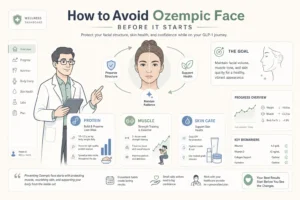
How to Avoid Ozempic Face Before It Starts
You can lower your odds of the gaunt, sunken look people call Ozempic face. Here is how pacing, protein, muscle, and skin care protect your
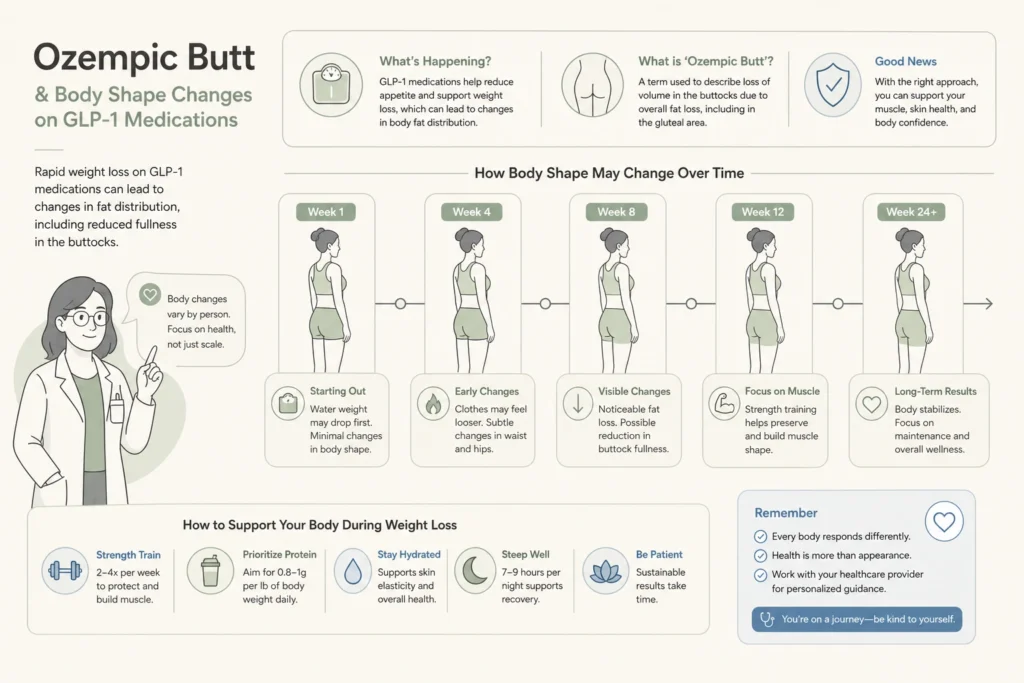
“Ozempic butt” is a nickname for the flatter, softer, sometimes saggy look the buttocks can take on after fast weight loss on a GLP-1 medication. It is not a medical condition and it is not caused by the drug damaging your tissue. It’s simply what happens when fat leaves the glutes quickly, some muscle goes with it, and the skin does not shrink at the same pace. The same process is behind other nicknames people use, like “Ozempic face” and the broader “Ozempic body.” Understanding why your shape changes is the first step to keeping more of it.
At Body Works and our medical weight loss program, this is one of the questions patients ask most once the weight starts coming off: my clothes fit better, so why does my body look different than I expected? This guide explains the shape side of weight loss. For the full picture of what to expect physically during rapid weight loss, see our complete guide.
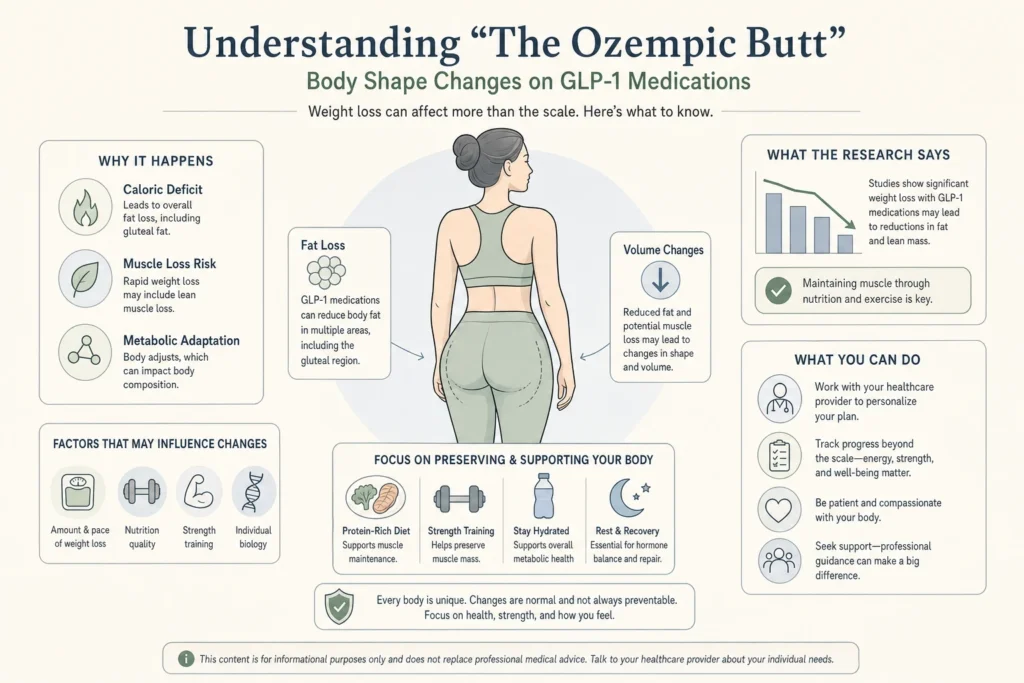
“Ozempic butt” describes a loss of fullness and firmness in the buttocks after losing weight on medications like semaglutide or tirzepatide. People notice their jeans fitting loosely in the seat, a flatter profile, or skin that looks crepey or slightly sagging where it used to be smooth. The glutes are a common spot because they store a large amount of subcutaneous fat, so when total body fat drops, the change is easy to see there.
The term went viral on social media, not in a doctor’s office. It’s a plain-language way of naming a normal outcome of significant fat loss, the same way “Ozempic face” names the volume loss people see in their cheeks. The medication is doing exactly what it is meant to do: reduce fat. The shape change is a side effect of losing that fat fast, not a sign that something has gone wrong.
Rapid weight loss changes your shape because you lose three things at once: fat, some muscle, and the skin’s ability to keep up. Fat gives your body its curves and cushioning. When it drops quickly, the tissue underneath is revealed, and if muscle has thinned too, there is less firmness to hold the shape. Skin that stretched over years of higher weight needs time to retract, and it does not always fully bounce back.
Muscle loss is the part most people underestimate. In the STEP 1 body composition analysis published in the STEP 1 trial, New England Journal of Medicine, 2021, participants on semaglutide lost meaningful weight, and a sizable share of that loss came from lean body mass, not fat alone. Losing muscle along with fat flattens the areas that muscle normally shapes, including the glutes, and it’s a large reason bodies can look softer even as the scale improves.
Shape changes tend to be most visible in the areas that hold the most fat and the areas where skin is thin. On most people that means the buttocks, breasts, upper arms, lower belly, and face. These regions lose volume early and show it plainly. Fat in the hips and buttocks, sometimes called gluteofemoral fat, is a normal part of body shape, and research on gluteofemoral fat as a determinant of metabolic health, International Journal of Obesity, 2010 notes that this depot behaves differently from belly fat and is one of the last places some people want to lose.
Here is a simple way to think about what drives the change in each spot.
| Area | Main reason it changes | What tends to help most |
|---|---|---|
| Buttocks | Fat loss plus thinning glute muscle | Resistance training, protein, slower pace |
| Breasts | Fat loss, skin elasticity | Slower pace, skin support |
| Upper arms | Fat loss, loose skin | Strength work, skin support |
| Lower belly | Fat loss, previously stretched skin | Time, skin elasticity support |
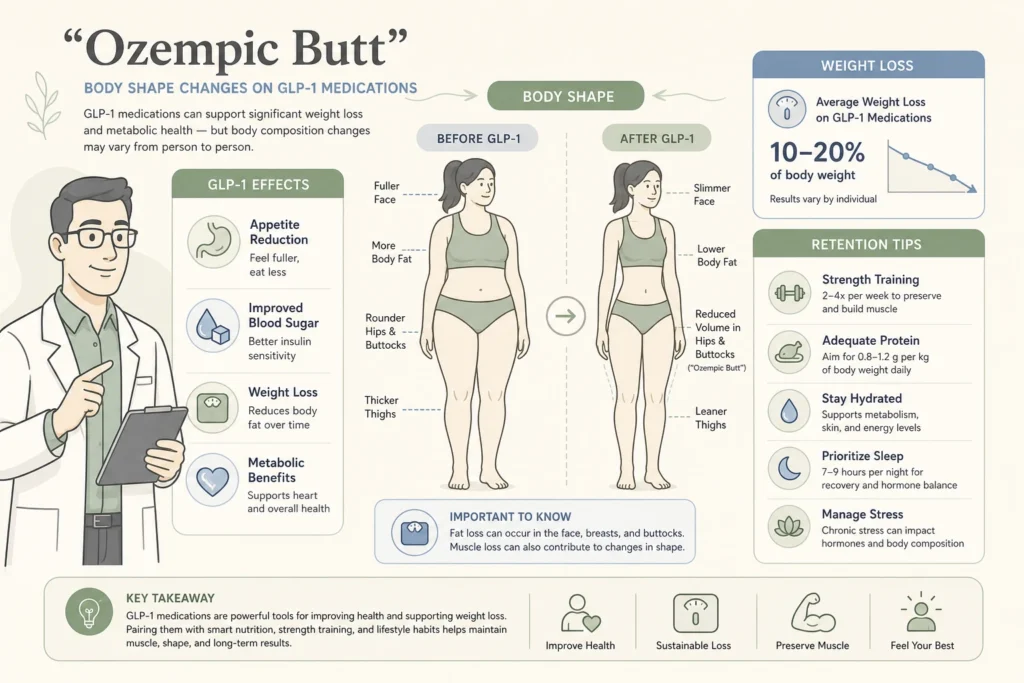
Usually it is all three, in different proportions depending on your age, how fast you lost weight, and how much you started with. Fat loss is the goal and the biggest driver of a smaller silhouette. Muscle loss makes the remaining shape look softer and flatter. Loose skin becomes more noticeable once the fat that filled it is gone. Telling them apart matters because each one responds to a different fix.
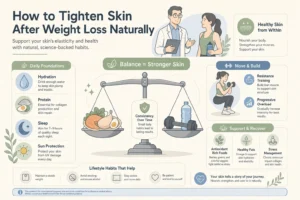
If the area feels soft and deflated, that points to fat and muscle loss, which strength training and protein can push back on. If the skin itself is loose, crepey, or hangs, that’s an elasticity issue that behaves on its own timeline. As Cleveland Clinic guidance on excess skin after weight loss notes, stretched skin often loses elasticity and does not fully conform to a smaller frame, and factors like age, how much weight you lost, and how long the skin was stretched affect how much it recovers. Our guide to loose skin after weight loss covers that side in depth.
The single most effective thing you can do is protect your muscle while the fat comes off. Muscle is what gives the glutes, arms, and legs their firm, rounded look, so keeping it is how you avoid the flat, deflated version of weight loss. That means eating enough protein, doing regular resistance training, and, when possible, losing weight at a steady pace rather than the fastest one your body allows.
You do not have to become a gym regular overnight, but you do need to give your muscles a reason to stay. We break down the protein targets, training approach, and pacing in detail in our guide on how to prevent muscle loss on GLP-1 medications. The short version: the people who keep the best shape are almost always the ones who lifted something heavier than a fork while they lost the weight.
Pace matters too. Skin and muscle both adapt better when weight comes off gradually. That is one reason medical supervision helps: a provider can adjust your plan so you are losing fat efficiently without stripping muscle or outrunning your skin’s ability to keep up.
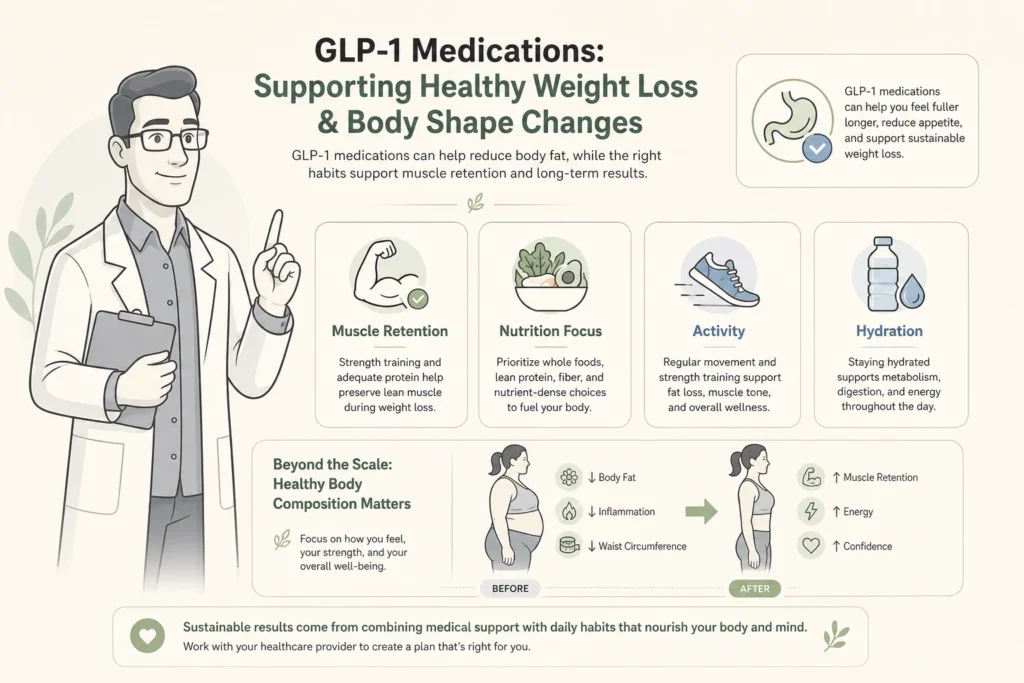
Yes, to a meaningful degree, especially the muscle-driven part of shape. Muscle you lost during weight loss can be rebuilt with consistent resistance training and adequate protein, and rebuilding it is often what restores fullness to a flat-looking backside or arms. This is the most reliable lever most people have, and it works at any age.
The skin and body-composition side is more individual. Skin elasticity partly recovers on its own over months, and firm, well-built muscle underneath fills the frame so loose skin is less obvious. Some patients also ask about body-composition support beyond diet and training. Certain clinical peptides are studied for their effect on body fat and lean mass, which we cover in our article on tesamorelin for visceral fat. Whether any of that fits you is a conversation for a provider who knows your history, not a decision to make from a social media trend.
The clinic that manages your dose is also the right place to talk about what the weight loss is doing to your shape. At Body Works, we treat body composition as part of the weight loss plan, not an afterthought once patients notice the change in the mirror. That means we talk about protein, strength, and pacing at the start, so the shape questions come up less often at the end. What we see in patients is simple: the ones who plan for it keep more of their figure.
If you are starting a GLP-1 medication, or you are already on one and noticing your shape shift, the fix is rarely stopping the medication. It is adjusting the plan around it. Our providers can look at your rate of loss, your muscle-protecting habits, and your goals, and help you keep the results you want while still losing the fat you came for.
Medically reviewed by Dr. Donald Vollmer, MD
Managing Physician, Body Works TN
You can lower your odds of the gaunt, sunken look people call Ozempic face. Here is how pacing, protein, muscle, and skin care protect your
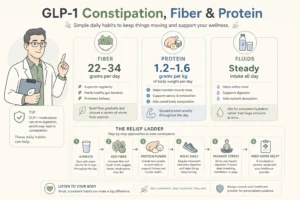
Constipation affects 24% of semaglutide patients and up to 17% on tirzepatide. This guide gives the daily targets that prevent it: 22 to 34 grams
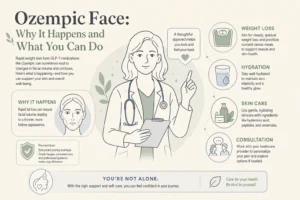
Ozempic face is the hollow, aged look some people notice after rapid weight loss. Here is why it happens, who is most at risk, and

When Tennessee investigators tested counterfeit weight loss vials seized in Medina, one was mostly water. That was the good outcome. The dangers of buying peptides
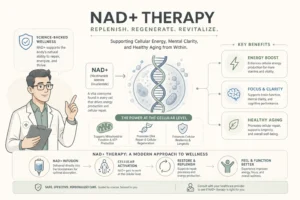
NAD+ therapy is marketed as a longevity reset for energy, focus, and healthy aging. This guide separates what the science on NAD therapy actually supports
A candid, evidence-based look at what natural methods can and cannot do for loose skin after GLP-1 weight loss, from protein and resistance training to
See Body Works first in your Google results.