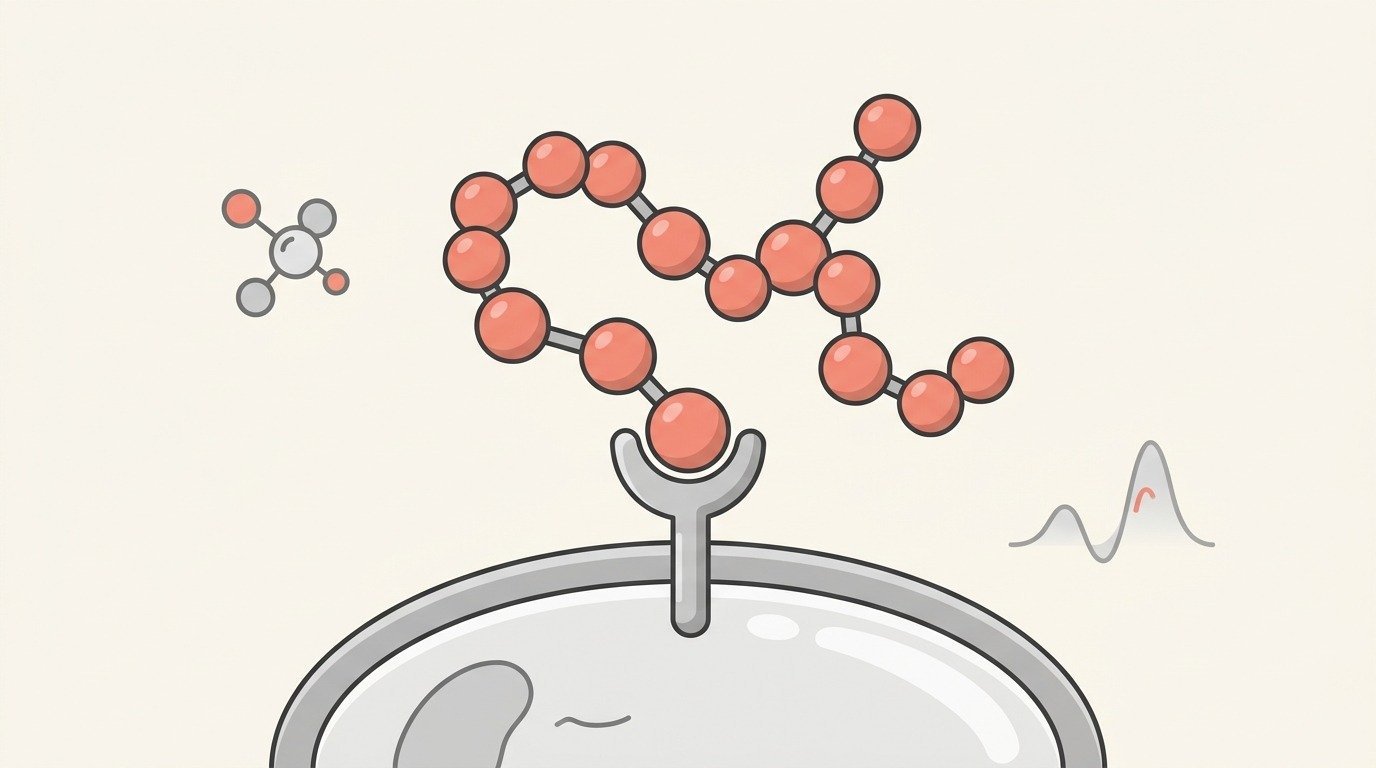

GHK-Cu Peptide Therapy for Skin, Hair, and Collagen

GHK-Cu Peptide Therapy for Skin, Hair, and Collagen

May 23, 2026

Copper sounds like an odd thing to put on, or in, your skin. It is also one of the most-studied trace minerals in dermal repair, and the body’s use of it depends on a small carrier molecule called GHK-Cu. The peptide has been in the lab since 1973, and the research now spans collagen biology, wound healing, dermal fibroblasts, and gene expression in aging skin. Most of what people read online about it, though, comes from supplement marketing rather than the peer-reviewed work.

This guide looks at what the GHK-Cu peptide actually does at the cellular level, what the dermatology and biochemistry literature supports, how topical and injectable forms differ in practice, and who is a reasonable candidate. The goal is to give you an honest picture so you can decide whether copper-tripeptide therapy belongs in a conversation with a clinician. At Body Works, GHK-Cu is one of several tools inside a physician-supervised peptide protocol in Franklin, TN and Nolensville, TN, paired with realistic expectations rather than miracle claims.

GHK-Cu Peptide Therapy for Skin, Hair, and Collagen

What Is the GHK-Cu Peptide?

GHK-Cu is a small protein fragment of three amino acids, glycine, histidine, and lysine, bound to a copper ion. It occurs naturally in human plasma and signals skin cells, immune cells, and connective-tissue cells how to repair injury. Levels are high in young adults and decline steadily with age, which mirrors the loss of skin firmness, slower wound healing, and thinner dermal collagen seen in older patients.

Most of the foundational science traces back to Loren Pickart. A peer-reviewed review by Pickart and Margolina, BioMed Research International, 2015 describes GHK-Cu as modulating several cellular pathways at once, increasing collagen and elastin synthesis, supporting fibroblast function, and acting as an anti-inflammatory and antioxidant signal. The peptide is not a drug in the conventional sense. It is a delivery system for copper plus a biological instruction the body already recognizes.

How Does GHK-Cu Affect Collagen and Dermal Fibroblasts?

GHK-Cu signals dermal fibroblasts, the cells that build the collagen and elastin scaffolding under your skin, to step up matrix production. This is the mechanism that earned the peptide most of its scientific attention. In cell culture work published by Maquart et al., FEBS Letters, 1988, the GHK-copper complex stimulated collagen synthesis in fibroblast cultures at nanomolar concentrations, with the largest effect at very low doses. Later studies extended the finding to glycosaminoglycans, decorin, and matrix metalloproteinase balance.

The cellular effect is not a single event. The peptide raises collagen and elastin output, triggers release of growth factors like vascular endothelial growth factor that improve local blood flow, activates antioxidant defenses including superoxide dismutase that protect cells from oxidative damage, and tempers inflammatory signals like TNF-alpha that accelerate skin aging. In plain terms, the peptide tells fibroblasts to rebuild dermal scaffolding without excessive breakdown of healthy tissue. American Academy of Dermatology guidance on retinoids and peptides places this class of ingredients in the category of evidence-supported topical and procedural strategies, alongside microneedling and chemical peels that stimulate the same repair cells.

GHK-Cu cellular mechanisms: collagen synthesis, growth factor activation, antioxidant defense, and anti-inflammatory effect working together to support dermal tissue repair

What Does GHK-Cu Do for Hair?

Hair follicles cycle through a long growth phase called anagen, a short transition called catagen, and a resting phase called telogen. Anything that supports anagen activity, improves scalp circulation, or strengthens the dermal papilla cells at the base of each follicle has the potential to influence hair density and shedding. Copper-binding peptides like GHK-Cu interact with several of those signals in laboratory studies, which is why they appear in hair-loss research.

The hair-cycle physiology is well established. According to DermNet on hair loss and the hair cycle, around 85 to 90 percent of scalp follicles are in anagen at any time, with each remaining in active growth for two to six years. Supporting that phase, or reducing inflammation around the follicle, is the lever most hair-focused therapies pull. Honest framing matters: GHK-Cu has a plausible mechanism and supportive preclinical data, but it is not an FDA-approved hair-loss drug, and patients with significant pattern hair loss usually need a multi-modal plan rather than a peptide alone.

Is GHK-Cu Better as a Topical or an Injection?

Both forms exist, and they answer different questions. Topical GHK-Cu, typically labeled as copper tripeptide-1 in serums, sits on the skin and acts locally on the dermis it can reach. Injectable GHK-Cu compounded by a 503A pharmacy delivers the peptide subcutaneously, which produces broader exposure across tissues but also adds the considerations that come with any injectable, including sterile technique, dosing accuracy, and physician oversight.

The decision is rarely either-or. In practice, patients focused on aesthetic skin tone, wrinkle texture, and topical maintenance often start with a well-formulated topical, sometimes paired with the procedural treatments offered at the Body Works medical aesthetics program such as microneedling or chemical peels. Patients pursuing whole-body regenerative goals, hair-cycle support, or post-procedure recovery may benefit more from an injectable protocol inside a supervised peptide therapy program at Body Works. The right answer depends on the goal and on what the bloodwork and history show.

How Does GHK-Cu Compare to Retinoids, Botox, and Fillers?

Patients ask this often, and the honest answer is that these tools do different things, not better or worse versions of the same thing. Topical retinoids are the most-studied anti-aging molecule and work by accelerating skin cell turnover and prompting collagen remodeling, and they can be combined with GHK-Cu rather than substituted for it. Neurotoxin injections like onabotulinumtoxinA reduce the muscle contractions that crease dynamic wrinkles, but they do not change skin quality or build collagen. Hyaluronic acid and other dermal fillers add volume in a specific location for several months at a time, but they do not stimulate tissue repair. Microneedling and fractional lasers create controlled micro-injury to trigger collagen remodeling and can be paired with GHK-Cu to support the recovery phase.

GHK-Cu fits a different slot. It is a slower, structural intervention that supports the cells that build skin and follicle tissue in the first place. It will not freeze a wrinkle, fill a hollow cheek, or resurface skin in a week. It will, over months, support better dermal scaffolding underneath whichever procedural treatments a patient also chooses, which is why dermatologists often think of it as a complement to retinoids, Botox, and fillers rather than a replacement.
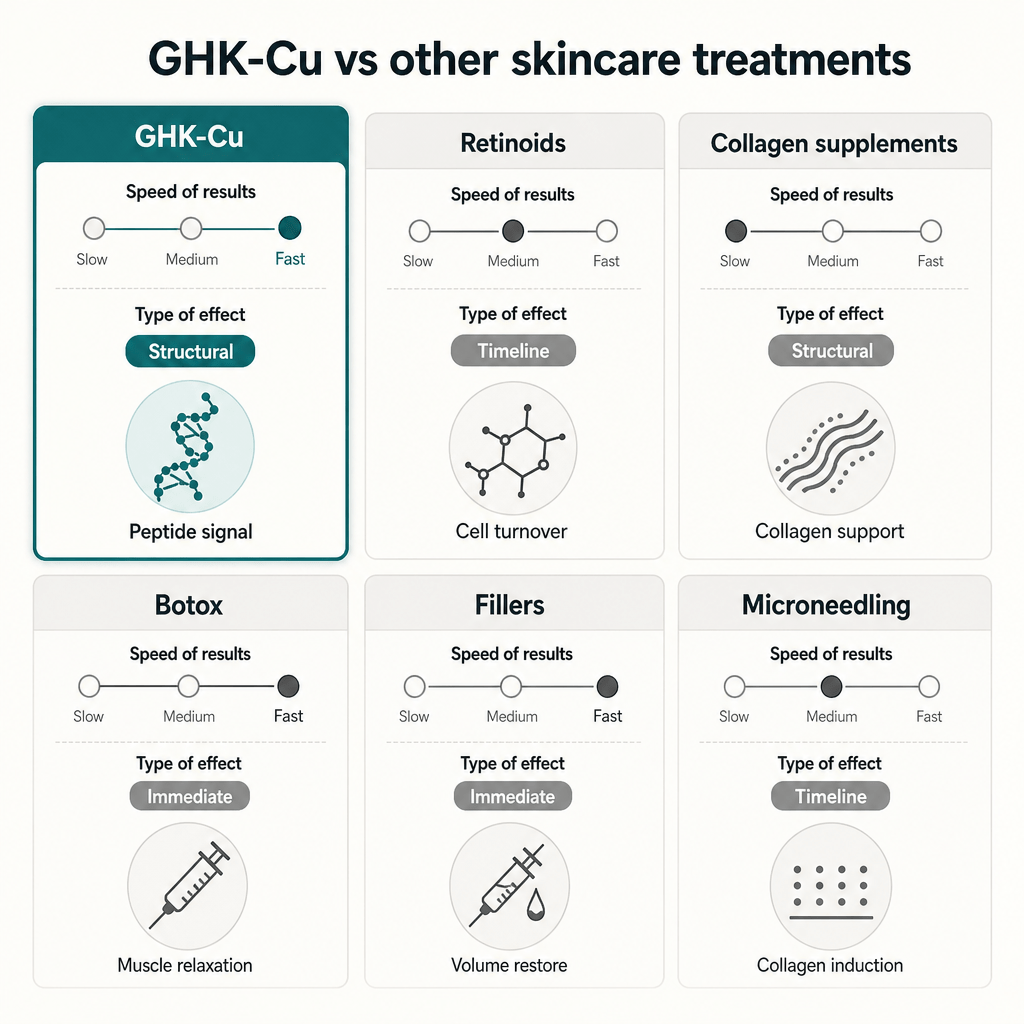
GHK-Cu versus retinoids, collagen supplements, neurotoxin injections, dermal fillers, and microneedling, comparing speed of results and type of effect across each option

What Is the Realistic Timeline for GHK-Cu Results?

Published data and clinical experience converge on a few honest expectations. The earliest signal is usually a change in skin feel, hydration, and surface texture, appearing in the first two to four weeks of a consistent topical or injectable protocol. Fine-line softening, more uniform skin tone, and visible firmness changes generally take eight to twelve weeks because dermal collagen rebuilds slowly. Hair density and shedding changes are even slower, with most patients needing at least three months of consistent dosing before judging the response, and a full six months before deciding whether to continue, adjust, or stop.

Several variables move the timeline. Patients who pair the peptide with daily SPF, structured sleep, adequate protein, and avoidance of nicotine respond faster than patients who rely on the peptide alone. Patients with significant chronic inflammation, uncontrolled blood sugar, or thyroid dysfunction tend to respond more slowly. Honest peptide programs are scheduled in months, not weeks, and the patients who do best understand that.
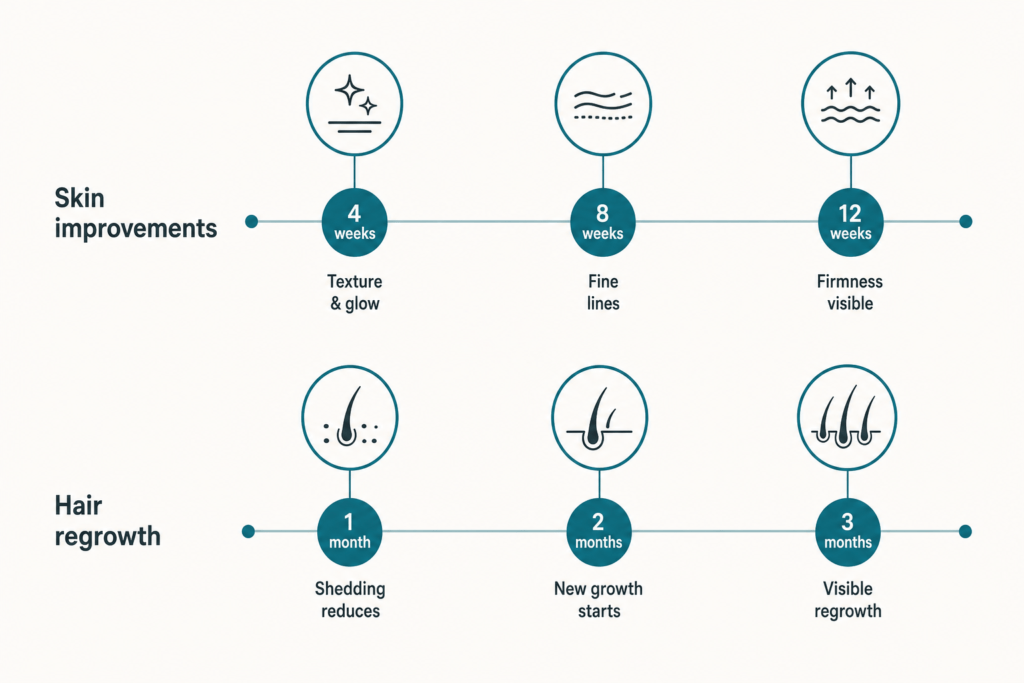
GHK-Cu skin and hair improvement timeline: skin results at four, eight, and twelve weeks; hair regrowth progress at one, two, and three months of consistent use

The Gene-Expression Side of the Story

The most striking line of GHK-Cu research is the gene-expression work. The peptide does not just push collagen production. It appears to influence the activity of thousands of genes involved in tissue repair, antioxidant defense, and cellular signaling, which is why the literature sometimes describes it as a broad biological modulator rather than a single-target drug.

A detailed review by Pickart and Margolina, International Journal of Molecular Sciences, 2018 documents these actions, including effects on collagen and elastin pathways, anti-inflammatory signaling, and antioxidant defenses. The breadth is both the appeal and the caveat. A molecule that touches many pathways at once is harder to package into a single, narrowly defined clinical claim, and the human randomized-trial base is thinner than for established drugs like topical retinoids.

Is GHK-Cu Safe, and Who Is a Good Candidate?

Safety for healthy adults has looked favorable in the published GHK-Cu literature, especially at the low doses used in topicals and in standard compounded injectable protocols. Side effects when they occur are usually local: mild redness, transient itching, or sensitivity at an application or injection site. Even so, copper-tripeptide therapy is not a fit for everyone, and self-experimenting with research-grade powders or unvetted online vendors carries real risks for sterility, dosing, and counterfeit material.

Candidacy at Body Works starts with a physician evaluation, a review of medical history and current medications, and bloodwork where indicated. Patients with active cancer, certain autoimmune conditions, pregnancy, or copper-metabolism disorders should not pursue GHK-Cu without specialist input. Skin-care patients who are happy with results from collagen-supporting strategies outlined by Cleveland Clinic, such as daily SPF, topical retinoids, and procedural collagen induction, may not need a peptide protocol at all.

What Is the FDA Status of Compounded GHK-Cu?

GHK-Cu is not an FDA-approved drug. It is most often dispensed through 503A compounding pharmacies, which prepare patient-specific medications under a physician prescription. The current bulk drug substances list that governs which ingredients are eligible for compounding is administered by the FDA and continues to evolve. According to the FDA Bulk Drug Substances Used in Compounding Under Section 503A page, the agency periodically reviews peptides and other substances for inclusion or removal based on safety data, supply, and clinical use.

What this means for patients is practical. The 503A framework is the lane that allows physician-supervised peptide therapy to exist, but the regulatory status of any specific peptide can change. That is exactly why provider selection matters so much. A clinic that watches FDA category updates, sources only from accredited 503A pharmacies, and rebuilds protocols when the list shifts is offering a different product than one that markets the same peptide indefinitely regardless of policy. Patients who want a deeper read on the 2026 changes can see the explainer on FDA peptide regulation in 2026, and the broader framework lives in the complete guide to peptide therapy.

GHK-Cu Inside a Broader Treatment Plan

Patients rarely show up wanting copper peptide for its own sake. They arrive with a goal: smoother skin texture, better hair density, faster recovery from an aesthetic procedure, or general regenerative support. GHK-Cu fits some of those goals well, fits others modestly, and fits a few not at all. The honest framing is to start with the goal, then ask which tools give the best return on time, cost, and physiologic risk.

A Body Works peptide consultation includes skin and lifestyle factors, candidacy for topical or injectable forms, complementary aesthetic procedures, and overlap with services like custom IV hydration for general nutrient and antioxidant support. It also includes a candid discussion of what GHK-Cu cannot do. It will not regrow hair gone for years, will not reverse deep volume loss, and is not a substitute for sun protection or basic skin care. Patients who want to vet any clinic before booking can review the guide to choosing a peptide therapy provider.

Talk to a Physician Before You Start a Copper-Peptide Protocol

GHK-Cu is one of the more interesting molecules in regenerative dermatology, but the right place to evaluate it is inside a physician relationship, not at a checkout page. Body Works runs peptide therapy under medical supervision in Franklin and Nolensville, with bloodwork-first protocols, accredited 503A sourcing, and a conservative posture on claims. If GHK-Cu is the right fit, the team will explain why. If it is not, the team will say so and recommend the better path. That is the standard worth holding any peptide clinic to.

If you are ready to compare GHK-Cu against the other tools available for your goals, Schedule a Free Consultation with the Body Works team. You can reach the Franklin office at (615) 790-2548 or the Nolensville office at (615) 941-1000.

Frequently Asked Questions

Most patients describe gradual changes in skin texture or scalp condition over 8 to 12 weeks of consistent use, not days. Connective tissue rebuilds slowly, so honest peptide protocols are scheduled in months, not weeks, with check-ins to evaluate response.
Published research and clinical experience suggest a favorable safety profile in healthy adults when prescribed by a physician and sourced from an accredited 503A compounding pharmacy. Patients with active cancer, certain autoimmune conditions, pregnancy, or copper-metabolism disorders need specialist evaluation before any copper-peptide therapy.
GHK-Cu is not an FDA-approved drug. It is most often prescribed by physicians and dispensed through 503A compounding pharmacies. The FDA periodically reviews peptides on the bulk drug substances list, and that status can change over time, which is one reason provider selection matters.
Yes, in most cases. GHK-Cu works on a different pathway than neurotoxins or fillers and is often paired with topical retinoids and post-procedure recovery to support collagen remodeling. Decisions about combining therapies should be made with the prescribing clinician after a candidacy review.
Body Works offers physician-supervised peptide therapy, including copper-tripeptide protocols when clinically appropriate, at both the Franklin and Nolensville locations. New patients can book a free consultation to determine candidacy.

Medically reviewed by Dr. Donald Vollmer, MD
Managing Physician, Body Works TN

Browse Our Blog

Peptides for Better Sleep: How Growth Hormone Peptides Restore Deep-Wave Recovery

Peptides for Better Sleep: How Growth Hormone Peptides Restore Deep-Wave Recovery

May 20, 2026

Sleep is not downtime. It is when tissue repair, immune restoration, and hormonal rebalancing happen. The problem is that the biology that drives deep sleep weakens with age. Growth hormone output during sleep falls steadily after the third decade. Deep slow-wave sleep, the most regenerative stage, shrinks from roughly a quarter of the night in young adults to under ten percent by the sixties. The fatigue and slow recovery many adults blame on stress is often the visible edge of that hormonal decline.

Growth-hormone-stimulating peptides like CJC-1295 and ipamorelin are one tool a physician-supervised program at Body Works in Franklin, TN and Nolensville, TN can use to support that biology. They do not sedate. They amplify the body’s own overnight growth hormone surge. This guide walks through how they work, what the peer-reviewed evidence actually shows, the realistic timeline, and where the limits are.

Peptides for Better Sleep: How Growth Hormone Peptides Restore Deep-Wave Recovery

What Do Peptides Actually Do for Sleep?

Peptides are short chains of amino acids that function as signaling molecules. The peptides used for sleep optimization do not target sleep stages directly. They target the hormonal systems that govern sleep depth, especially the overnight pulse of growth hormone that drives slow-wave sleep. A classic study by Van Cauter and colleagues on age-related changes in slow-wave sleep and growth hormone, JAMA, 2000 showed that slow-wave sleep and growth hormone secretion decline together with age in healthy men, and that the two are tightly coupled across the night.

The practical reading: restoring even part of that overnight growth hormone signal can lengthen and deepen slow-wave sleep without changing total time in bed. Peptides that stimulate the pituitary to release more of the patient’s own growth hormone work upstream of the sleep stages themselves. They do not knock the brain out the way a benzodiazepine or a Z-drug does. They reinforce a biological signal the body is already trying to make.

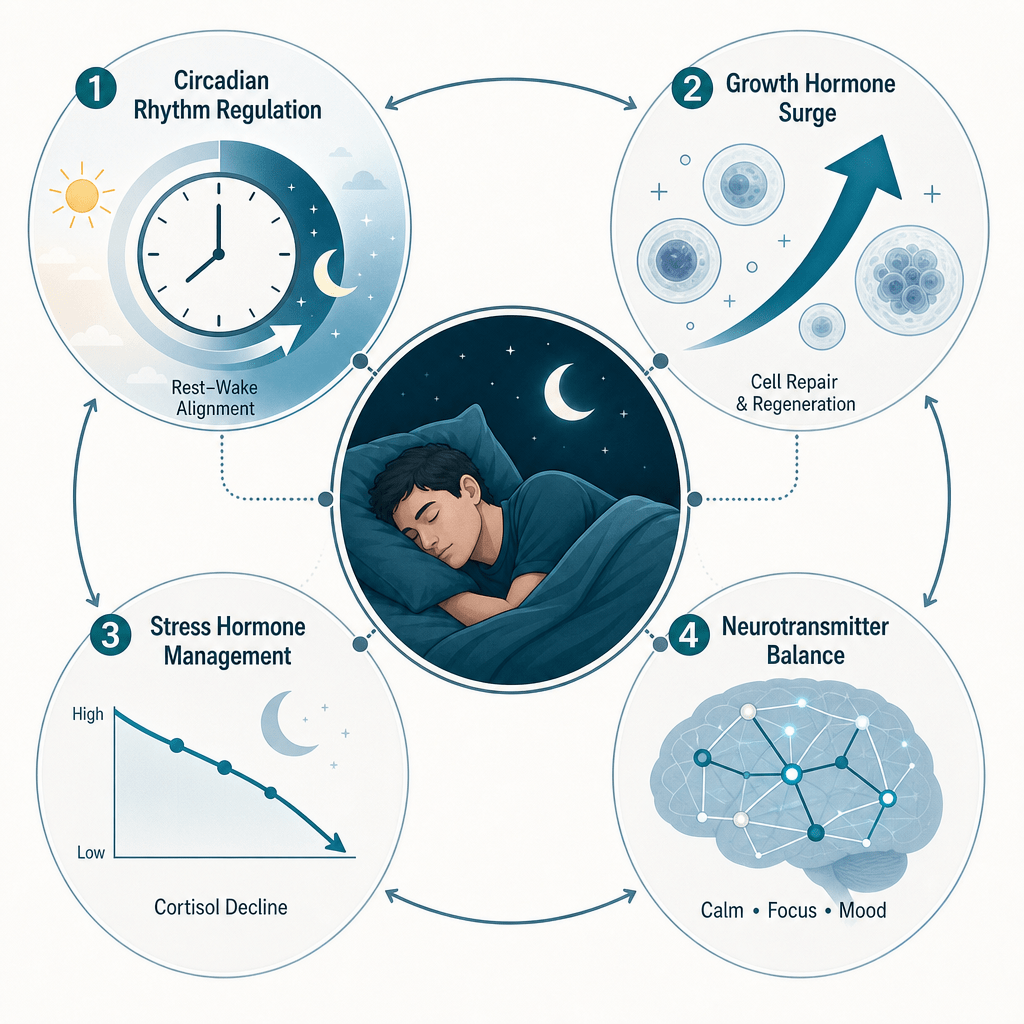
How peptides support sleep: circadian rhythm regulation, growth hormone surge, stress hormone management, and neurotransmitter balance working together

How Does CJC-1295 Deepen Slow-Wave Sleep?

CJC-1295 is a synthetic analog of growth-hormone-releasing hormone (GHRH). It binds the GHRH receptor on the pituitary and prolongs the natural pulses of growth hormone release. A trial of CJC-1295 in healthy adults by Teichman and colleagues, a long-acting GHRH analog in healthy adults, Journal of Clinical Endocrinology and Metabolism, 2006 documented sustained increases in growth hormone and IGF-1 levels over multiple days after a single subcutaneous dose. The relevance for sleep is that growth hormone is released in pulses, and the largest pulse of the day occurs during the first few hours after sleep onset.

In a supervised protocol, CJC-1295 is typically injected in the evening so that its prolonged GHRH signal aligns with that early-night pulse. Most patients describe the change as feeling more “in” sleep rather than falling asleep faster. The first three to four hours of the night carry more weight, daytime fatigue eases, and morning grogginess decreases. The change is rarely dramatic in the first week and continues to build over four to eight weeks of consistent dosing.

How Does Ipamorelin Help With Sleep Onset?

Ipamorelin acts at a different receptor. It is a selective growth hormone secretagogue that binds the GHS-R (ghrelin) receptor on the pituitary to trigger a sharp, short pulse of growth hormone release. The original characterization by Raun and colleagues, ipamorelin as a selective growth hormone secretagogue, European Journal of Endocrinology, 1998 showed it releases growth hormone with minimal effect on cortisol, prolactin, or aldosterone, which is what makes it distinct from older GH-releasing peptides.

The clinical observation that follows is timing. Because the ipamorelin pulse peaks within thirty to sixty minutes, it can be dosed close to bedtime to put a GH spike on top of the body’s own first nocturnal pulse. Patients tend to notice the effect of ipamorelin earlier than CJC-1295: fewer mid-night awakenings, faster return to sleep after an awakening, and lighter morning grogginess. The deeper recovery effects on body composition and daytime energy follow over the same six-to-eight-week window as CJC-1295.

What Does Combining CJC-1295 and Ipamorelin Do?

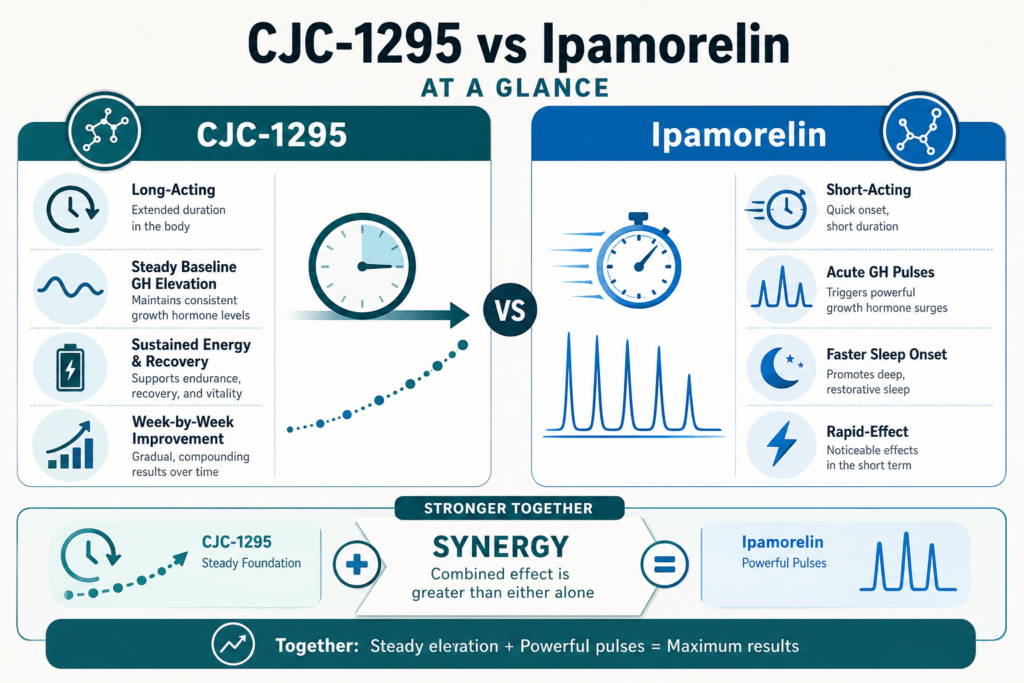
The two peptides are often paired because they hit complementary parts of the same pathway. CJC-1295 stabilizes the underlying GHRH tone and raises the baseline of growth hormone release across the dosing window. Ipamorelin adds a sharper, acute pulse on top of that baseline through the ghrelin-receptor route. A peer-reviewed review by Sigalos and Pastuszak on growth hormone secretagogue safety and efficacy, Sexual Medicine Reviews, 2018 describes the GHRH-plus-secretagogue strategy and the literature on combined dosing.

In practice, supervised sleep-optimization protocols use the combination more often than either peptide alone. The combination requires the same baseline labs and the same physician oversight as either component on its own. It does not get prescribed casually, and it is not appropriate for every patient.

CJC-1295 versus ipamorelin: long-acting baseline growth hormone elevation combined with short-acting acute pulses creates synergistic effects on sleep depth and recovery

What Does the Research Actually Show About Peptides for Sleep?

The honest framing matters. Growth hormone biology and sleep are well-studied in mechanism. The connection between slow-wave sleep, growth hormone release, and tissue recovery is established. CJC-1295 and ipamorelin each have human pharmacology data showing they raise growth hormone levels. What does not yet exist is a large, multi-year randomized trial of these specific peptides as a sleep treatment with overnight polysomnography as the primary endpoint.

That gap matters because patients evaluating peptide therapy deserve calibrated expectations. The mechanistic case is strong. The patient-reported outcomes inside supervised programs are encouraging. The randomized-trial-grade sleep data is partial. Endocrine Society clinical practice guidance on growth hormone therapy consistently emphasizes that newer compounds without large randomized trials require careful patient selection, baseline lab work, and ongoing monitoring rather than blanket use, and that framework is the right one for sleep-targeted peptide protocols too.

What Is the Realistic Timeline for Sleep Improvement?

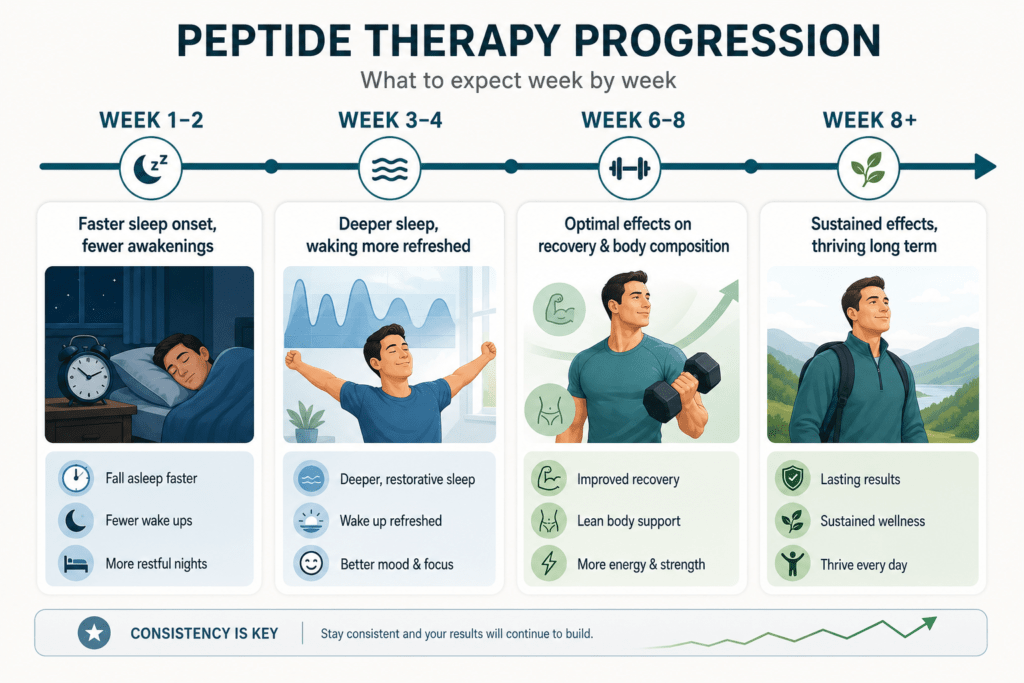
The pattern most supervised peptide patients report is steady rather than dramatic. In the first one to two weeks, the most common signal is faster sleep onset and fewer mid-night awakenings, especially with ipamorelin. By weeks three and four, slow-wave sleep starts feeling qualitatively different: morning waking is sharper, daytime energy stabilizes, and recovery from physical work improves. The full effect on body composition, lean muscle, and metabolic markers tends to emerge at the six-to-eight-week mark.

Several variables move the timeline. Patients who pair the peptide with consistent sleep timing, adequate protein, and structured exercise respond faster than patients who treat the peptide as a standalone fix. Patients with active inflammatory conditions, untreated thyroid issues, or significant nicotine and alcohol use tend to respond more slowly. Honest peptide programs are measured in months, not nights, and the patients who do best understand that.

Peptide therapy timeline: weeks 1-2 faster sleep onset, weeks 3-4 deeper sleep and refreshed waking, weeks 6-8 optimal recovery and body composition, beyond 8 weeks sustained effects

Who Is a Reasonable Candidate for Sleep-Supporting Peptides?

The patients most often considered for CJC-1295, ipamorelin, or the combination in a physician-supervised program fall into a few groups. Adults in their forties through sixties dealing with the predictable age-related drop in growth hormone and slow-wave sleep. High-output professionals and active adults whose recovery has slowed even though training and sleep hygiene have not. Post-surgical patients trying to support overnight tissue repair without compromising standard recovery care. Patients with measurable IGF-1 or growth hormone deficits on baseline lab work.

The patients who are not appropriate candidates are equally important to name. Anyone with active malignancy or a recent history of it. Patients with uncontrolled diabetes or untreated pituitary disease. Pregnant or breastfeeding patients. Patients seeking a sedative or a sleeping pill replacement, which these peptides are not.

How Does Body Works Approach Peptide Therapy for Sleep?

Sleep-targeted peptide therapy at Body Works sits inside the same structured framework as the rest of the peptide program. A consultation reviews goals, current medications, prior diagnoses, and any oncology or autoimmune flags. Baseline lab work includes IGF-1, growth hormone markers, fasting glucose, a metabolic panel, and thyroid markers when indicated. If a peptide protocol is appropriate, sourcing comes from accredited 503A compounding pharmacies, dosing is structured for the patient, and follow-up labs check both response and safety on a defined cadence.

A useful companion read is the existing post on peptide authenticity and sourcing, which covers what to look for in a 503A compounder. New readers can start with the plain-English guide to peptides, and the full category overview lives in the complete guide to peptide therapy.

What Should You Do Before Starting a Sleep-Peptide Protocol?

The right next step is a consultation, not a checkout. Peptides for sleep are not a supplement, and the patients who get the most out of them treat them as a medical decision rather than a wellness purchase. A physician-supervised peptide therapy program at Body Works in Franklin and Nolensville includes the candidacy review, baseline labs, sourcing oversight, dosing structure, and the follow-up that the published growth hormone literature recommends.

If poor sleep, slow recovery, or persistent daytime fatigue has you researching peptides, the most useful thing you can do is talk to a physician who works with this category. Schedule a Free Consultation with the Body Works team. You can reach the Franklin office at (615) 790-2548 or the Nolensville office at (615) 941-1000.

Frequently Asked Questions

Most patients describe faster sleep onset and fewer mid-night awakenings inside the first one to two weeks, especially with ipamorelin. Deeper slow-wave sleep and the body-composition effects tend to emerge over six to eight weeks of consistent dosing. Recovery timelines vary with baseline hormone levels, sleep hygiene, and other medical conditions.
CJC-1295 and ipamorelin are not FDA-approved drugs for any indication. They are most often prescribed by physicians and dispensed through 503A compounding pharmacies under a physician relationship. The regulatory picture for peptides changed in April 2026 with FDA revisions to the 503A bulk drug substances framework, and that file continues to evolve.
The published growth hormone secretagogue literature does not show dependency, tolerance, or daytime sedation with properly dosed peptide protocols. The mechanism is upstream of the sleep stages themselves, so the body is doing its own sleep work rather than being suppressed by a drug. Abrupt cessation does not cause withdrawal, but it also does not preserve the gains, which is why protocols are managed inside a physician program.
Melatonin and magnesium act at the symptom level by shifting circadian timing or supporting muscle relaxation. They do not change the underlying biology of slow-wave sleep. Growth-hormone-stimulating peptides target the hormonal pulse that drives slow-wave sleep itself, which is why the patient-reported effect is deeper sleep rather than easier sleep onset alone.
Body Works offers physician-supervised peptide therapy, including sleep-targeted CJC-1295 and ipamorelin protocols when clinically appropriate, at both the Franklin and Nolensville locations. New patients can book a free consultation to review goals, baseline labs, and candidacy before any protocol is started.

Medically reviewed by Dr. Donald Vollmer, MD
Managing Physician, Body Works TN

Browse Our Blog

BPC-157 for Tissue Repair: What the Research Actually Shows

BPC-157 for Tissue Repair: What the Research Actually Shows

May 18, 2026

This guide walks through what the research on BPC-157 tissue repair actually shows, where the strongest evidence sits, what the FDA 503A compounding framework allows in 2026, and how a physician-supervised program at Body Works in Franklin, TN and Nolensville, TN evaluates candidacy. The goal is an honest picture of the mechanism, the benefits, and the limits before you spend a dollar on any peptide protocol.

BPC-157 for Tissue Repair: What the Research Actually Shows

What Is BPC-157 and Where Does It Come From?

BPC-157 is a synthetic chain of 15 amino acids modeled on a sequence found in human gastric juice. The name stands for Body Protection Compound, which captures the original research interest: a small molecule the gut produces that appears to support tissue repair across multiple organ systems. Researchers synthesized BPC-157 in the lab to study that sequence in isolation, and the bulk of the published work since the 1990s has examined how it behaves in animal models of injury.

A recent systematic review by McGuire et al., emerging use of BPC-157 in orthopaedic sports medicine, HSS Journal, 2025 summarizes the field this way: animal evidence for accelerated soft-tissue healing is broad and reproducible, but only three small human pilot studies exist, covering intraarticular knee pain, interstitial cystitis, and intravenous safety and pharmacokinetics. That is the honest framing every reader should start with. The mechanism story is rich. The human outcome story is still being written.

How Does BPC-157 Affect Tendons, Ligaments, and Joints?

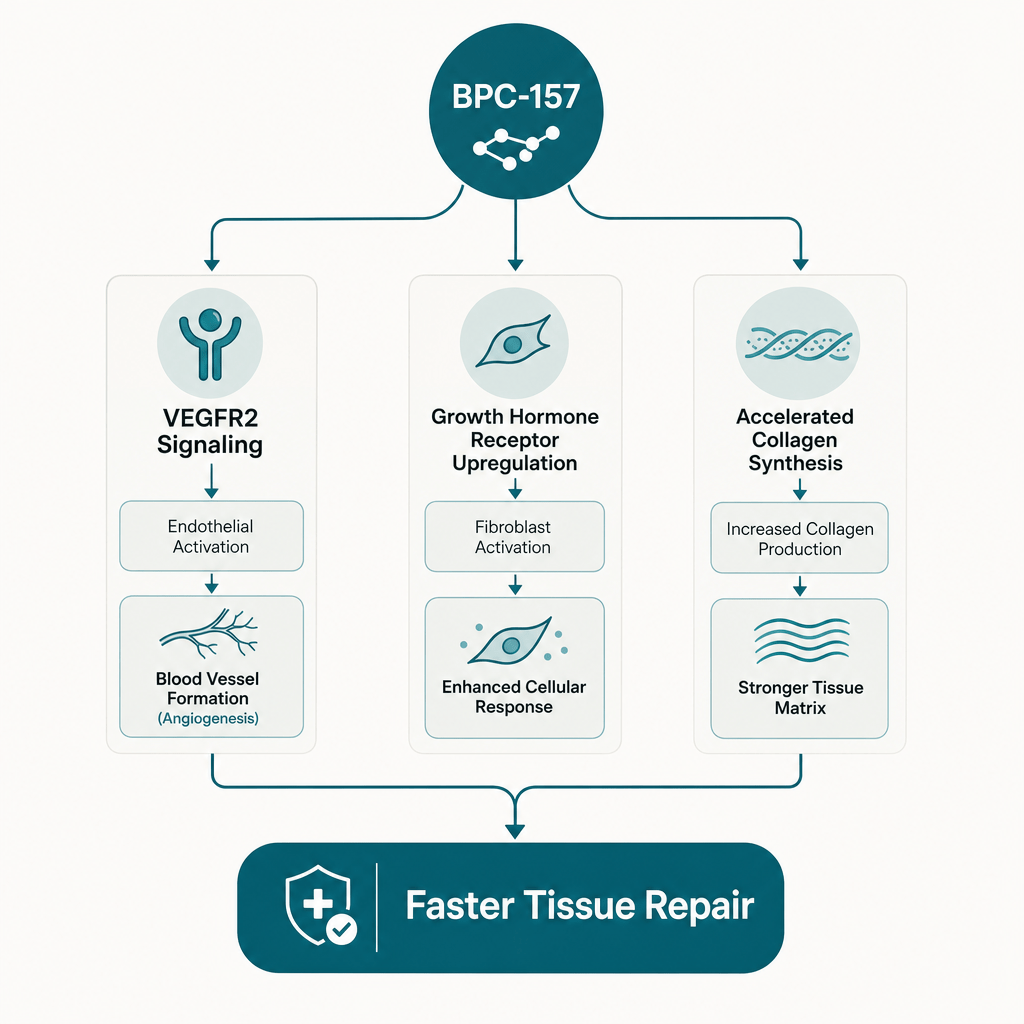
The strongest preclinical signal for BPC-157 sits in tendon and ligament repair. In animal models of Achilles transection, medial collateral ligament tears, and rotator-cuff injury, the peptide has consistently accelerated functional recovery and improved tissue organization on histology. The proposed mechanism involves several pathways at once. The peptide triggers VEGF receptor signaling that stimulates new blood vessel growth into the wound bed, amplifies growth hormone receptor sensitivity in fibroblasts so existing repair signals carry further, and accelerates collagen organization in tendon tissue.

A narrative review by McGuire et al., regeneration or risk, Current Reviews in Musculoskeletal Medicine, 2025 concludes that BPC-157 demonstrates reproducible regenerative and cytoprotective effects in preclinical work, with effects on tendon cell outgrowth, fibroblast survival under stress, and migration into damaged tissue. Earlier mechanistic work by Chang et al., tendon outgrowth and cell migration, Journal of Applied Physiology, 2011 linked those effects to FAK-paxillin signaling, a pathway tendon fibroblasts use to crawl into a healing wound. The pattern is consistent across labs. The question is how reliably those animal findings translate to humans.

BPC-157 mechanism cascade: VEGFR2 signaling, growth hormone receptor upregulation, and collagen synthesis converging to faster tissue repair

What Does the Current Research Actually Show?

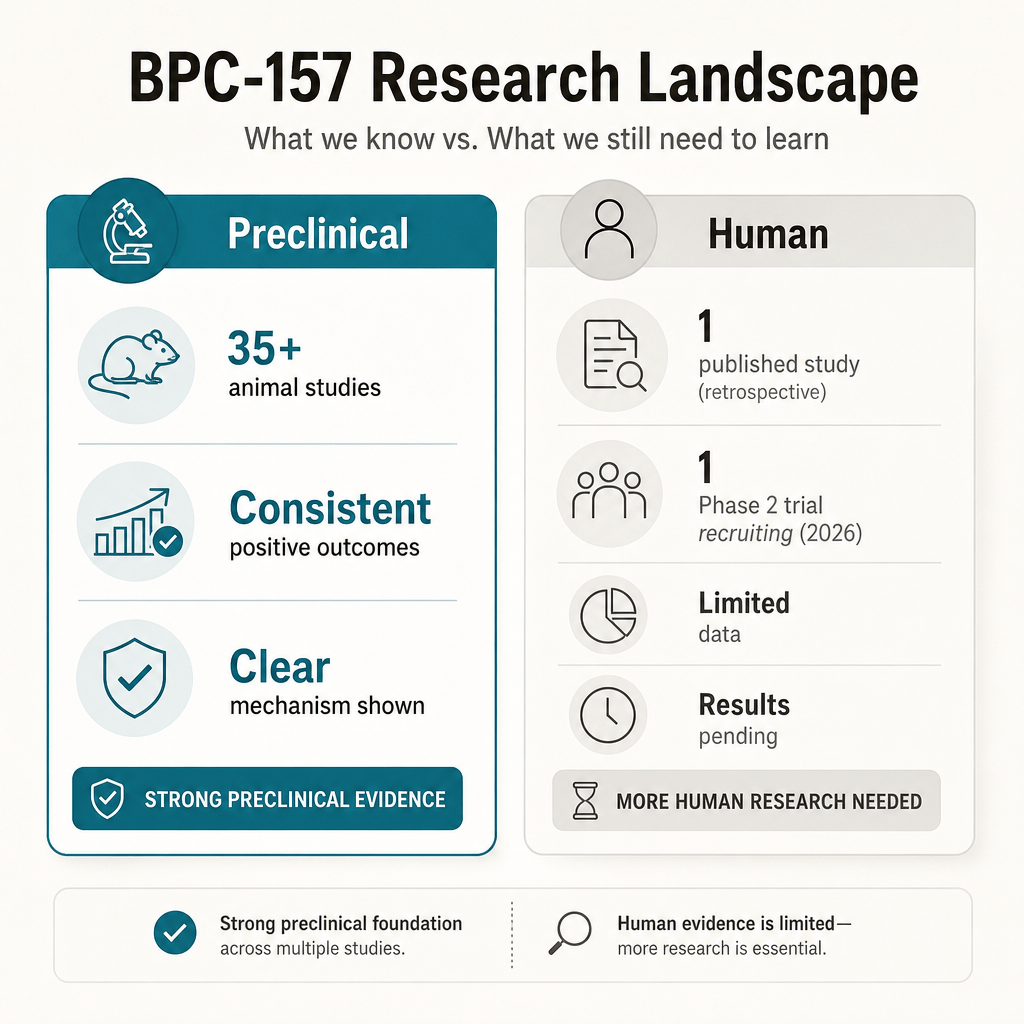
The evidence splits sharply into two buckets. Preclinical work is broad and consistent. Human work is sparse and early. A 2025 systematic review screened 544 articles and included 36 studies, of which 35 were preclinical animal studies and only one was a human trial. That ratio is the most important fact a patient can know before starting a protocol.

On the animal side, the signal is reproducible across labs. Rats with transected Achilles tendons healed with greater tensile strength and faster functional recovery on systemic BPC-157 dosing. Rats with medial collateral ligament injuries showed faster biomechanical recovery on both local and systemic administration. Rabbit bone-defect models showed acceleration comparable to autologous grafts, with the strongest effect at bone-to-tendon junctions. On the human side, one retrospective case series of 17 patients receiving intraarticular knee injections reported sustained pain relief over six to twelve months, but there was no control group, no blinding, and no randomization. A Phase 2 randomized controlled trial of BPC-157 for acute hamstring strain is now recruiting, with results expected in early 2027. That trial will be the first rigorous human efficacy test of this peptide.

BPC-157 evidence landscape: 35 preclinical animal studies with consistent positive outcomes versus 1 published human study and 1 Phase 2 trial recruiting

What Does BPC-157 Do for Gut and Gastrointestinal Healing?

BPC-157 was originally isolated for its gut-protective effects, and that line of research is older and broader than the orthopedic work. In rodent models of inflammatory bowel disease, esophageal injury, gastric ulcer, and toxin-induced colitis, the peptide has accelerated mucosal healing and reduced inflammatory markers. The proposed mechanism overlaps with the tendon story: improved local blood flow, stabilized nitric oxide signaling, and protection of epithelial cells against oxidative stress.

A 2018 review by Sikiric et al., BPC 157 and angiogenic growth factors, Current Pharmaceutical Design, 2018 traces the angiogenesis hypothesis across both gastrointestinal and musculoskeletal injury models, arguing the peptide acts as a general protector of damaged vascular networks. Clinically, the most honest takeaway is that BPC-157 has plausible biology for gut healing, animal data that is genuinely interesting, and no large human trials confirming the effect. Patients with active gastrointestinal disease should be managed by a gastroenterologist using established therapies, not by self-administered peptides ordered online.

How Long Does Tissue Repair Take with BPC-157?

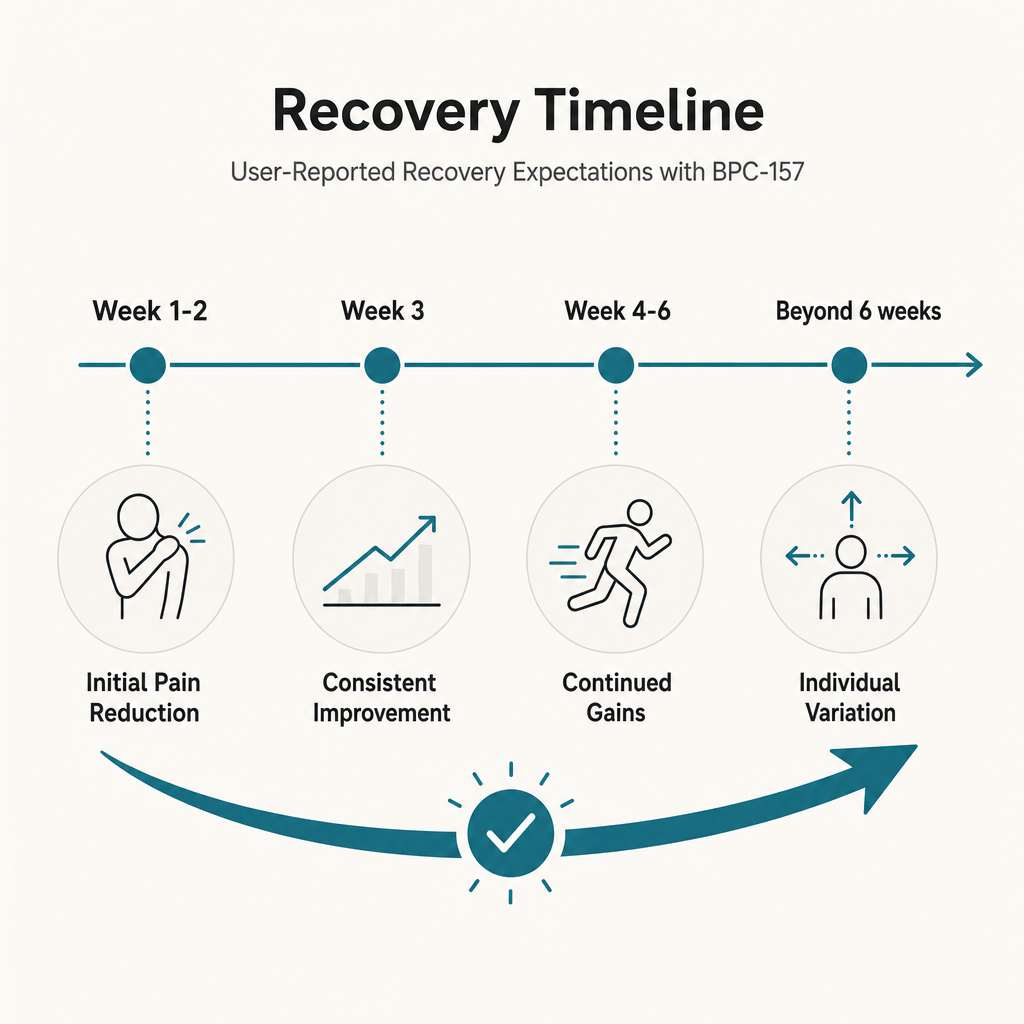
Published animal data and clinical experience inside supervised peptide programs converge on a few honest expectations. The early subjective signal, usually a reduction in pain or stiffness, often appears in the first two to three weeks of a protocol. Functional improvement in joint mobility, range of motion, or load tolerance commonly appears between weeks three and six. Structural change continues underneath those signals for longer than the patient feels it, which is why protocols are usually run for at least eight to twelve weeks rather than stopped at first relief.

Several variables move the timeline. Acute injuries with intact blood supply respond faster than chronic, degenerative tissue. Patients who pair the peptide with structured physical therapy, adequate protein intake, and seven to eight hours of sleep do measurably better than patients who treat BPC-157 as a standalone fix. Patients with active inflammatory conditions, uncontrolled blood sugar, or significant nicotine exposure tend to respond more slowly. Honest peptide programs are measured in months, not days, and the patients who do best understand that.

BPC-157 recovery timeline: weeks 1-2 initial pain reduction, weeks 3-4 consistent improvement, weeks 4-6 continued gains, beyond 6 weeks individual variation

Is BPC-157 Safe in the Studies That Have Been Done?

Safety data for BPC-157 has looked favorable in the published literature, which is one reason the peptide became popular before the regulatory picture caught up. Animal studies have not identified a clear toxic threshold, and the small human pilot studies have not surfaced major adverse events. That is meaningfully different from proven safe. Long-term outcomes and effects in patients with comorbid disease are still missing.

The honest caveats matter for anyone considering treatment. BPC-157 has not been studied in pregnant or breastfeeding patients and should be avoided in those groups. Patients with a history of cancer face a theoretical risk because the peptide promotes angiogenesis, which is also the process that supports tumor growth, and there is not enough oncology safety data to use it confidently in that context. Patients with active autoimmune disease, uncontrolled diabetes, or significant kidney or liver dysfunction need individualized evaluation. Endocrine Society clinical practice guidance on hormone and peptide therapeutics consistently emphasizes that emerging compounds without large randomized trials require careful patient selection and active monitoring, not blanket use.

What Is the FDA and 503A Regulatory Status of BPC-157 in 2026?

The compounding picture for BPC-157 changed in April 2026. On April 22, 2026, the FDA removed twelve peptides, including BPC-157, from Category 2 of the 503A bulk drug substances framework. Category 2 was the agency’s significant-safety-concerns list, and removal does not mean approval. It means the substance is no longer under that active concern designation while the formal review process continues. The Pharmacy Compounding Advisory Committee is scheduled to discuss BPC-157 and several other peptides at its July 2026 meeting to determine whether they belong on the formal 503A bulks list.

According to the FDA bulk drug substances under Section 503A page, only state-licensed pharmacists working under a physician prescription may compound bulk substances that meet the regulatory criteria, and the list is updated as new evidence arrives. For patients, the practical reading is that the compounding lane exists but is in active flux, and clinical use of BPC-157 belongs inside a physician relationship that watches the regulatory file closely. A deeper read of the April 2026 changes is available in the explainer on FDA peptide regulation in 2026, which sits alongside the broader complete guide to peptide therapy for context.

Who Is a Reasonable Candidate for BPC-157?

The patients most often considered for BPC-157 in physician-supervised peptide programs fall into a few clear groups. Active adults dealing with a slow-healing tendinopathy that has not responded fully to physical therapy, conservative orthopedic care, and time. Post-surgical patients trying to support soft-tissue recovery without compromising standard rehab. Patients recovering from a recent injury where the goal is to accelerate the early window of repair. Patients with a chronic gastrointestinal complaint that has been worked up by a specialist and remains symptomatic.

The patients who are not good candidates are equally important to name. Anyone with active malignancy or a recent history of it, given the angiogenesis question. Pregnant or breastfeeding patients. Patients seeking BPC-157 as a substitute for guided rehabilitation, which it is not. Patients with muscle loss after rapid weight reduction usually need a structured plan rather than a standalone peptide, and the medical weight loss program at Body Works is the right entry point for that group.

How Does Body Works Approach BPC-157?

BPC-157 at Body Works sits inside a structured peptide protocol rather than as a one-off prescription. The first step is a consultation with the medical team to review goals, current medications, prior injuries, surgical history, and any oncology or autoimmune flags. Bloodwork is ordered when clinically indicated. If BPC-157 is appropriate, the protocol is built around the patient’s specific question: tendon recovery, post-surgical support, gut symptoms, or general regenerative goals. Sourcing comes from accredited 503A compounding pharmacies, and the team tracks the FDA regulatory file as it evolves.

This program-first framing matters because BPC-157 is a tool, not a treatment plan. The patients who do best understand the peptide is one input alongside physical therapy, sleep, nutrition, and patience. A useful companion read is the existing post on peptide authenticity and sourcing, which covers what to look for in a 503A compounder. New readers can also start with the plain-English guide to peptides if the broader category is still unfamiliar.

What Should You Do Before You Start a BPC-157 Protocol?

The right next step is a consultation, not a checkout. BPC-157 is not a supplement you buy off a shelf, and the patients who get the most out of it are the ones who treat it as a medical decision rather than a wellness purchase. A physician-supervised peptide therapy program at Body Works in Franklin and Nolensville includes the candidacy review, sourcing oversight, dosing structure, and the follow-up that the published literature and the current FDA framework both recommend.

If a slow-healing injury, post-surgical recovery, or persistent soft-tissue complaint has you researching peptides, the most useful thing you can do is talk to a physician who works with this category. Schedule a Free Consultation with the Body Works team. You can reach the Franklin office at (615) 790-2548 or the Nolensville office at (615) 941-1000.

Frequently Asked Questions

Published animal data and clinical experience suggest the early signal often appears in the first two to four weeks of a supervised protocol, with continued improvement over eight to twelve weeks. Recovery timelines vary by injury type, baseline tissue health, and how well the patient pairs the peptide with physical therapy. Honest peptide programs are measured in months, not days.
BPC-157 is not an FDA-approved drug. It is most often prescribed by physicians and dispensed through 503A compounding pharmacies. In April 2026 the FDA removed BPC-157 from Category 2 of the 503A framework, and the Pharmacy Compounding Advisory Committee is scheduled to review the peptide in July 2026. Provider selection matters because that file can change again.
Self-administering BPC-157 without a prescription, sourcing it from non-503A vendors, or dosing from a social media protocol carries real risks for sterility, dosing accuracy, and counterfeit material. The published safety record applies to supervised use of pharmacy-grade peptide, not to research-grade powders ordered online. A medical evaluation is the safer path.
Body Works offers physician-supervised peptide therapy, including BPC-157 protocols when clinically appropriate, at both the Franklin and Nolensville locations. New patients can book a free consultation to determine candidacy and review goals before any protocol is started.

Medically reviewed by Dr. Donald Vollmer, MD
Managing Physician, Body Works TN

Browse Our Blog

What to expect at your first peptide therapy appointment

What to expect at your first peptide therapy appointment

May 15, 2026

Thinking about starting peptide therapy? At Body Works, we want you to feel prepared before you even arrive at our Franklin or Nolensville clinics. The first visit isn’t just a medical checkup. It’s the moment you stop guessing about your health and start a plan built for your specific biology.

Thinking about starting peptide therapy can feel like the start of something big. You have probably heard the success stories about better sleep, faster recovery, and more energy, but you might still have questions about the actual process. Showing up to a medical clinic for a new treatment can be intimidating if you don’t know what happens once you walk through the door.

What to expect at your first peptide therapy appointment

What is peptide therapy and how does it work?

Peptides are short chains of amino acids that act as biological signaling messengers in your body. You can think of them as the building blocks of proteins, but their smaller size allows them to communicate directly with your cells. They tell your body to perform specific tasks like repairing tissue, burning fat, or regulating hormones.

As you get older, your natural levels of these messengers start to drop. This is why it takes longer to recover from a workout than it did ten years ago. Peptide therapy works by restoring these levels and signaling your body to reactivate its natural healing and metabolic processes.

Because peptides work with your natural systems rather than overriding them, they are a preferred choice for adults in Middle Tennessee who want a safer, more natural path to health. We focus on using pharmaceutical-grade peptides from trusted compounding pharmacies to ensure you get the best possible results.

The clinical peptide therapy appointment: Setting your wellness goals

When you arrive for your initial peptide therapy appointment, the focus is entirely on your history and your future goals. We don’t do one-size-fits-all treatments. We start with a detailed health history review to understand where you are right now.

You will meet with one of our licensed Nurse Practitioners to talk through the symptoms that are holding you back. For most of our patients, those symptoms include:

  • Persistent fatigue that doesn’t go away with sleep
  • Slow recovery after exercise or minor injuries
  • “Brain fog” or difficulty staying focused during the day
  • Stubborn weight gain that diet and exercise cannot seem to budge

This consultation typically lasts between 30 and 60 minutes. We take this time to listen to your concerns and define what success looks like for you. Whether you want to get back to playing with your kids without pain or you want to sharpen your mental edge at work, we build the plan around those specific outcomes.

Why lab work is the foundation of your peptide therapy appointment Franklin Nolensville protocol

One of the biggest mistakes you can make is trying to guess which peptides you need without data. That is why we require Endocrine Society clinical practice guideline on adult growth hormone deficiency as part of your startup process. These labs give us a map of your internal health.

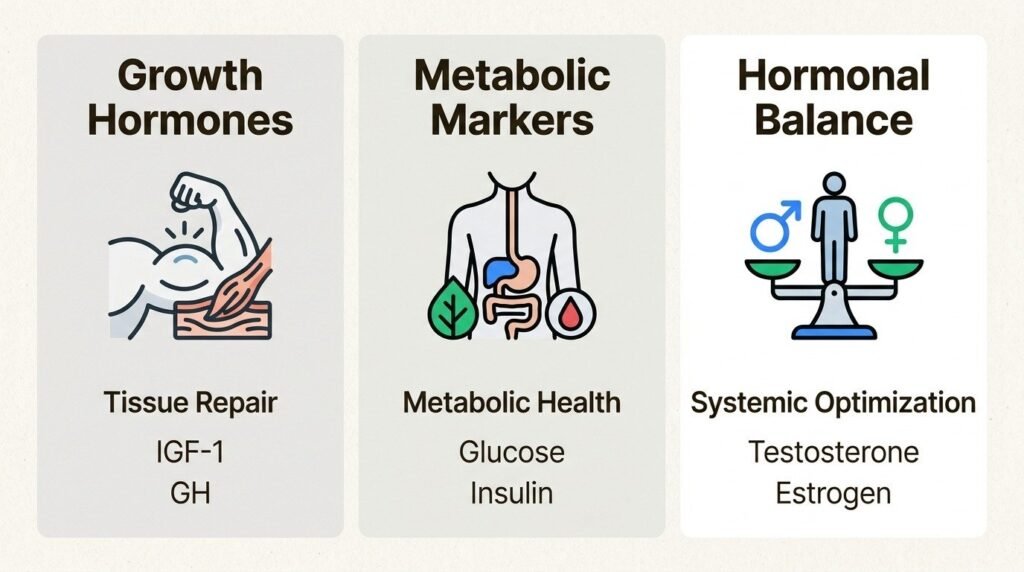
By looking at specific markers, we can identify exactly where your body needs support. We look at:

| Marker Category | What We Monitor | Why It Matters |

|—————–|—————–|—————-|

| Growth Hormones | IGF-1 and GH levels | Essential for muscle repair and fat metabolism |

| Metabolic Markers | Glucose and insulin sensitivity | Helps determine if weight gain is biologically driven |

| Hormonal Balance | Testosterone and Estrogen | Ensures peptides are working in a balanced environment |

This data allows us to select the right peptide protocol for you, drawing on the published musculoskeletal evidence base for BPC-157. For instance, we might use CJC-1295 or Ipamorelin if your growth hormone markers are low, or BPC-157 if we see signs of chronic inflammation or slow tissue repair. Without these labs, we’d just be guessing, and we believe your health is too important for guesswork.

Lab work provides a precise map of your internal health, guiding the selection of the most effective peptide protocols for your body.

Your first peptide injection: Technique and safety

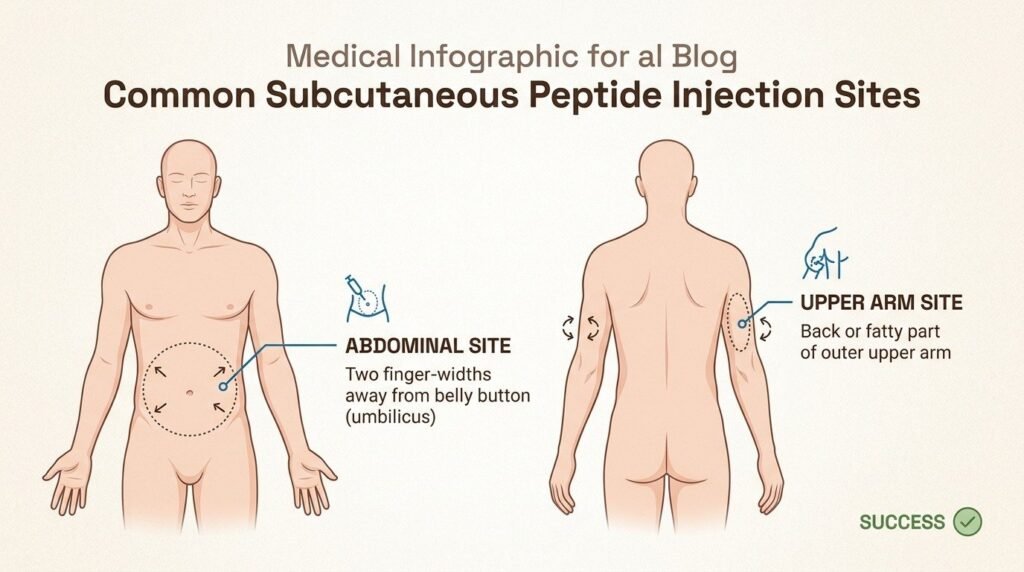
Once your plan is set and your peptides arrive, we’ll walk you through your first administration. Most peptides are given as a CDC Pink Book chapter on vaccine administration and subcutaneous injection technique, which means the needle only goes into the fatty tissue just under the skin.

If you’re nervous about needles, you’re not alone. However, the needles we use are extremely small. Most patients describe the sensation as a mild pinch rather than a painful shot. The most common injection sites are the abdomen or the upper arm.

During this visit, our medical team’ll give you clear instructions on how to handle the peptides at home. We cover:

  • Proper injection technique to ensure comfort
  • Storage requirements like refrigeration to keep the peptides active
  • Your specific dosing schedule
  • What normal responses feel like versus what needs a follow-up
Learning the proper sites for subcutaneous peptide administration is a key part of your first visit.

Managing expectations: Results and timeline after your peptide therapy appointment Franklin Nolensville

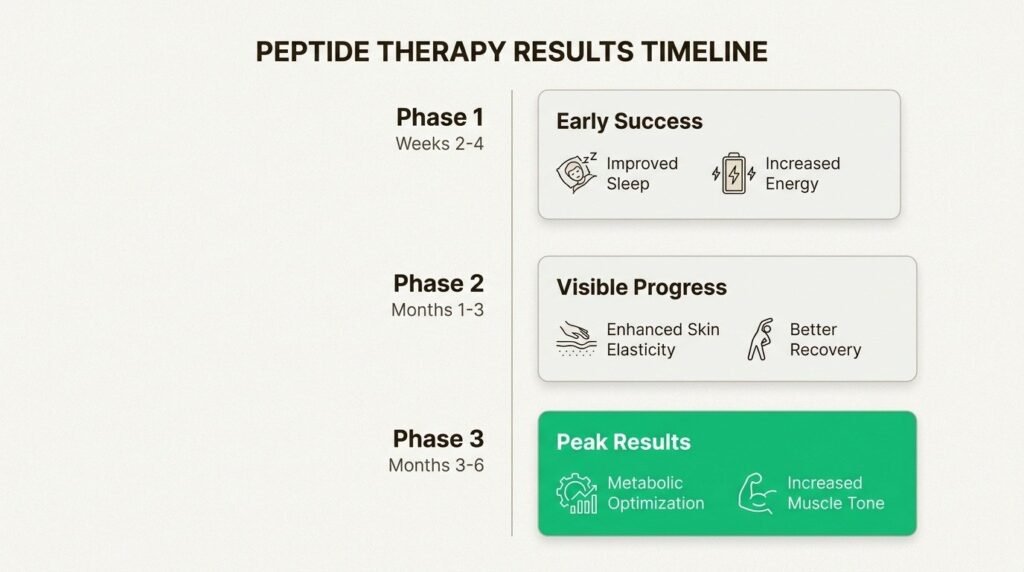
Peptide therapy isn’t a magic fix that works overnight. It works through your biology, and biology takes time. That said, many of our patients notice “early wins” within the first two to four weeks. These often include better sleep quality and more stable energy levels during the day.

The more significant changes usually follow this timeline:

  • 1 to 3 Months: Improvements in body composition, skin elasticity, and muscle recovery after exercise become more apparent
  • 3 to 6 Months: This is typically when you see the full benefits of the protocol, supported by published human safety data on intravenous BPC-157, including improved lean muscle mass and fat loss

Consistency is the most important factor in your success. If you skip doses or stop early, your body won’t have the sustained signal it needs to make lasting changes. We also often find that peptides work best when paired with our other services. For example, combining peptides with Medical Weight Loss can help preserve muscle while you lose fat, and pairing them with Hormone Therapy can ensure your entire system is in balance.

Understand the typical progression of peptide therapy results, from early improvements to peak metabolic and physical optimization.

Start your peptide therapy journey in Franklin or Nolensville today

You have plenty of choices when it comes to wellness in Middle Tennessee, but we believe the boutique experience makes a difference. We are locally owned, which means we are part of the Franklin and Nolensville communities. We do not rush you through your visits or treat you like a number in a national franchise.

We have two convenient locations to serve you:

  • Body Works Franklin: Located on Murfreesboro Rd, serving downtown Franklin and surrounding areas
  • Body Works Nolensville: Located in Burkitt Commons, making it easy for residents south of Nashville to get care

If you are ready to stop feeling “good enough” and start feeling like yourself again, the first step is simple. Schedule a free consultation at either of our locations. We’ll sit down with you, listen to your goals, and help you decide if a peptide therapy plan is the right choice for your health.

___

Body Works provides a boutique, personalized experience in our Franklin and Nolensville locations.

Frequently Asked Questions

You should bring a valid ID and a list of any current medications or supplements you are taking. If you have had blood work done in the last 90 days, bringing those results can also be helpful for our initial review.
Most initial consultations last between 30 and 60 minutes. This gives us enough time to review your health history, talk through your specific wellness goals, and explain how the different peptide protocols work.
Yes, we require clinical blood work for all new peptide patients. This ensures we are selecting the right peptides based on your actual biological markers and helps us monitor your safety throughout the treatment.
Yes, if we are drawing blood for metabolic or hormone markers, you will typically need to fast for 8 to 12 hours. We will give you specific instructions on when to stop eating before your scheduled visit.
Most patients describe the injections as a very mild pinch. We use extremely small needles designed for comfort, and our medical team will show you the best techniques to make the process quick and easy.

Medically reviewed by Dr. Donald Vollmer, MD
Managing Physician, Body Works TN

Browse Our Blog

How to choose a peptide therapy provider: A guide for 2026

How to choose a peptide therapy provider: A guide for 2026

May 12, 2026

Finding a medical partner who understands your goals is the first step toward reclaiming your health. You aren’t just looking for a vial of medication; you’re looking for a strategy to help you feel like your best self again.

The peptide therapy landscape is changing fast, which makes it even more important to choose a provider that puts safety and medical oversight first. This guide will walk you through the essential questions to ask before you begin your journey.

Peptide therapy is everywhere right now. You can find ads for weight loss injections or anti-aging protocols on almost every social media feed. The market has moved fast, which usually means the quality is all over the map. You’re likely looking for a way to recover faster, lose weight, or regain the energy you had a decade ago. But finding the right provider isn’t as simple as clicking a buy button on a website.

Choosing a provider is the most important decision you’ll make in this process. It’s the difference between a supervised medical treatment and a risky experiment with your own biology. We see patients every day who are confused by the options. Some are looking at local clinics in Middle Tennessee while others are considering national mail-order services that promise quick results with zero human interaction.

The goal is to help you “feel like YOU again” without taking unnecessary risks. This guide will help you spot the red flags and ask the questions that actually matter. You can also find more information on our wellness blog.

How to choose a peptide therapy provider: A guide for 2026

Why your choice of peptide therapy provider matters

The peptide market is currently fragmented. On one side, you have legitimate medical practices that treat peptides as one tool in a larger wellness strategy. On the other side, there’s a thriving “gray market” of websites selling “research chemicals” that aren’t intended for human use. These products skip the purity and safety testing required for medical treatments.

If you choose a provider that cuts corners, you’re not just risking your money. You’re risking your health. Peptides are powerful signaling molecules. They tell your body to produce growth factors, burn fat, or repair tissue. When used correctly under medical supervision, peptide therapy can be life-changing. When used incorrectly, you might experience anything from simple site reactions to more serious hormonal imbalances.

We believe that a trusted partner is essential to achieving sustainable results. You need someone who understands your medical history and can adjust your protocol as your body responds. This is a journey, not a transaction.

What is a legitimate peptide therapy program?

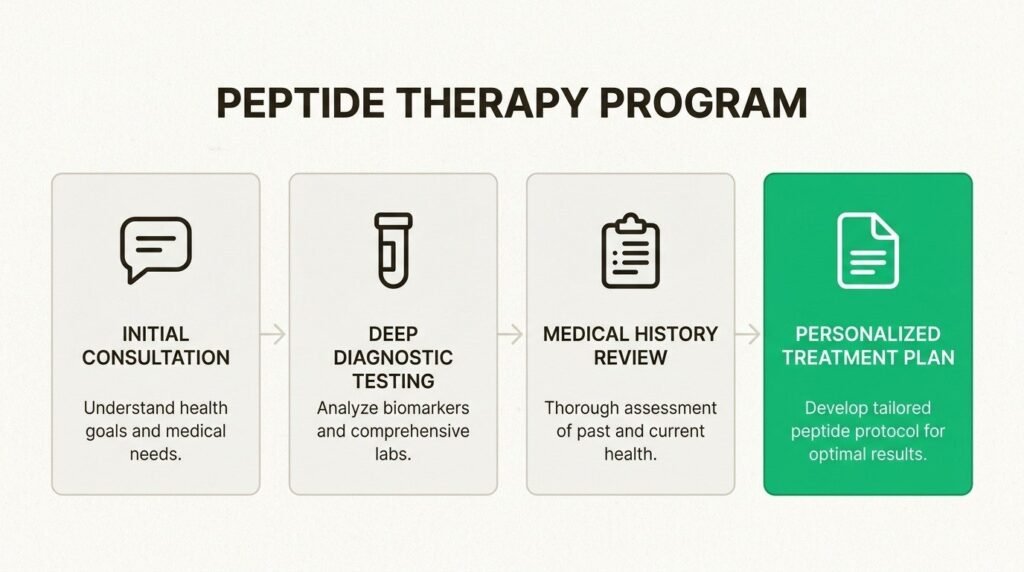
A legitimate program starts with a person, not a form. If a provider offers to ship you peptides after you fill out a five-minute online questionnaire, that’s a red flag. Medical treatments require a relationship between a patient and a licensed provider.

Our team at Body Works includes Nurse Practitioners and Registered Nurses who oversee every aspect of your care. This medical oversight ensures that the peptides you use are appropriate for your specific health needs. A real program involves:

  • A thorough initial consultation to discuss your symptoms and goals.
  • A review of your medical history and current medications.
  • Diagnostic testing to establish a baseline.
  • A personalized treatment plan that evolves over time.

Providers who skip these steps are usually more interested in volume than outcomes. They offer “one-size-fits-all” stacks that ignore the unique biology of each patient. If a provider can’t explain why a specific peptide was chosen for you, it’s time to look elsewhere.

The screening process: Why lab work is non-negotiable

You can’t manage what you don’t measure. Any reputable provider will insist on comprehensive lab work before you start your first cycle. This isn’t just to see where your levels are; it’s a critical safety step to ensure you don’t have underlying conditions that would make certain peptides dangerous.

A safe and effective program should include a thorough screening protocol aligned with published safety and efficacy data on growth hormone secretagogues to determine whether peptides are even appropriate for you. We look for specific markers including:

  • IGF-1 and Growth Hormone axis markers: To see how your body is currently regulating growth factors.
  • Metabolic panels: To check blood sugar, insulin levels, and liver function.
  • Hormone cascades: Including testosterone, estrogen, and cortisol to ensure your system is in balance.

A full medical history review is also required to spot contraindications. For example, growth hormone secretagogues can stimulate the growth of existing tumors. If a provider doesn’t ask about your history with cancer or heart issues, they’re ignoring established safety protocols.

Personalized dosing is the only way to get real results. Your body is different from your neighbor’s. A medically guided approach takes your unique history and lifestyle into account to find the right dose for your specific goals.

A legitimate peptide therapy program involves a rigorous, multi-step screening process, including consultations, diagnostics, and medical history review, to ensure patient safety and optimal results.

Sourcing and quality: Identifying the "research grade" red flag

Where your peptides come from is just as important as who prescribes them. This is the area where the most confusion exists for new patients. You’ll see many websites selling peptides labeled as “research chemicals” or “research grade” products. These bypass the safety and quality controls a medical clinic enforces.

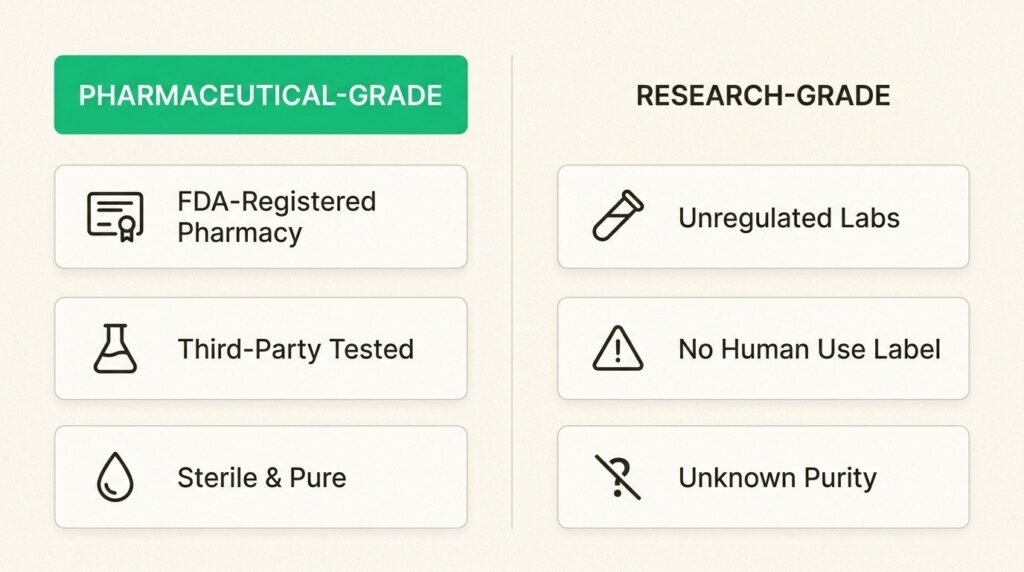
There’s a FDA Section 503A pharmacy compounding guidance between pharmaceutical-grade peptides and research-grade chemicals. Pharmaceutical-grade products are manufactured in highly regulated environments with strict quality controls. Research-grade chemicals are often produced in labs with lower standards and may contain impurities or incorrect dosages.

High-quality peptides must come from FDA bulk drug substances used in compounding under Section 503A. These pharmacies follow pharmaceutical-grade standards for purity and sterility. When you use a local provider like Body Works, you know exactly where your medication is coming from.

You should also understand the importance of a Certificate of Analysis (COA). A COA is a document provided by the lab that verifies the identity and purity of a specific batch. Legitimate providers should be able to confirm that their sources use third-party testing to back up their claims.

Understanding the difference between pharmaceutical-grade and research-grade peptides is crucial for ensuring the safety and efficacy of your treatment.

Critical questions to ask your peptide provider

When you’re interviewing a potential provider, don’t be afraid to be direct. A good clinician will welcome these questions because they show you’re serious about your health. If a provider gets defensive or vague, that’s your cue to leave.

Who is designing and monitoring my treatment?

You want to ensure that a qualified medical professional is involved in every step. Ask if you’ll be meeting with a Nurse Practitioner or a Doctor, or if you’ll only be talking to a sales representative. You need a clinician who can interpret your labs and adjust your protocol based on how you feel.

Where exactly are these peptides sourced from?

A trustworthy clinic will be transparent about their sources. They should name the compounding pharmacies they work with. If they claim their peptides are “proprietary” and can’t name a registered pharmacy, that’s a major red flag.

How frequently will my labs be re-evaluated?

Peptide therapy isn’t a “one and done” prescription. Legitimate programs include Endocrine Society clinical practice guideline on growth hormone deficiency. We typically recommend re-evaluating labs every three to six months to ensure the therapy remains effective and your body is responding well.

What realistic expectations and side effects should I expect?

No treatment is without risks. Your provider should be honest about the FDA safety information on unapproved compounded GLP-1 peptide products and the timeline for results. Most patients begin to see changes in energy or recovery within a few weeks, but it often takes three to six months to see the full benefits for body composition or anti-aging.

Choosing a local peptide therapy partner in Middle Tennessee

There’s a significant benefit to working with a local clinic rather than a national mail-order service. In-person consultations allow for a better understanding of your physical health and a more personal connection with your medical team. You’re not just a number in a database; you’re a neighbor.

Body Works operates in both Franklin and Nolensville. We provide a comprehensive wellness experience where you can address multiple goals at once. Whether you’re interested in medical weight loss, men’s testosterone replacement, or women’s hormone therapy, we have the expertise to help. Our other services like IV hydration and Botox and fillers can also complement your health journey.

If you’re ready to reclaim your health and vitality, the first step is a conversation. We offer free consultations at both of our locations to help you decide if peptide therapy is the right path for you. Our team will listen to your story, review your goals, and help you build a plan that works.

Schedule your free consultation today and take the first step toward feeling like YOU again.

Frequently Asked Questions

You should look for a provider that requires comprehensive lab work and a consultation with a licensed medical professional. A trustworthy provider will be transparent about where they source their peptides and will offer ongoing monitoring throughout your treatment.
Major red flags include providers who do not require blood work, those who sell ‘research grade’ chemicals, and websites that offer prescriptions without a medical consultation. If a provider makes ‘miracle’ claims or refuses to name their compounding pharmacy, you should look for another option.
While some telehealth providers are legitimate, many online sources lack the oversight and personalized care of a local medical clinic. It is difficult for an online provider to give you a physical assessment or to provide the same level of responsive monitoring you would get from a local partner.
A responsible provider will be honest about potential risks like injection site irritation, water retention, or headaches. They should also explain that certain peptides are contraindicated for patients with a history of cancer and ensure you are screened properly before starting.
Your medical history is essential for spotting contraindications and ensuring the therapy is safe for your specific biology. Certain peptides can interact with existing medications or exacerbate underlying health issues, so a full review is a non-negotiable safety step.
Dosage should be determined based on your lab results, your symptoms, and your health goals. A legitimate provider will start with a conservative dose and adjust it over time based on how your body responds to the treatment.

Medically reviewed by Dr. Donald Vollmer, MD
Managing Physician, Body Works TN

Browse Our Blog

FDA peptide approval 2026: What the April decision means and what’s next

FDA peptide approval 2026: What the April decision means and what’s next

May 9, 2026
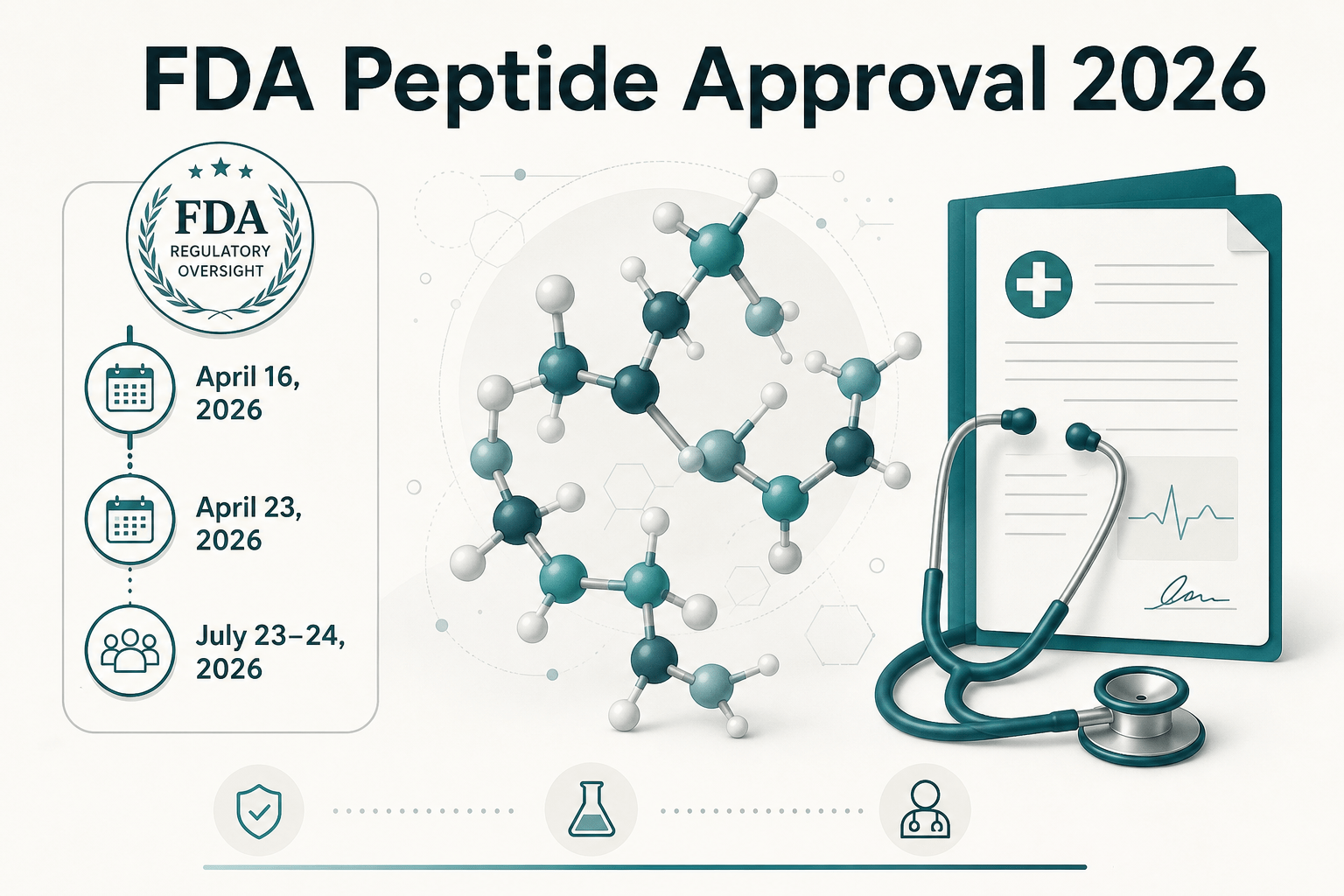
FDA peptide approval 2026 regulatory timeline and decision process

In April 2026, the FDA began moving seven peptides off its most restrictive compounding list and toward formal review. The change does not make these peptides approved drugs, and the decision that matters most has not happened yet. A federal advisory committee meets in July 2026 to recommend whether peptides like BPC-157 should be legal to compound. Here is what changed, what the categories mean, and what to expect next.

What changed for peptides in April 2026?

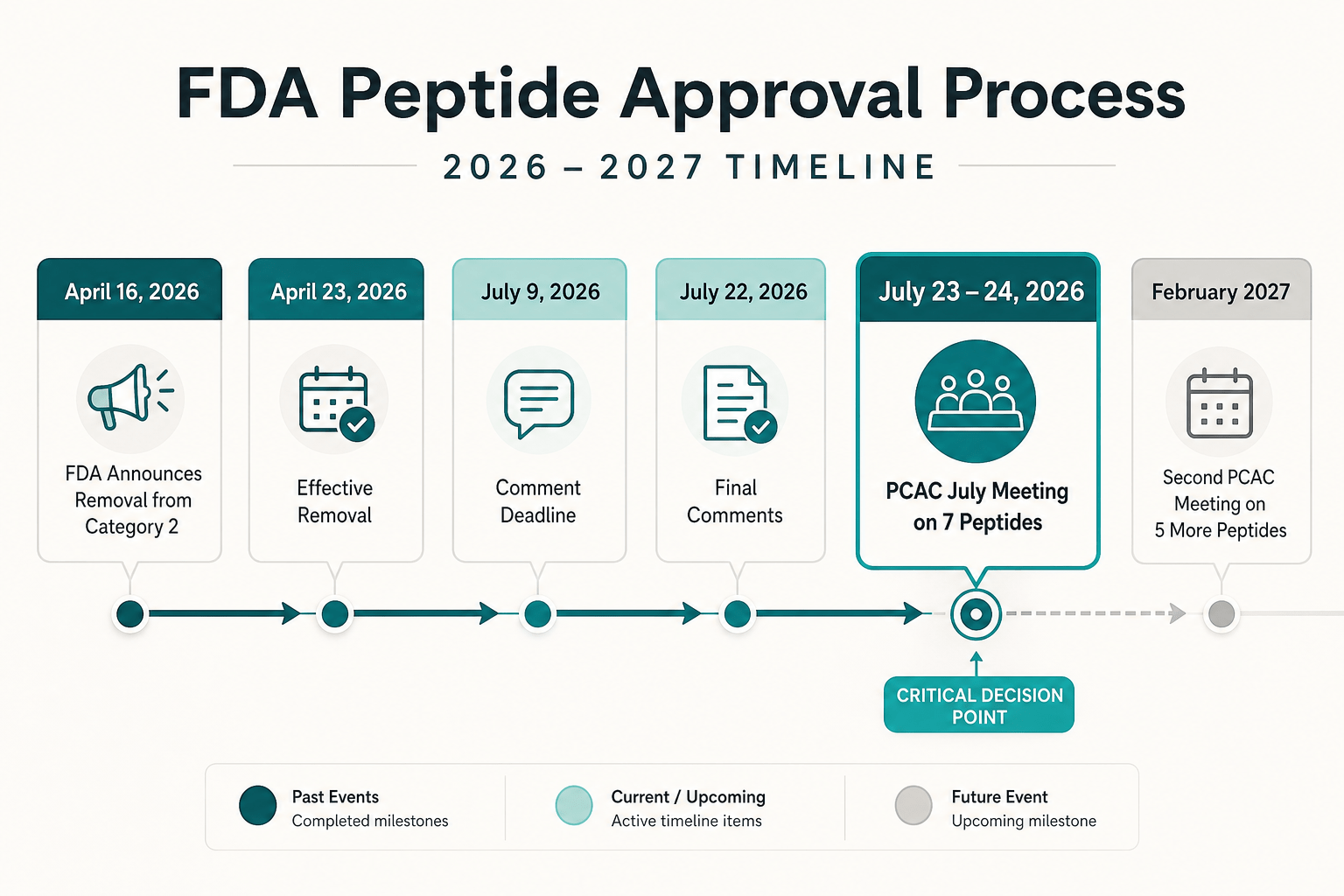
On April 23, 2026, the FDA removed seven peptides from its restrictive Category 2 compounding list. On its own, this was a procedural step: the peptides came off one list, but they were not added to another. In practice it moved away from the 2023 restrictions that had stopped compounding pharmacies from preparing peptides such as BPC-157 and TB-500.

The more important date is still ahead. The Pharmacy Compounding Advisory Committee meets on July 23 and 24, 2026, to decide whether these peptides should be eligible for compounding. That recommendation, not the April removal, will shape what peptide therapy looks like for the next several years.

What does the April 23 removal actually mean?

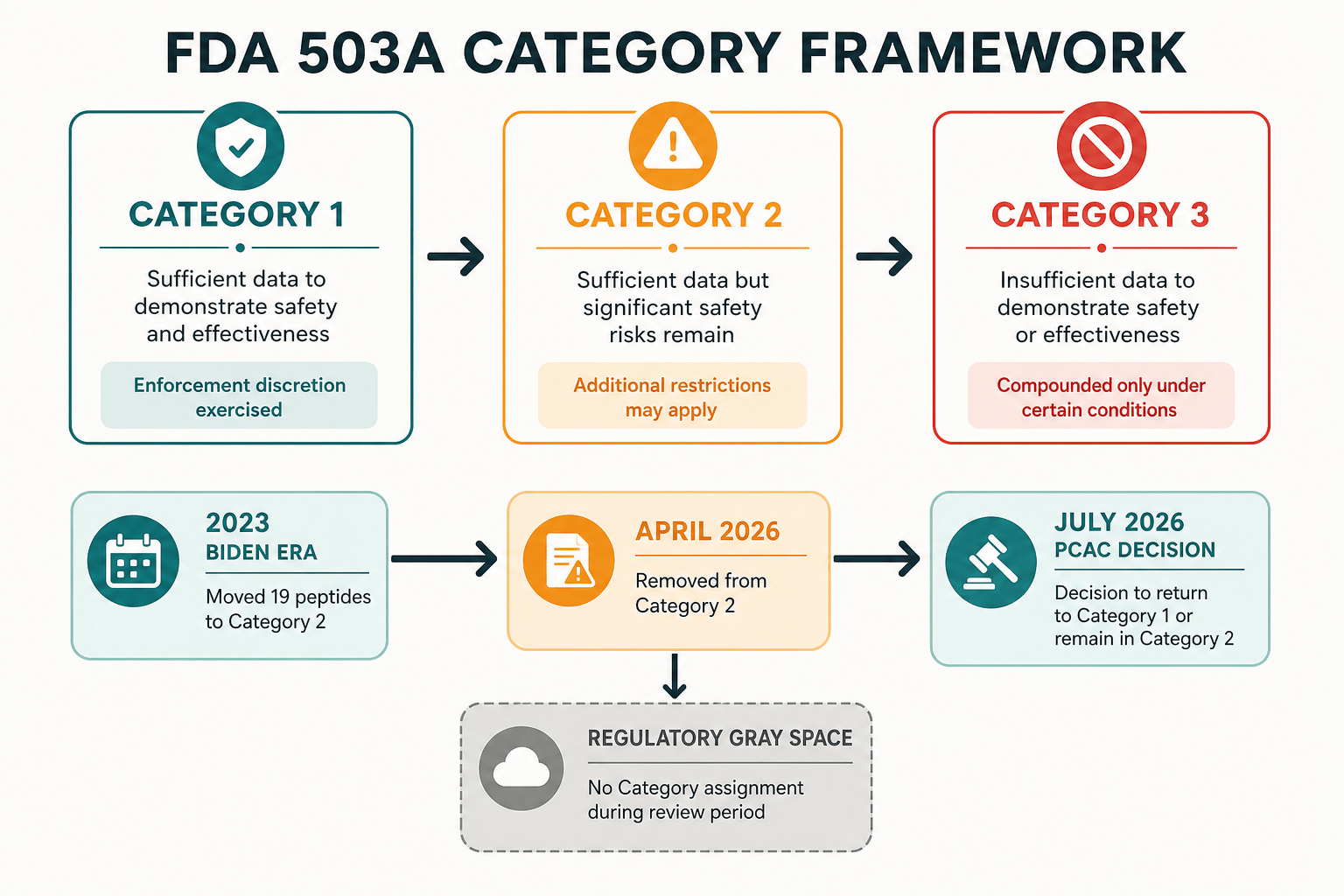
The FDA’s 503A compounding system sorts bulk drug substances into three categories. Those categories decide what a licensed compounding pharmacy can legally prepare for a patient.

CategoryStatusWhat it means
Category 1EligibleSufficient supporting data. The FDA allows compounding while it completes its evaluation.
Category 2IneligibleThe FDA has identified significant safety risks. Not authorized for compounding.
Category 3IneligibleInsufficient data for the FDA to begin a full evaluation.

In September 2023, the FDA placed 19 peptides into Category 2, citing immunogenicity concerns, limited human safety data, and contamination risks. Compounding pharmacies had to stop preparing them, and many patients turned to an unregulated gray market.

On April 16, 2026, the FDA announced that the Category 2 applications for seven of those peptides had been withdrawn. The April 23 removal followed. The seven peptides are now in regulatory gray space: not banned, not authorized. Compounding pharmacies stay in a period of uncertainty until the advisory committee meets in July.

FDA 503A category framework showing Category 1, 2, and 3 definitions for peptide compounding

The July 23-24, 2026 advisory committee meeting

The Pharmacy Compounding Advisory Committee will meet for two days in Silver Spring, Maryland to review whether seven peptides should be added to the 503A bulks list. A peptide on that list has clear legal status for compounding.

On July 23, the committee reviews BPC-157, KPV, TB-500, and MOTS-c. On July 24, it reviews Emideltide (also called DSIP), Semax, and Epitalon. The deadline for public comments is July 9, 2026. If the committee recommends inclusion, the FDA publishes new regulations and compounding becomes legal. If it does not, the peptides stay in gray space. Details are posted on the FDA’s page for the Pharmacy Compounding Advisory Committee meeting on July 23 and 24, 2026.

A second committee meeting is scheduled before the end of February 2027 to review five more peptides, including GHK-Cu, Cathelicidin, Dihexa, Melanotan II, and mechano growth factor, per an April 2026 Federal Register notice.

Which peptides are under review in July?

All seven peptides were placed in Category 2 in 2023 for similar reasons: limited human safety data, immunogenicity concerns, and contamination risks. The committee will weigh whether those concerns can be managed.

  • BPC-157 is studied for wound healing and tissue repair. It is the most widely discussed peptide on the list.
  • KPV is a tripeptide studied for anti-inflammatory and gut-health effects. The FDA noted limited human exposure data for it.
  • TB-500, a thymosin beta-4 fragment, is studied for muscle recovery and is listed as a banned substance by international sports authorities.
  • MOTS-c is a mitochondrial peptide studied for metabolic regulation, with limited published human data.
  • Emideltide (DSIP) is studied for sleep and related effects, drawing largely on older research.
  • Semax is a neuropeptide studied for cognitive function, with limited English-language clinical literature.
  • Epitalon is associated with sleep and longevity claims that are not yet supported by peer-reviewed human trials.

How do 503A and 503B compounding pharmacies fit in?

The category lists matter because they govern the pharmacies that prepare your medication. Body Works works with two types of compounding pharmacy.

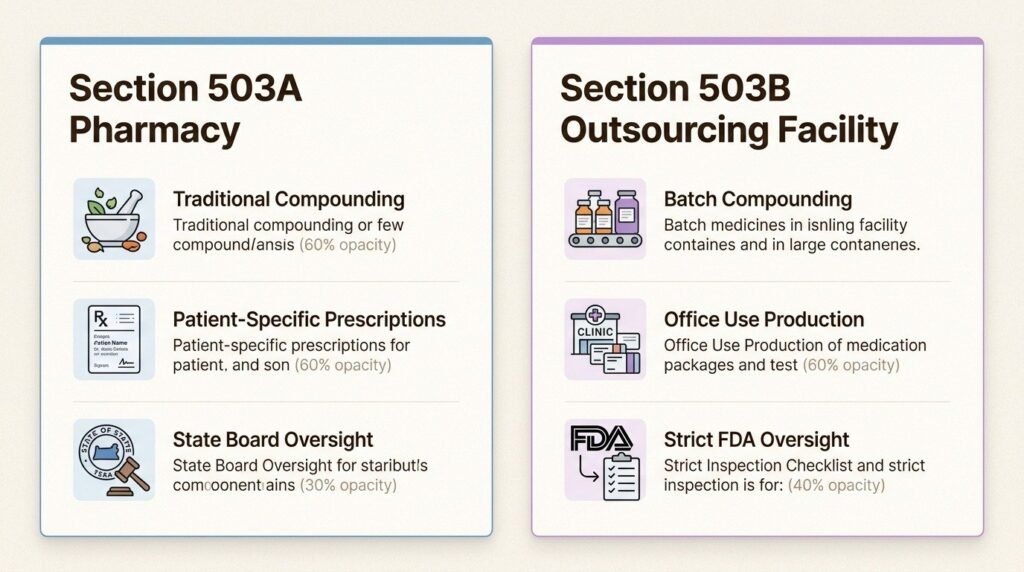
A 503A pharmacy prepares medications for a specific patient based on a prescription from a licensed provider. A 503B outsourcing facility prepares larger batches for in-office use. Both operate under the FDA’s human drug compounding program and its federal standards.

The safety risk with peptides usually comes less from the peptide itself than from where it is made. A licensed compounding pharmacy must document every ingredient and test for purity, potency, and sterility. Unregulated online sellers follow none of these rules, which is why a peptide bought from an unknown website is a gamble on what the vial actually contains.

This diagram compares 503A pharmacies for individual prescriptions with 503B facilities for larger batch compounding.

How can you access peptide therapy safely right now?

Until the advisory committee meets and the FDA publishes new rules, nothing changes for patient access. The peptides under review are still best approached through a licensed medical provider who can source from quality compounding pharmacies. The same caution applies to sourcing in general, a point covered in our guide on why authenticity matters with peptides.

At Body Works, peptide therapy follows a defined process:

  1. A medical consultation to understand your goals, whether that is recovery, sleep, or metabolic health.
  2. Comprehensive lab work to review your hormonal and metabolic picture.
  3. A personalized plan, rather than a one-size-fits-all protocol.
  4. Sourcing only from licensed compounding pharmacies that meet federal standards.

Regulatory access on its own does not make peptide therapy safe. It helps only when it is paired with physician oversight and quality compounding. That is the difference between a peptide prescribed and monitored by a licensed provider and one bought from an unregulated supplier. You can review the current options on the Body Works peptide therapy page.

What happens next: the peptide review timeline

  • July 9, 2026: deadline for public comments to reach the committee.
  • July 23-24, 2026: the committee reviews and votes on the seven peptides.
  • After July 24: if the committee recommends approval, the FDA must publish new regulations adding the peptides to the 503A bulks list. This rulemaking usually takes weeks to months.
  • February 2027: the committee meets to review a second group of five peptides.

Until the committee votes and the FDA publishes new rules, patient access does not change. If you are considering peptide therapy now, work with a licensed provider who can navigate the current rules and source responsibly.

FDA peptide review timeline from the April 2026 announcement through the July PCAC meeting and February 2027 reviews

Take the next step with Body Works

The regulatory picture for peptides is still in motion, but the clinical standard has not changed. The safest path is the same one it has always been: a licensed medical team, real lab work, and compounding pharmacies that meet federal quality standards.

Body Works offers peptide therapy designed around specific health goals, with physician oversight and responsible sourcing at every step. Whether you visit the office in Franklin or Nolensville, the goal is the same: a plan built for your body, not a guess.

Schedule a Free Consultation to discuss whether peptide therapy fits your goals and what the current rules mean for your options.

Frequently Asked Questions

No. The April 23 removal from Category 2 is not the same as FDA approval. These peptides are off the restrictive list but not yet authorized for compounding. The July 2026 advisory committee meeting will decide whether they should be added to the 503A bulks list. Until then, their status is unsettled, and compounding pharmacies that use them do so at legal risk.
Seven peptides will be reviewed: BPC-157, KPV, TB-500, and MOTS-c on July 23, and Emideltide (DSIP), Semax, and Epitalon on July 24. A second group of five peptides, including GHK-Cu, is scheduled for review in February 2027. These are peptides that were placed in Category 2 in 2023 and have now been pulled from that list for formal review.
Yes. Some peptides remain legally compoundable today, and several peptide-based medications are already fully FDA approved and in clinical use. A licensed provider can tell you which options are appropriate for your situation while the July review is pending, and can monitor your response.
Work with a licensed medical provider and a quality compounding pharmacy. If a peptide is offered through a clinic, it is being prescribed under medical oversight with sourced quality control. Avoid unregulated online peptide suppliers, because the gray market still exists and sourcing is the main safety factor.
The recommendation goes to the FDA, which must then publish new regulations adding the peptide to the 503A bulks list. That rulemaking process typically takes weeks to months. Only after the final rule is published would compounding pharmacies have clear legal authority to prepare it.

Medically reviewed by Dr. Donald Vollmer, MD
Managing Physician, Body Works TN

Browse Our Blog

What are peptides? A plain-English guide for adults

What are peptides? A plain-English guide for adults

May 6, 2026
What are peptides? A plain-English guide for adults

What exactly are peptides?

Peptides are the body’s natural signaling molecules, summarized in a recent review of therapeutic peptides in gerontology. They are short, specific signals that tell your cells exactly what to do. If you think of your body as a massive corporation, peptides are the quick memos that keep departments running.

The chemistry is simpler than it sounds. Proteins are long, complex chains of amino acids that build your structure. Peptides are just shorter versions of those same building blocks, typically consisting of 2 to 50 amino acids linked together. Your body produces thousands of them naturally to manage everything from your appetite to how fast your skin heals.

We can now recreate these exact sequences in a lab to mimic those natural signals. This is different from taking something like a steroid. Steroids often force a massive, body-wide response that can lead to permanent side effects. Peptides nudge existing systems back toward function. They are subtle tools that help you stay yourself longer.

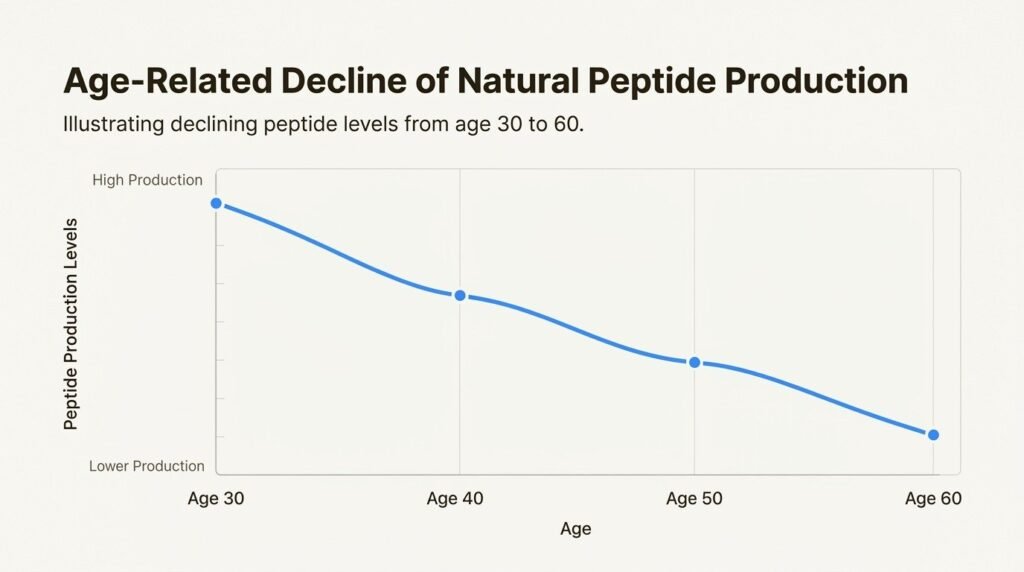
Understand how natural peptide production decreases significantly after age 30, contributing to slower recovery, reduced energy, and visible signs of aging.

How peptide therapy works in the body

A peptide works by binding to a specific receptor on the surface of a cell, acting like a key in a lock. When the key turns, it triggers a precise biological response inside that cell. This might mean releasing a hormone, starting a repair process, or quieting down inflammation.

There is a catch. Natural production of these signaling molecules declines measurably after age 30. As we get older, the signal gets quieter. Your body still knows how to repair tissue or burn fat, but it isn’t getting the memo as clearly as it used to. This is where peptide therapy enters the conversation.

By introducing specific peptides, we help restore those fading signals. It’s less about “hacking” your biology and more about reminding your body how to do what it was already designed to do. This is why many adults see improvements in sleep, energy, and recovery that they assumed were just gone with age.

The big three of peptide therapy

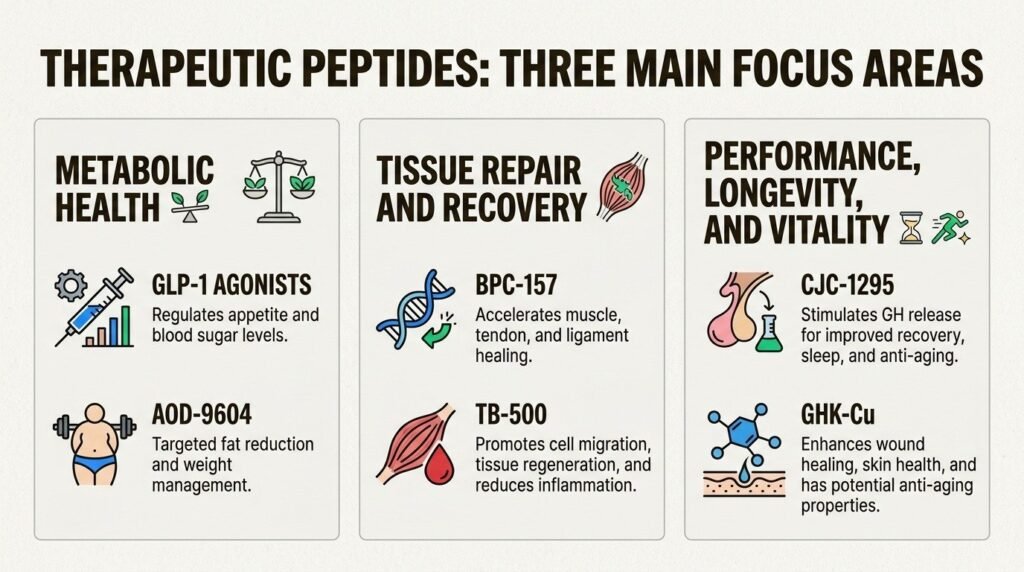
Most clinical applications today fall into three main categories. Each one uses different keys to unlock different results.

Explore the three primary categories of peptide therapy: metabolic health, tissue repair, and vitality, each targeting specific wellness goals for comprehensive benefits.

Metabolic health and weight management

The most familiar peptides in mainstream medicine right now are GLP-1 receptor agonists. The two best known generic medications in this class are semaglutide and tirzepatide. These work by slowing how fast your stomach empties and by increasing feelings of fullness, two of the mechanisms NIDDK describes in its clinical guidance on overweight and obesity. They essentially reset how your brain and gut communicate about hunger.

Beyond GLP-1 receptor agonists like semaglutide, summarized on MedlinePlus, researchers also use growth-hormone-fragment peptides such as tesamorelin, a small part of the growth hormone molecule that targets fat burning without affecting your blood sugar or general tissue growth. If you’re looking for medical weight loss solutions, these are the primary tools in the kit.

Tissue repair and recovery

BPC-157 is often called the “Body Protection Compound.” It is a synthetic peptide first reviewed in Cell Tissue Research, 2019. Athletes use it because it helps heal tendons, ligaments, and even the gut lining by creating new blood vessels.

Another common choice is TB-500, or Thymosin Beta-4. It works by promoting cell migration to the site of an injury. When used together, these two peptides can help your body bounce back from injuries that usually linger for months.

Performance, longevity, and vitality

Growth hormone secretagogues like CJC-1295 and Ipamorelin are popular for adults noticing age-related declines. They stimulate your pituitary gland to increase its own output of growth hormone. A 2006 study in the Journal of Clinical Endocrinology and Metabolism found that CJC-1295 can increase growth hormone levels by two to ten times in healthy adults. This leads to better sleep quality and lean muscle mass.

For your skin and hair, there is GHK-Cu. This “copper peptide” helps with collagen production and skin firmness. It’s a common part of both men’s hormone therapy and women’s hormone therapy plans that focus on feeling and looking healthier.

Safety, sourcing, and medical oversight

Medical supervision is not a formality. It is the most important part of the process. Peptides act differently depending on your existing hormone levels, your current inflammation, and your stress. A peptide that works for your neighbor might be useless or even counterproductive for you.

The internet is full of “research use only” vendors. You should stay away from them. These products are often sold through legal loopholes and lack quality controls. There is a real risk of contamination, incorrect dosing, or getting a substance that isn’t what the label says it is.

Regulated 503A compounding pharmacies authorized under the FDA bulk drug substances framework are the only safe source. These facilities follow strict quality standards to ensure you are getting exactly what your doctor prescribed. Side effects are usually mild, such as redness at the injection site or temporary water retention, but you still need a professional to monitor your progress and adjust your dose.

Getting started with personalized peptide therapy at Body Works

We believe that your wellness plan should be as unique as your own biology. At Body Works, we don’t do cookie-cutter solutions. Our licensed medical team of Nurse Practitioners and Registered Nurses oversees every protocol to make sure you are safe and getting real results.

Our process starts with a conversation. We look at your goals, your lifestyle, and your lab work to build a plan that actually fits. Whether you are visiting us in Franklin or Nolensville, you will work with professionals who know you by name, not a faceless chatbot.

If you’re ready to stop guessing and start seeing results, schedule a free consultation today. We will walk through your goals, review your medical history, and tell you honestly whether peptide therapy fits your situation.

Frequently Asked Questions

Peptide therapy can help with weight loss, muscle recovery, anti-aging, and improved energy by restoring natural signaling molecules that decline after age 30.
Yes, peptide therapy is generally safe when prescribed by licensed providers who monitor your health and source medications from regulated compounding pharmacies.
Some people notice better sleep or energy within days, but most significant changes in body composition or recovery take between 4 to 12 weeks of consistent peptide therapy.
Yes, any reputable clinic will require a consultation and a prescription to ensure the peptide therapy is appropriate for your specific health goals and medical history.
Many patients combine peptide therapy with medical weight loss, hormone replacement, or IV hydration to achieve more comprehensive results.

Medically reviewed by Dr. Donald Vollmer, MD
Managing Physician, Body Works TN

Browse Our Blog

Peptide therapy: A complete guide to how it works in 2026

Peptide therapy: A complete guide to how it works in 2026

May 3, 2026

Finding a medical solution that actually works with your body, not against it, can feel like a full-time job. You want results that last, but you are tired of the cookie-cutter advice and one-size-fits-all prescriptions that only seem to mask the symptoms of aging.

That is why more people are turning to biological signaling to reclaim their vitality and restore their healthiest selves from the inside out.

Peptide therapy is a targeted medical approach that uses specific sequences of amino acids to restore balance and vitality to the body. You can think of it as a precision messaging system. By reintroducing these signaling molecules, we help your cells perform functions they may have forgotten or deprioritized over time. It is not about forcing the body to do something unnatural. Instead, it is about giving it the exact instructions it needs to heal, recover, and thrive.

Lab work provides a precise map of your internal health, guiding the selection of the most effective peptide protocols for your body.

What is peptide therapy?

At its simplest level, peptide therapy involves using short chains of amino acids to influence how your body functions. According to the NIH StatPearls reference on peptide biochemistry, a peptide is a short string of 2 to 50 amino acids joined by covalent peptide bonds. These chains act as biological messengers. They travel through your system and bind to specific receptors on your cells, much like a key fits into a lock. Once the connection is made, the cell receives a signal to initiate a particular process, whether that is building muscle, burning fat, or repairing damaged tissue.

You might wonder how peptides differ from proteins. The main distinction is size and signaling function. Most scientists refer to chains with over 50 to 100 amino acids as proteins, while these shorter chains are classified as peptides. Because they are smaller, peptides can often navigate the body with more precision and higher target specificity than larger proteins.

The need for this therapy arises because our natural production of these molecules does not stay constant. For most people, the production of growth hormone releasing hormones and thymic peptides begins to drop after age 30. This decline is gradual but measurable. It often leads to the fatigue, slower recovery, and stubborn weight gain that people assume is just a normal part of getting older. We view it differently. It is often just a breakdown in communication between your systems.

If you want to explore how these treatments fit into a broader wellness plan, you can learn more about our peptide therapy services.

Learning the proper sites for subcutaneous peptide administration is a key part of your first visit.

How peptides work: The science of biological signaling

The core of peptide therapy is biological signaling. Every cell in your body is waiting for instructions. These instructions come in the form of molecules that tell the cell when to grow, when to activate the immune system, or when to release a specific hormone. A peptide binds to a specific receptor on the surface of a cell, which triggers a cascade of internal biological responses.

One of the defining advantages of this approach is specificity. Traditional drugs often work by broadly suppressing or stimulating entire systems, which can lead to unwanted side effects. Peptides offer higher target specificity with minimal off-target effects. They go where they are needed and do exactly what they are designed to do.

This targeted action has immense regenerative potential. For example, some peptides are specifically designed to promote angiogenesis, which is the formation of new blood vessels. This process is essential for healing damaged tissue and restoring blood flow to areas that have been injured.

We also distinguish between bioidentical and synthetic peptides. Bioidentical versions are identical in structure to the molecules your body already recognizes, while synthetic versions are designed to mimic these natural signals for smoother integration into existing biological pathways. Bottom line: peptides are the body’s internal messaging system, and we are just making sure the messages get delivered clearly.

Major categories of therapeutic peptides

Not every peptide does the same thing. We group them by the specific goals they help achieve. Let’s break it down into the most common categories.

Understand the typical progression of peptide therapy results, from early improvements to peak metabolic and physical optimization.

Weight management and metabolism

Metabolic peptides have gained significant attention for their ability to influence how the body processes energy. The NIDDK overview of prescription weight management medications explains how GLP-1 receptor agonists like semaglutide and tirzepatide target areas of the brain that regulate appetite and food intake. They work by slowing digestion and increasing feelings of fullness, which helps people manage their appetite naturally.

Another option discussed in clinical research is AOD-9604, a fragment of human growth hormone that has been studied for its ability to influence fat breakdown without affecting blood sugar levels. If you are struggling with stubborn weight, our medical weight loss programs incorporate these precise tools.

Muscle growth and body recomposition

For those looking to increase strength and vitality, growth hormone secretagogues are a common option. A peer-reviewed study on CJC-1295 in Growth Hormone and IGF Research demonstrated that this long-acting GHRH analog produced sustained, dose-dependent increases in plasma growth hormone and IGF-1 in healthy adults. CJC-1295 and Ipamorelin are frequently paired to stimulate the pituitary gland to increase the natural production of growth hormone. Unlike synthetic hormones that can suppress your natural levels, these peptides support your existing pulses. We often use these protocols in our men’s hormone therapy programs to help restore energy and strength.

Tissue repair and injury recovery

Recovery is where many peptides truly shine. A 2025 systematic review of BPC-157 in orthopaedic sports medicine examined 36 studies and found that BPC-157, a pentadecapeptide derived from a protein found in human gastric juice, improved functional, structural, and biomechanical outcomes in muscle, tendon, ligament, and bony injury models. It is often combined with TB-500, which promotes cell migration to injury sites, creating a supportive environment for healing.

Cognitive function and neuroprotection

Your brain needs specialized signaling to maintain clarity and focus. Peptides like Semax and Selank have been studied in some research contexts for their potential influence on neurotransmitter activity. Other compounds like Dihexa and Pinealon remain investigational. Because peer-reviewed clinical evidence for these specific peptides is limited, we only consider them after a full intake and medical review.

Benefits of peptide therapy for longevity and recovery

The benefits of these treatments extend beyond a single problem. They are designed to support overall physiological balance.

One of the most important benefits is hormonal support. Instead of overriding your system with aggressive doses of hormones, peptides work with your regulatory systems. This is a core component of our approach to women’s hormone therapy, where we focus on addressing the root causes of fatigue and mood changes.

Immune system modulation is another area of active research. A review of thymosin alpha 1 in World Journal of Virology describes how this peptide, naturally produced by the thymus gland, has long been recognized for modifying, enhancing, and restoring immune function through effects on T-cell maturation.

For longevity, Epitalon has been studied for its potential effects on telomeres, the protective caps on chromosomes. Many of our clients also pair these treatments with custom IV hydration to ensure their bodies have the nutrients to support these signaling processes.

How peptide therapy is administered: A practical guide

If you are new to this, the logistics can feel intimidating. Here is how the process actually works.

Peptides are available in several forms, including subcutaneous injections, nasal sprays, and oral forms. Injections are generally preferred because they offer superior bioavailability. While oral forms may only have 1 to 2 percent absorption, injections deliver nearly 100 percent of the peptide directly into your system.

Injection technique for beginners

The injection process is straightforward and uses very thin needles that cause minimal discomfort. CDC guidance on subcutaneous injection technique outlines the standard technique:

1. Clean the site: Use an alcohol wipe on the injection area (usually the abdomen or thigh).

2. Position the tissue: Gently pinch a small fold of subcutaneous tissue between your thumb and index finger.

3. Insert the needle: Insert the needle at a 45 degree angle into the fatty tissue.

4. Inject and apply pressure: Push the plunger steadily, withdraw the needle, and apply light pressure.

Most injectable peptides come in a lyophilized (powdered) form and must be reconstituted. This means you slowly inject bacteriostatic water into the vial to dissolve the powder. It is important to swirl the vial gently rather than shaking it, as shaking can degrade the sensitive peptide structure.

Potency is also tied to storage. Most reconstituted peptides must be kept in the refrigerator at around 39 degrees Fahrenheit to remain effective. Proper handling ensures that your treatment stays safe and potent for the duration of your protocol.

Safety, side effects, and the 2026 regulatory landscape

Peptide therapy is generally considered safe under medical supervision because the molecules already exist in your body. However, there are a few things you should know before starting.

The most common side effects are mild, such as temporary redness or itching at the injection site, slight water retention, or occasional headaches that usually resolve as your body adjusts. It is also important to note that anyone with a personal or familial history of cancer should consult with a specialist before using growth hormone secretagogues, as these peptides promote cellular growth.

The regulatory landscape has also shifted recently. The FDA page on bulk drug substances that may present significant safety risks explains how the agency evaluates compounded peptides under Section 503A. Several peptides, including BPC-157, have been the subject of regulatory review, meaning they are subject to higher scrutiny and can only be compounded under specific medical necessity.

This is why medical oversight is non-negotiable. You should never purchase research-grade products online. These products often have purity levels well below pharmaceutical standards and are not intended for human consumption. A reputable clinic will always use pharmaceutical-grade peptides and provide a data-driven protocol based on your specific biomarkers.

Getting started with a personalized peptide protocol at Body Works

We believe that health should never be a cookie-cutter experience. Many clinics operate on a high-volume model that treats every patient the same way. At Body Works, we take a boutique approach. We focus on you as an individual, not just a set of symptoms.

Our process begins with a comprehensive intake. We evaluate your blood markers and talk through your specific goals for energy, recovery, and vitality. Whether you are looking to reclaim your healthiest self or just want to optimize your current performance, we build a plan that fits your life.

If you are ready to see if these treatments are right for you, you can visit us at our Franklin or Nolensville locations. Our team of licensed Nurse Practitioners and Registered Nurses is here to guide you every step of the way.

Ready to take the next step? Contact us today to schedule a free consultation. You can also learn more about our team and mission on our about us page. We look forward to helping you feel like YOU again.

Frequently Asked Questions

Most people begin to see noticeable changes within 2 to 4 weeks, although the full benefits of peptide therapy for tissue repair or muscle growth often peak around the 8 to 12-week mark.
While generally safe, the main risks of peptide therapy include injection site reactions and the potential for hormonal imbalances if not supervised by a medical professional.
Yes, we often combine multiple peptides to create a synergistic effect, such as pairing healing peptides with metabolic support, depending on your individual peptide therapy goals.
Yes, pharmaceutical-grade peptide therapy must be prescribed and monitored by a licensed medical provider to ensure safety, correct dosing, and legal compliance.
The FDA regularly updates its compounding lists, and recent changes to peptide therapy regulations are designed to ensure higher standards of manufacturing and clinical oversight for specific molecules.
Peptide therapy is a powerful tool for optimization, but it works best when used as a supportive component of a broader lifestyle that includes proper nutrition and exercise.

Medically reviewed by Dr. Donald Vollmer, MD
Managing Physician, Body Works TN

Browse Our Blog