
How to Avoid Ozempic Face Before It Starts
You can lower your odds of the gaunt, sunken look people call Ozempic face. Here is how pacing, protein, muscle, and skin care protect your
Two women start tirzepatide on the same day. Same starting weight, same dose schedule, similar habits. A year later, one has lost noticeably more than the other. When researchers looked closely at cases like this, one difference kept surfacing: the woman who lost more was often also taking menopause hormone therapy.
New research on GLP-1 and hormone therapy suggests that for postmenopausal women, the two treatments may work better together than either does alone. That is a meaningful idea, because weight loss after menopause is famously stubborn, and many women feel like their medication is working against a headwind they cannot name. At Body Works, women in Franklin, TN and Nolensville, TN ask about this often, and the honest answer is that the science is early but genuinely encouraging.
Below is what the newest study actually found, why the underlying biology makes sense, and how to think about combining these therapies without overstating a single result.
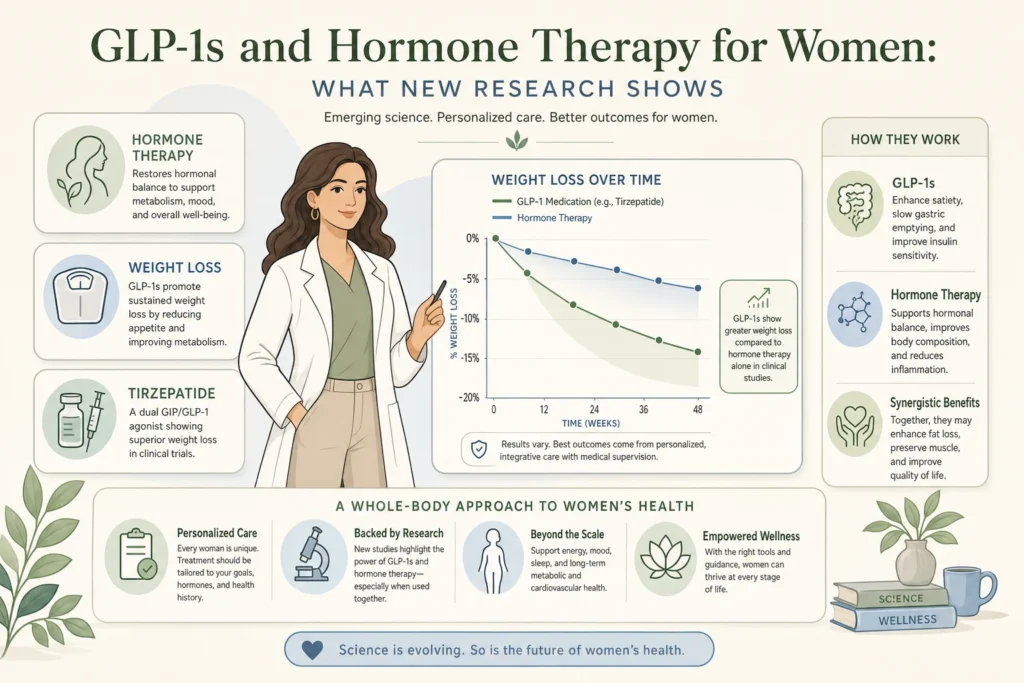
Emerging evidence says it may. In a 2026 study of postmenopausal women taking tirzepatide, those who also used menopause hormone therapy lost more of their starting body weight than those on the medication alone. This does not mean hormone therapy is a weight loss drug. It means restoring some of the estrogen lost at menopause may help a GLP-1 medication do its job more fully.
That fits what many women already sense. Appetite, energy, and fat storage all shift at menopause, and those shifts can blunt the results people expect from a GLP-1. The same pattern shows up in the existing research on GLP-1 weight loss during menopause and perimenopause, where hormonal changes clearly influence how the body responds.
In a retrospective cohort of 120 postmenopausal women taking tirzepatide for at least 12 months, those also using menopause hormone therapy lost 19.2 percent of their starting body weight, compared with 14.0 percent for tirzepatide alone, reported Castaneda and colleagues in The Lancet Obstetrics, Gynaecology and Women’s Health, 2026.
Estrogen is a metabolic hormone, not just a reproductive one. It helps regulate appetite, energy expenditure, and where the body stores fat. When estrogen falls at menopause, the body tends to store more fat around the midsection while lean muscle declines, and it becomes less sensitive to insulin. A GLP-1 medication pushes in the opposite direction, so adding back some estrogen may remove a brake that menopause quietly applied.
This is well established in the research. A review in Endocrine Reviews on estrogen and energy balance concluded that estrogen deficiency promotes metabolic dysfunction, shifting fat toward the abdomen and raising the risk of obesity and insulin resistance.
The muscle side matters too. Longitudinal data from the Study of Women’s Health Across the Nation on body composition changes showed that fat gain accelerates and lean mass declines during the menopause transition. Protecting muscle is part of why a combined, physician-guided plan can matter for women in this stage of life.
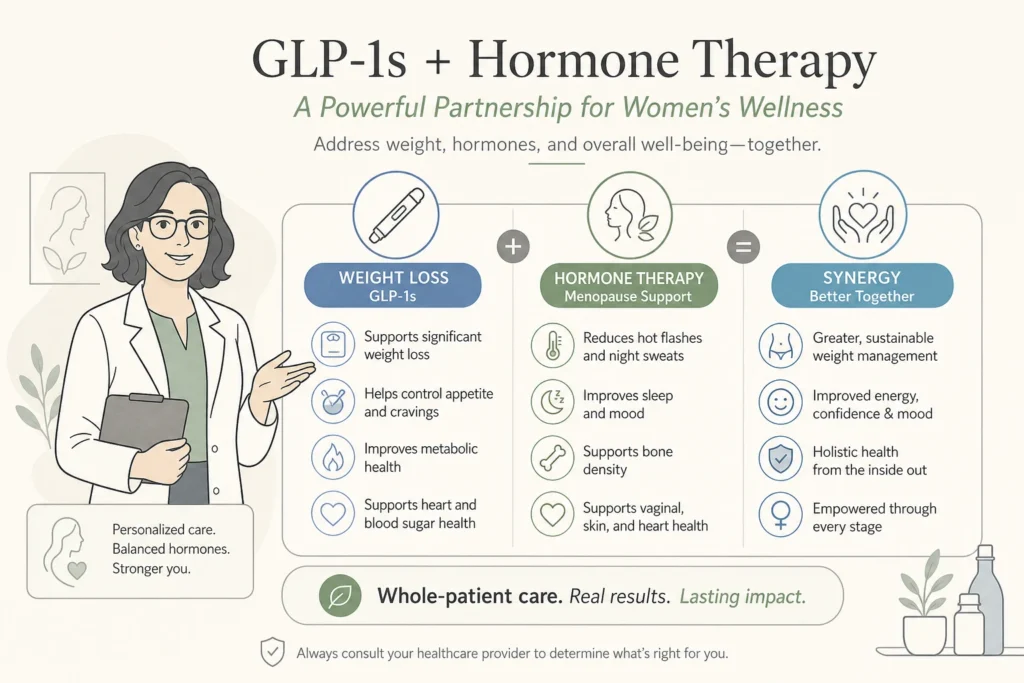
The headline numbers were larger than the averages suggest. The hormone therapy group did not just lose a bit more on average, they were far more likely to reach the deeper weight loss thresholds that change health outcomes. Nearly half of the hormone therapy users crossed the 20 percent mark, a level relatively few reached on tirzepatide alone.
| Outcome at 12+ months | Tirzepatide only | Tirzepatide plus hormone therapy |
|---|---|---|
| Mean weight loss (percent of starting weight) | 14.0 percent | 19.2 percent |
| Reached more than 20 percent total weight loss | 18 percent of women | 45 percent of women |
| Study design | Retrospective cohort, 120 postmenopausal women | |
The honest caveat is important. This was a retrospective study, not a randomized trial, so it cannot prove that hormone therapy caused the extra weight loss. Women who choose hormone therapy may differ in other ways. Still, the size of the gap and its fit with known biology make it worth taking seriously. For reference, tirzepatide alone produced average losses near 20 percent at the highest dose in the SURMOUNT-1 trial of tirzepatide for obesity, so hormone therapy appears to help more women reach that upper tier rather than replacing the medication.

Combining a GLP-1 with hormone therapy is a medical decision, not a one-size-fits-all protocol. Hormone therapy has its own candidacy rules based on age, time since menopause, and personal and family history. The right starting point is a full evaluation, not a request for a specific prescription. This is also why interest in hormone evaluation is best handled through a consultation rather than assumed from a study.
The Endocrine Society’s clinical practice guideline calls menopause hormone therapy the most effective treatment for hot flashes and related symptoms, and notes that benefits may outweigh risks for many symptomatic women under 60 or within 10 years of their final period, after screening for cardiovascular and breast cancer risk, according to its clinical practice guideline on treatment of menopause symptoms.
Weight and hormones also move together in men, where losing weight on a GLP-1 can raise testosterone, a two-way relationship covered in our post on how GLP-1 medications and testosterone interact in men. For women exploring the wider picture of midlife hormones, energy, and muscle, the guide to peptide options for women over 40 covers complementary approaches worth discussing with a clinician.
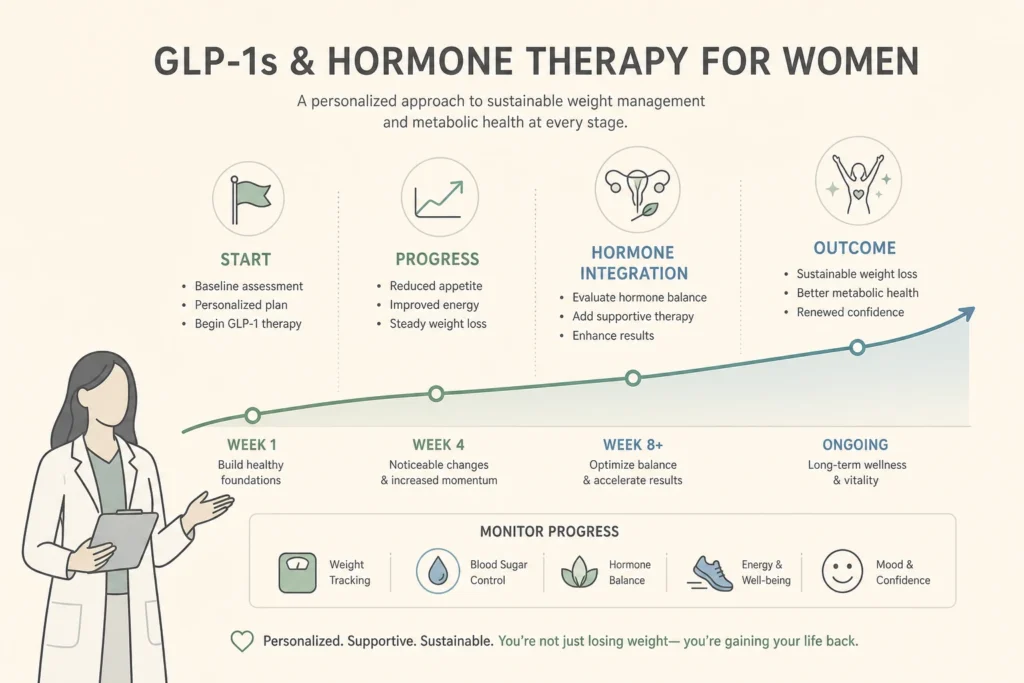
The practical takeaway is not to chase a headline. It is to work with a provider who can look at your full picture, appetite, muscle, symptoms, and history, and decide whether a GLP-1, hormone support, or a thoughtful combination fits you. That is exactly the kind of personalized medical weight loss planning that produces durable results instead of quick, fragile ones.
Body Works builds these plans for women across the greater Nashville area, and many patients pair their weight loss care with energy-support options like NAD therapy for cellular energy as part of a broader wellness approach. Whether you are just starting to research your options or already on a GLP-1 and wondering what is missing, a conversation is the fastest way to get a plan built around you.
Women in Franklin and Nolensville can talk through GLP-1 therapy, hormone evaluation, and combined care with a medical provider at no cost. Schedule a Free Consultation to see what a personalized plan could look like for you.
Medically reviewed by Dr. Donald Vollmer, MD
Managing Physician, Body Works TN
You can lower your odds of the gaunt, sunken look people call Ozempic face. Here is how pacing, protein, muscle, and skin care protect your
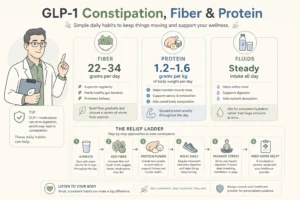
Constipation affects 24% of semaglutide patients and up to 17% on tirzepatide. This guide gives the daily targets that prevent it: 22 to 34 grams

Ozempic face is the hollow, aged look some people notice after rapid weight loss. Here is why it happens, who is most at risk, and

When Tennessee investigators tested counterfeit weight loss vials seized in Medina, one was mostly water. That was the good outcome. The dangers of buying peptides
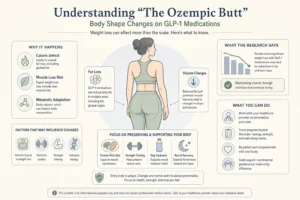
Rapid weight loss changes more than the number on the scale. Here is why the glutes, breasts, and arms often change shape on GLP-1 medications,

NAD+ therapy is marketed as a longevity reset for energy, focus, and healthy aging. This guide separates what the science on NAD therapy actually supports
See Body Works first in your Google results.