

MOTS-c: The Mitochondrial Peptide for Metabolism and Endurance
For decades, the DNA inside your mitochondria was treated as a parts list for one job: energy production, nothing else. Then researchers found a 16-amino-acid
Search “BPC-157 TB-500 stack” and the forums all say the same thing: pair them, because one heals the tissue and the other helps cells get there faster. The claim is repeated so often it sounds settled. The actual research tells a narrower story, one where the mechanisms are distinct and genuinely complementary, but the human evidence for the combination itself is still thin.
BPC-157 and TB-500 are two different peptides that are frequently injected together because they act on separate stages of soft-tissue repair. BPC-157 is a synthetic fragment of a peptide found in gastric juice that appears to accelerate blood vessel growth and protect the cells involved in healing. TB-500 is a synthetic version of thymosin beta-4, a naturally occurring protein that regulates the actin structure cells use to move, which lets repair cells migrate into an injury site. Used together, the theory is that TB-500 gets the right cells to the damaged tissue and BPC-157 supports what happens once they arrive.
Body Works offers physician-supervised peptide therapy, including BPC-157 and TB-500, at its Franklin, TN and Nolensville, TN offices. Here is what each peptide does, what the combination research actually shows, and how the program works.
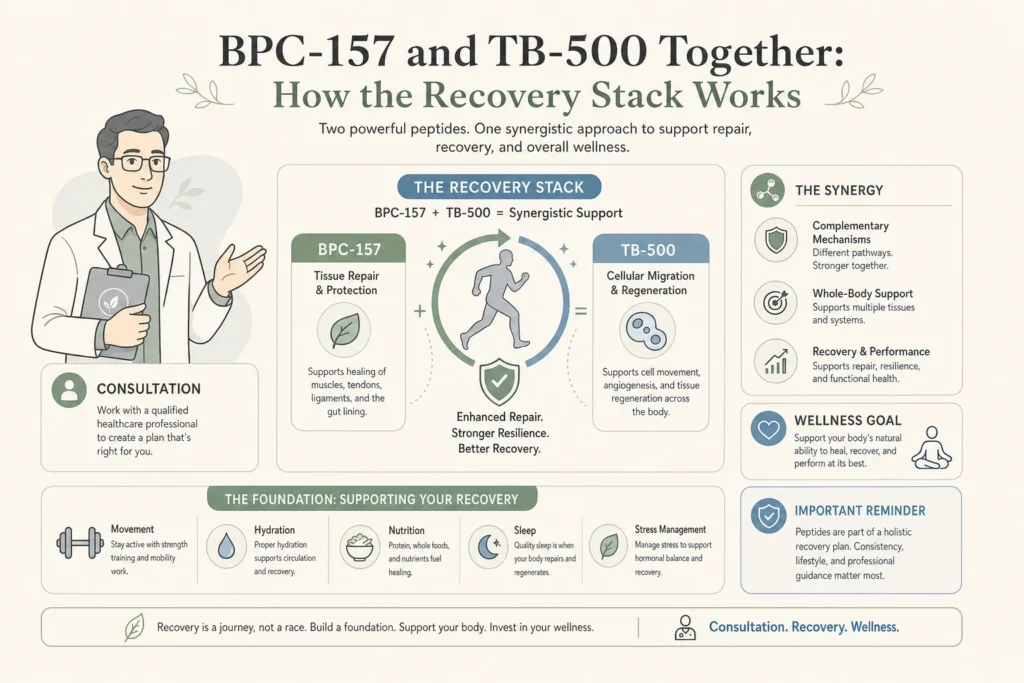
It is the combined use of two research peptides, BPC-157 and TB-500, that patients and clinicians pair for soft-tissue injuries such as tendon strains, ligament sprains, and muscle tears. Neither peptide is a drug you would recognize from a pharmacy shelf. Both are compounded preparations, sourced through a licensed compounding pharmacy with a prescription, and both are studied primarily in animal models rather than large human trials. The pairing became popular in sports medicine and recovery circles because the two mechanisms do not overlap, which is a more coherent rationale than most peptide “stacks” get.
A recent literature review for orthopaedic and sports medicine physicians frames injectable peptides like these as an emerging category worth understanding clinically, even where the evidence base for musculoskeletal use is still developing. That framing matters here: this is a legitimate area of clinical interest, not a settled treatment with guaranteed results.
BPC-157 works mainly by promoting new blood vessel formation and protecting the cells that carry out tissue repair, which is why animal studies keep returning to tendon and ligament healing. A review of BPC-157’s role in musculoskeletal soft-tissue healing describes consistent improvements in tendon, ligament, and muscle repair across a wide range of injury models, with the peptide supporting the outgrowth of tendon cells from explanted tissue and speeding the early stages of the healing cascade.
A separate study on tendon-specific healing found that BPC-157 promoted tendon outgrowth, improved cell survival, and supported cell migration in explanted tendon tissue, three separate mechanisms working together rather than one single effect. In the stack, this is the peptide most associated with the repair itself, the actual rebuilding of damaged fibers, once cells have reached the site.
TB-500 is the synthetic, injectable form of thymosin beta-4, a small protein your body already makes that regulates actin, the structural protein cells use to change shape and move. That mobility function is the whole reason it is paired with BPC-157: a peptide that helps repair cells travel to an injury is a natural complement to one that helps repair cells build tissue once they get there. A study of chronic thymosin beta-4 administration in a muscular dystrophy model found it measurably improved both skeletal and cardiac muscle function over time, evidence that its effects extend beyond a single injury site to broader muscle tissue health.
Because thymosin beta-4 also plays a role in reducing scar tissue formation and improving blood supply during healing, the stack’s underlying logic, migration paired with repair, holds up mechanistically even where the clinical trial record in humans is still limited.
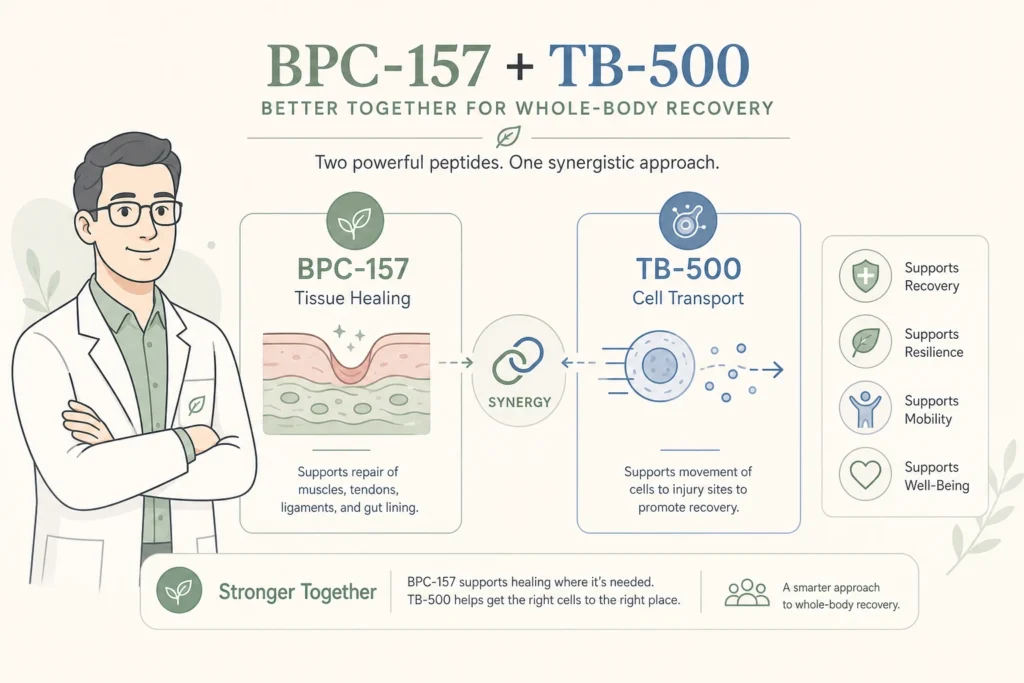
The most direct answer so far comes from a 2026 rat study that compared BPC-157, TB-500, and the combination in Achilles tendon healing. Both peptides individually improved tissue organization and healing parameters compared to no treatment, with TB-500 also showing a measurable biomechanical advantage at four weeks, but the combination did not clearly outperform TB-500 given alone in that specific model. That does not mean the stack is pointless, it means the two peptides may converge on some of the same downstream repair pathways rather than simply adding their effects together, and more research is needed before that question is settled.
This is the honest state of the evidence: real, published, peer-reviewed animal data supports both peptides individually and the pairing’s underlying logic, but a controlled human trial proving the combination beats either peptide alone does not yet exist. Anyone presenting the stack as guaranteed to outperform BPC-157 by itself is ahead of what the current research shows.
| Factor | BPC-157 | TB-500 (Thymosin Beta-4) |
|---|---|---|
| Primary role | Tissue repair, blood vessel formation, cell protection | Cell migration and mobility via actin regulation |
| Best-studied application | Tendon, ligament, and gut lining healing | Muscle and skin tissue repair, reduced scarring |
| Human trial evidence | Limited, mostly small or anecdotal reports | Limited, strongest in ocular and skin healing studies |
| Animal trial evidence | Extensive, across multiple injury models | Extensive, across muscle and cardiac tissue |
| Typical use case | Direct injury site, localized repair | Broader recovery support, mobility of repair cells |
Most of what is known about both peptides comes from rodent studies, not controlled human trials. The available research supports the biological mechanisms described above, actin regulation, blood vessel formation, cell migration, and shows consistent benefit in animal injury models. What it does not yet include is a large, randomized, placebo-controlled human trial confirming the stack accelerates recovery from a specific human injury by a specific amount. Patients considering this stack should understand that distinction before starting: the biology is credible and well-published, but the confirmatory human trials are still ahead of us.
This is also why supervision matters more here than with a well-studied medication. A qualified provider tracks how a patient responds, watches for the expected mild injection-site reactions, and adjusts the plan rather than following a fixed protocol pulled from a forum post. The deeper look at BPC-157 alone covers what to expect when it is used without TB-500, which is still the more common approach for isolated injuries.
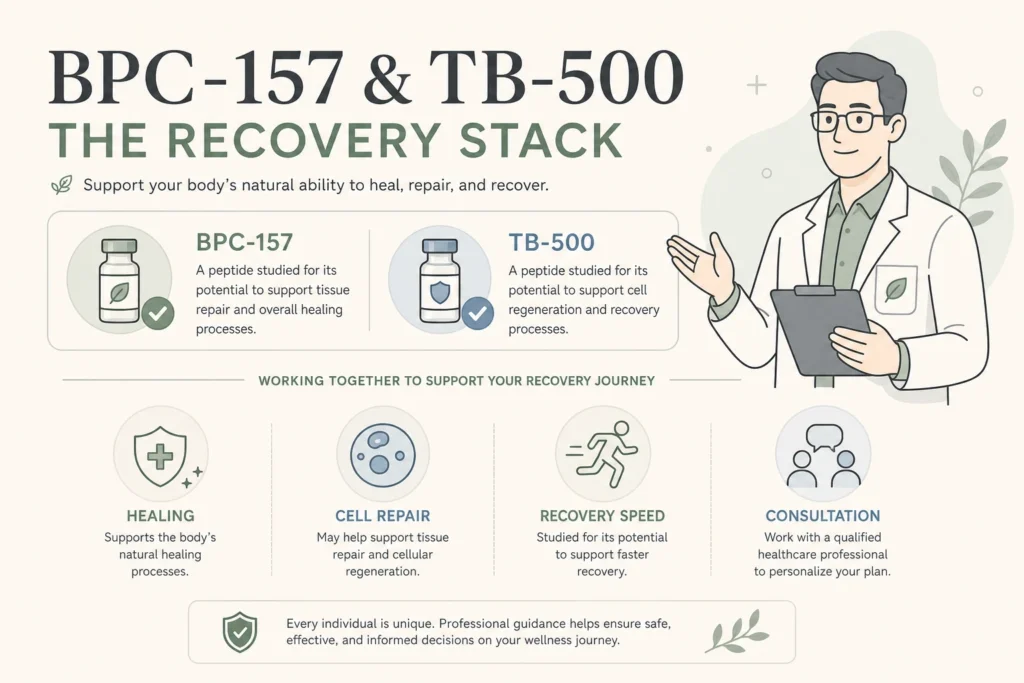
Both peptides are given as subcutaneous injections, typically near the site of injury when the target is a specific tendon or ligament, over a defined course that a provider adjusts based on progress. Bloodwork and a physical history come first, both to confirm there is no contraindication and to give the provider a baseline to compare against as treatment continues. Because BPC-157 and TB-500 are compounded medications rather than FDA-approved drugs, sourcing matters: they should come from a licensed 503A compounding pharmacy operating under FDA oversight of the compounding process, not an unregulated online seller shipping research-use-only vials.
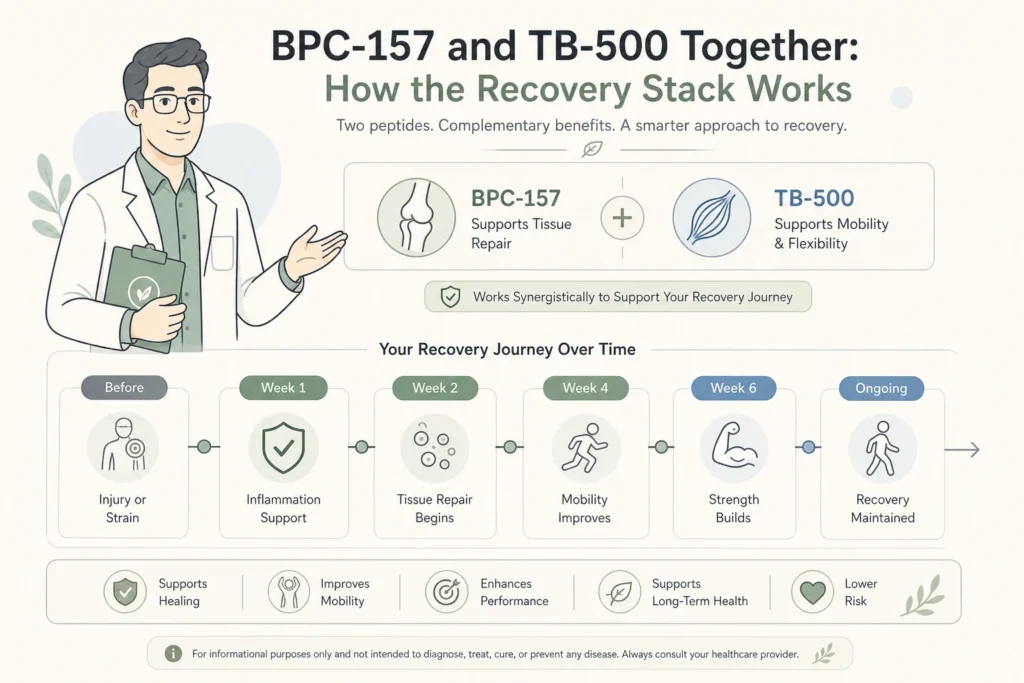
Body Works has worked with more than 580 individual clients on peptide protocols at its Franklin office since 2022, and questions about pairing BPC-157 with TB-500 come up in nearly every consultation about tendon or ligament recovery. The team’s usual starting point is the same one this article makes: confirm the injury, confirm there is no contraindication on bloodwork, and build the plan around what the tissue actually needs rather than a fixed stack everyone gets. Some patients only need BPC-157. Others, especially with a slower-healing muscle strain, are better candidates for the combination.
If you are recovering from a tendon, ligament, or muscle injury and want to know whether the BPC-157 and TB-500 stack fits your situation, the Franklin and Nolensville teams can review your history and build a supervised plan. Schedule a Free Consultation to get started, or read the complete guide to peptide therapy for how the broader program works.
Medically reviewed by Dr. Donald Vollmer, MD
Managing Physician, Body Works TN
For decades, the DNA inside your mitochondria was treated as a parts list for one job: energy production, nothing else. Then researchers found a 16-amino-acid
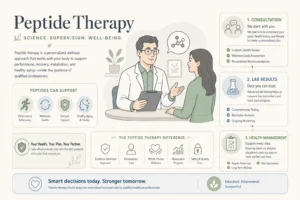
Search “peptide therapy near me” and the results mix licensed medical clinics with websites selling research-use-only vials to your front door, no prescription, no bloodwork,

A single glass of wine that never used to bother anyone can suddenly cause real nausea a few months into semaglutide or tirzepatide treatment. Patients
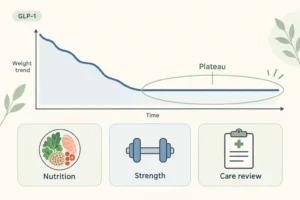
Three months of steady loss, then two weeks of nothing, then a patient calls certain the medication stopped working. It didn’t. A GLP-1 plateau is

Ask ten men about TRT side effects and you’ll hear ten different fears, most of them wrong. Shrinking testicles, aggression, hair loss, none of these
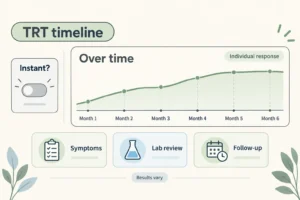
Most men expect testosterone therapy to feel like flipping a switch. It doesn’t, and a realistic TRT results timeline looks nothing like the overnight transformation
See Body Works first in your Google results.