
Peptides for Muscle Growth and Recovery: What Actually Works
Search “best peptides for muscle growth” and you will find lists of ten or twelve compounds, most stacked together with no explanation of why, and
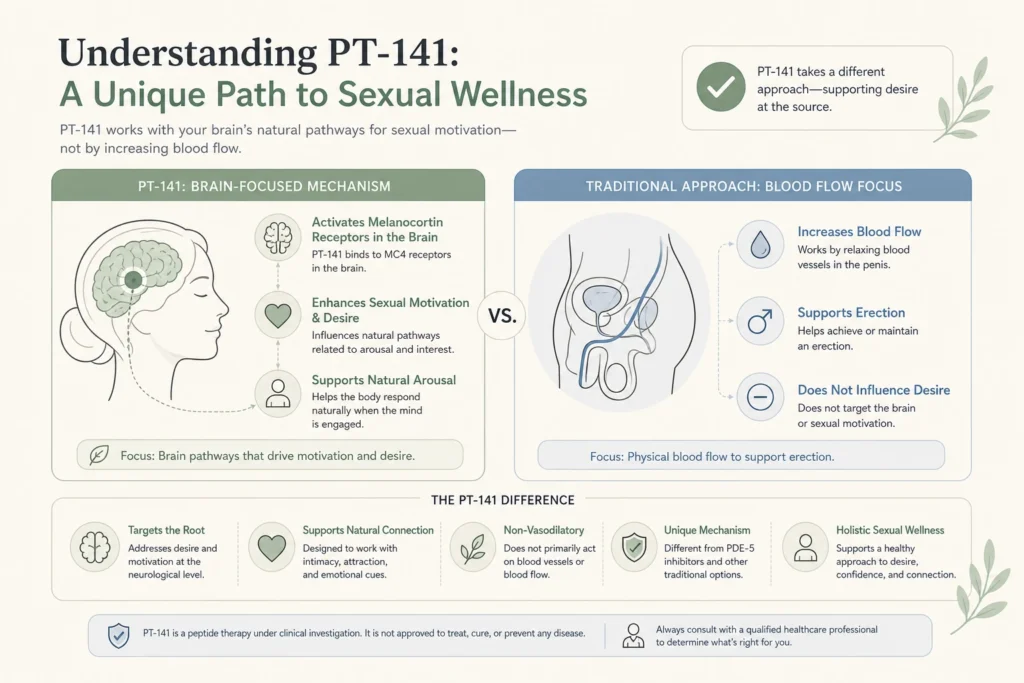
Most treatments for low sexual desire work on blood flow. PT-141 does not touch blood flow at all. It works in the brain, on the same pathways that generate sexual motivation in the first place, which is a different problem than the one erectile-dysfunction medications were built to solve.
PT-141, also known by its generic name bremelanotide, is a synthetic peptide that activates melanocortin receptors in the brain’s hypothalamus and limbic system, the regions involved in sexual desire and arousal. Because it acts centrally rather than on blood vessels, it is studied and used for low libido and desire disorders, a category of concern that vascular-acting medications were never designed to address. The strongest clinical evidence comes from two large phase 3 trials in premenopausal women, though the compounded version is also used off-label in other patients under physician supervision.
Body Works offers physician-supervised PT-141 protocols at its Nolensville, TN and Franklin, TN offices. Here is how the peptide works, what the trial data actually shows, and who is a reasonable candidate.
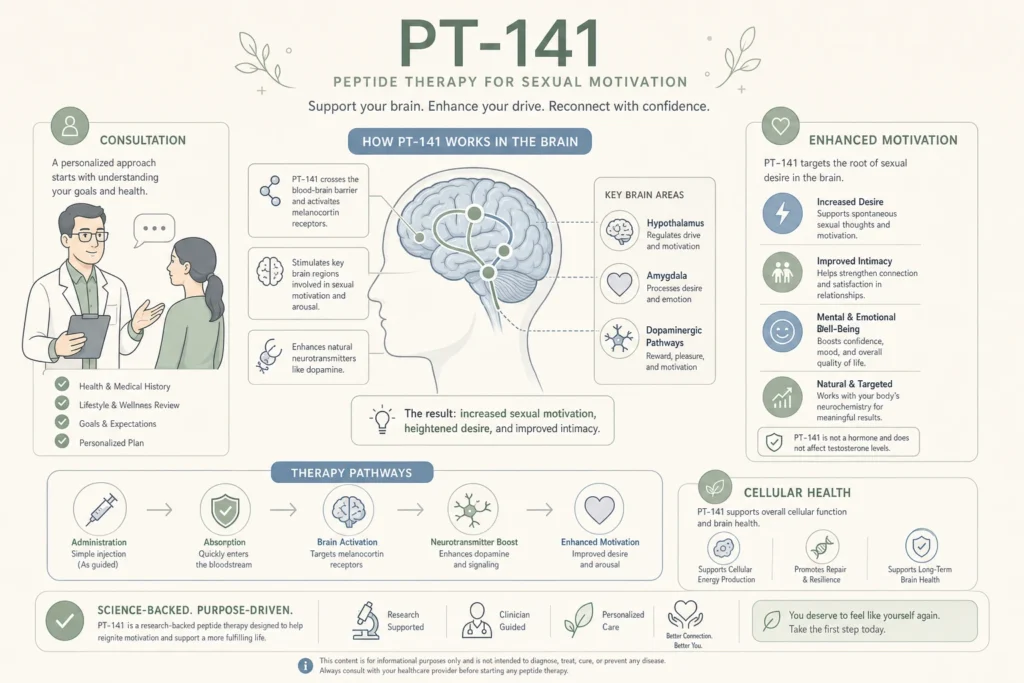
PT-141 is a synthetic cyclic peptide, a melanocortin receptor agonist, that was originally developed from a peptide called melanotan II and later isolated for its specific effect on sexual desire pathways. Bremelanotide is its generic pharmacological name; PT-141 is the research code name that stuck in clinical and compounding use. It is not a hormone replacement and it is not related to testosterone or estrogen therapy, even though it addresses a symptom, low desire, that those hormones also influence.
A compounded version is available through a licensed compounding pharmacy with a prescription, following physician evaluation, sourced under the same FDA framework governing 503A compounding pharmacies that applies to other peptide medications. It comes as a subcutaneous injection, taken on an as-needed basis rather than daily, which distinguishes it from most other peptide protocols built around a fixed weekly schedule. An NCBI Bookshelf clinical overview of bremelanotide covers its pharmacology and monitoring considerations in more clinical detail than most patient-facing material.
It works upstream, in the brain, rather than downstream, in the blood vessels. PT-141 activates the melanocortin-4 receptor in the hypothalamus and limbic system, the areas of the brain associated with sexual motivation, rather than acting on vascular tissue the way erectile-dysfunction medications do. That distinction is not a marketing detail. It is the entire reason the two categories of treatment exist for different problems: one restores blood flow to tissue that already wants to respond, and the other addresses a lack of desire in the first place.
| Factor | PT-141 (Bremelanotide) | Vascular-Acting Options |
|---|---|---|
| Primary mechanism | Central nervous system, melanocortin receptor activation | Peripheral blood vessel dilation |
| Problem it targets | Low sexual desire, arousal disorders | Erectile function, physical response |
| Timing before use | Hours before activity, as needed | Typically 30 to 60 minutes before activity |
| Common side effects | Nausea, flushing, headache | Headache, flushing, nasal congestion |
| Dosing frequency limit | Limited monthly doses per protocol | Generally as needed, no monthly cap |
The strongest evidence comes from two identical, large-scale phase 3 trials, together known as the RECONNECT studies, which enrolled more than 1,200 premenopausal women with hypoactive sexual desire disorder. Both trials found that bremelanotide significantly improved sexual desire and reduced related distress compared to placebo, measured on standardized clinical scales over 24 weeks of treatment. A follow-up analysis of participant experience in the same trial population found that women who completed the RECONNECT program reported increased desire, physical arousal, and satisfaction with their relationships, evidence that the effect held up as a meaningful change, not just a shift in a numeric score.
That evidence base is specific to premenopausal women with a formally diagnosed desire disorder. Use in men, in postmenopausal women, or for general low libido without a formal diagnosis is off-label, meaning it is not what the pivotal trials were designed to measure. Physicians who prescribe it in those situations are extrapolating from a known mechanism and a favorable safety profile, not citing a trial that enrolled that specific population. A patient considering PT-141 for reasons outside the trial population deserves that context up front, not a claim that the RECONNECT results simply transfer.
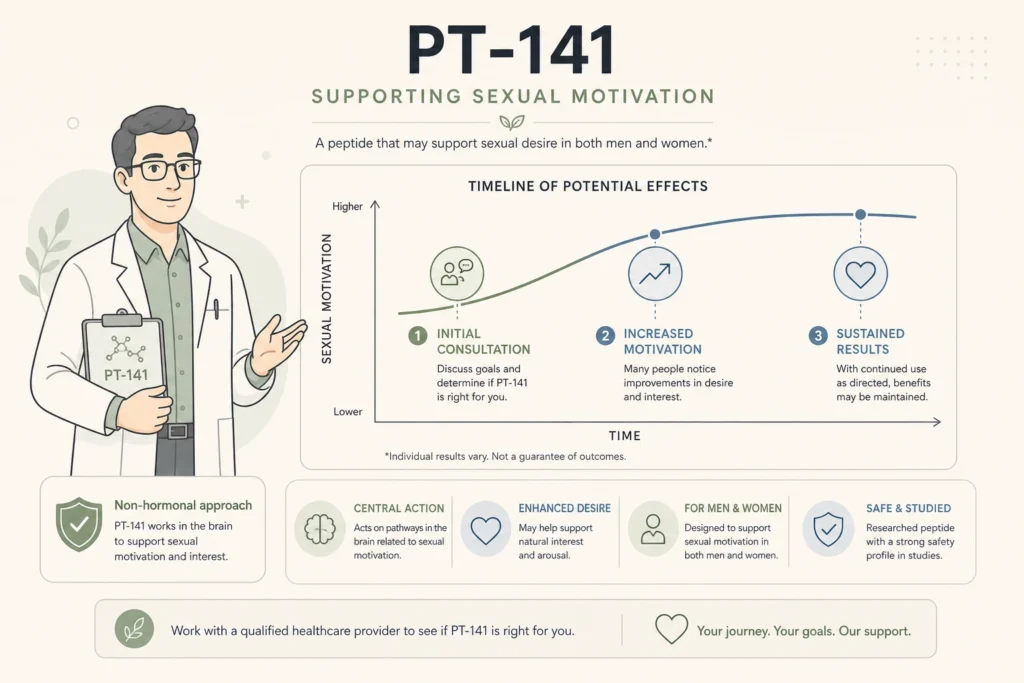
Adults experiencing low sexual desire that is bothersome to them, who have been screened for underlying causes such as thyroid dysfunction, depression, relationship stress, or medication side effects, are the population most likely to benefit. PT-141 is not a first-line answer for every low-libido complaint. A thorough history should rule out or address reversible causes before adding a peptide, because desire suppressed by an untreated thyroid condition or an antidepressant’s side effect responds to fixing that problem first, before a melanocortin agonist is added to the plan.
People with uncontrolled high blood pressure or significant cardiovascular disease need particular caution. Ambulatory monitoring in clinical development found that bremelanotide produced small, transient increases in blood pressure with a corresponding drop in heart rate, and that study specifically excluded women with uncontrolled hypertension at baseline. A physician reviewing current blood pressure control before starting is not a formality; it is the specific population the safety data has the least visibility into.
Nausea is the most common side effect, reported in roughly four in ten patients on active drug versus about one in a hundred on placebo in the phase 3 program, followed by flushing, headache, and injection site reactions. Most cases were mild to moderate and tended to ease with continued use. A less common but distinct effect is transient hyperpigmentation, a darkening of skin, gums, or nipples, that can occur with repeated dosing over time and is related to bremelanotide’s activity at a second melanocortin receptor that governs pigmentation. Clinical use limits the number of doses allowed per month specifically to reduce that risk, which is one reason self-directed, unsupervised dosing is a genuinely worse idea here than with many other peptides.

PT-141 is given as a subcutaneous injection, self-administered after training, timed ahead of anticipated activity rather than on a fixed daily or weekly schedule. Because effectiveness and side effects both track how recently and how often it is used, a provider sets a specific frequency ceiling as part of the plan rather than leaving that decision to the patient. Bloodwork and a blood pressure check are part of the intake before the first dose, and a physician monitors ongoing use rather than issuing a single prescription and stepping away.
In 2025, 48 unique clients at the Nolensville office worked with Body Works on peptide protocols, and low libido is one of the questions the team fields most often in a general wellness consultation, not just a men’s or women’s health visit specifically. The typical starting point mirrors the research: rule out a thyroid problem, a medication side effect, or an unaddressed stress or relationship factor before adding PT-141 to the plan, then screen blood pressure carefully given what the trial data shows about cardiovascular response.
If low desire has become a persistent, bothersome problem and you want an evaluation that looks at the whole picture before recommending PT-141, the Nolensville and Franklin teams can help. Schedule a Free Consultation to get started, or read the complete guide to peptide therapy for how the broader program is structured.
Medically reviewed by Dr. Donald Vollmer, MD
Managing Physician, Body Works TN
Search “best peptides for muscle growth” and you will find lists of ten or twelve compounds, most stacked together with no explanation of why, and

For decades, the DNA inside your mitochondria was treated as a parts list for one job: energy production, nothing else. Then researchers found a 16-amino-acid

Search “peptide therapy near me” and the results mix licensed medical clinics with websites selling research-use-only vials to your front door, no prescription, no bloodwork,
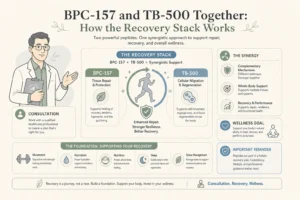
Search “BPC-157 TB-500 stack” and the forums all say the same thing: pair them, because one heals the tissue and the other helps cells get

A single glass of wine that never used to bother anyone can suddenly cause real nausea a few months into semaglutide or tirzepatide treatment. Patients
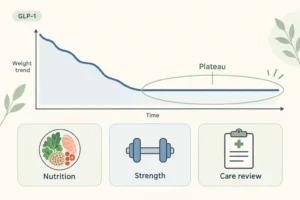
Three months of steady loss, then two weeks of nothing, then a patient calls certain the medication stopped working. It didn’t. A GLP-1 plateau is
See Body Works first in your Google results.