

Semaglutide in Nolensville, TN: Availability and How to Start
Searching for semaglutide in a town the size of Nolensville turns up a strange gap: national telehealth ads everywhere, but almost nothing about a real
The needle is the easy part. Most people who quit a GLP-1 medication early do not quit because of the injection itself, they quit because of a bruised, lumpy patch of skin from using the same spot every week, or because a missed dose turned into a guessing game about what to do next.
Semaglutide and tirzepatide are both injected subcutaneously, meaning into the fatty layer under the skin, once a week, in the abdomen, thigh, or upper arm, with the injection site rotated every time. Getting that rotation pattern right, and knowing the actual rule for a missed dose instead of guessing, prevents most of the avoidable problems patients run into. Body Works providers in Nolensville, TN and Franklin, TN walk every new patient through this at their first injection before they ever do one alone.
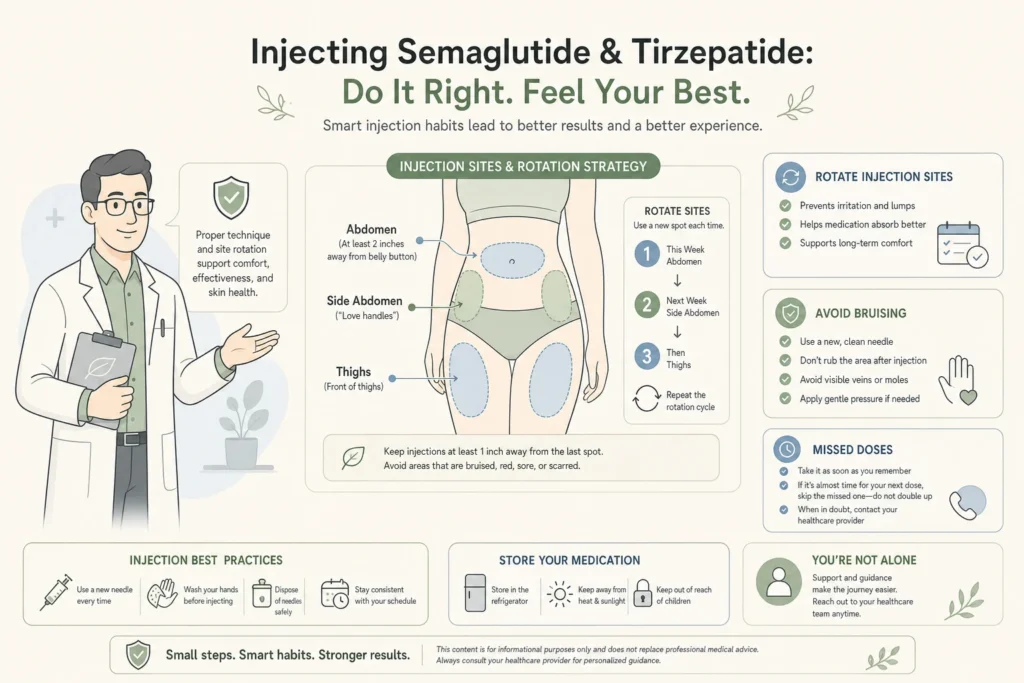
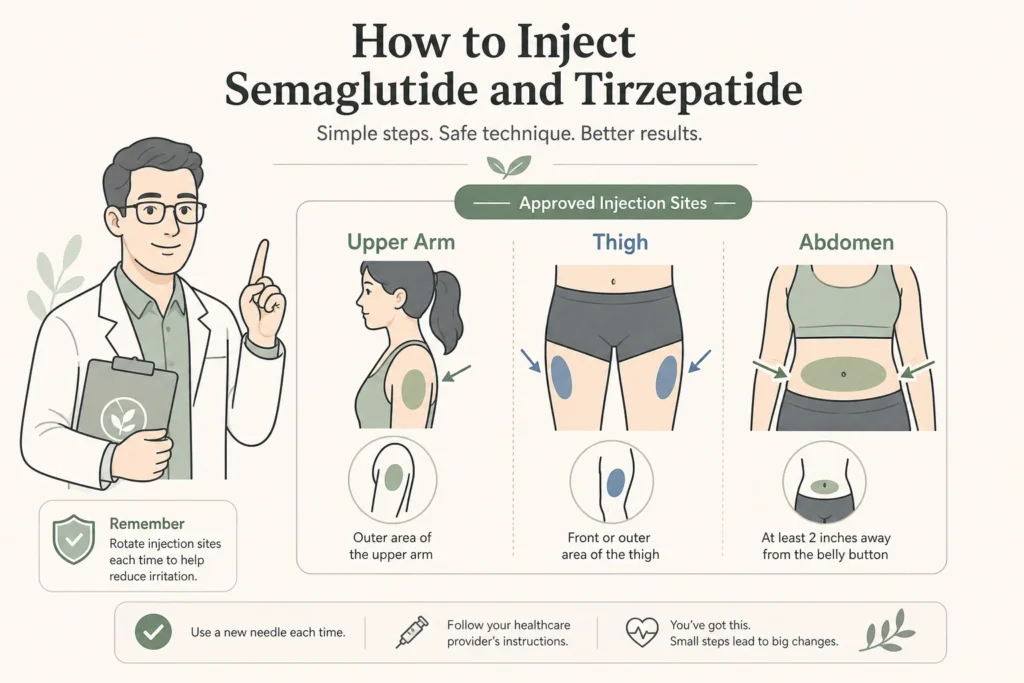
Both medications use the same three approved sites: the abdomen, the front of the thigh, and the back of the upper arm. According to the semaglutide injection instructions published by MedlinePlus, injections should stay at least two inches away from the belly button when using the abdomen, and the same spacing rule applies to tirzepatide per its own MedlinePlus drug entry for tirzepatide injection.
No single site is better than the others for absorption. The right choice is whichever area you can comfortably reach and pinch a fold of skin from every week, since consistency in technique matters more than which of the three sites you use on any given day. Most patients settle into a pattern within the first few weeks, rotating between the abdomen and thigh and saving the upper arm for weeks when a partner or family member is available to help.
Injecting the exact same spot week after week causes tissue changes that can stop the medication from absorbing properly, which is the opposite of what a titration schedule is trying to achieve. A Cleveland Clinic guide to subcutaneous injection technique notes that repeated injections in one location cause the tissue to change over time, reducing absorption and increasing bruising and discomfort, and recommends spacing each new injection at least an inch and a half from the last.
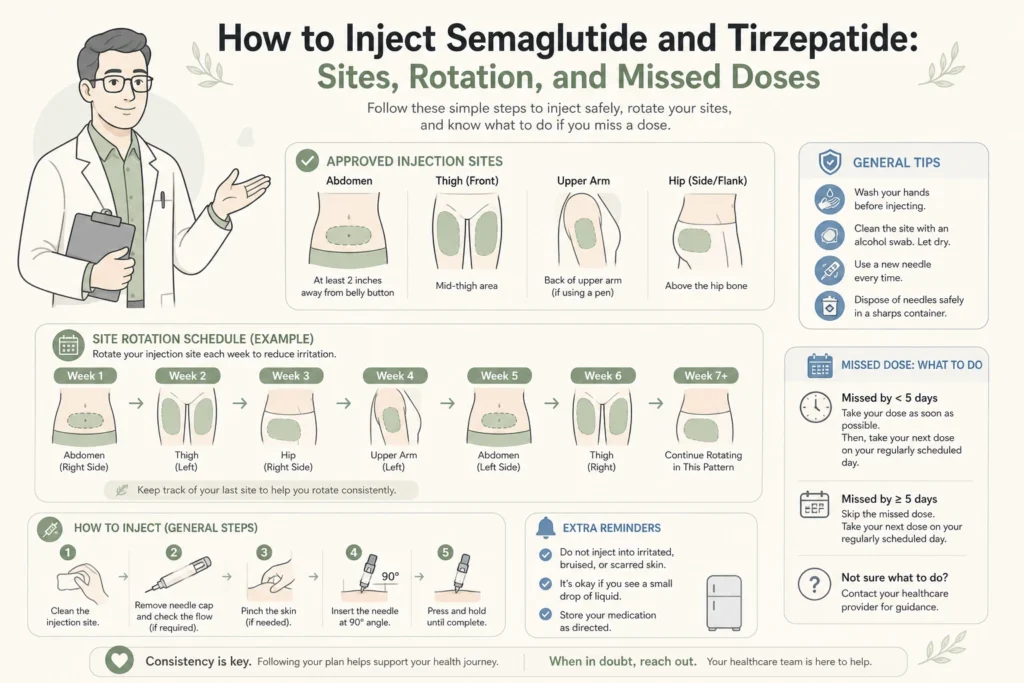
A simple rotation habit fixes this: pick a different one of the three approved areas each week, or move roughly a hand’s width across the same area, and keep a mental note of your last injection point. Patients who skip rotation are also the ones most likely to develop the hard lumps that make the next several injections more painful than they need to be.
| Site | Placement rule | Rotation tip |
|---|---|---|
| Abdomen | At least 2 inches from the belly button | Alternate left and right sides week to week |
| Thigh | Front of the thigh, mid-way between hip and knee | Alternate left and right legs |
| Upper arm | Back of the upper arm, where a caregiver or partner can help if needed | Harder to self-inject, so it works best as an occasional rotation option rather than a weekly default |
Clean the site, pinch a fold of skin between your thumb and forefinger, and insert the full needle at a 90-degree angle in one steady motion. That’s the same technique the Cleveland Clinic’s guide to giving a subcutaneous injection describes, and it matches the manufacturer instructions printed with these pens. Hold the fold throughout the injection, depress the plunger slowly and fully, and withdraw the needle straight out rather than at an angle, which reduces bruising and leakage at the site.
Both semaglutide and tirzepatide come in prefilled pens designed for self-injection, and the button-style mechanism does most of the depth and angle work automatically once it’s pressed against pinched skin. Checking that the solution is clear and free of particles before every injection, and confirming the pen hasn’t expired, takes less time than the injection itself and prevents a wasted dose. The FDA-approved prescribing information for semaglutide also specifies that pens should be stored refrigerated until first use, then can be kept at room temperature for a limited window once in use, which matters if you travel or keep a pen in a bag between doses.
New patients sometimes worry about hitting a vein or injecting too deep. The subcutaneous layer these medications target sits just under the skin and above the muscle, which is why the pinch-and-hold step matters: it lifts that fatty layer away from deeper tissue before the needle goes in. Watching a nurse demonstrate the first injection in person resolves most of this hesitation faster than any written instructions can.
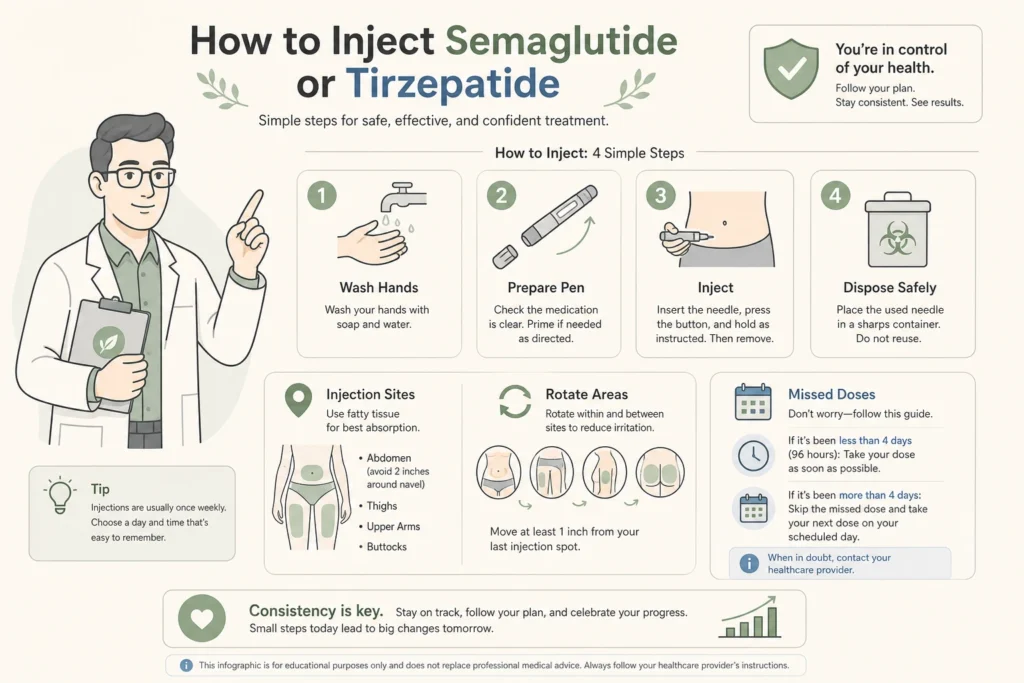
The rule differs slightly by medication, and guessing wrong in either direction causes real problems. For tirzepatide, MedlinePlus advises taking a missed dose as soon as you remember it if fewer than four days have passed since the scheduled day. Beyond four days, skip it entirely and resume your normal weekly schedule rather than doubling up. Semaglutide follows a similar late-dose window under medical guidance, though the exact cutoff should always be confirmed with your prescriber since it can shift based on where you are in titration.
Never inject two doses within a few days of each other to “catch up.” That raises side-effect risk without adding any benefit, since these medications are designed around steady, once-weekly exposure, not accumulated dosing. If you’re unsure whether enough time has passed to take a late dose safely, call your provider rather than guess, especially during the early weeks of the tirzepatide titration schedule when the body is still adjusting to each new step.
Mild redness, a small bump, or brief tenderness at the injection site is common and usually resolves within a day. What’s not routine is a site that stays hard, warm, or increasingly painful for more than a few days, or spreading redness, which can signal a skin infection rather than a normal injection reaction. Those symptoms, along with the broader picture of what counts as an expected side effect versus one that needs same-day attention, are covered in our guide to GLP-1 side effects by week.
The injection questions our nursing staff hears most often aren’t about the needle itself. They’re about rotation and missed doses, the two details a patient handout easily buries in fine print but that determine whether the next twelve weeks of treatment go smoothly. Body Works reviews injection technique at every follow-up visit, not just the first one, because habits drift over months of self-injecting.
Whether you’re about to give yourself a first injection or you’ve been on either medication for months and want your technique checked, our physician-supervised teams in Franklin and Nolensville can walk through it with you. Schedule a Free Consultation to get started.
Medically reviewed by Dr. Donald Vollmer, MD
Managing Physician, Body Works TN
Searching for semaglutide in a town the size of Nolensville turns up a strange gap: national telehealth ads everywhere, but almost nothing about a real

If you have been researching semaglutide for weight loss, you have probably hit the same wall everyone else does: a telehealth app that ships a
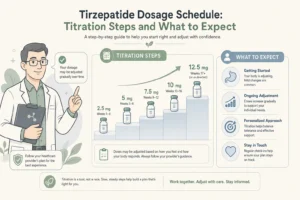
Patients starting tirzepatide often expect the first injection to feel like the start of real treatment. It isn’t. The 2.5 mg starting dose is a
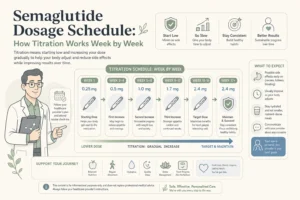
The dose on a semaglutide prescription rarely matches the dose a patient ends up taking, and that gap confuses people every week. Someone reads that
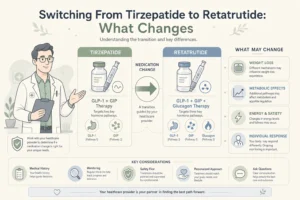
Switching from tirzepatide to retatrutide is a supervised medication change, not a milligram match. Retatrutide (GLP-3) adds the glucagon receptor and produced 24.2% weight loss

You can lower your odds of the gaunt, sunken look people call Ozempic face. Here is how pacing, protein, muscle, and skin care protect your
See Body Works first in your Google results.