

Semaglutide in Nolensville, TN: Availability and How to Start
Searching for semaglutide in a town the size of Nolensville turns up a strange gap: national telehealth ads everywhere, but almost nothing about a real
Loose skin after weight loss happens when you lose fat faster than your skin can shrink back to fit your smaller frame. The skin stretched to cover extra weight, and when that weight comes off quickly, the skin does not always retract at the same pace. How much loose skin you end up with depends mostly on things you cannot fully control, like your age, your genes, how much weight you lost, and how long you carried it. Some of it does firm up over months as your skin slowly adjusts. This guide covers what causes loose skin, what makes it more or less likely, and the honest range of what you can do about it.
This is one of the most common concerns we hear from people on medical weight loss programs, and it’s a fair one. If you want the wider view of how the body shifts during rapid weight loss, our full guide to body changes during weight loss maps out the face, skin, muscle, and shape changes together. This article stays focused on the skin.
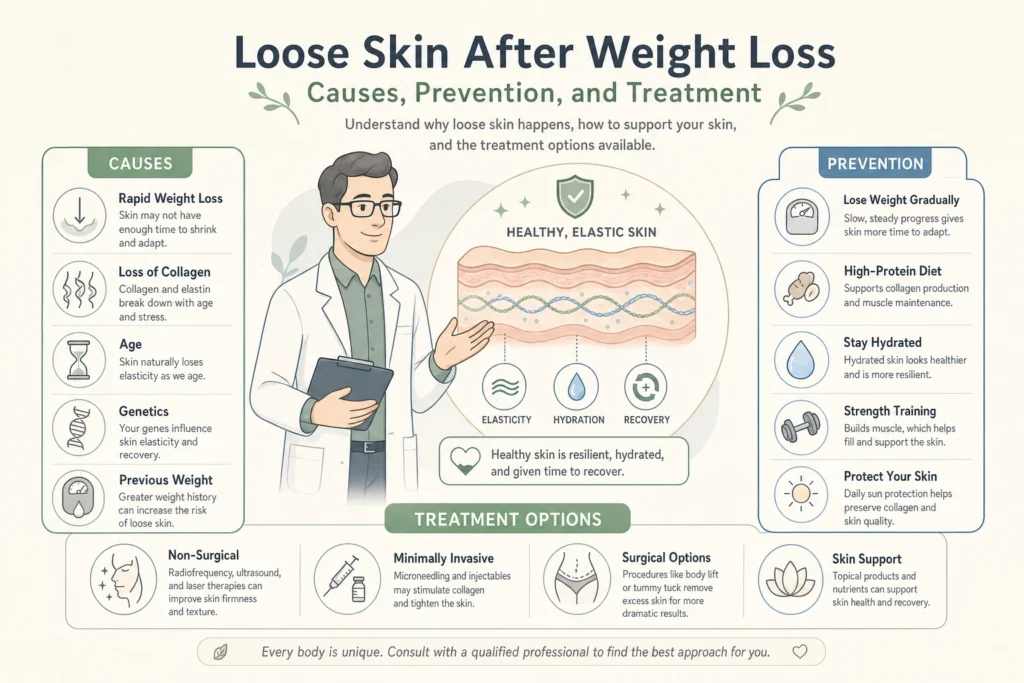
Loose skin is a mismatch between how fast fat leaves and how fast skin adapts. Your skin is an elastic organ that stretches as you gain weight, but its ability to snap back has limits. When you carry extra weight for a long time, the collagen and elastin fibers that give skin its bounce get stretched and can break down. Lose the fat underneath and the skin that was holding it in place no longer has anything to fill it out, so it hangs.
Rapid loss makes this worse because skin remodeling is slow. According to the StatPearls review of skin anatomy in the NCBI Bookshelf, the dermis relies on collagen and elastin networks that turn over gradually, which is why skin cannot instantly resize when a large amount of fat disappears in a short window. The bigger the gap between fat loss speed and skin recovery speed, the more loose skin tends to show.
Medications like semaglutide and tirzepatide can produce fast, significant weight loss, and speed is one of the main drivers of loose skin. The medicine itself does not damage your skin. The loose skin comes from the amount and pace of fat loss, not from any direct effect the drug has on collagen.
The other piece is muscle. When weight comes off quickly without enough protein and resistance training, some of what you lose is lean muscle, and muscle helps fill out the frame under your skin. Losing muscle along with fat can make skin look looser than fat loss alone would. This is also part of why body shape shifts in ways people do not expect, including the flattening and body shape changes some people notice on GLP-1 medications. Protecting muscle during weight loss is one of the few levers that genuinely helps here.
Most of what determines your loose skin was set before you started losing weight. The amount you lost, how long you carried it, your age, and your genetics do most of the work. You cannot change those, but knowing them helps you set realistic expectations instead of blaming yourself.
Age matters because skin makes less collagen and elastin as you get older, so it recovers more slowly. Collagen production drops steadily with age, according to a study of collagen production in chronologically aged skin (Varani et al., American Journal of Pathology). The table below sums up the main factors and which direction each one pushes.
| Factor | Less loose skin | More loose skin |
|---|---|---|
| Amount of weight lost | Modest loss (under about 40 to 50 pounds) | Large loss (100+ pounds) |
| Age | Younger skin | Older skin, slower collagen |
| Speed of loss | Gradual, steady | Very rapid |
| Time carrying the weight | Shorter duration | Many years stretched |
| Muscle retention | Muscle preserved | Muscle lost alongside fat |
| Sun and smoking history | Low sun damage, non-smoker | Heavy sun exposure, smoking |
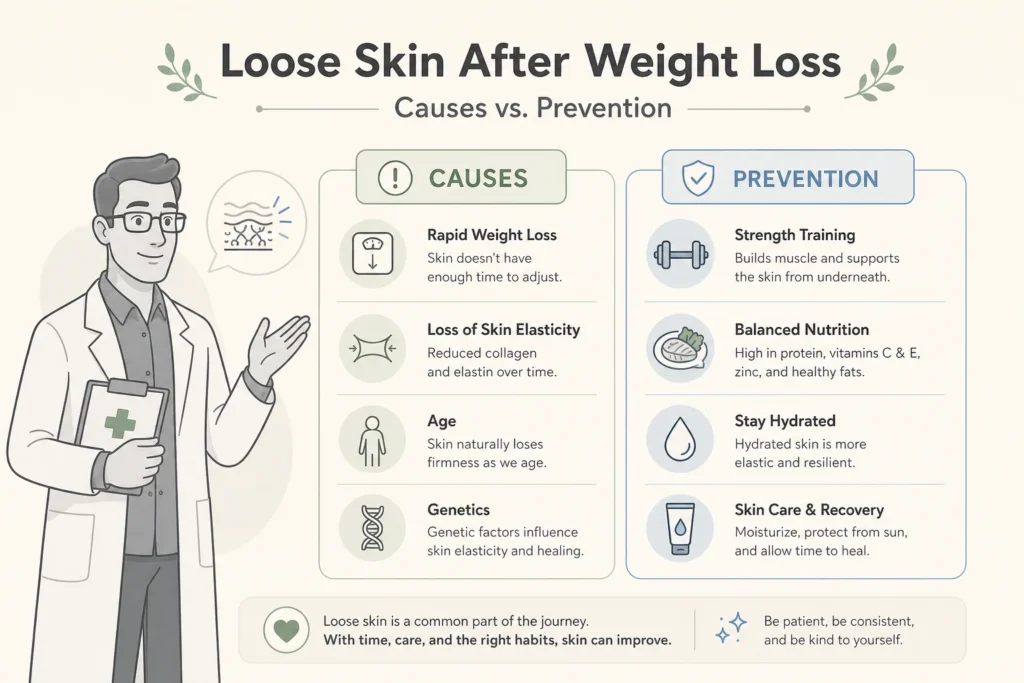
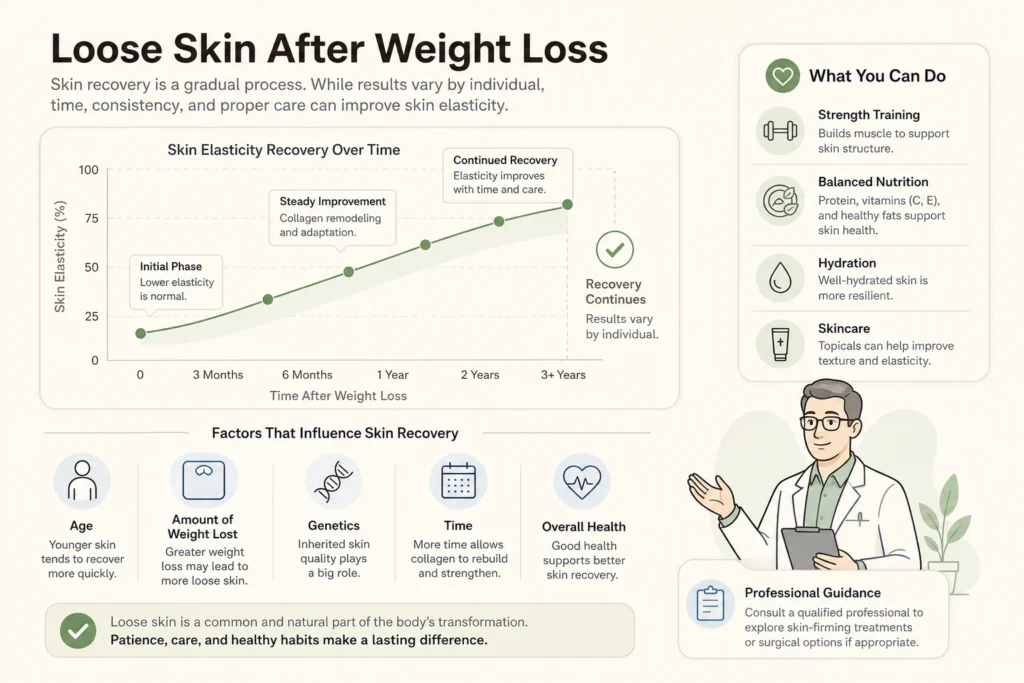
Some loose skin does improve on its own, especially mild to moderate looseness in younger people, but it happens slowly and it has limits. Skin keeps remodeling for months after your weight stabilizes, so what looks loose at your goal weight is often firmer six months to a year later. Giving your skin time before judging the final result is one of the most useful things you can do.
How much it recovers depends on the same factors that caused it. Mild looseness after a smaller loss often tightens noticeably. Large amounts of hanging skin after major weight loss, especially in older skin that was stretched for years, usually do not fully retract without help. Skin that has lost significant elastin does not fully regenerate those fibers, so setting honest expectations matters. What we see in patients at Body Works is that the people happiest with their results are the ones who lose weight at a steady pace, protect their muscle, and give their skin time rather than expecting an overnight snap-back.
You cannot guarantee zero loose skin, but you can shift the odds in your favor by losing weight at a steady pace, keeping your muscle, staying hydrated, and protecting your skin from damage. Sun protection matters more than most people realize, since a review of skin anti-aging strategies (Ganceviciene et al.) ties ultraviolet exposure directly to collagen breakdown. None of these are magic, and none override genetics or a very large loss, but together they give your skin the best chance to keep up.
The biggest levers are pace and muscle. A steadier rate of loss gives skin more time to remodel, and preserving lean mass with enough protein and resistance training keeps your frame filled out. This is exactly where a supervised program helps, because the team can adjust your plan to protect muscle while you lose fat. Our medical weight loss program builds those protections in rather than leaving them to chance. For the full playbook on nutrition, training, and pacing, our sibling guide on how to tighten skin after weight loss naturally goes deeper than we can here.
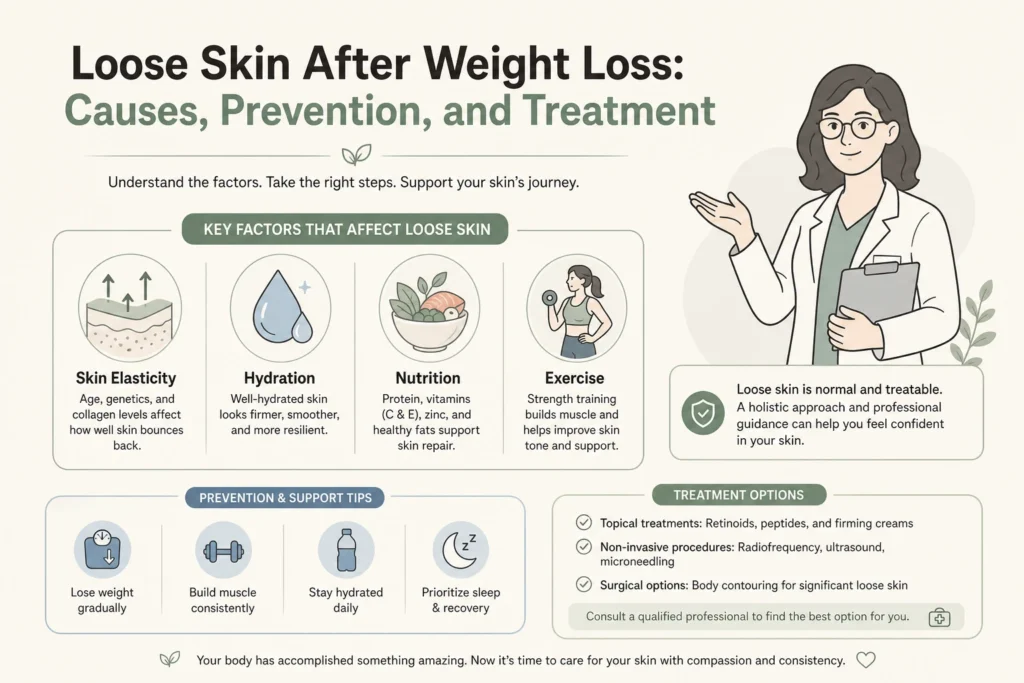
Yes, saggy skin can be addressed, but the right approach depends on how much loose skin you have. Mild laxity often responds to natural methods and time, while moderate looseness may improve with non-surgical skin tightening treatments. Significant hanging skin after major weight loss usually needs a surgical consultation, because no cream or device removes large folds of excess skin.
The honest framing is that treatments exist along a ladder. Lifestyle and time sit at the bottom for mild cases. Non-surgical options sit in the middle for moderate laxity. Surgery sits at the top for large amounts of excess skin. Matching the method to the severity is the whole game, and a provider who examines your skin can tell you where you actually fall. We walk through the middle rung, the non-surgical choices and how they compare, in our guide to skin tightening after weight loss options.
Loose skin tends to appear where fat was stored heaviest and where skin was stretched most, which for most people means the belly, upper arms, thighs, and under the chin. The abdomen is the most common spot after major weight loss because it holds a lot of fat and stretches significantly, especially across the lower belly.
Areas with thinner skin or less underlying muscle support, like the inner arms and inner thighs, also tend to show looseness sooner. The face is its own category, since facial fat loss creates a hollowed, aged look rather than hanging skin. Knowing where you are most likely to notice changes helps you focus your prevention efforts, particularly resistance training that builds the muscle under those areas.
It is worth talking to a provider when loose skin is affecting your comfort or confidence, when you are still partway through your weight loss and want to protect your skin going forward, or when you simply want an honest read on what your options are. There is no need to wait until you are unhappy. A conversation early in your weight loss can shape choices, like pacing and muscle protection, that reduce loose skin before it sets in.
The clinic that manages your dose is also the right place to talk about what the weight loss is doing to your skin, because those two things are connected. At Body Works, patients at our Franklin, TN and Nolensville, TN offices can raise skin concerns as part of the same weight loss visit rather than starting over somewhere new. A provider can look at your skin, tell you honestly which rung of the ladder you are on, and lay out realistic options.
Schedule a Free Consultation to talk through your weight loss and your skin with a provider who sees both sides of the picture.
Medically reviewed by Dr. Donald Vollmer, MD
Managing Physician, Body Works TN
Searching for semaglutide in a town the size of Nolensville turns up a strange gap: national telehealth ads everywhere, but almost nothing about a real

If you have been researching semaglutide for weight loss, you have probably hit the same wall everyone else does: a telehealth app that ships a
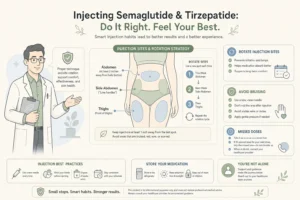
The needle is the easy part. Most people who quit a GLP-1 medication early do not quit because of the injection itself, they quit because
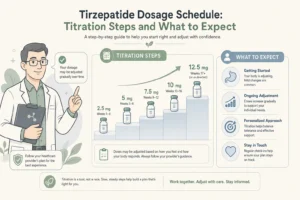
Patients starting tirzepatide often expect the first injection to feel like the start of real treatment. It isn’t. The 2.5 mg starting dose is a
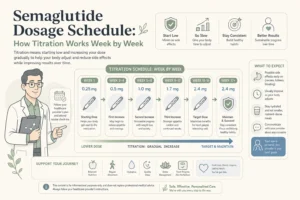
The dose on a semaglutide prescription rarely matches the dose a patient ends up taking, and that gap confuses people every week. Someone reads that
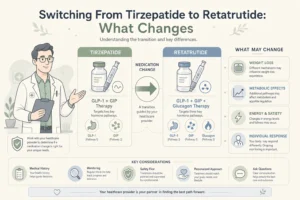
Switching from tirzepatide to retatrutide is a supervised medication change, not a milligram match. Retatrutide (GLP-3) adds the glucagon receptor and produced 24.2% weight loss
See Body Works first in your Google results.