Loose Skin After Weight Loss: Causes, Prevention, and Treatment

Loose Skin After Weight Loss: Causes, Prevention, and Treatment

August 10, 2026

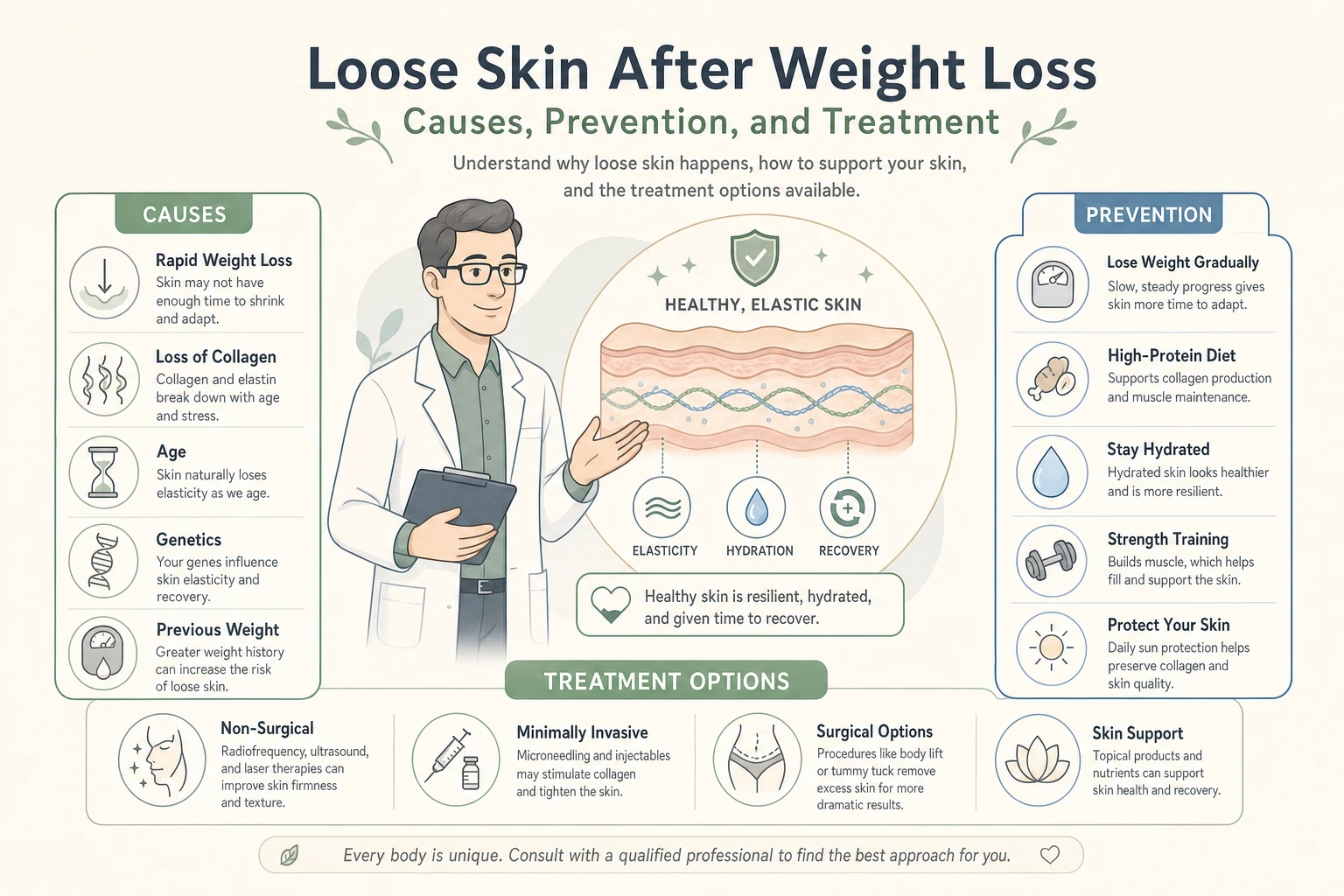
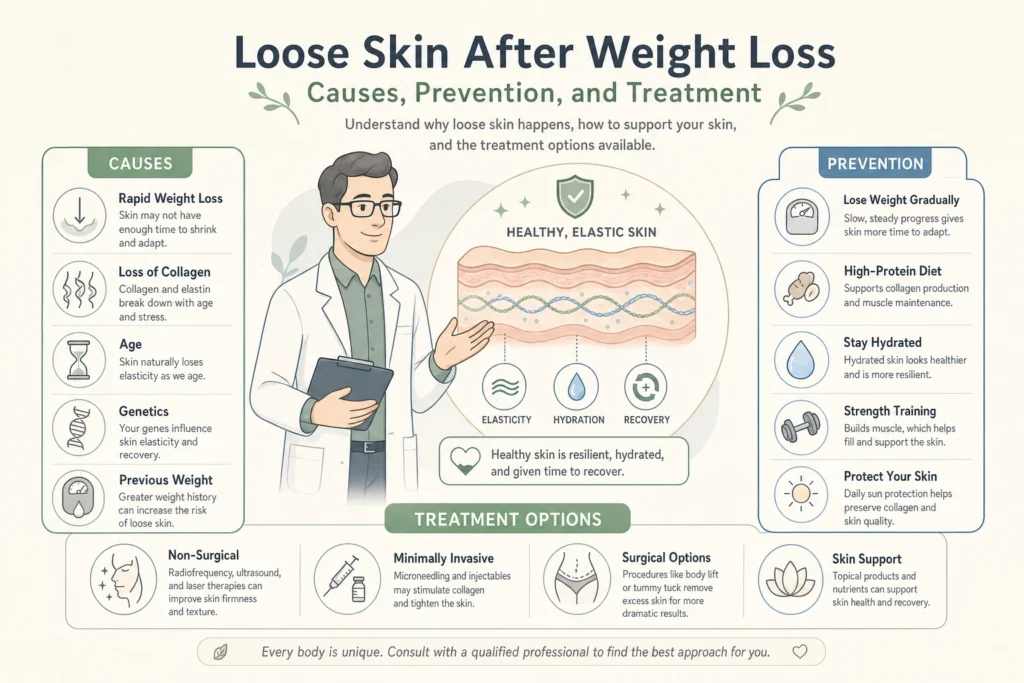
Loose skin after weight loss happens when you lose fat faster than your skin can shrink back to fit your smaller frame. The skin stretched to cover extra weight, and when that weight comes off quickly, the skin does not always retract at the same pace. How much loose skin you end up with depends mostly on things you cannot fully control, like your age, your genes, how much weight you lost, and how long you carried it. Some of it does firm up over months as your skin slowly adjusts. This guide covers what causes loose skin, what makes it more or less likely, and the honest range of what you can do about it.

This is one of the most common concerns we hear from people on medical weight loss programs, and it’s a fair one. If you want the wider view of how the body shifts during rapid weight loss, our full guide to body changes during weight loss maps out the face, skin, muscle, and shape changes together. This article stays focused on the skin.

Illustration of Loose Skin After Weight Loss: Causes, Prevention, and Treatment in a modern medical wellness setting

What Causes Loose Skin After Weight Loss?

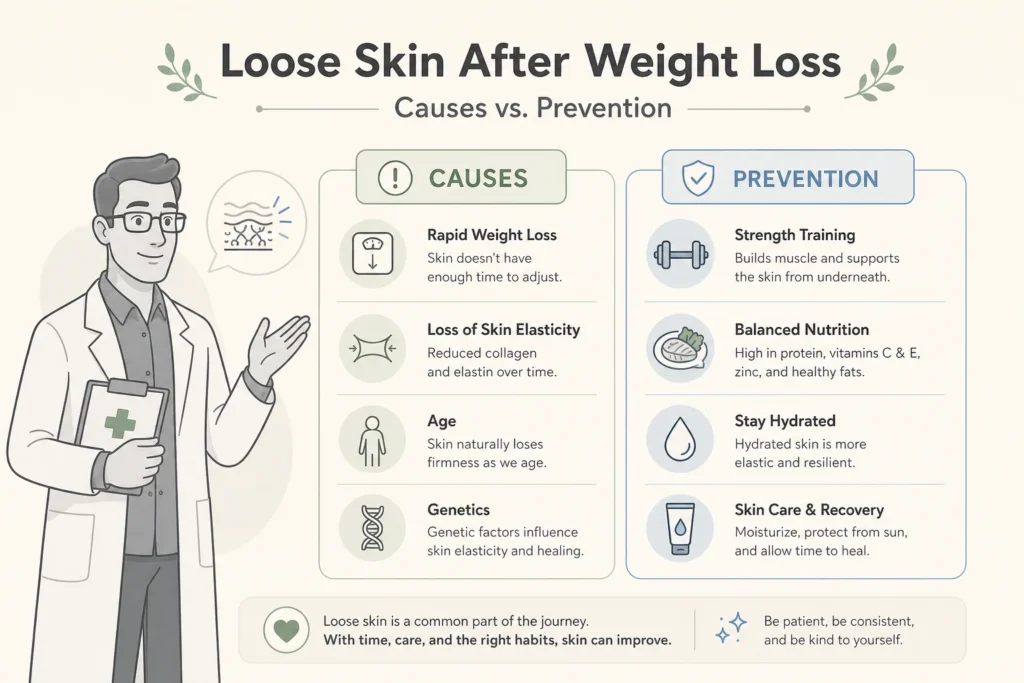
Loose skin is a mismatch between how fast fat leaves and how fast skin adapts. Your skin is an elastic organ that stretches as you gain weight, but its ability to snap back has limits. When you carry extra weight for a long time, the collagen and elastin fibers that give skin its bounce get stretched and can break down. Lose the fat underneath and the skin that was holding it in place no longer has anything to fill it out, so it hangs.

Rapid loss makes this worse because skin remodeling is slow. According to the StatPearls review of skin anatomy in the NCBI Bookshelf, the dermis relies on collagen and elastin networks that turn over gradually, which is why skin cannot instantly resize when a large amount of fat disappears in a short window. The bigger the gap between fat loss speed and skin recovery speed, the more loose skin tends to show.

Why Does GLP-1 Weight Loss Sometimes Leave Loose Skin?

Medications like semaglutide and tirzepatide can produce fast, significant weight loss, and speed is one of the main drivers of loose skin. The medicine itself does not damage your skin. The loose skin comes from the amount and pace of fat loss, not from any direct effect the drug has on collagen.

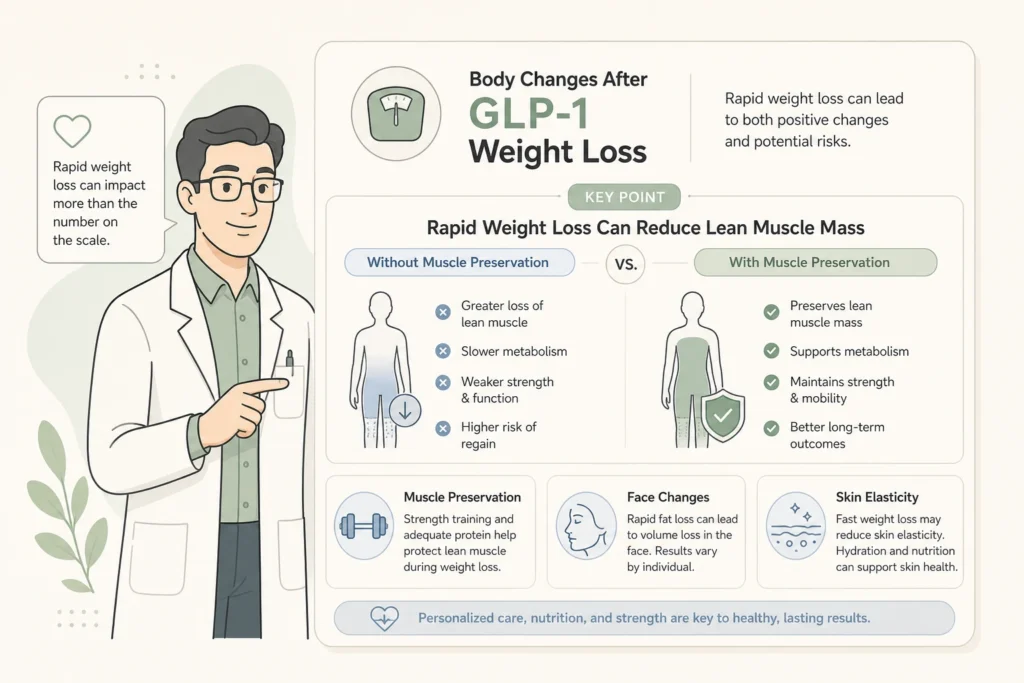
The other piece is muscle. When weight comes off quickly without enough protein and resistance training, some of what you lose is lean muscle, and muscle helps fill out the frame under your skin. Losing muscle along with fat can make skin look looser than fat loss alone would. This is also part of why body shape shifts in ways people do not expect, including the flattening and body shape changes some people notice on GLP-1 medications. Protecting muscle during weight loss is one of the few levers that genuinely helps here.

What Factors Decide How Much Loose Skin You Get?

Most of what determines your loose skin was set before you started losing weight. The amount you lost, how long you carried it, your age, and your genetics do most of the work. You cannot change those, but knowing them helps you set realistic expectations instead of blaming yourself.

Age matters because skin makes less collagen and elastin as you get older, so it recovers more slowly. Collagen production drops steadily with age, according to a study of collagen production in chronologically aged skin (Varani et al., American Journal of Pathology). The table below sums up the main factors and which direction each one pushes.

FactorLess loose skinMore loose skin
Amount of weight lostModest loss (under about 40 to 50 pounds)Large loss (100+ pounds)
AgeYounger skinOlder skin, slower collagen
Speed of lossGradual, steadyVery rapid
Time carrying the weightShorter durationMany years stretched
Muscle retentionMuscle preservedMuscle lost alongside fat
Sun and smoking historyLow sun damage, non-smokerHeavy sun exposure, smoking
Supporting illustration for Loose Skin After Weight Loss: Causes, Prevention, and Treatment in a modern medical wellness setting

Does Loose Skin After Weight Loss Go Away on Its Own?

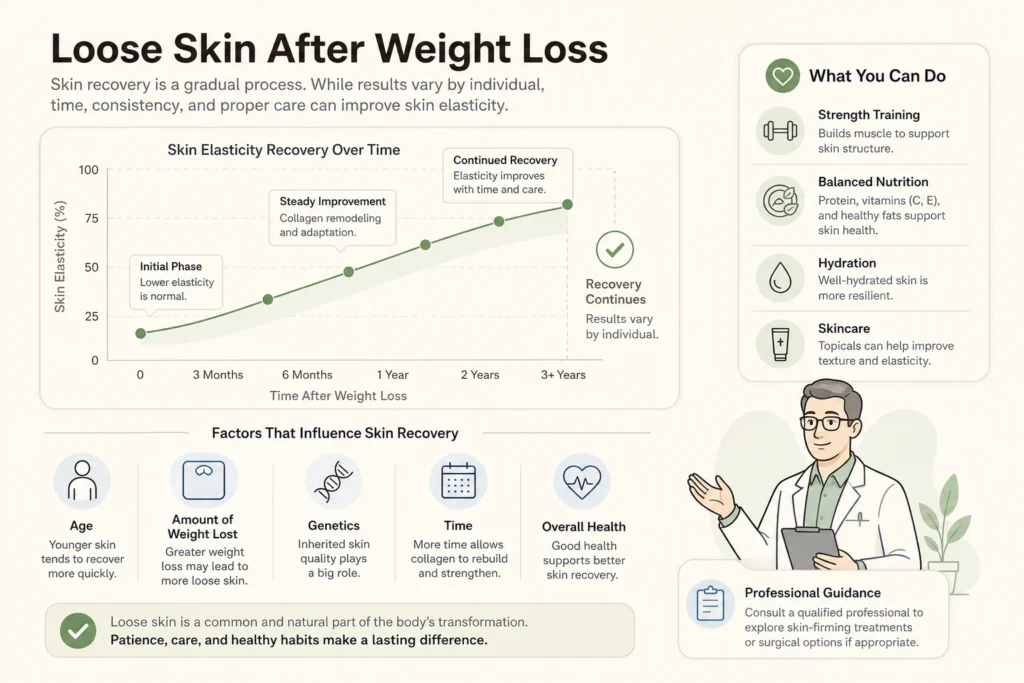
Some loose skin does improve on its own, especially mild to moderate looseness in younger people, but it happens slowly and it has limits. Skin keeps remodeling for months after your weight stabilizes, so what looks loose at your goal weight is often firmer six months to a year later. Giving your skin time before judging the final result is one of the most useful things you can do.

How much it recovers depends on the same factors that caused it. Mild looseness after a smaller loss often tightens noticeably. Large amounts of hanging skin after major weight loss, especially in older skin that was stretched for years, usually do not fully retract without help. Skin that has lost significant elastin does not fully regenerate those fibers, so setting honest expectations matters. What we see in patients at Body Works is that the people happiest with their results are the ones who lose weight at a steady pace, protect their muscle, and give their skin time rather than expecting an overnight snap-back.

How Do You Avoid Loose Skin When Losing Weight?

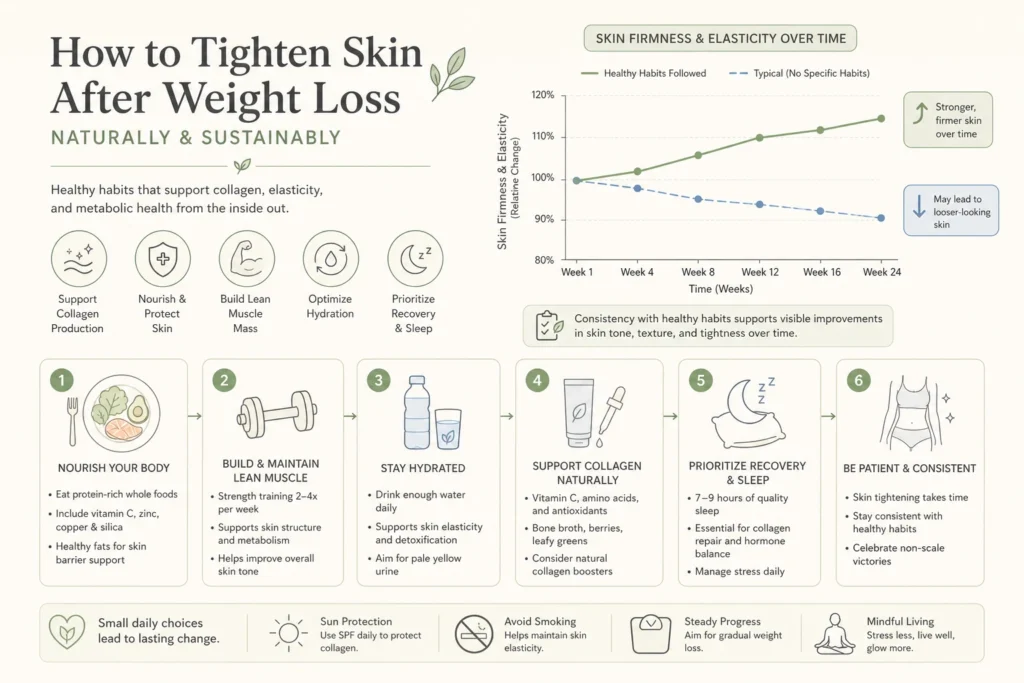
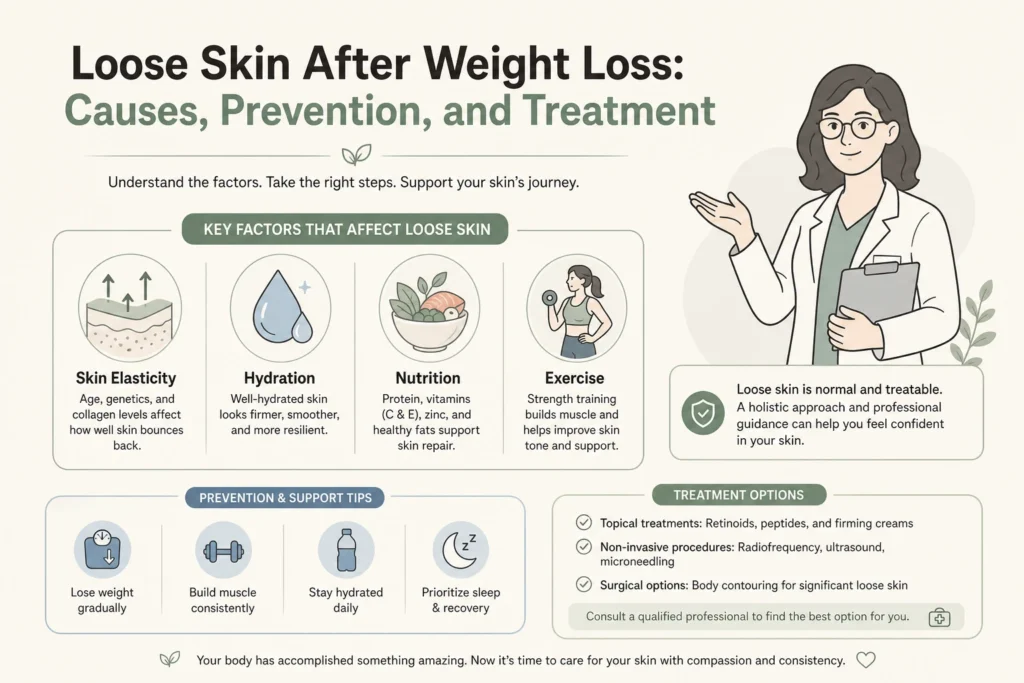
You cannot guarantee zero loose skin, but you can shift the odds in your favor by losing weight at a steady pace, keeping your muscle, staying hydrated, and protecting your skin from damage. Sun protection matters more than most people realize, since a review of skin anti-aging strategies (Ganceviciene et al.) ties ultraviolet exposure directly to collagen breakdown. None of these are magic, and none override genetics or a very large loss, but together they give your skin the best chance to keep up.

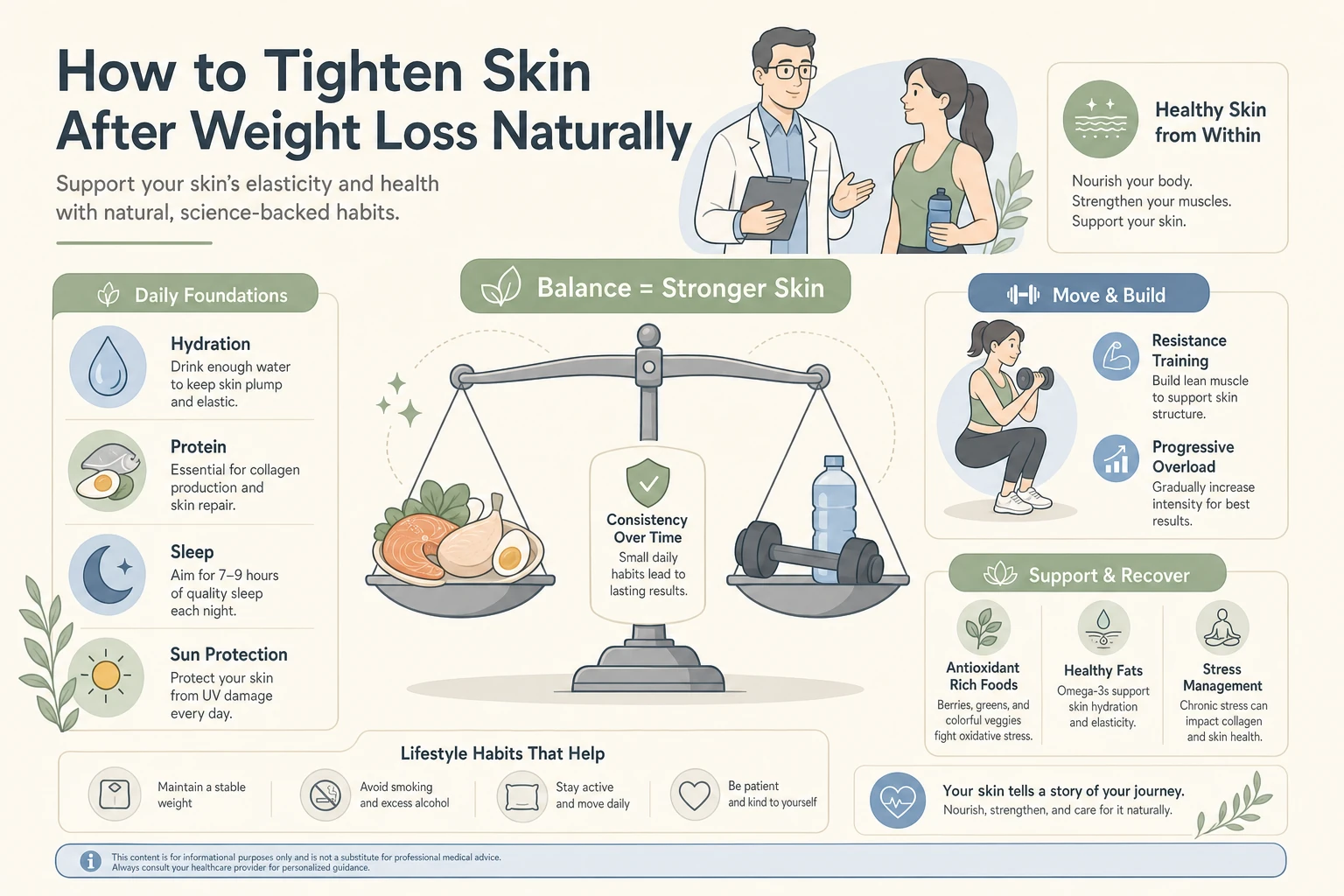
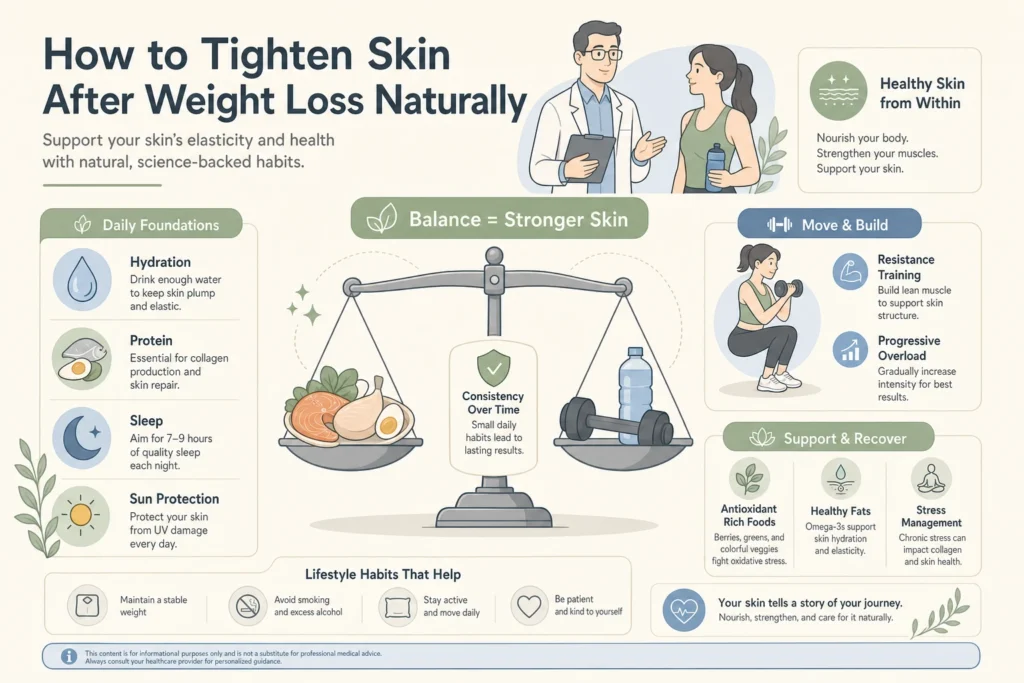
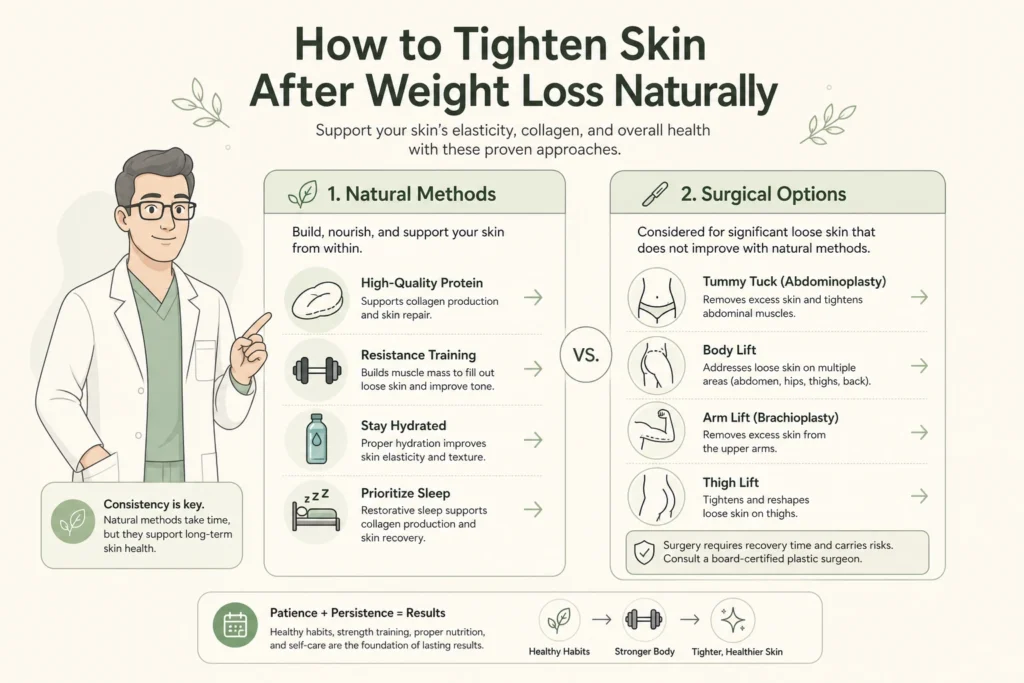
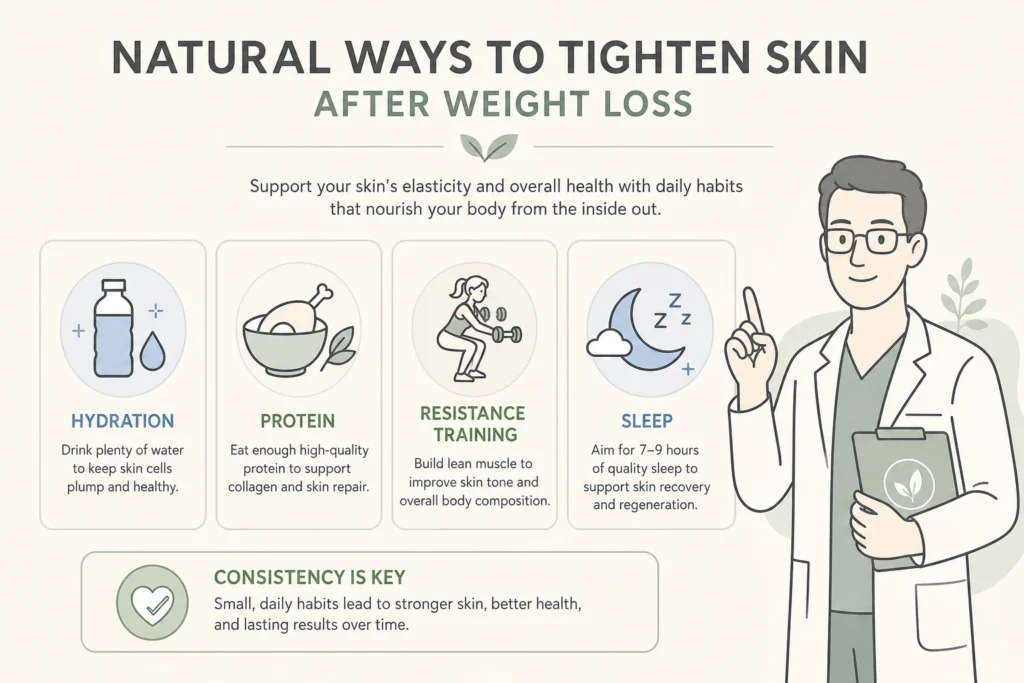
The biggest levers are pace and muscle. A steadier rate of loss gives skin more time to remodel, and preserving lean mass with enough protein and resistance training keeps your frame filled out. This is exactly where a supervised program helps, because the team can adjust your plan to protect muscle while you lose fat. Our medical weight loss program builds those protections in rather than leaving them to chance. For the full playbook on nutrition, training, and pacing, our sibling guide on how to tighten skin after weight loss naturally goes deeper than we can here.

Supporting illustration for Loose Skin After Weight Loss: Causes, Prevention, and Treatment in a modern medical wellness setting

Can You Fix Saggy Skin After Weight Loss?

Yes, saggy skin can be addressed, but the right approach depends on how much loose skin you have. Mild laxity often responds to natural methods and time, while moderate looseness may improve with non-surgical skin tightening treatments. Significant hanging skin after major weight loss usually needs a surgical consultation, because no cream or device removes large folds of excess skin.

The honest framing is that treatments exist along a ladder. Lifestyle and time sit at the bottom for mild cases. Non-surgical options sit in the middle for moderate laxity. Surgery sits at the top for large amounts of excess skin. Matching the method to the severity is the whole game, and a provider who examines your skin can tell you where you actually fall. We walk through the middle rung, the non-surgical choices and how they compare, in our guide to skin tightening after weight loss options.

Where Does Loose Skin Show Up Most?

Loose skin tends to appear where fat was stored heaviest and where skin was stretched most, which for most people means the belly, upper arms, thighs, and under the chin. The abdomen is the most common spot after major weight loss because it holds a lot of fat and stretches significantly, especially across the lower belly.

Areas with thinner skin or less underlying muscle support, like the inner arms and inner thighs, also tend to show looseness sooner. The face is its own category, since facial fat loss creates a hollowed, aged look rather than hanging skin. Knowing where you are most likely to notice changes helps you focus your prevention efforts, particularly resistance training that builds the muscle under those areas.

Supporting illustration for Loose Skin After Weight Loss: Causes, Prevention, and Treatment in a modern medical wellness setting

When Should You Talk to a Provider?

It is worth talking to a provider when loose skin is affecting your comfort or confidence, when you are still partway through your weight loss and want to protect your skin going forward, or when you simply want an honest read on what your options are. There is no need to wait until you are unhappy. A conversation early in your weight loss can shape choices, like pacing and muscle protection, that reduce loose skin before it sets in.

The clinic that manages your dose is also the right place to talk about what the weight loss is doing to your skin, because those two things are connected. At Body Works, patients at our Franklin, TN and Nolensville, TN offices can raise skin concerns as part of the same weight loss visit rather than starting over somewhere new. A provider can look at your skin, tell you honestly which rung of the ladder you are on, and lay out realistic options.

Schedule a Free Consultation to talk through your weight loss and your skin with a provider who sees both sides of the picture.

Frequently Asked Questions

Some of it does. Mild to moderate loose skin, especially in younger people, often firms up over the six to twelve months after your weight stabilizes, because skin keeps remodeling during that time. Large amounts of hanging skin after major weight loss usually do not fully retract on their own, particularly in older skin that was stretched for many years. Giving your skin time before judging the result is smart, but severe looseness typically needs treatment to fully resolve.
Mild to moderate saggy skin can often be improved without surgery through a combination of muscle-building exercise, good hydration and nutrition, time, and non-surgical skin tightening treatments. These approaches work best when the amount of loose skin is limited. Large folds of excess skin after a very big weight loss generally do not respond enough to non-surgical methods, and a surgical consultation is the realistic path in those cases. A provider who examines your skin can tell you which category you fall into.
It is uncommon to lose 100 pounds with no loose skin at all, but the amount varies widely from person to person. Younger people with good skin elasticity who lose weight gradually and preserve muscle tend to have less. Older people who carried the weight for many years typically have more. You can improve your odds with a steady pace, strength training, protein, hydration, and sun protection, but at that scale of loss, some loose skin is common and often needs treatment to fully address.
Building muscle helps loose skin look better by filling out the frame underneath it, even though it does not tighten the skin itself. When you preserve or add lean muscle during weight loss, there is more supportive tissue under the skin, so it appears firmer and less empty. This is one reason resistance training and adequate protein matter so much during rapid weight loss, and why losing muscle alongside fat tends to make skin look looser than it otherwise would.
Most providers suggest waiting until your weight has been stable for several months, often around six months to a year, before pursuing treatment for loose skin. Skin continues to remodel and firm up during that window, so what looks loose at your goal weight may improve noticeably on its own. Waiting also means your body has reached a steady state, which gives any treatment a more accurate target. If you are still losing, focus first on pacing, muscle, and skin care.

Medically reviewed by Dr. Donald Vollmer, MD
Managing Physician, Body Works TN

Browse Our Blog

Body Changes After GLP-1 Weight Loss: The Complete Guide

Body Changes After GLP-1 Weight Loss: The Complete Guide

August 6, 2026

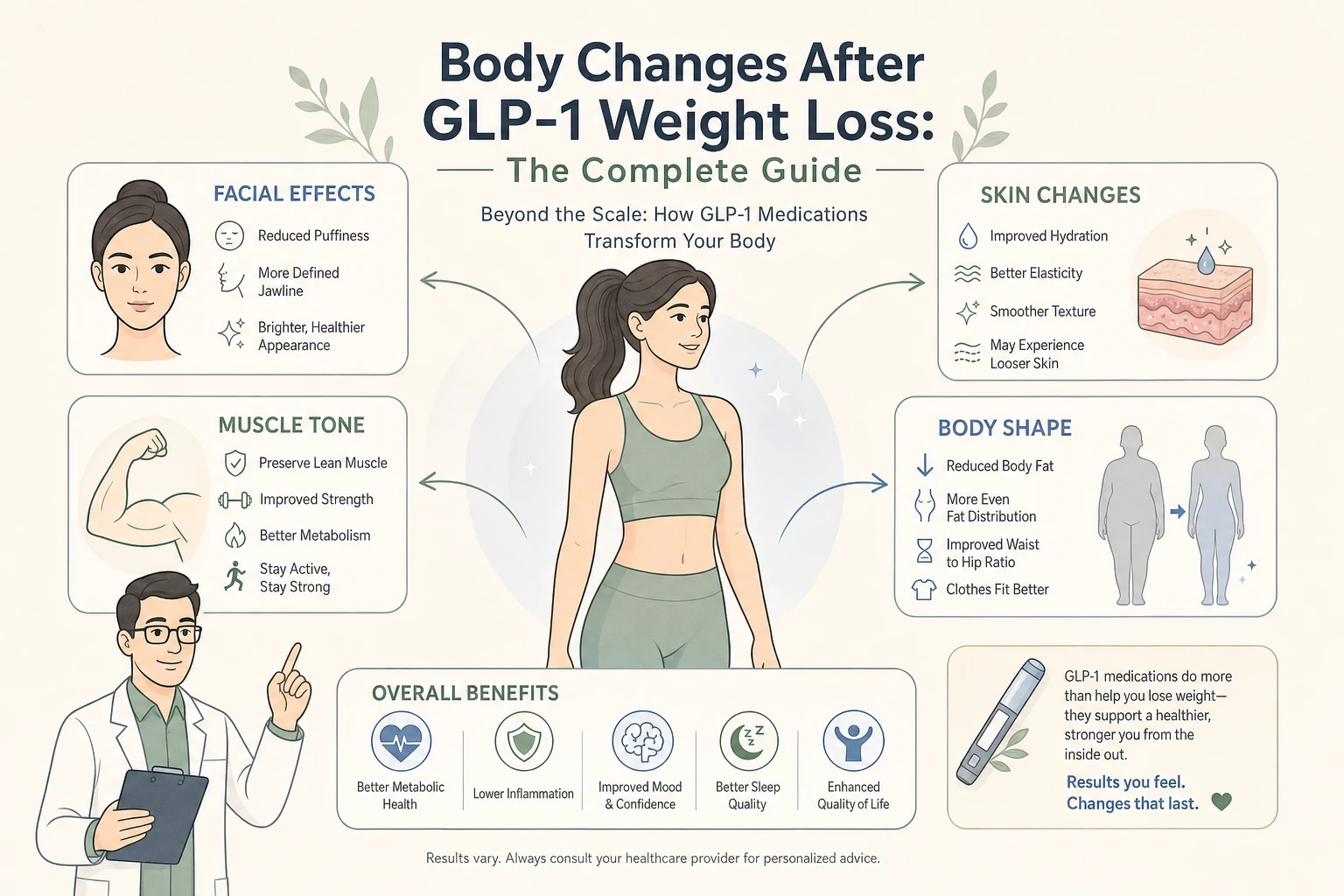
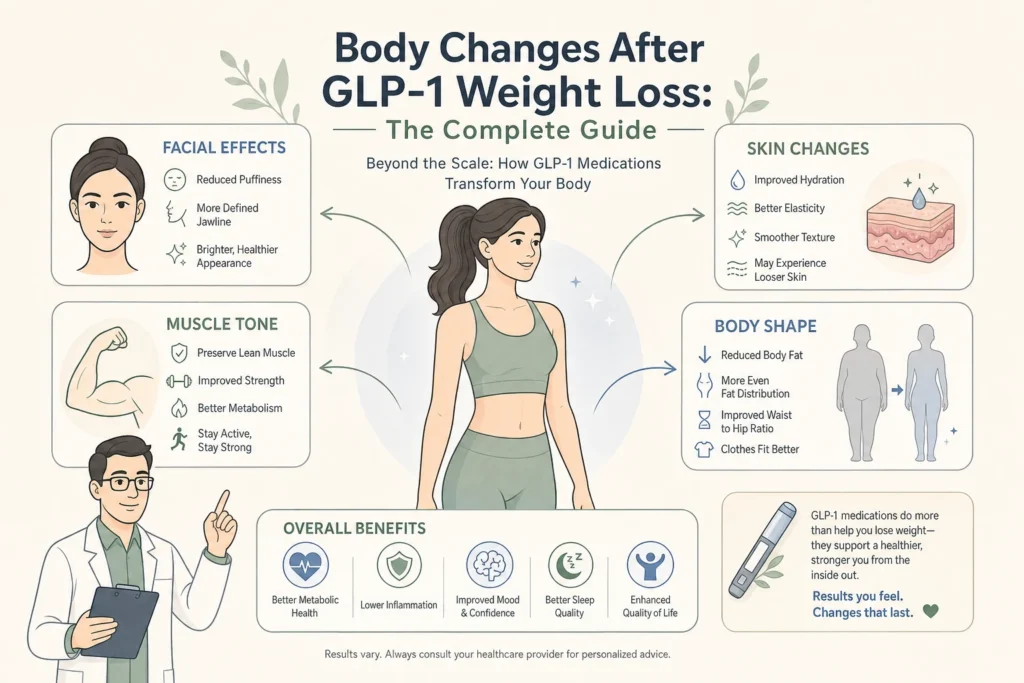
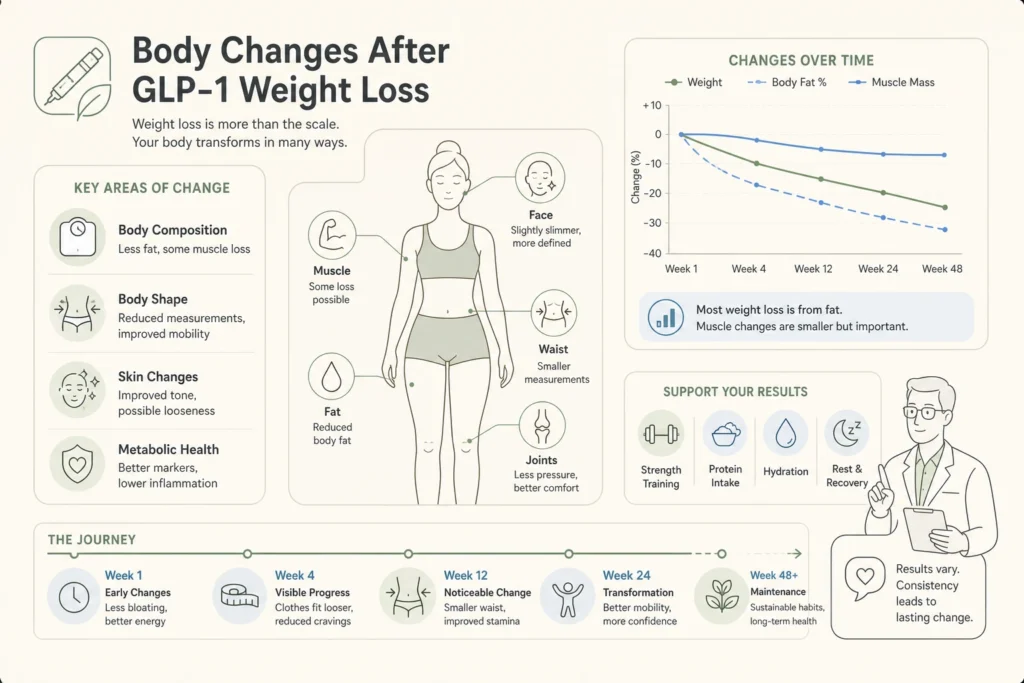
If you have lost a significant amount of weight on a GLP-1 medication, you have probably noticed that the scale is not the only thing that changed. Your face may look thinner or more drawn. Your skin might feel looser. Your clothes fit differently in ways that are not only about size. The short answer is that rapid weight loss changes fat, skin, and muscle all at once, and each of those tissues responds on its own timeline. Most of what people call the “Ozempic body” is the visible result of losing fat faster than your skin and muscle can adapt. The good news is that much of it is manageable, and some of it is preventable when you plan for it from the start.

This guide is the survey map for everything that changes. It covers what happens to your face, skin, muscle, and shape after weight loss with semaglutide or tirzepatide, why each change happens, and what actually helps. For any single topic, you will find a link to a deeper guide that answers that one question in full. Body Works helps patients across Franklin, TN and Nolensville, TN manage the whole picture, not just the dose, through our medical weight loss program.

According to the Cleveland Clinic on facial volume loss during rapid weight loss, the sunken look people notice in the face is not caused by the medication itself. It comes from losing facial fat quickly, the same way you lose fat everywhere else. That single idea, that the drug reveals fat loss rather than causing a special kind of aging, is the key to understanding almost every change on this page.

Illustration of Body Changes After GLP-1 Weight Loss: The Complete Guide in a modern medical wellness setting

Why Rapid Weight Loss Changes More Than the Scale

Rapid weight loss changes more than the scale because your body is not made of one uniform material. When you lose weight quickly, you lose fat from under the skin across your whole body, including the face, arms, and buttocks. At the same time, skin that stretched to cover a larger body does not instantly shrink back, and some lean muscle is lost along with the fat unless you actively protect it. The result is a mix of thinner features, looser skin, and shifts in shape that all arrive around the same time.

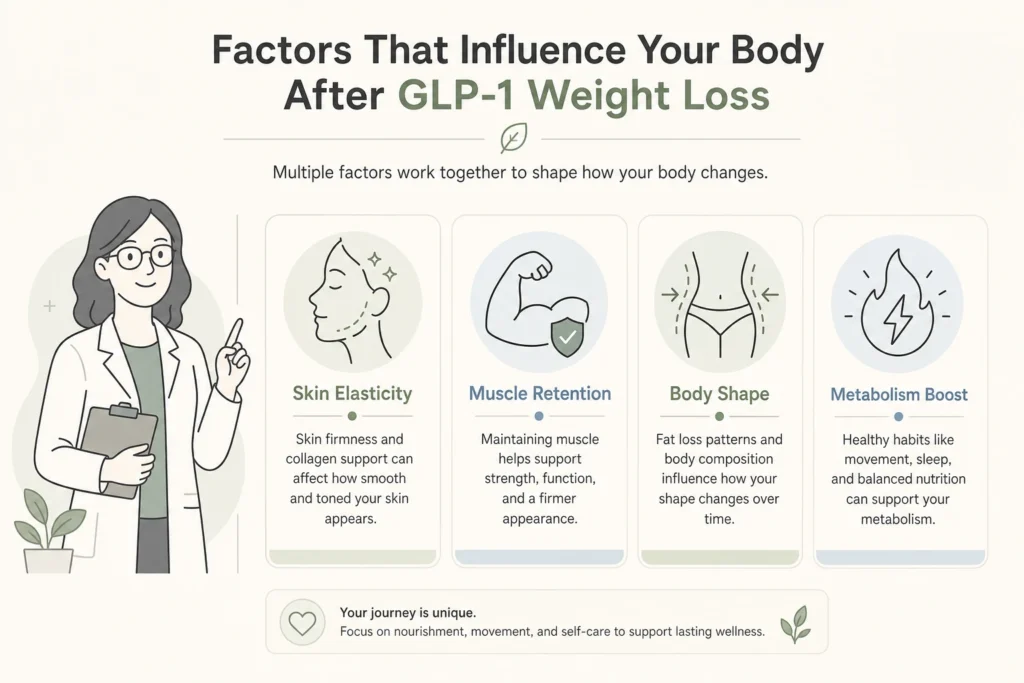
The speed matters. Skin and muscle adapt slowly, so the faster the fat leaves, the more likely these tissues fall behind. This is why two people who lose the same amount of weight can look very different: age, genetics, how much weight was lost, how long it was carried, and how the weight came off all play a role. The National Institute of Diabetes and Digestive and Kidney Diseases weight management guidance notes that gradual, steady weight loss paired with muscle-preserving habits tends to produce more durable results than crash approaches. Understanding that framework, fat down fast, skin and muscle lagging behind, makes the rest of this guide easier to follow.

Face Changes: What "Ozempic Face" Really Is

“Ozempic face” is the popular nickname for the thinner, more hollow, sometimes older-looking appearance that can follow rapid weight loss on a GLP-1 medication. It is not a unique medical condition and it is not damage from the drug. It is facial fat loss. The cheeks, temples, and area under the eyes hold fat pads that give the face a youthful fullness, and when you lose weight everywhere, you lose some of that cushion too. Less underlying volume plus skin that has lost some elasticity can read as gaunt or aged.

Because the face is where change is hardest to hide, this is the concern we hear about most. The reassuring part is that the face has several levers you can pull, from prevention to volume replacement. For the full picture of why it happens and what to do, see our guide to why Ozempic face happens and how it is treated. If you have not started losing yet or are early in the process, the more useful read is how to avoid Ozempic face before it starts, which focuses on pacing and muscle-sparing habits. And if you are asking whether the changes can be reversed, what fillers and collagen can and cannot do for Ozempic face walks through the realistic options.

Skin Changes: Elasticity, Loose Skin, and What Affects Them

Loose skin after weight loss happens because skin that stretched to cover a larger body loses some of its ability to snap back. Skin gets its stretch and recoil from collagen and elastin, and when skin is stretched for a long time or over a large volume, those fibers can be permanently altered. When the fat underneath leaves, the skin envelope that remains may hang, most often on the belly, upper arms, inner thighs, and neck. How much loose skin you end up with depends on your age, how much weight you lost, how long you carried it, sun exposure over the years, and genetics.

Not all skin change is permanent, and mild laxity often improves over months as skin slowly remodels. The distinction between “will tighten on its own” and “will need help” is the whole subject of a dedicated guide: start with the causes, prevention, and treatment of loose skin after weight loss. For the do-it-yourself side, how to tighten skin after weight loss naturally covers hydration, protein, strength training, and pacing, and is honest about where natural methods stop. When skin laxity is beyond what habits can fix, non-surgical skin tightening options compared lays out the professional treatments to discuss with a provider. Skin also responds to signaling molecules, which is why some patients ask about peptides for skin versus skincare creams.

Supporting illustration for Body Changes After GLP-1 Weight Loss: The Complete Guide in a modern medical wellness setting

Muscle and Body Composition on GLP-1 Medications

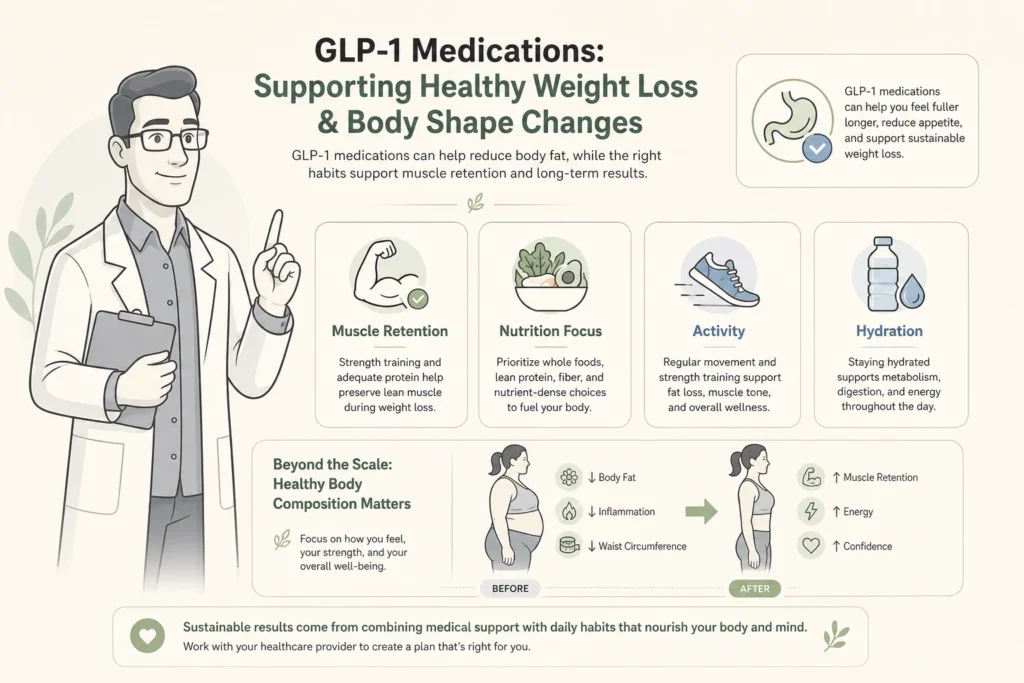
When you lose weight on a GLP-1 medication, some of that loss is muscle, not just fat, unless you take steps to protect it. Muscle is what keeps your metabolism up, your body strong, and your shape looking healthy rather than deflated. Studies of rapid weight loss consistently show that a portion of the weight lost is lean mass, and appetite suppression can make it harder to eat enough protein to defend that muscle. Losing muscle also makes weight regain more likely later, because a lower-muscle body burns fewer calories at rest.

The fix is not complicated, but it does take intention. Resistance training and adequate protein are the two biggest levers, and the Mayo Clinic notes that strength training helps preserve lean muscle and resting metabolism during weight loss. We go deep on the protocol in our guide to preventing muscle loss on GLP-1 medications. Protecting muscle is also central to keeping your results after you taper off, which we cover in what happens when you stop semaglutide or tirzepatide.

Body Shape Changes: The "Ozempic Butt" and Beyond

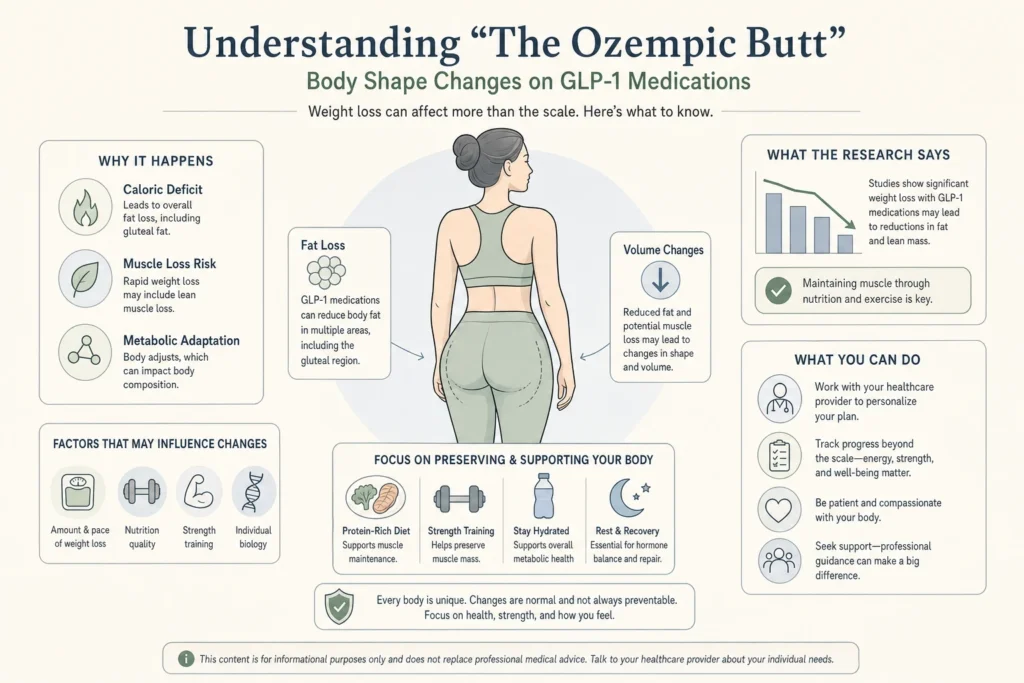
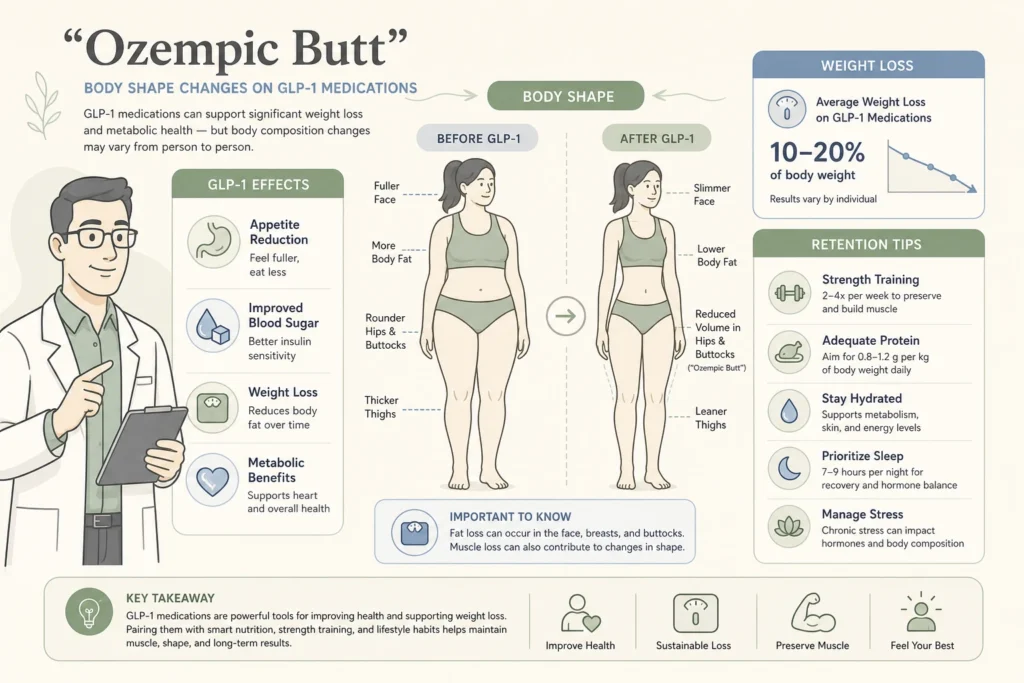
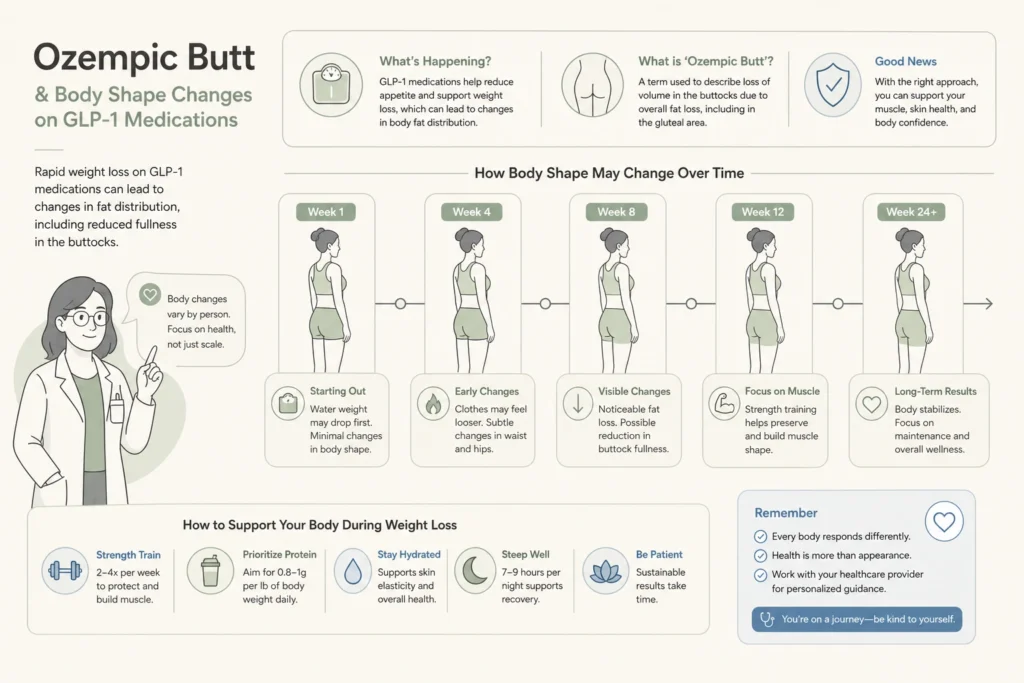
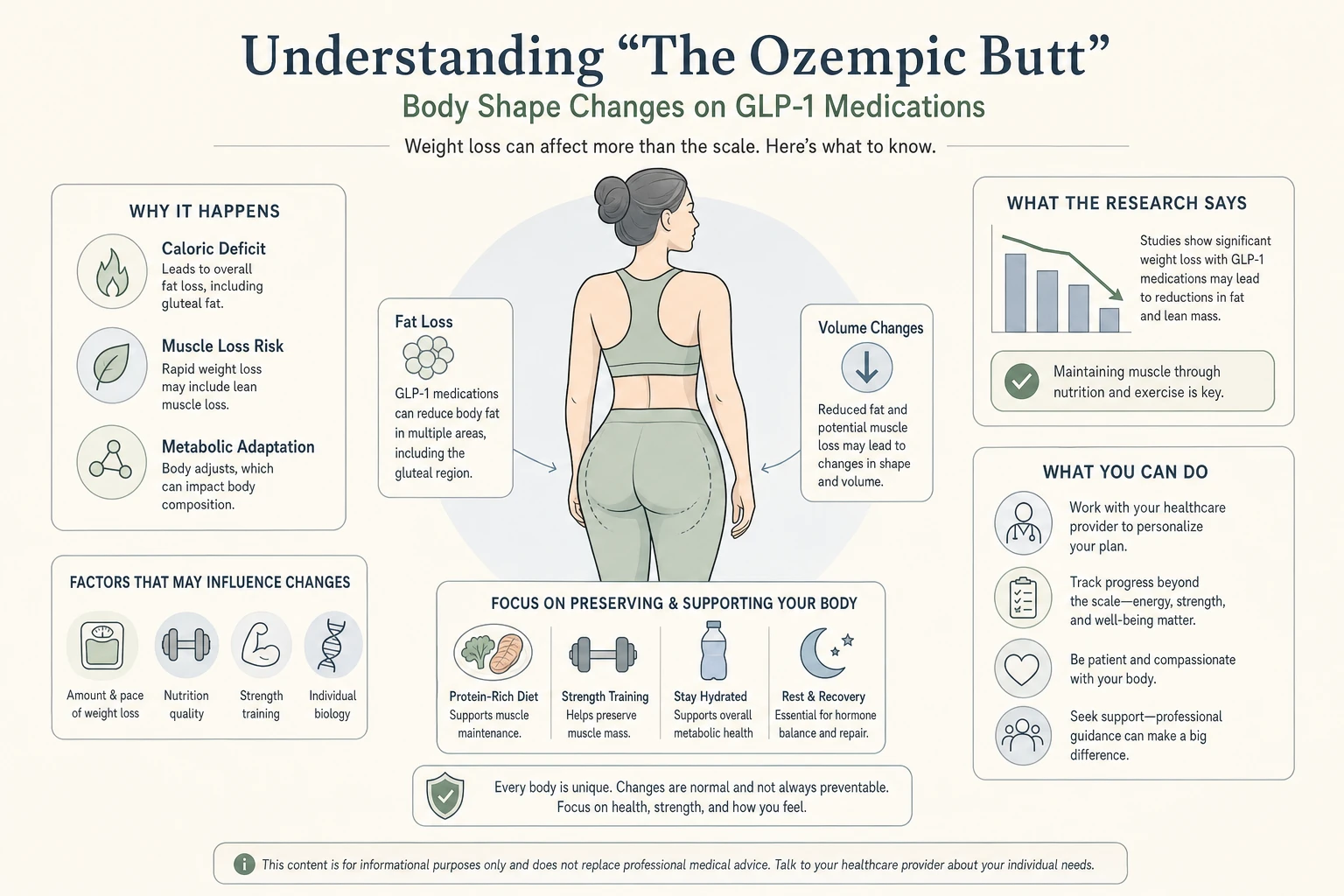
“Ozempic butt” is the nickname for the flatter, softer, or more deflated look the buttocks can take on after rapid weight loss. Like the face, the buttocks hold fat, and when you lose fat everywhere, that area loses volume too. If muscle is also lost from the glutes and legs, the area can look both smaller and less firm. It is the same underlying story as the face, just lower on the body: fat down fast, plus some muscle loss, plus skin that may not fully recoil.

Shape change is not limited to the buttocks. Some patients notice softer arms, a less defined jawline, or a different silhouette as their body composition shifts. The encouraging part is that shape responds well to muscle, which is one of the few tissues you can actively rebuild. Our guide to the “Ozempic butt” and body shape changes on GLP-1 medications explains what is fat, what is muscle, and how targeted strength work changes the outcome.

Supporting illustration for Body Changes After GLP-1 Weight Loss: The Complete Guide in a modern medical wellness setting

How to Protect Your Skin, Muscle, and Face During Weight Loss

The single best way to limit unwanted body changes is to protect skin, muscle, and facial volume while you are still losing, not after. Four habits do most of the work:

  1. Lose at a steady pace rather than as fast as possible, so skin and muscle have time to adapt.
  2. Eat enough protein every day to defend lean mass, even when appetite is low.
  3. Do resistance training two to three times a week to preserve and build muscle.
  4. Support your skin with hydration, sun protection, and time.

None of these guarantee a perfect outcome, but together they meaningfully reduce loose skin, muscle loss, and facial hollowing.

Some patients also ask about supplements, especially collagen, and about signaling peptides that target skin. The honest answer is that these are supporting players, not replacements for the four habits above. We sort the evidence in collagen and supplements for skin during weight loss, and we compare in-clinic peptide therapy to over-the-counter products in peptides for skin. What we see in patients at Body Works is that the people who plan for these changes early, from the first appointment, consistently end up happier with how they look at the finish line than those who wait until the skin is already loose.

Treatment Options Worth Discussing With a Provider

When habits are not enough, several treatment categories can address body changes after weight loss, and the right choice depends on which tissue is involved and how much change you want to correct. For facial volume, replacement approaches can restore fullness. For loose skin, non-surgical tightening treatments can help mild to moderate laxity, while significant excess skin may be a surgical conversation. For muscle and shape, structured strength training is still the foundation, sometimes supported by clinical peptides. No single treatment fixes everything, which is why a provider who can see the whole picture is more useful than chasing one fix at a time.

Change typeWhy it happensWhat helpsWhich guide covers it
Facial hollowing (“Ozempic face”)Loss of facial fat pads plus reduced skin elasticitySteady pacing, muscle-sparing habits, volume replacement optionsOzempic face causes and treatment and fillers for Ozempic face
Loose or sagging skinSkin stretched over a larger body cannot fully recoilProtein, strength training, time, and professional tightening when neededLoose skin after weight loss and skin tightening options
Muscle and metabolism lossLean mass is lost with fat, worsened by low protein intakeResistance training and adequate daily proteinPreventing muscle loss on GLP-1s
Shape and buttock changes (“Ozempic butt”)Fat loss plus muscle loss in the glutes and legsTargeted strength work to rebuild volume and firmnessOzempic butt and body shape changes
Skin quality and elasticityCollagen and elastin decline with age and rapid changeHydration, sun protection, collagen support, clinical peptidesTighten skin naturally, peptides for skin, and collagen and supplements

The one thing every treatment decision has in common is that it should follow an honest assessment, not a sales pitch. Some changes will settle on their own, some respond to habits, and only some need a procedure. A good provider will tell you which is which before recommending anything.

Supporting illustration for Body Changes After GLP-1 Weight Loss: The Complete Guide in a modern medical wellness setting

How Body Works Approaches Weight Loss Beyond the Scale

At Body Works, we treat body changes as part of the weight loss plan, not an afterthought. The clinic that adjusts your dose is also the right place to talk about what the weight loss is doing to your skin, face, and muscle, because those things are connected. From the first appointment, we talk about pace, protein, and strength training so that skin and muscle keep up as the fat comes off. When a change needs more than habits, we walk through the realistic options and route you to the right treatment rather than overpromising a reversal.

Patients at our Franklin and Nolensville offices work with providers who manage both the medication and the whole-body picture in one place. If you are early in your weight loss and want to prevent problems, or you are further along and want to address a change that has already appeared, the best next step is a conversation. Learn more about our medical weight loss services, or Schedule a Free Consultation to build a plan that protects how you look as well as how much you weigh.

Frequently Asked Questions

Some facial fullness can return if you regain a little weight or if your weight stabilizes and skin slowly remodels, but a face that thinned from significant fat loss usually does not fully return to its pre-weight-loss look on its own. The thinner appearance is mostly from lost facial fat, and that fat does not automatically come back once weight is stable. Prevention through steady pacing helps, and volume replacement options can restore fullness when desired. The changes are manageable, not necessarily permanent, but they rarely reverse completely without support.
Collagen supplements may offer modest support for skin elasticity, but the evidence is limited and they will not replace lost facial fat or reverse significant loose skin on their own. Collagen is one supporting player among several, and it works best alongside adequate protein, strength training, and steady weight loss rather than as a standalone fix. If you want to know what the research actually shows, our guide to collagen and supplements during weight loss reviews the evidence honestly and separates what helps from what is marketing.
It depends on how much skin is involved. Mild laxity often improves over six months to a year as skin remodels, especially in younger patients who lost a moderate amount of weight. Larger amounts of loose skin, particularly after major weight loss or in older skin with reduced elasticity, are less likely to tighten fully on their own and may need professional treatment or surgery. Protein, strength training, hydration, and time give your skin the best chance to recover before you consider a procedure.
The two most effective steps are resistance training two to three times a week and eating enough protein every day, even when the medication reduces your appetite. Muscle is lost along with fat during any rapid weight loss, and appetite suppression can make it harder to eat the protein your muscles need. Prioritizing protein at each meal and lifting weights signals your body to keep the muscle it has. This protects your metabolism, your strength, and your shape, and it makes long-term maintenance easier.
“Ozempic butt” is a nickname for the flatter, softer buttocks some people notice after rapid weight loss, caused by losing fat and sometimes muscle from that area. Unlike facial fat, the buttocks respond well to targeted strength training, so this is one of the more fixable shape changes. Squats, hip thrusts, and other glute-focused work can rebuild firmness and volume over time. Because muscle is tissue you can actively grow, patients who train consistently often reshape this area rather than just losing size.
Yes, and ideally before the changes appear. The provider managing your medication is well positioned to help you protect skin, muscle, and facial volume because those changes are driven by the same weight loss they are guiding. Bringing up pace, protein, strength training, and any concerns early lets you build prevention into the plan instead of reacting later. At Body Works, we treat these conversations as a standard part of medical weight loss, not a separate appointment, so nothing about your results catches you off guard.

Medically reviewed by Dr. Donald Vollmer, MD
Managing Physician, Body Works TN

Browse Our Blog

GLP-1s and Hormone Therapy for Women: What New Research Shows

GLP-1s and Hormone Therapy for Women: What New Research Shows

August 2, 2026

Two women start tirzepatide on the same day. Same starting weight, same dose schedule, similar habits. A year later, one has lost noticeably more than the other. When researchers looked closely at cases like this, one difference kept surfacing: the woman who lost more was often also taking menopause hormone therapy.

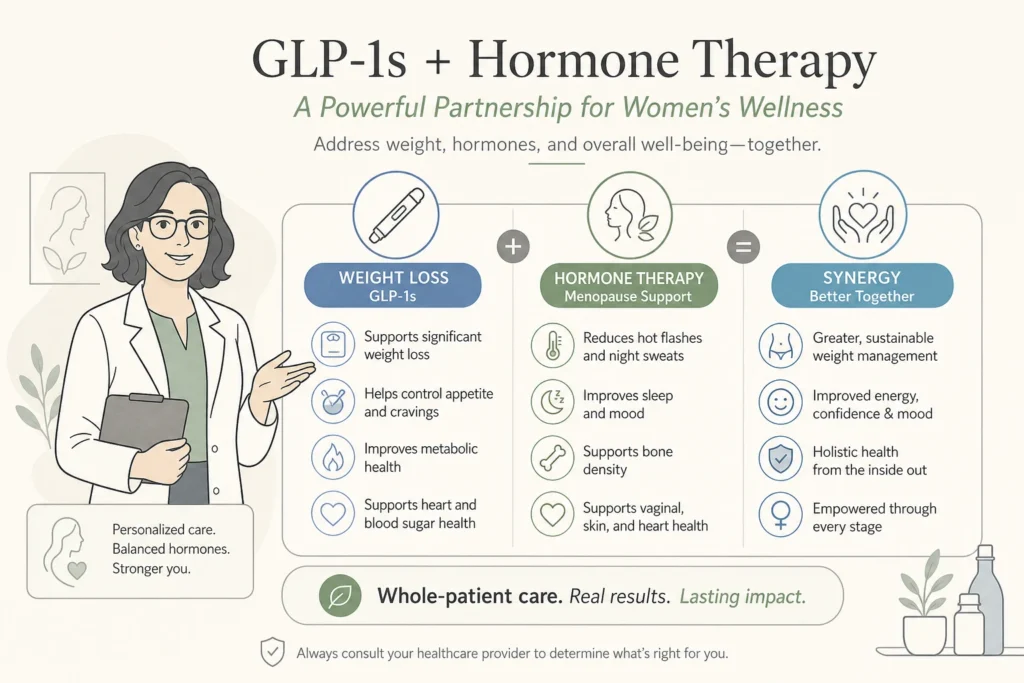
New research on GLP-1 and hormone therapy suggests that for postmenopausal women, the two treatments may work better together than either does alone. That is a meaningful idea, because weight loss after menopause is famously stubborn, and many women feel like their medication is working against a headwind they cannot name. At Body Works, women in Franklin, TN and Nolensville, TN ask about this often, and the honest answer is that the science is early but genuinely encouraging.

Below is what the newest study actually found, why the underlying biology makes sense, and how to think about combining these therapies without overstating a single result.

Illustration of GLP-1s and Hormone Therapy for Women: What New Research Shows in a modern medical wellness setting

Can Hormone Therapy Boost GLP-1 Weight Loss in Women?

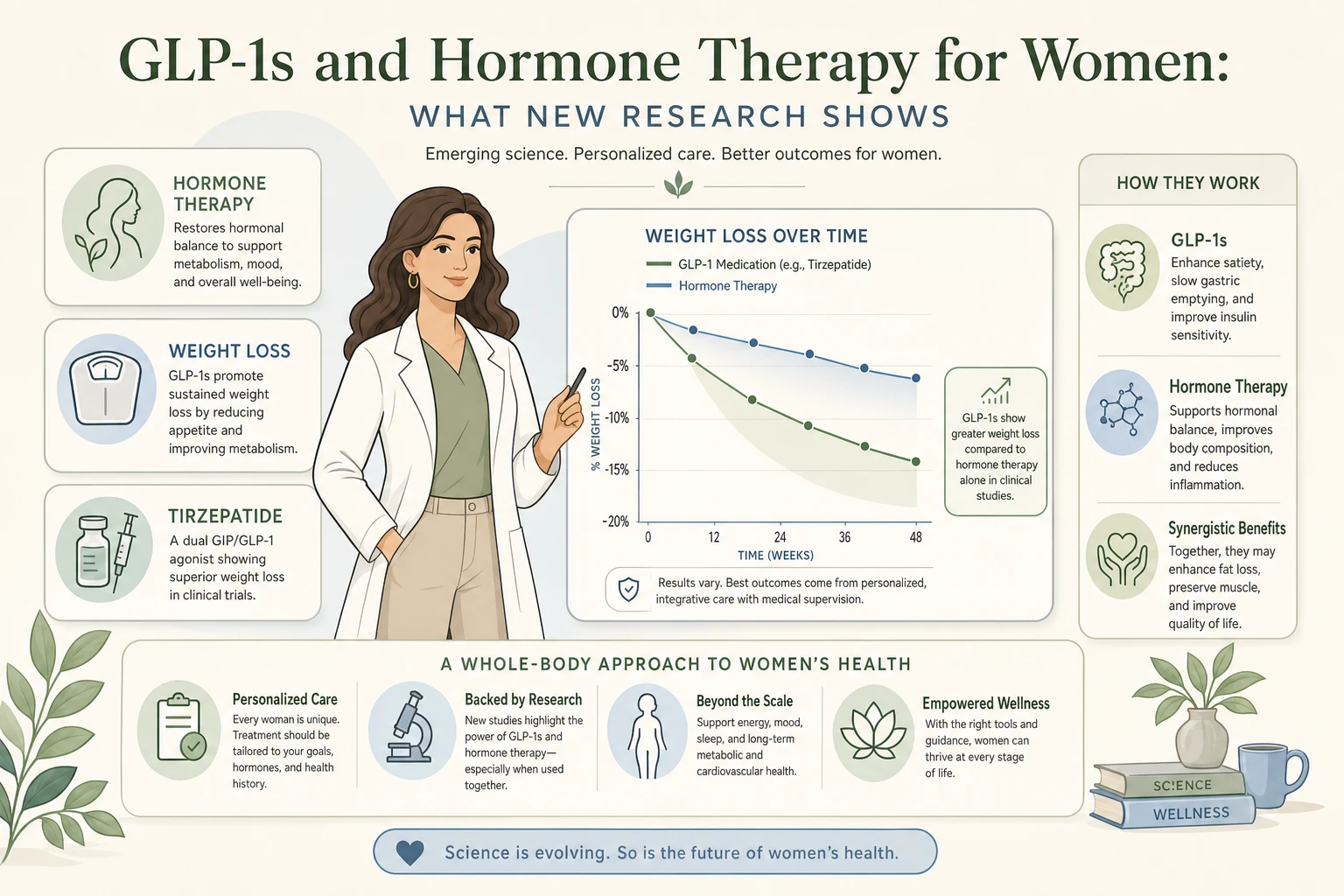
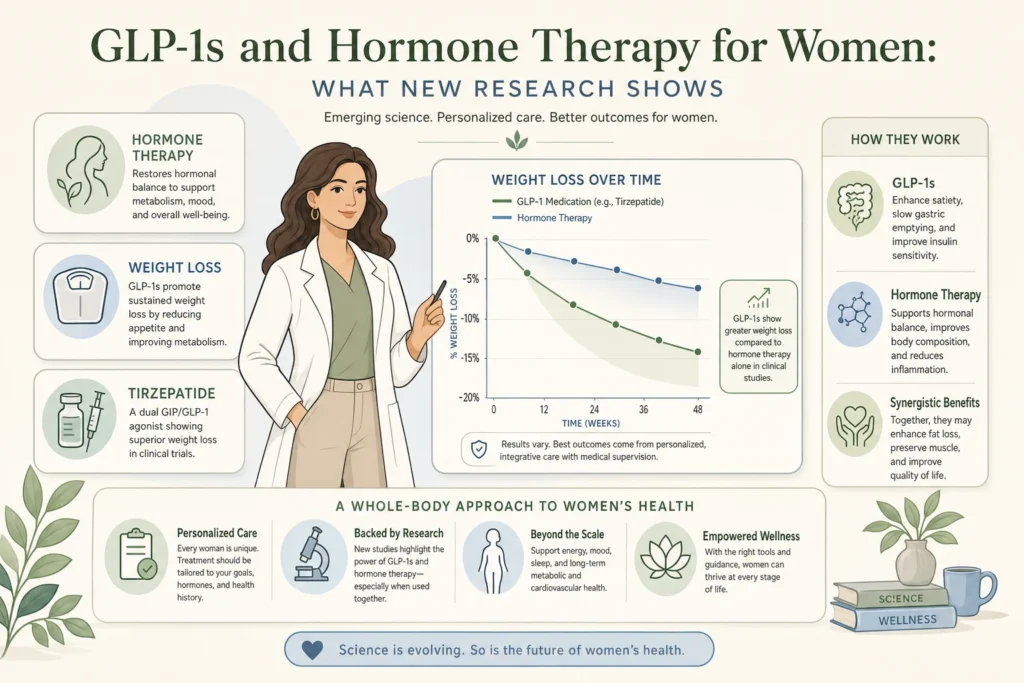
Emerging evidence says it may. In a 2026 study of postmenopausal women taking tirzepatide, those who also used menopause hormone therapy lost more of their starting body weight than those on the medication alone. This does not mean hormone therapy is a weight loss drug. It means restoring some of the estrogen lost at menopause may help a GLP-1 medication do its job more fully.

That fits what many women already sense. Appetite, energy, and fat storage all shift at menopause, and those shifts can blunt the results people expect from a GLP-1. The same pattern shows up in the existing research on GLP-1 weight loss during menopause and perimenopause, where hormonal changes clearly influence how the body responds.

In a retrospective cohort of 120 postmenopausal women taking tirzepatide for at least 12 months, those also using menopause hormone therapy lost 19.2 percent of their starting body weight, compared with 14.0 percent for tirzepatide alone, reported Castaneda and colleagues in The Lancet Obstetrics, Gynaecology and Women’s Health, 2026.

Why Would Estrogen Change How a GLP-1 Works?

Estrogen is a metabolic hormone, not just a reproductive one. It helps regulate appetite, energy expenditure, and where the body stores fat. When estrogen falls at menopause, the body tends to store more fat around the midsection while lean muscle declines, and it becomes less sensitive to insulin. A GLP-1 medication pushes in the opposite direction, so adding back some estrogen may remove a brake that menopause quietly applied.

This is well established in the research. A review in Endocrine Reviews on estrogen and energy balance concluded that estrogen deficiency promotes metabolic dysfunction, shifting fat toward the abdomen and raising the risk of obesity and insulin resistance.

The muscle side matters too. Longitudinal data from the Study of Women’s Health Across the Nation on body composition changes showed that fat gain accelerates and lean mass declines during the menopause transition. Protecting muscle is part of why a combined, physician-guided plan can matter for women in this stage of life.

Supporting illustration for GLP-1s and Hormone Therapy for Women: What New Research Shows in a modern medical wellness setting

What Did the GLP-1 and Hormone Therapy Study Find?

The headline numbers were larger than the averages suggest. The hormone therapy group did not just lose a bit more on average, they were far more likely to reach the deeper weight loss thresholds that change health outcomes. Nearly half of the hormone therapy users crossed the 20 percent mark, a level relatively few reached on tirzepatide alone.

Outcome at 12+ monthsTirzepatide onlyTirzepatide plus hormone therapy
Mean weight loss (percent of starting weight)14.0 percent19.2 percent
Reached more than 20 percent total weight loss18 percent of women45 percent of women
Study designRetrospective cohort, 120 postmenopausal women

The honest caveat is important. This was a retrospective study, not a randomized trial, so it cannot prove that hormone therapy caused the extra weight loss. Women who choose hormone therapy may differ in other ways. Still, the size of the gap and its fit with known biology make it worth taking seriously. For reference, tirzepatide alone produced average losses near 20 percent at the highest dose in the SURMOUNT-1 trial of tirzepatide for obesity, so hormone therapy appears to help more women reach that upper tier rather than replacing the medication.

Supporting illustration for GLP-1s and Hormone Therapy for Women: What New Research Shows in a modern medical wellness setting

Safety and Candidacy: What to Weigh Before Combining Therapies

Combining a GLP-1 with hormone therapy is a medical decision, not a one-size-fits-all protocol. Hormone therapy has its own candidacy rules based on age, time since menopause, and personal and family history. The right starting point is a full evaluation, not a request for a specific prescription. This is also why interest in hormone evaluation is best handled through a consultation rather than assumed from a study.

The Endocrine Society’s clinical practice guideline calls menopause hormone therapy the most effective treatment for hot flashes and related symptoms, and notes that benefits may outweigh risks for many symptomatic women under 60 or within 10 years of their final period, after screening for cardiovascular and breast cancer risk, according to its clinical practice guideline on treatment of menopause symptoms.

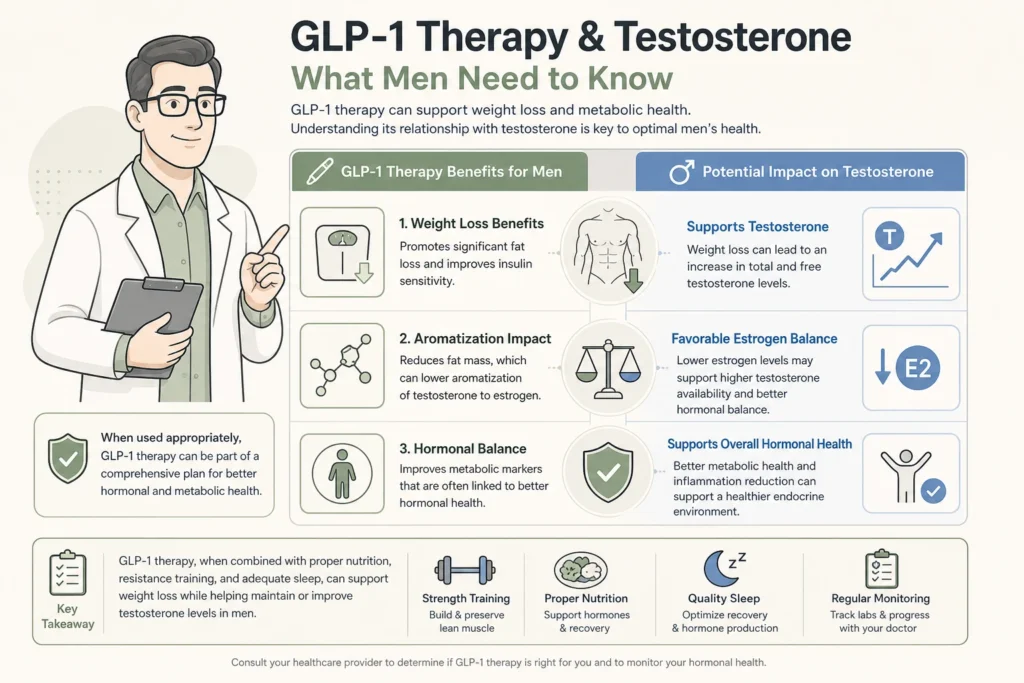
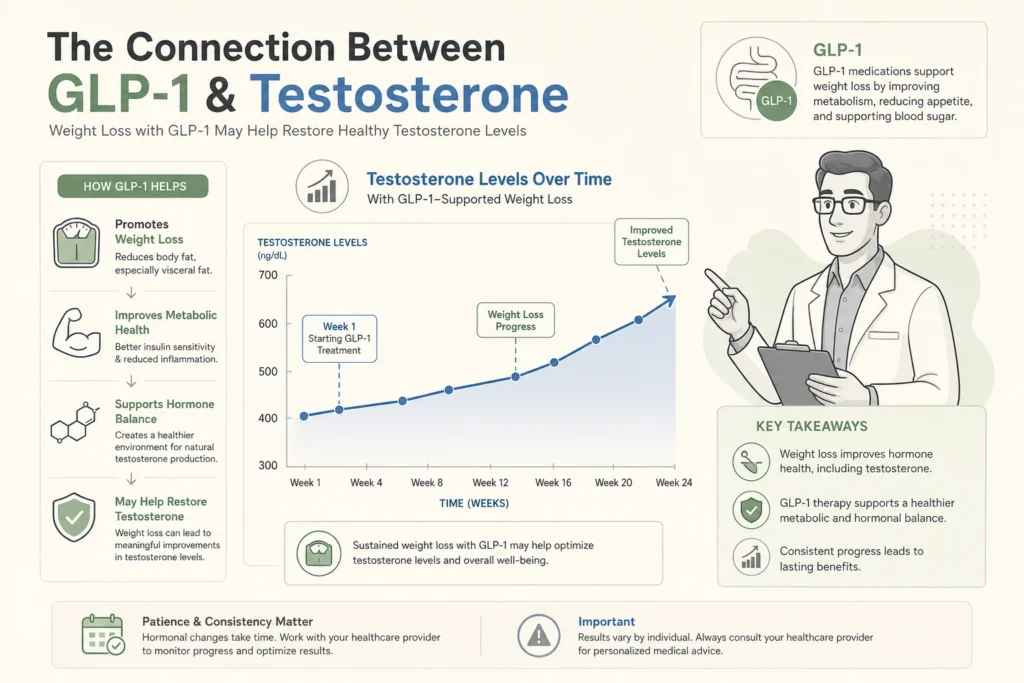
Weight and hormones also move together in men, where losing weight on a GLP-1 can raise testosterone, a two-way relationship covered in our post on how GLP-1 medications and testosterone interact in men. For women exploring the wider picture of midlife hormones, energy, and muscle, the guide to peptide options for women over 40 covers complementary approaches worth discussing with a clinician.

Getting Started With a Combined Weight Loss Plan

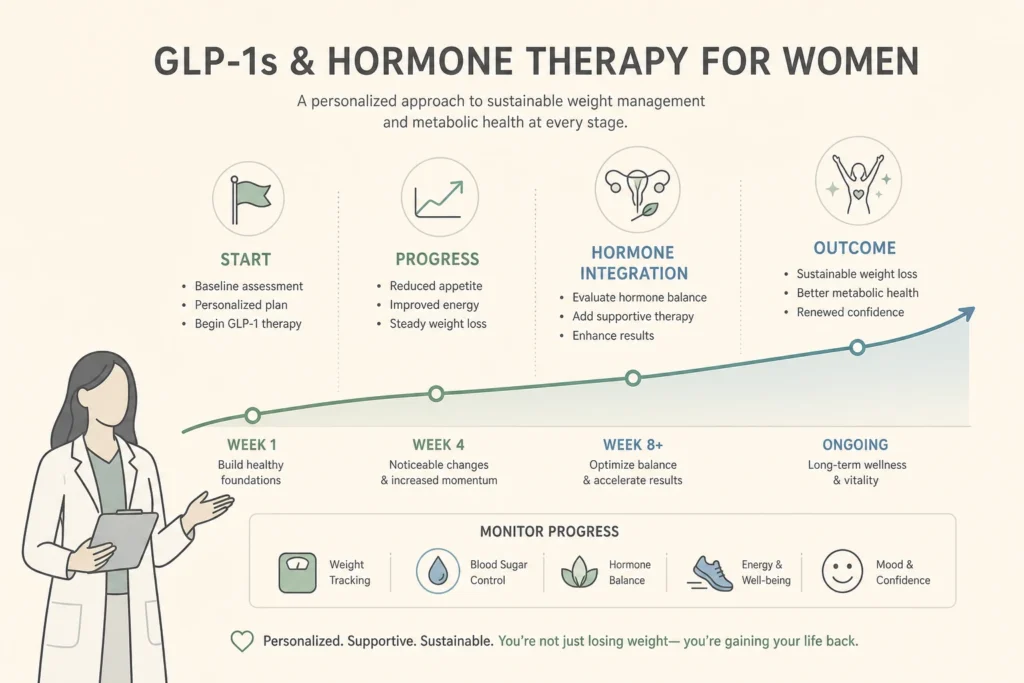
The practical takeaway is not to chase a headline. It is to work with a provider who can look at your full picture, appetite, muscle, symptoms, and history, and decide whether a GLP-1, hormone support, or a thoughtful combination fits you. That is exactly the kind of personalized medical weight loss planning that produces durable results instead of quick, fragile ones.

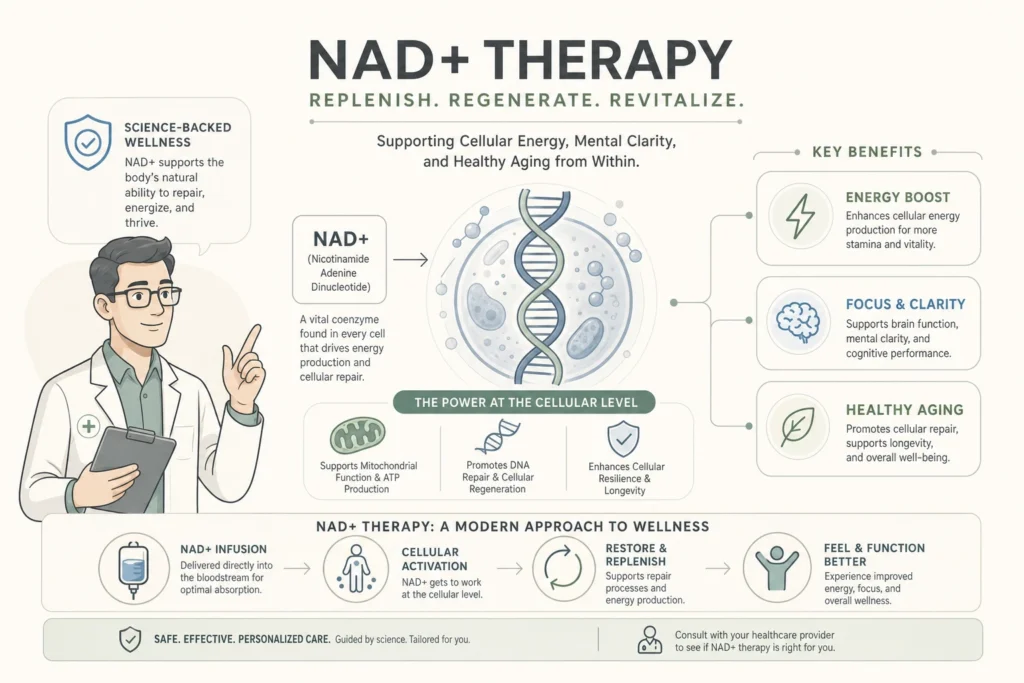
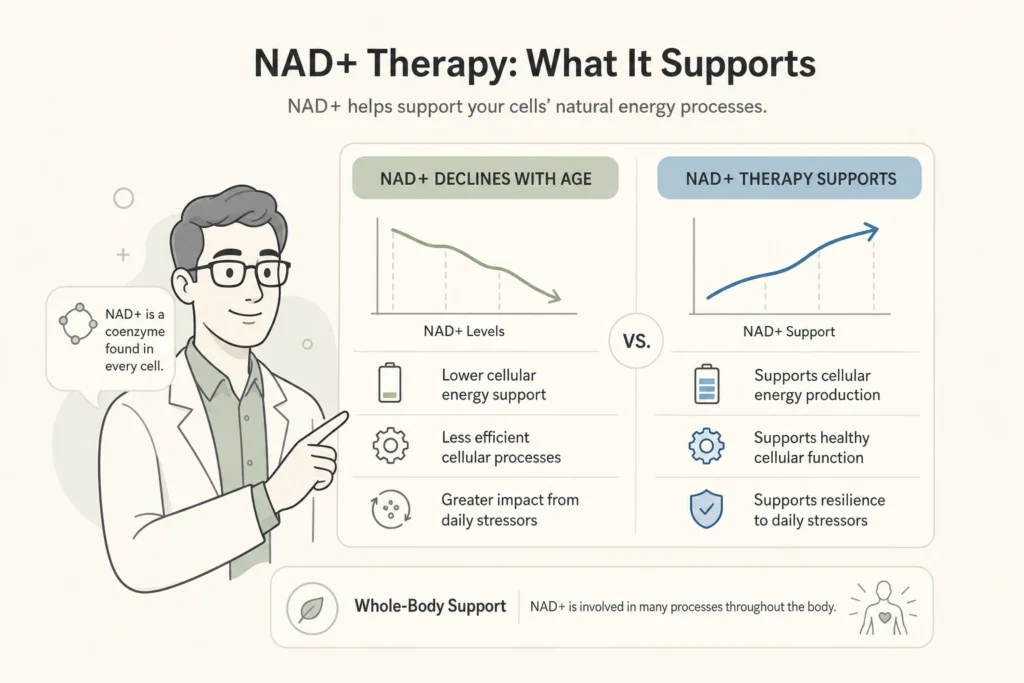
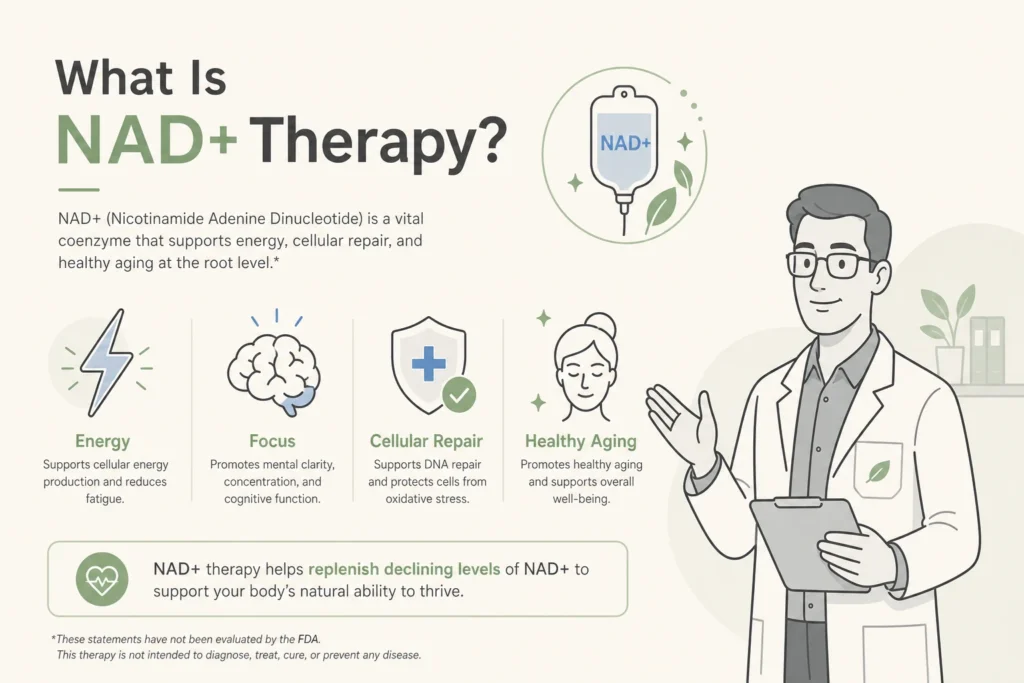
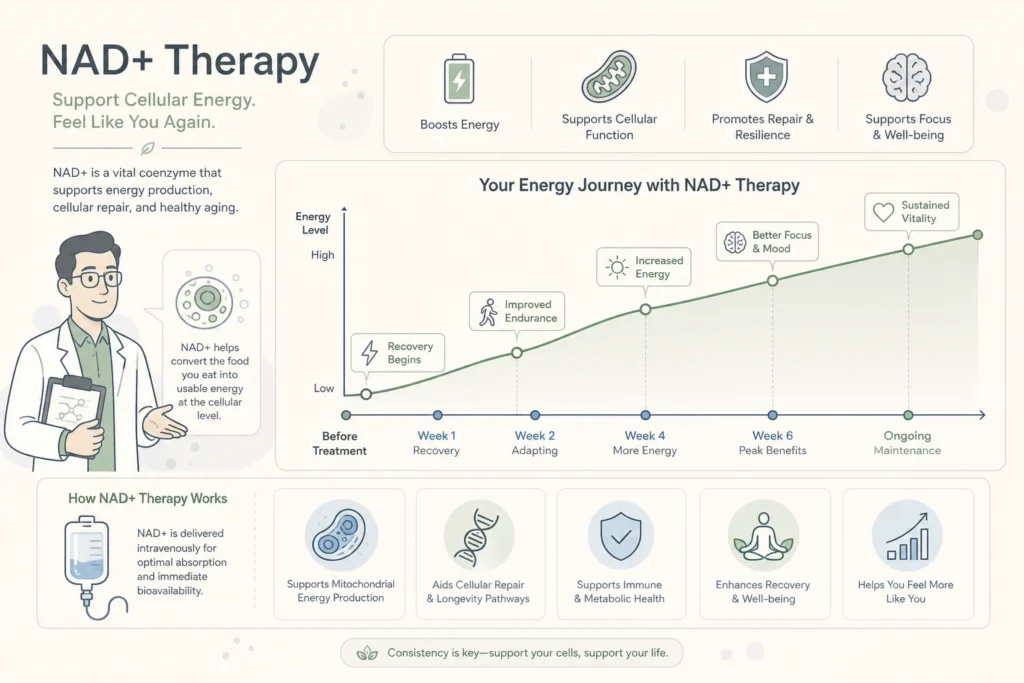
Body Works builds these plans for women across the greater Nashville area, and many patients pair their weight loss care with energy-support options like NAD therapy for cellular energy as part of a broader wellness approach. Whether you are just starting to research your options or already on a GLP-1 and wondering what is missing, a conversation is the fastest way to get a plan built around you.

Women in Franklin and Nolensville can talk through GLP-1 therapy, hormone evaluation, and combined care with a medical provider at no cost. Schedule a Free Consultation to see what a personalized plan could look like for you.

Supporting illustration for GLP-1s and Hormone Therapy for Women: What New Research Shows in a modern medical wellness setting

Frequently Asked Questions

Cost depends on which therapies fit your evaluation and your individual plan, so there is no single number. The clearest way to understand your options is a free consultation, where a provider reviews your goals and history and explains what a combined plan would involve before you commit to anything.
Body Works serves women throughout the greater Nashville area from two locations, Franklin, TN and Nolensville, TN. Both offer GLP-1 weight loss care and full metabolic evaluations, so you can start close to home and work with a provider who understands the full metabolic picture after menopause.
For many women it can be, but it is an individual decision that depends on your age, time since menopause, and health history. A provider screens for cardiovascular and breast cancer risk before recommending hormone therapy, then decides whether combining it with a GLP-1 makes sense for you.
The 2026 study specifically looked at tirzepatide, so the direct evidence is strongest there. The underlying biology, estrogen’s effect on appetite, fat storage, and insulin sensitivity, could plausibly apply to other GLP-1 medications, but that has not been proven in the same way. Your provider can help weigh what the current evidence supports.
The research focused on postmenopausal women, who have the largest drop in estrogen. Perimenopausal women experience hormonal changes too, but candidacy for hormone therapy and the expected benefit differ by stage. A full evaluation is the right way to find out whether this approach fits where you are right now.

Medically reviewed by Dr. Donald Vollmer, MD
Managing Physician, Body Works TN

Browse Our Blog