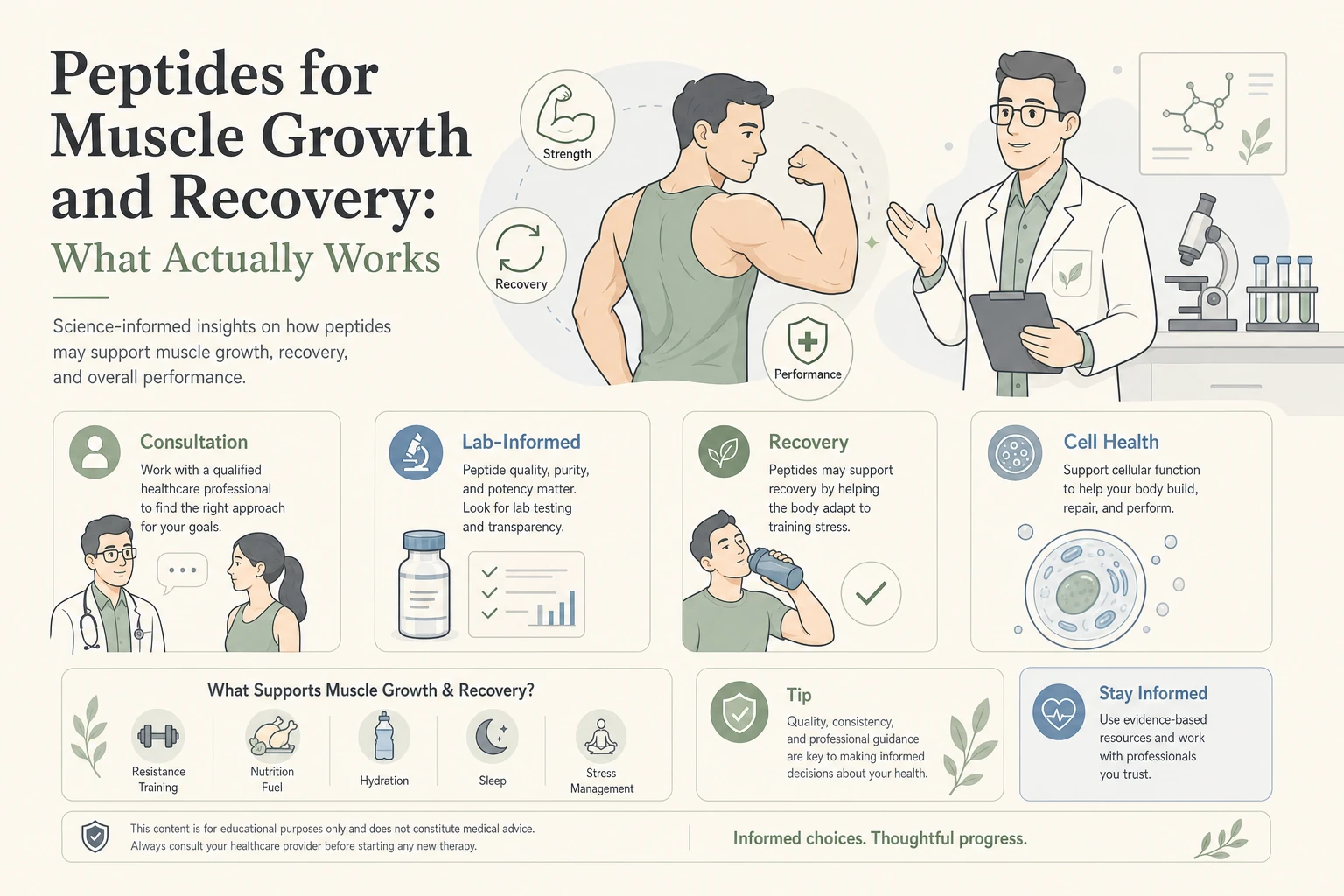
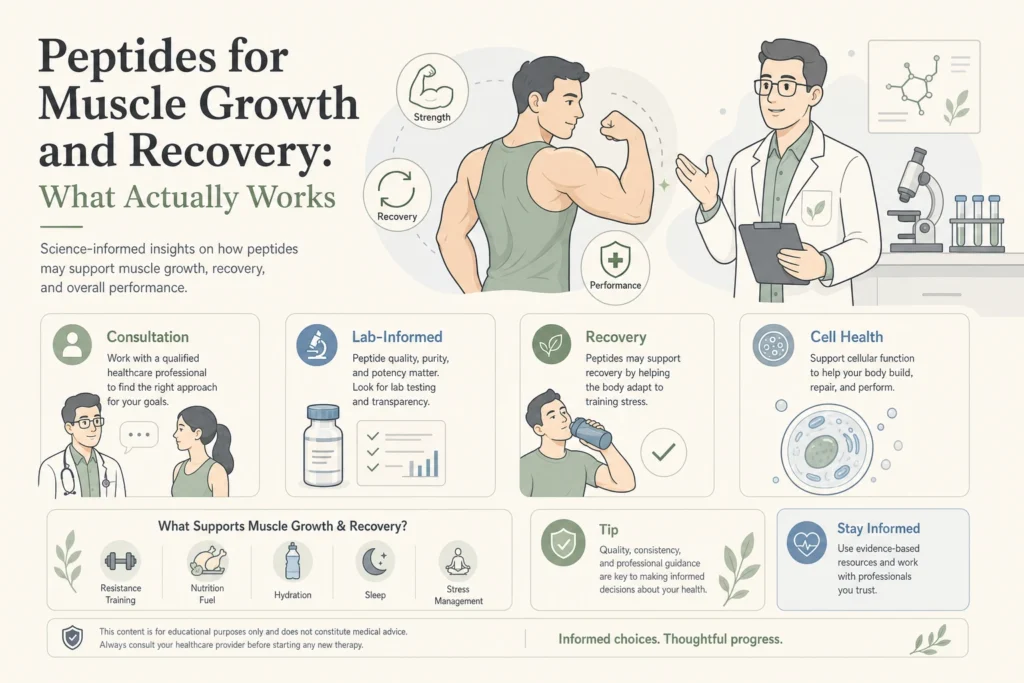
Peptides for Muscle Growth and Recovery: What Actually Works
November 19, 2026
Search “best peptides for muscle growth” and you will find lists of ten or twelve compounds, most stacked together with no explanation of why, and no distinction between the ones backed by published trials and the ones backed by a single forum post. That distinction is the entire point of this article.
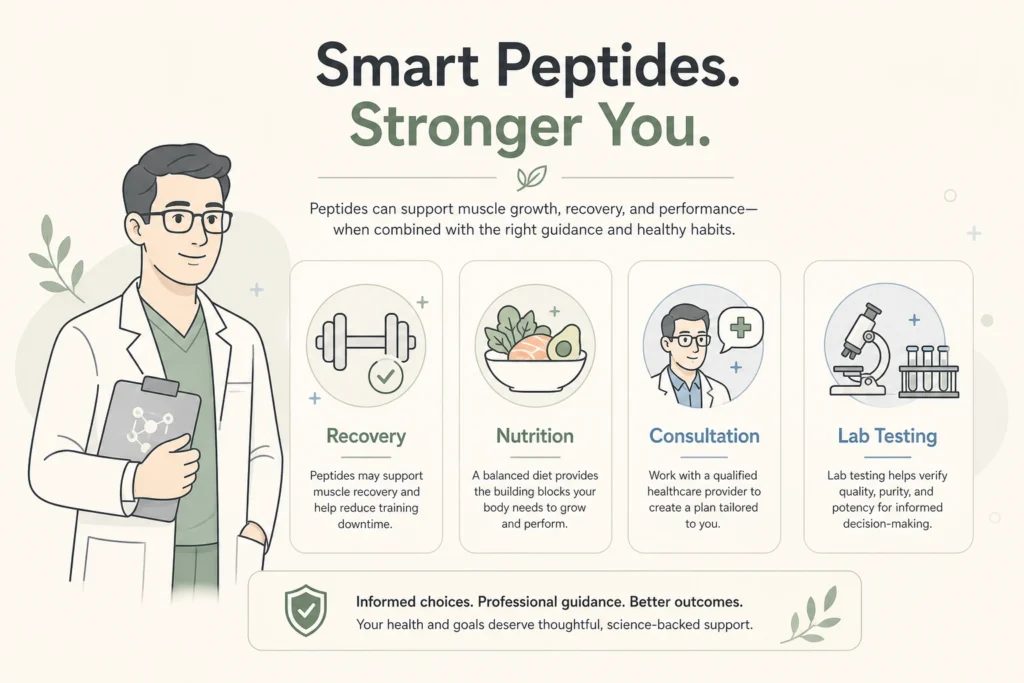
Four categories of peptides have real, published research behind muscle growth or recovery, and they work through different mechanisms for different goals: BPC-157 and TB-500 for tissue repair after injury, growth-hormone-releasing peptides like ipamorelin and tesamorelin for growth-hormone-driven muscle support, MK-677 as an oral growth hormone secretagogue, and MOTS-c for the metabolic side of exercise capacity and recovery. None of them replaces resistance training or adequate protein intake. All of them are compounded medications requiring physician oversight, not supplements you pick up without a prescription.
Body Works offers physician-supervised peptide therapy for muscle growth and recovery at its Franklin, TN and Nolensville, TN offices. Here is what the evidence actually supports, compound by compound.
Which Peptides Actually Have Evidence Behind Them for Muscle Growth and Recovery?
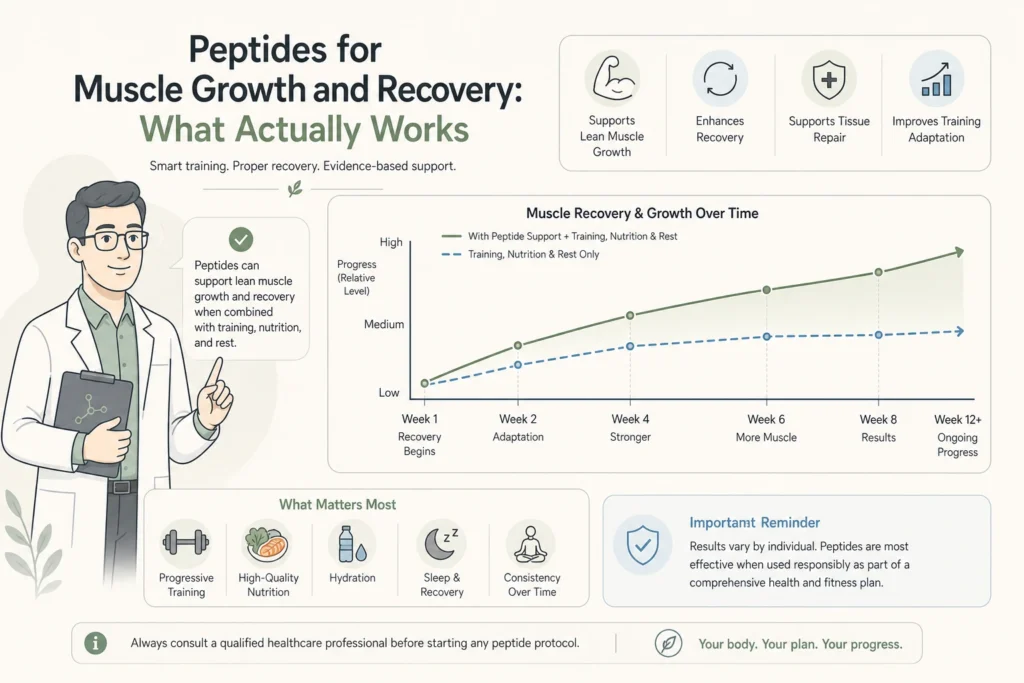
A recent literature review focused specifically on peptide therapies for musculoskeletal injuries and athletic performance found that both approved and unapproved peptides show a wide range of evidence quality, from well-powered randomized trials down to preclinical animal data only, and that framing should be the starting point for anyone comparing options. Some peptides in this category have decades of clinical use behind a related, approved indication. Others have real, published animal mechanism data but no completed human trial for the specific claim being marketed. Knowing which tier a peptide sits in matters more than knowing its name.
BPC-157 and TB-500 for Injury Recovery
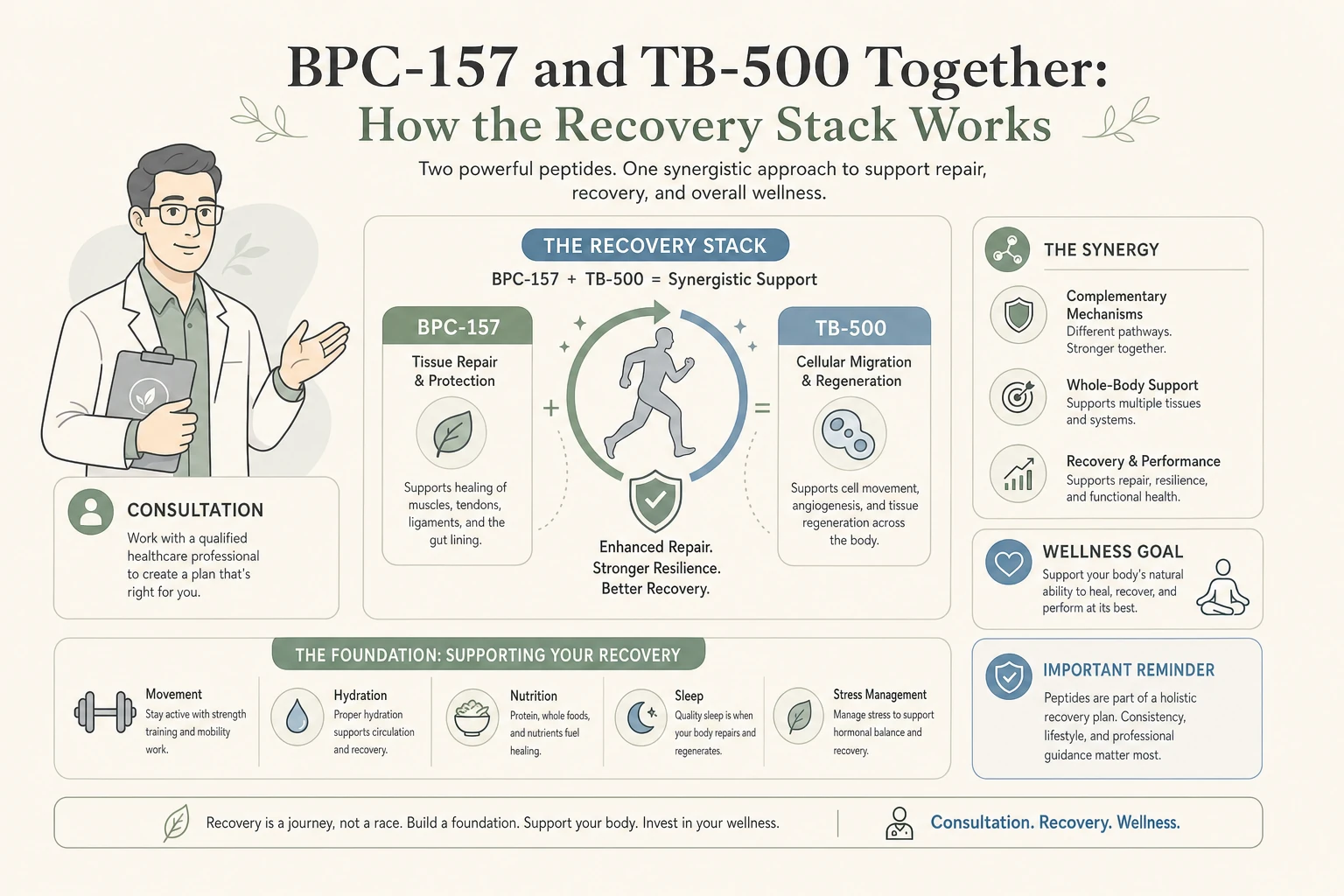
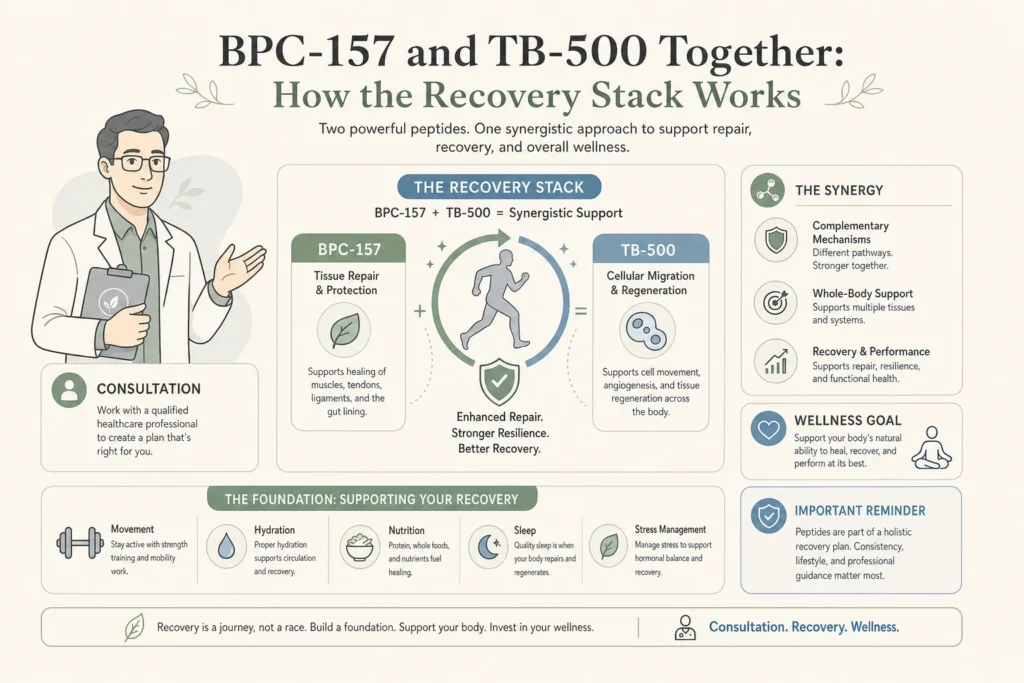
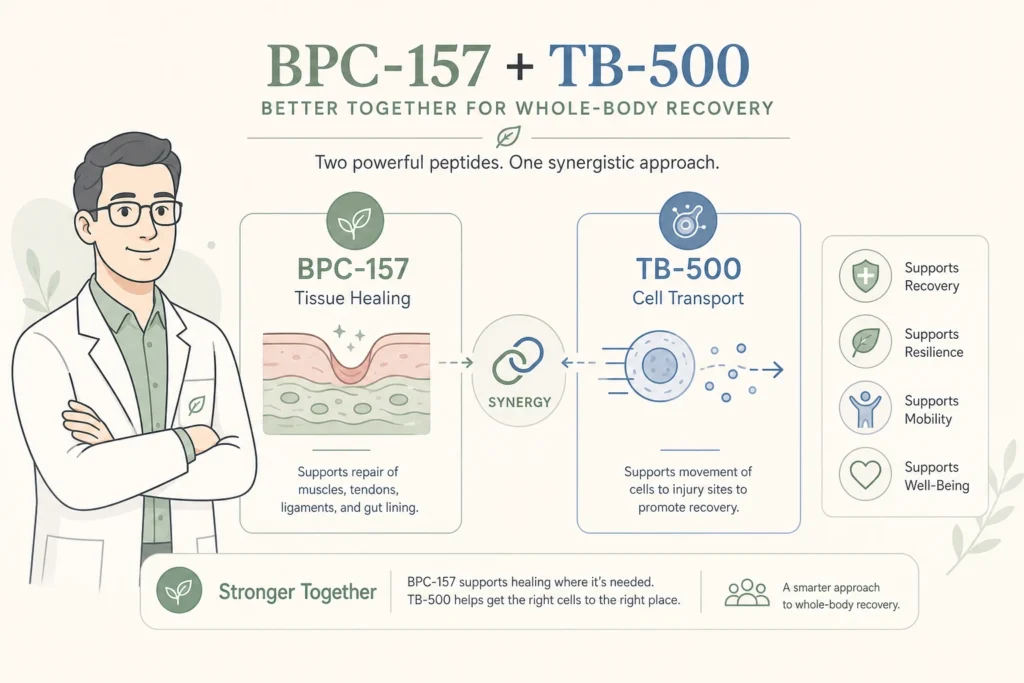
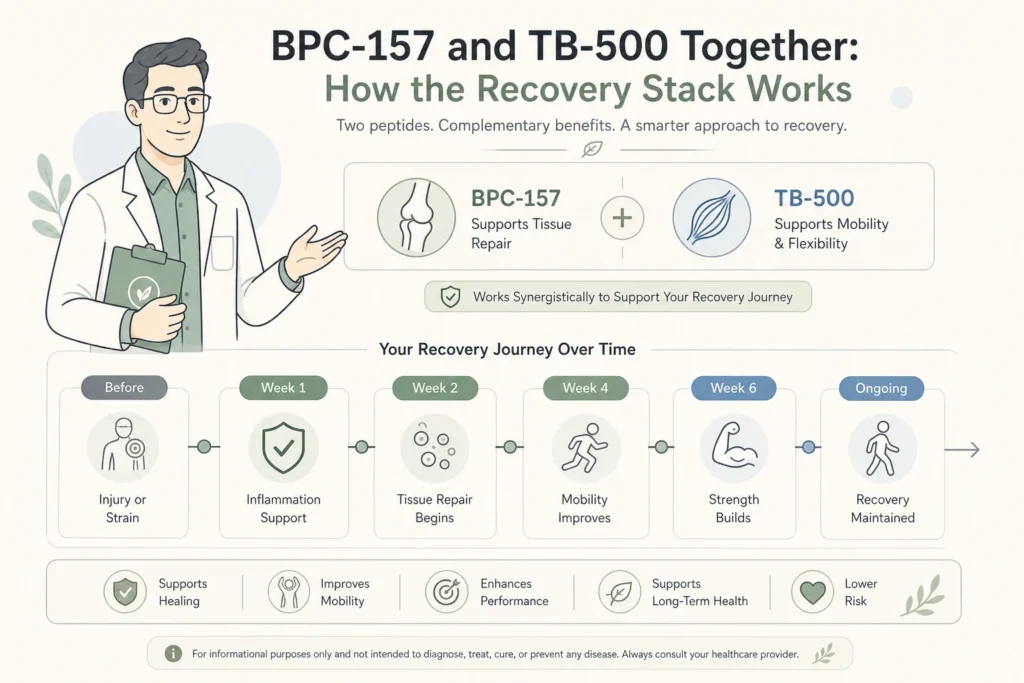
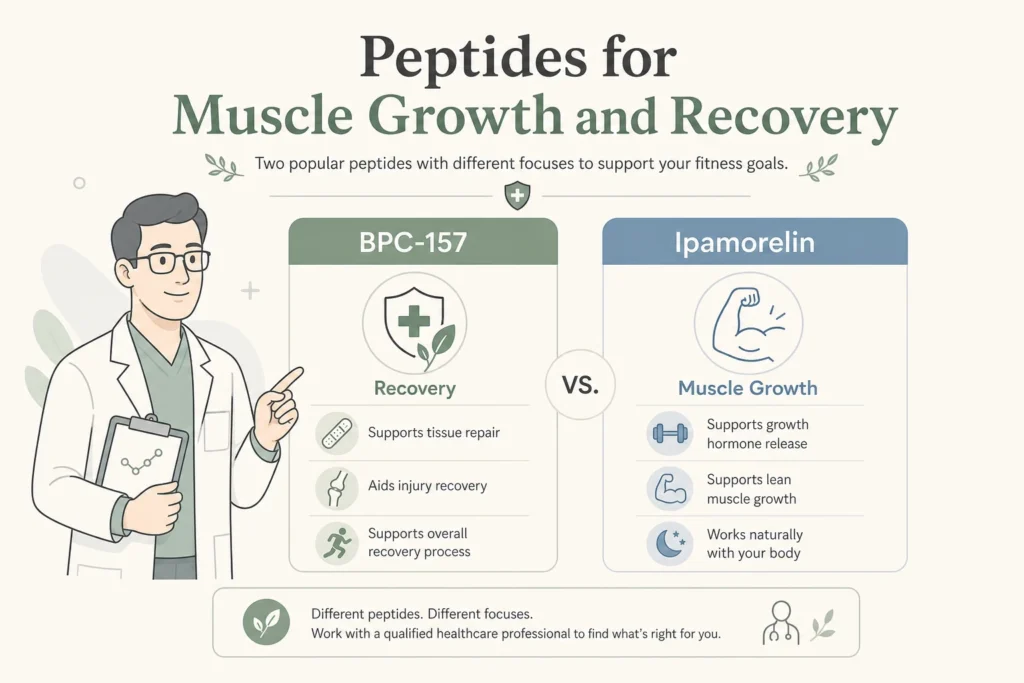
BPC-157 promotes tissue repair and blood vessel growth at an injury site, while TB-500, the synthetic form of thymosin beta-4, helps repair cells migrate to where they are needed. A 2026 rat study directly comparing the two found that both peptides improved tendon healing parameters individually, with TB-500 also producing a measurable biomechanical advantage. This pairing is the most studied combination in the recovery category, and its evidence base, while still mostly preclinical, is more developed than almost anything else discussed here. The full breakdown of how the BPC-157 and TB-500 stack works covers the mechanism and the evidence gaps in more depth.
Ipamorelin, Sermorelin, and Tesamorelin for Growth-Hormone-Driven Growth
Growth-hormone-releasing peptides support muscle growth indirectly, by increasing the body’s own growth hormone output rather than adding an anabolic hormone directly. Ipamorelin does this selectively, triggering growth hormone release without meaningfully raising cortisol or other pituitary hormones, even at high doses, which is why it is often paired with CJC-1295 for a sustained release pattern. Sermorelin and tesamorelin work through the same GHRH receptor but differ in potency and trial evidence, tesamorelin’s strongest data is specifically for visceral fat rather than lean mass. The full comparison of these three peptides walks through which fits which goal.
What Is MK-677, and How Is It Different From Injectable Growth Hormone Peptides?
MK-677, also called ibutamoren, is an orally active compound that mimics ghrelin, the hormone that stimulates growth hormone release, and it is the only peptide-adjacent option on this list that does not require an injection. A study of MK-677 in adults found it reversed diet-induced catabolism and increased growth hormone and IGF-1 levels, and a separate randomized trial in older adults found that sustained MK-677 use over a year increased fat-free mass and was generally well tolerated, though it also raised blood glucose modestly in some participants, a tradeoff worth discussing with a physician before starting. Because it is orally active and taken daily rather than injected, MK-677 appeals to patients who want the growth hormone pathway benefit without a needle, but the same monitoring standard applies: bloodwork before starting and periodically after.
Does MOTS-c Support Muscle Recovery Too?
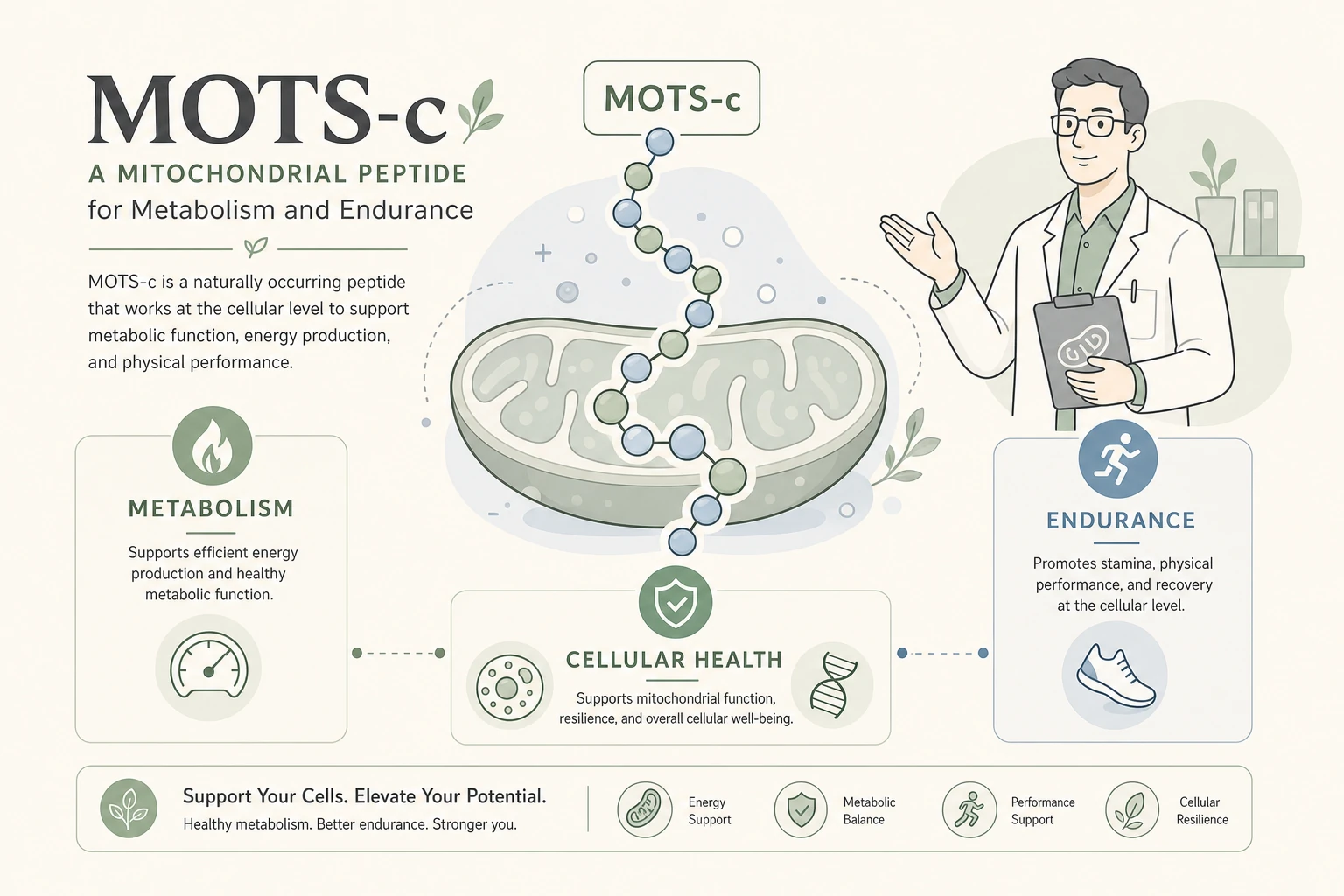
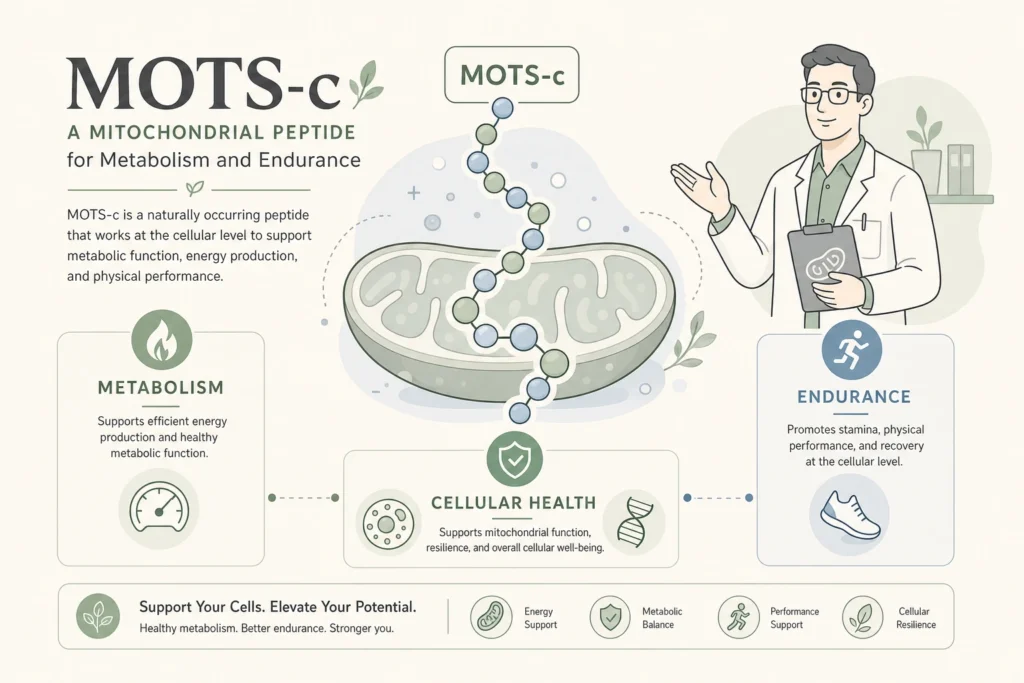
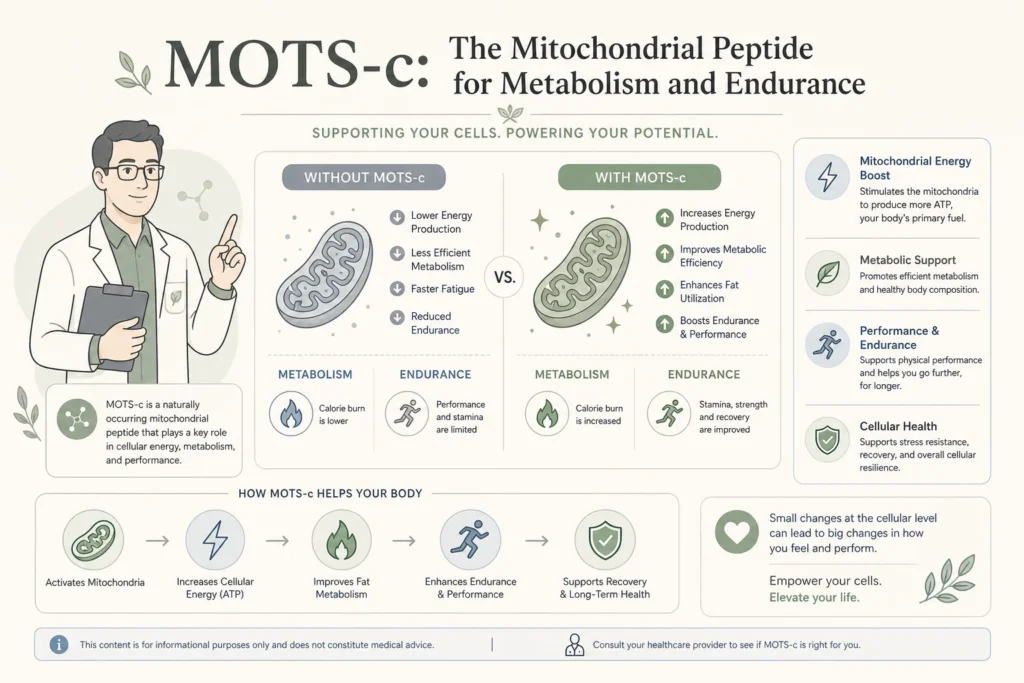
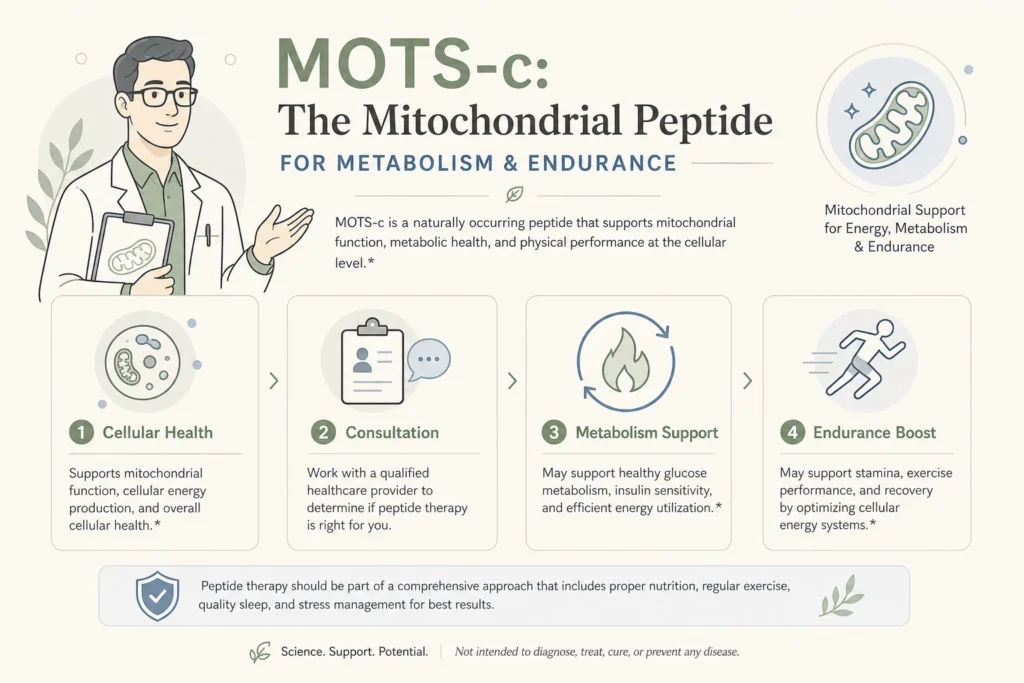
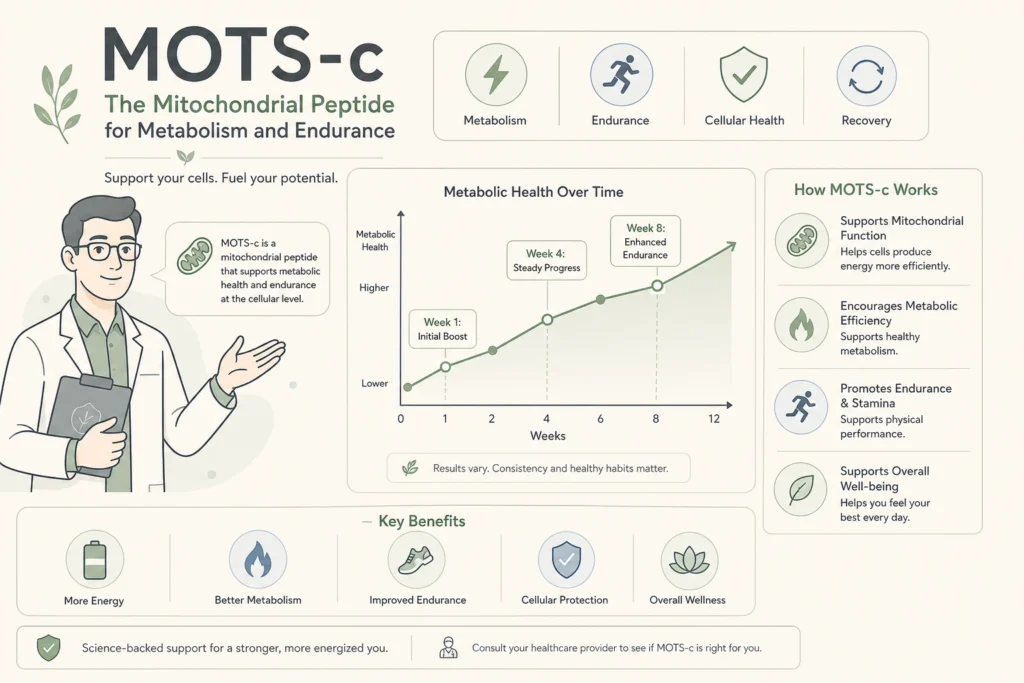
Indirectly, through a different mechanism than the other peptides discussed here. MOTS-c is a mitochondrial-derived peptide that regulates insulin sensitivity and the metabolic signaling pathway exercise itself activates, and in aged animal models it improved exercise capacity and preserved muscle metabolic function. It is not a growth or repair peptide in the way BPC-157 or ipamorelin are; it supports the metabolic backdrop that makes training and recovery more effective. The deeper look at MOTS-c covers what the research does and does not support.
What Peptides Should You Be Skeptical Of?
Anything sold without a prescription, without physician oversight, and without a compounding pharmacy behind it. Research-use-only vials marketed directly to consumers online carry no quality guarantee on purity, concentration, or sterility, and several peptides that circulate heavily on social media have no published human data behind the specific muscle-growth claims attached to them. A well-studied mechanism paired with unregulated sourcing is still a bad combination. The compound matters less than whether a physician reviewed your bloodwork, confirmed there is no contraindication, and sourced the product through a licensed 503A compounding pharmacy.
| Peptide | Primary use | Evidence depth | Route |
|---|---|---|---|
| BPC-157 / TB-500 | Tendon, ligament, and muscle injury repair | Extensive animal data, limited human trials | Injection |
| Ipamorelin | Selective growth hormone release | Strong mechanism data, moderate clinical use | Injection |
| Tesamorelin | Visceral fat, growth hormone support | Most rigorous, phase 3 trial data | Injection |
| MK-677 (ibutamoren) | Oral growth hormone/IGF-1 support | Multiple randomized human trials | Oral |
| MOTS-c | Metabolic and endurance support | Strong animal data, limited human trials | Injection |
Muscle Recovery Peptide Therapy in Franklin and Nolensville, TN
Across Franklin and Nolensville, Body Works has worked with clients on peptide protocols since 2022, and the muscle-growth and recovery category, not general weight loss, is what an increasing share of those consultations are about. The team’s consistent approach is the same one this article makes: match the peptide to the specific goal, confirm there is no contraindication on bloodwork, and treat training and protein intake as the foundation the peptide supports rather than replaces. A 2025 joint nutrition advisory from four medical societies recommends 1.2 to 1.6 grams of protein per kilogram of body weight daily during any period of active recovery or medication-driven weight change, a target that applies regardless of which peptide, if any, is part of the plan.
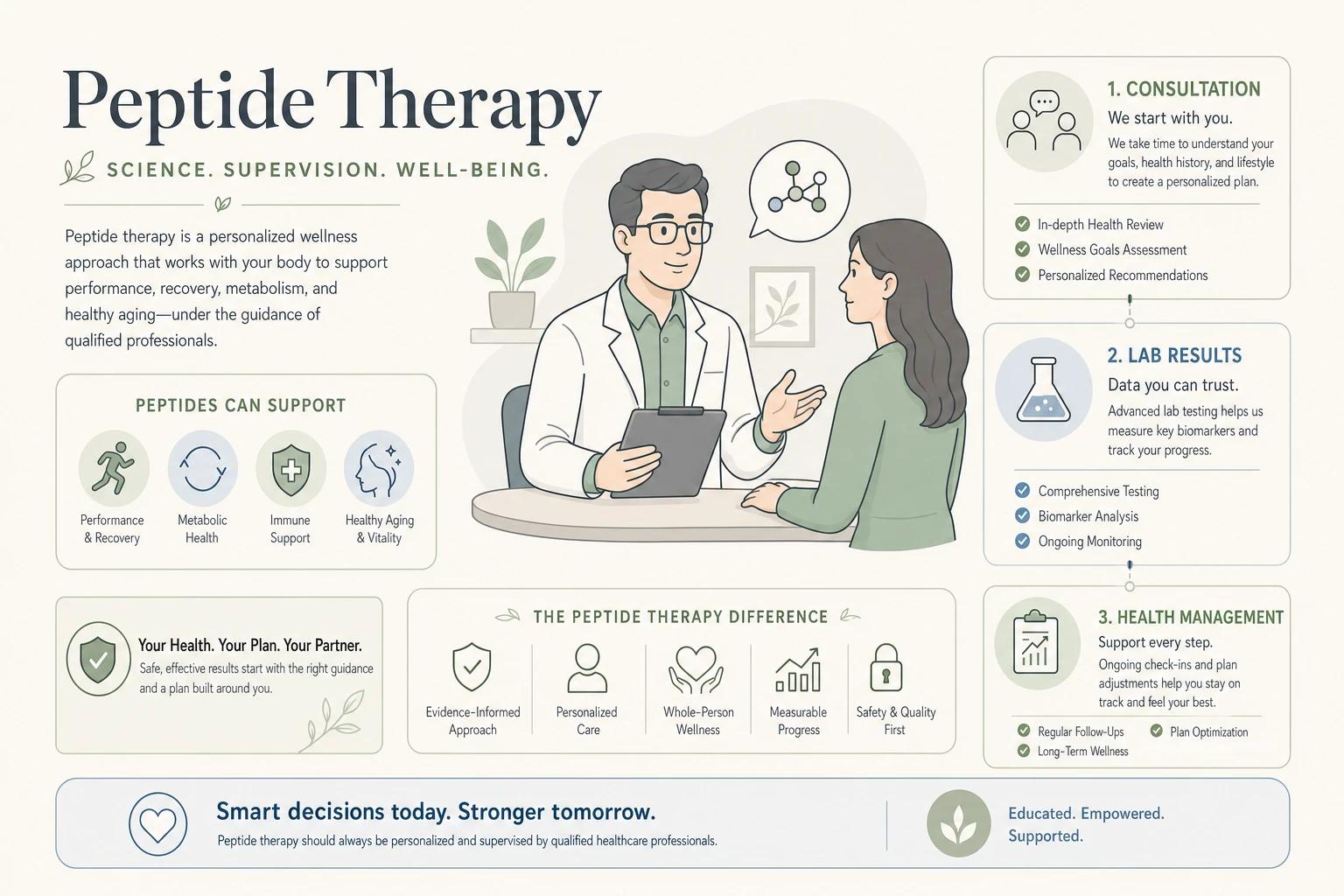
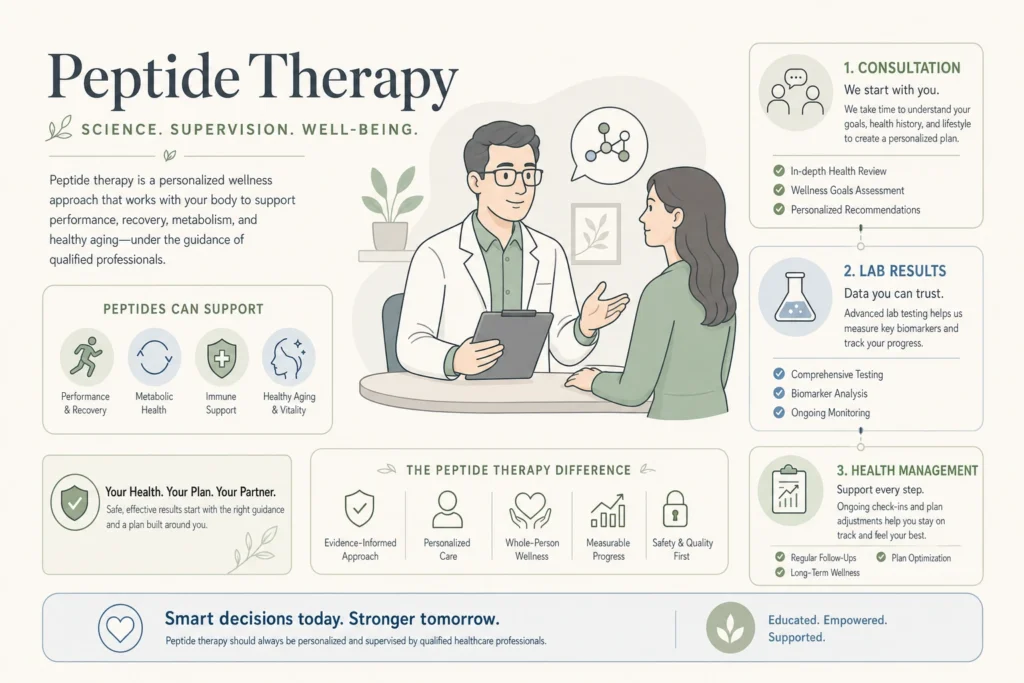
If you are trying to figure out which peptide, if any, actually fits your recovery or muscle-growth goal, the Franklin and Nolensville teams can review your bloodwork and training history and build a plan around real evidence. Schedule a Free Consultation to get started, or read more about peptide therapy for active adults.
Frequently Asked Questions
Medically reviewed by Dr. Donald Vollmer, MD
Managing Physician, Body Works TN
Browse Our Blog
Peptides for Muscle Growth and Recovery: What Actually Works
Search “best peptides for muscle growth” and you will find lists of ten or twelve compounds, most stacked together with no explanation of why, and
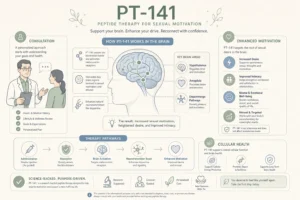
PT-141: What It Is, How It Works, and Who It Is For
Most treatments for low sexual desire work on blood flow. PT-141 does not touch blood flow at all. It works in the brain, on the

MOTS-c: The Mitochondrial Peptide for Metabolism and Endurance
For decades, the DNA inside your mitochondria was treated as a parts list for one job: energy production, nothing else. Then researchers found a 16-amino-acid
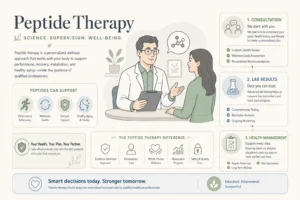
Peptide Therapy in Franklin and Nashville: How a Physician-Supervised Program Works
Search “peptide therapy near me” and the results mix licensed medical clinics with websites selling research-use-only vials to your front door, no prescription, no bloodwork,
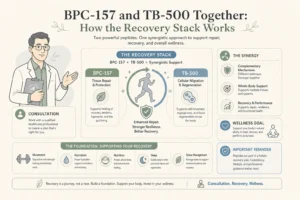
BPC-157 and TB-500 Together: How the Recovery Stack Works
Search “BPC-157 TB-500 stack” and the forums all say the same thing: pair them, because one heals the tissue and the other helps cells get

Alcohol and GLP-1 Medications: What Happens and How to Handle It
A single glass of wine that never used to bother anyone can suddenly cause real nausea a few months into semaglutide or tirzepatide treatment. Patients